
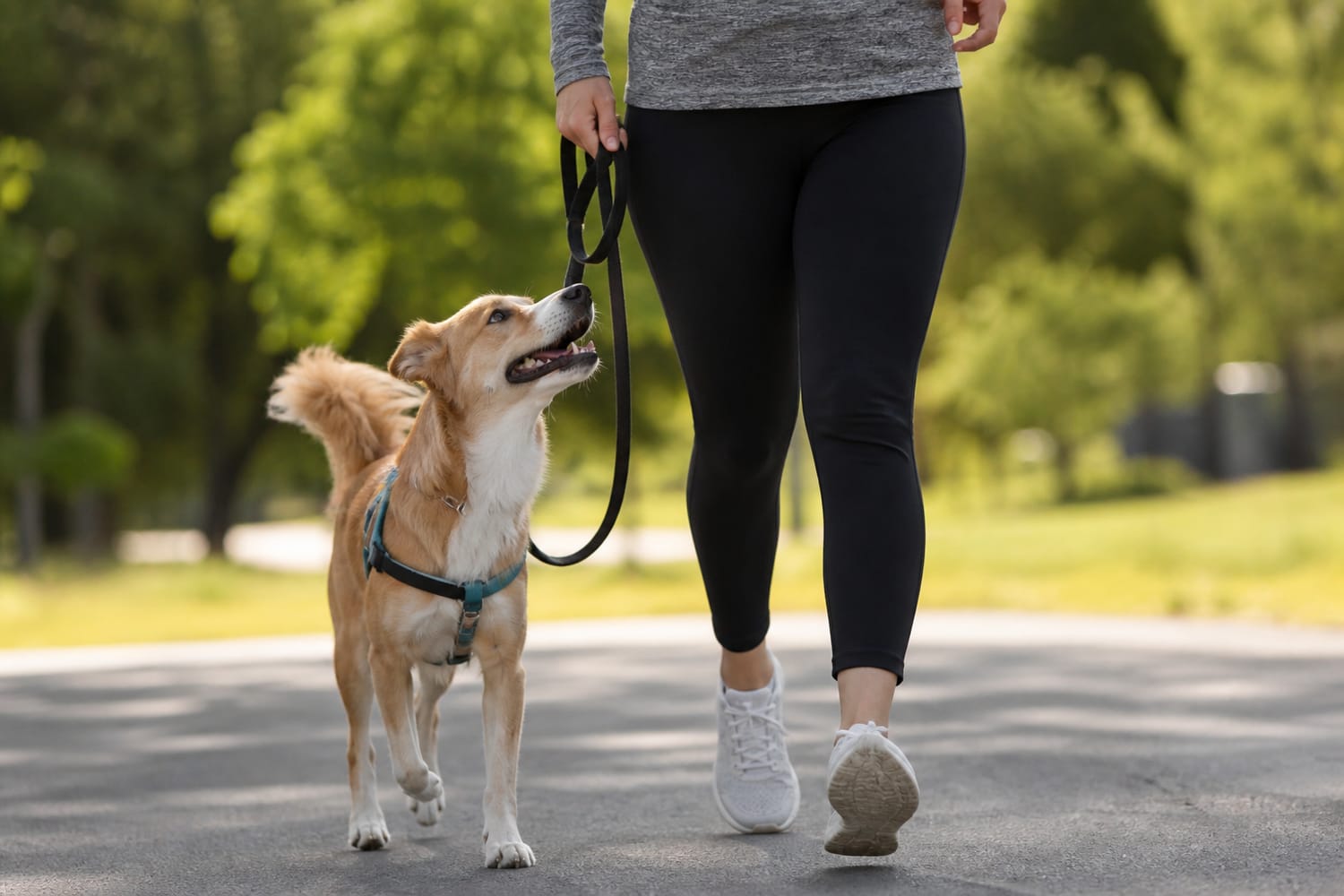
Why Moving Targets Feel Irresistible
Dogs chase cars, bicycles, runners, and other fast-moving targets for several reasons, including predatory instinct, herding behavior, excitement, fear, frustration, or territorial guarding. The safest solution combines careful management with reward-based training that teaches your dog an alternative response—such as looking at you, turning away, or calmly moving to the side.
To us, a passing cyclist is simply another trail user. To a dog, however, that cyclist may be a fascinating combination of speed, sound, spinning wheels, and sudden movement. Understanding what motivates your dog is the first step toward replacing a dangerous reaction with a safer habit.
Why Dogs Chase Cars, Bikes, and Runners
Chasing is part of the normal canine behavior toolkit. Many dogs are naturally drawn to movement, although the strength and purpose of that response vary greatly between individuals.
Common reasons include:
- Predatory behavior: Rapid movement can activate the instinct to watch, stalk, pursue, or grab.
- Herding tendencies: Some dogs attempt to control movement by circling, following, barking, or nipping toward heels or wheels.
- Territorial behavior: A dog may rush along a fence to drive a vehicle or runner away from the property.
- Fear or uncertainty: Loud engines, unusual silhouettes, or objects approaching quickly can feel threatening.
- Frustration and excitement: A leashed dog may bark and lunge because the leash prevents investigation or pursuit.
- Learned habit: Chasing is exciting and can reward itself, making the behavior stronger with repetition.
Certain sighthounds, herding dogs, and terriers may be especially sensitive to fast movement because of the work their ancestors were bred to perform. However, any dog can develop chasing behavior, regardless of breed or size. Veterinary behavior experts note that chasing, herding, and nipping at moving targets are normal behaviors that require a safer substitute—not simply a shouted “no.”
Why Chasing Becomes a Powerful Habit
Imagine a dog barking and racing beside the backyard fence as a delivery van passes. The van continues down the road and disappears. From the dog’s perspective, the strategy worked: “I chased it, and it left!”
The same reward occurs when a bicycle, jogger, or skateboarder moves away. The dog receives the thrill of pursuit followed by the apparent success of making the target disappear. Because the chase itself is stimulating, even a dog who never catches anything may be strongly rewarded by the experience.
This is why prevention matters. Every successful chase gives your dog another opportunity to rehearse the behavior. Training progresses more smoothly when walks, fencing, and daily routines are adjusted to prevent those rehearsals.
Begin With Safety and Management
Training around moving vehicles must never depend on trial and error. Before teaching new skills, create a setup that protects your dog, the handler, and everyone nearby.
Use the following safety checklist:
- Walk with a secure, standard-length leash near traffic.
- Check that the collar or harness fits correctly and cannot be slipped.
- Avoid retractable leashes beside roads and busy paths.
- Choose quiet walking times and lower-traffic routes while training.
- Block your dog’s view through a roadside fence if fence running is a problem.
- Keep gates latched and supervise outdoor time.
- Never allow a child to hold the leash of a dog who may lunge.
- Practice with bicycles or runners only when a responsible helper and a safe location are available.
A long line can be useful for recall practice in an open, traffic-free area, but it should not be used beside a road. No recall, stop cue, or training method is reliable enough to replace a leash around moving vehicles.
Learn to Recognize Your Dog’s Threshold
A dog is “under threshold” when they notice a trigger but remain calm enough to think, eat, and respond. Once the dog is barking, spinning, lunging, or pulling frantically, meaningful learning becomes much harder.
Look for early signs of fixation:
- A closed mouth
- A stiff or lowered body
- Ears sharply oriented toward the target
- Intense staring
- Weight shifting forward
- Slower, stalking movement
- Ignoring familiar cues or treats
When you see these signals, create more distance. Cross the street, turn down another path, step behind a parked vehicle, or make a cheerful U-turn. Distance is not defeat; it is one of your most valuable training tools. The goal is to work far enough from movement that your dog can succeed.
Teach a Safer Response Before You Need It
Choose a simple behavior your dog can perform instead of chasing. Useful alternatives include:
- Looking at you
- Touching their nose to your hand
- Turning and walking away
- Searching the ground for scattered treats
- Standing calmly at your side
Begin indoors, where there are no cars or runners competing for attention. Say your chosen cue once, mark the correct response with “Yes!” or a clicker, and immediately provide a valued reward.
A voluntary glance toward you can become a powerful safety skill. Petspiration’s guide to teaching a reliable check-in cue explains how to build that small but important moment of connection.
Practice for one to three minutes at a time in several easy locations. Once your dog responds happily inside, move to the yard and then to quiet outdoor spaces.
Change What the Trigger Predicts
Once your dog knows an alternative behavior, begin controlled training at a generous distance from the trigger.
- Position your dog far enough from a quiet road or path that they can remain relaxed.
- When a car, bicycle, or runner appears, mark the moment with “Yes!” and offer a high-value treat.
- Continue rewarding while the trigger passes, provided your dog stays calm.
- If your dog looks at you voluntarily, reward generously.
- When the trigger disappears, pause the treats and continue your walk.
- End after a few successful repetitions.
With practice, your dog can learn a new pattern: “Movement appears, so I check in with my person.” This approach combines positive reinforcement with counterconditioning, gradually changing both behavior and emotional response.
Do not rush closer. If your dog stops accepting food, stares intensely, or lunges, increase the distance during the next repetition. Progress may involve several tiny steps, and that is perfectly normal.
Practice the Happy U-Turn
A quick U-turn gives you an escape route when a motorcycle roars past or a runner appears unexpectedly.
Practice without triggers first. Say a cheerful phrase such as “This way!” and turn 180 degrees. Encourage your dog to follow, then reward as you move away together. Make it energetic and fun rather than tense.
Over time, the cue becomes an automatic team response. Instead of tightening the leash and waiting for an explosion, you can smoothly guide your dog out of the situation before chasing begins.
It is also worth developing an additional safety layer by teaching an emergency stop cue. This should be practiced in secure places and rewarded generously, but it must remain a backup—not a replacement for physical safety measures.
What Not to Do
Avoid yelling, leash jerks, shock collars, or deliberately overwhelming your dog with close exposure. Punishment may suppress visible behavior temporarily without resolving the excitement, fear, or frustration underneath. It can also cause the dog to associate pain or intimidation with runners, bicycles, or vehicles.
The American Veterinary Society of Animal Behavior recommends reward-based methods for canine training and behavior modification, emphasizing humane techniques that teach animals what to do instead of relying on fear or discomfort.
You should also avoid repeatedly testing your dog. Training beside a busy highway to “see if it works” creates unnecessary risk. Arrange easy practices in which calm behavior is likely, then increase difficulty gradually.
Give the Chase Instinct a Safe Outlet
The goal is not to remove your dog’s personality. Instead, provide appropriate ways to run, pursue, sniff, and play.
Depending on your dog’s health and preferences, safe outlets may include:
- Fetch in a securely fenced area
- Tug games with clear start and release cues
- Hide-and-seek with toys or family members
- Scent games and treat searches
- Controlled flirt-pole play on suitable footing
- Agility or other organized dog sports
- Lure-based sports for physically fit dogs
- Structured play followed by a calm settling activity
Games are most helpful when they include listening and self-control. Ask for a pause before releasing your dog to chase a toy, or practice “drop it” before restarting tug. Petspiration’s impulse-control games for dogs can help turn exciting play into valuable everyday training.
When to Seek Professional Help
Contact a qualified reward-based trainer, certified behavior consultant, veterinarian, or veterinary behaviorist if your dog:
- Has escaped or entered a road
- Redirects biting onto the leash or handler
- Attempts to bite runners or cyclists
- Cannot eat or respond even at a considerable distance
- Shows intense panic, fear, or aggression
- Is too strong for you to control safely
- Has suddenly developed the behavior without an obvious explanation
A veterinarian can also check for pain, sensory changes, or other health concerns that may influence a sudden behavioral change. Professional support is not a sign of failure—it is a loving investment in safety and confidence.
From Reflex to Partnership
Teaching a safer response to moving targets is rarely about one perfect command. It is about management, distance, repetition, and rewarding the choices you want to see again.
Celebrate the first glance away from a bicycle, the first calm pause as a car passes, and the first happy U-turn before a reaction. These small victories are the building blocks of dependable behavior.
Your dog may always notice movement—and that is okay. With compassionate training, they can learn that noticing does not have to lead to chasing. Instead, it can become a cue to turn toward the person they trust most: you.