
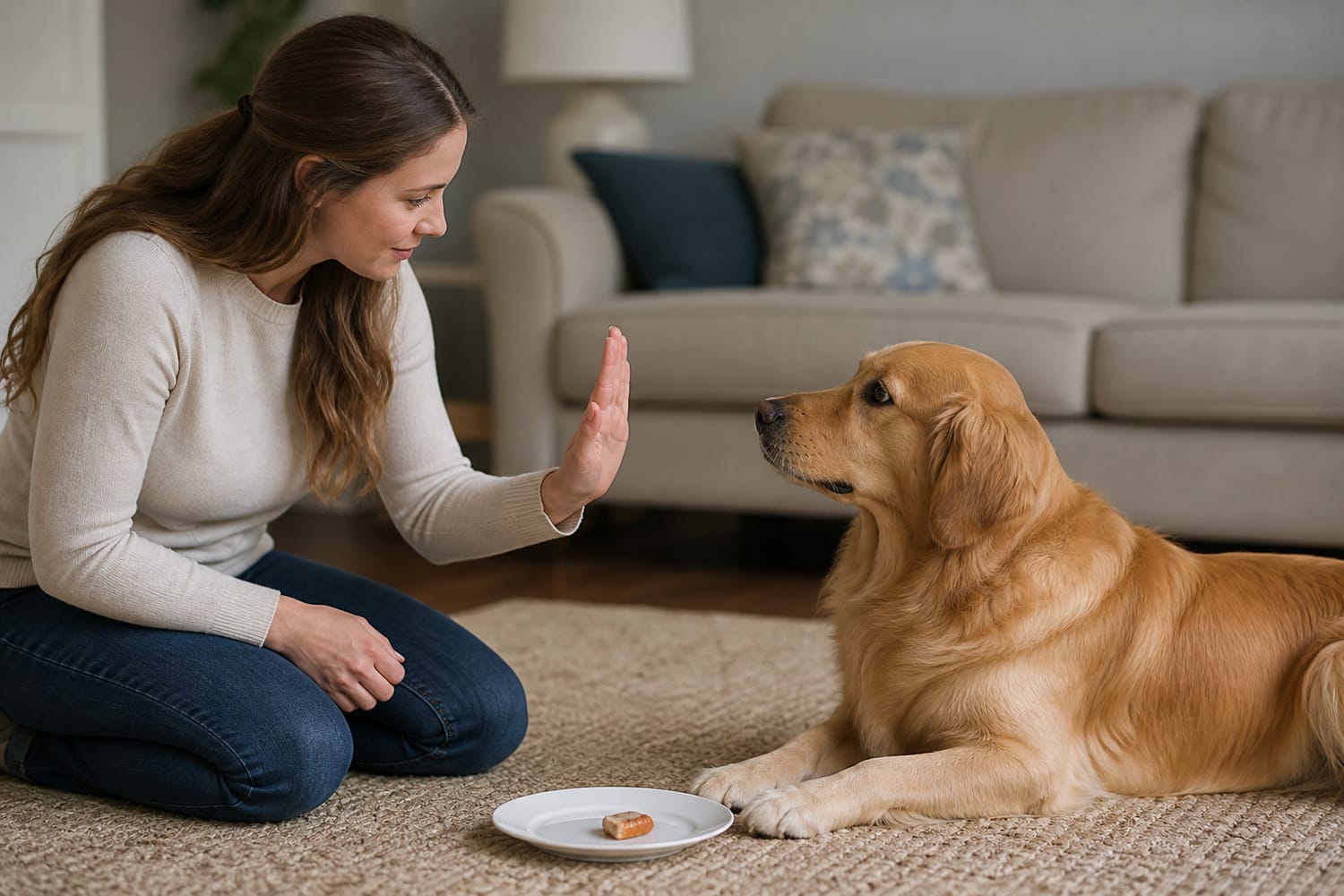
Why Impulse Control Matters for Dogs
Every dog has moments when excitement takes over. A squirrel darts across the path. Dinner hits the bowl. A guest walks through the door. Suddenly, your sweet companion becomes a whirlwind of paws, tail wags, barking, jumping, or pulling.
That excitement is normal. Dogs are curious, social, energetic animals. But just like children learning to wait their turn or take a deep breath before reacting, dogs can learn how to pause, think, and make calmer choices.
Impulse control is your dog’s ability to resist the urge to do something immediately. It is not about “breaking” a dog’s spirit or making them robotic. In fact, good impulse control often creates a happier, more confident dog because they understand what works, what earns rewards, and how to navigate exciting situations successfully.
Impulse control games are simple training exercises that teach your dog, “Good things happen when I stay calm and focused.” These games help with everyday behaviors like:
- Waiting politely for meals
- Not jumping on visitors
- Walking calmly on leash
- Ignoring food dropped on the floor
- Coming when called, even around distractions
- Settling at home
- Greeting people and dogs more politely
Best of all, these exercises can be fun. When taught with patience, encouragement, and rewards, impulse control becomes a game your dog enjoys playing with you.
The Golden Rule: Reward the Pause
Before jumping into the games, it helps to understand the foundation behind them: reward the pause.
Many dogs are rewarded accidentally for impulsive behavior. If a dog jumps and gets attention, jumping worked. If they bark at the door and you open it, barking worked. If they pull toward a smell and get to reach it, pulling worked.
Impulse control training flips the pattern. Your dog learns that waiting, looking at you, sitting, or staying calm is what makes the reward happen.
Rewards can include:
- Treats
- Toys
- Praise
- Sniffing opportunities
- Getting to go outside
- Greeting a person
- Being released to eat dinner
- Continuing a walk
The best reward depends on what your dog wants in that moment. If your dog is desperate to go outside, opening the door may be more powerful than a biscuit. If your dog loves chasing a ball, the ball becomes the reward.
Keep sessions short, upbeat, and easy at first. A few minutes of successful practice are far better than a long session where your dog becomes frustrated.
Game 1: Wait for the Food Bowl
Mealtime is one of the easiest times to practice impulse control because most dogs are naturally motivated by food. This game teaches your dog that calm behavior makes the bowl appear.
Start with your dog’s meal in hand. Ask your dog to sit if they already know the cue, or simply wait for a moment when all four paws are on the floor. Begin lowering the bowl slowly. If your dog jumps, lunges, or rushes forward, calmly lift the bowl back up. No scolding needed. Just reset.
When your dog stays still, even for one second, continue lowering the bowl. If they remain calm until the bowl reaches the floor, say your release word, such as “okay,” “free,” or “go eat,” and let them enjoy their meal.
At first, your dog may only manage a tiny pause. That is perfectly fine. Reward small successes and build gradually.
Over time, this game teaches a powerful lesson: pushing makes the food go away, but patience makes it arrive.
Helpful reminders:
- Use a release word so your dog knows when they are allowed to move.
- Do not make puppies or hungry dogs wait too long.
- Keep the mood calm and encouraging.
- Practice daily, but do not turn mealtime into a stressful test.
This exercise is especially useful because it fits naturally into your routine. You are not adding another task to your day; you are simply turning an everyday moment into a gentle training opportunity.
Game 2: Leave It
“Leave it” is one of the most valuable impulse control cues a dog can learn. It can prevent your dog from grabbing unsafe items, chasing after dropped food, or investigating something they should avoid.
Start with a low-value treat in one closed fist. Let your dog sniff, lick, or nudge your hand. Stay quiet and still. The moment your dog backs away, looks away, or pauses, mark it with “yes” and give them a better treat from your other hand.
Repeat several times. Your dog will begin to realize that moving away from the closed hand earns something better.
Once your dog understands the idea, say “leave it” as you present the closed fist. Mark and reward when they disengage.
Next, make the game slightly harder:
- Place a treat on the floor and cover it with your hand.
- Say “leave it.”
- When your dog backs away or looks at you, mark and reward from your other hand.
- Eventually uncover the treat briefly, ready to cover it again if your dog dives for it.
- Build up slowly until your dog can ignore the item.
The key is to reward your dog for choosing not to take the tempting object. Avoid yanking them away or shouting. The goal is to build understanding, not fear.
Also, do not let your dog eat the “leave it” item during early training. Reward from your hand instead. This makes the lesson clearer: leaving one thing earns another wonderful thing from you.
Game 3: The “It’s Your Choice” Hand Game
This simple game is a favorite among positive reinforcement trainers because it teaches dogs to make good choices without constant commands.
Hold several treats in your open palm. If your dog dives toward them, close your hand. When they stop pushing, licking, or pawing, open your hand again. If they stay back, calmly pick up one treat with your other hand and give it to them.
The message is beautifully simple: trying to grab the treats makes them disappear; waiting politely makes one arrive.
As your dog improves, you can increase the challenge by:
- Holding your open hand lower
- Placing treats on a table
- Setting treats on the floor
- Practicing around mild distractions
- Waiting for eye contact before rewarding
This game is excellent because it gives your dog agency. They are not being forced into calm behavior. They are discovering that calm behavior works.
For energetic dogs, this can be a lightbulb moment. Instead of hearing “no” repeatedly, they learn, “Oh! If I control myself, I get the good stuff.”
Game 4: Doorway Manners
Doors are exciting. They lead to walks, yards, car rides, visitors, and adventure. That excitement can also create unsafe habits, such as bolting outside or crowding the doorway.
Doorway manners teach your dog to wait calmly until released.
Begin at an interior door if your dog is very excitable. Ask for a sit or simply wait for calm standing. Reach for the doorknob. If your dog rushes forward, remove your hand from the knob and wait. When they settle, try again.
Open the door just a crack. If your dog moves toward it, close it gently. If they stay back, open it a little more. Mark and reward calm behavior.
When the door is fully open and your dog remains in place, say your release word and invite them through.
Important safety note: Use a leash when practicing at exterior doors, especially if your dog may run into a street, driveway, or unfamiliar area.
This exercise is not about making your dog wait forever. It is about teaching them to check in and pause before rushing through thresholds. That small pause can be incredibly valuable in daily life.
You can use the same idea for:
- Car doors
- Crates
- Baby gates
- Backyard gates
- Entering the dog park
- Getting out of the elevator
Remember, access to the exciting thing is the reward. Calm behavior opens doors—literally.
Game 5: Calm Toy Play
Many dogs adore toys, especially balls, tug ropes, and squeaky toys. Toy play is a fantastic way to teach impulse control because excitement is part of the fun.
For a game of fetch, ask your dog to sit before you throw the ball. At first, wait for just one second of stillness. Say your release word as you throw. Gradually increase the time your dog waits before chasing.
For tug, teach a start cue like “take it” and a pause cue like “drop” or “out.” Offer the toy and play for a few seconds. Then hold the toy still and ask for the drop. When your dog releases, reward by starting the game again.
This teaches your dog that letting go does not end the fun—it makes the fun continue.
A few tug rules help keep the game safe and enjoyable:
- Use a toy long enough to keep teeth away from hands.
- Pause if your dog gets too mouthy or overstimulated.
- Reward polite grabbing and releasing.
- Keep the tone playful, not competitive.
- Let your dog win sometimes by carrying the toy away proudly.
Toy-based impulse control is especially useful for high-energy dogs who may not be as motivated by food when they are excited. It channels their enthusiasm into cooperation.
Game 6: Settle on a Mat
Impulse control is not only about stopping movement. It is also about learning how to relax. Teaching your dog to settle on a mat gives them a clear place to go when life gets busy.
Choose a mat, towel, or dog bed. Place it on the floor. When your dog looks at it, sniffs it, steps on it, or moves toward it, mark and reward. Toss the treat slightly away so your dog leaves the mat, then wait for them to return. This builds interest in the mat.
Once your dog is happily stepping onto it, reward them for staying there. Gradually reward calmer behaviors such as sitting, lying down, resting their chin, or taking a deep breath.
You can later use the mat during:
- Family meals
- Work-from-home hours
- Guest visits
- Grooming preparation
- Vet visit practice
- Outdoor café trips
The mat becomes a portable “calm station.” It tells your dog, “This is your place to relax, and good things happen here.”
Do not rush this skill. Relaxation takes time, especially for young or energetic dogs. Practice when the house is quiet before expecting your dog to settle during exciting events.
Building Success: Make It Easy Before Making It Hard
One common mistake in impulse control training is asking for too much too soon. A dog who can wait for a treat in the kitchen may not be ready to wait at the park beside another dog, a skateboard, and a picnic blanket full of sandwiches.
Dogs do not automatically generalize skills to every environment. They need practice in different places, with different distractions, at a pace they can handle.
Think of training in levels:
- Level 1: Quiet room at home
- Level 2: Different room at home
- Level 3: Backyard or hallway
- Level 4: Front yard or quiet street
- Level 5: Park at a distance from distractions
- Level 6: Closer to real-life excitement
If your dog struggles, they are not being stubborn. The situation may simply be too hard. Make it easier by increasing distance, lowering the distraction, using better rewards, or asking for a shorter pause.
Celebrate tiny wins. One second of calm near a distraction is still a win. Looking at you instead of lunging is a win. Choosing to sit instead of jump is a win.
Training grows best in an atmosphere of trust.
What to Avoid
Impulse control should never be taught through fear, intimidation, or harsh punishment. These methods can damage trust and may increase anxiety or frustration.
Avoid:
- Yelling at your dog for making mistakes
- Holding their mouth closed
- Physically forcing them into position
- Repeatedly saying a cue when they do not understand it
- Practicing when they are too tired or overwhelmed
- Making exercises so difficult that they fail repeatedly
Instead, focus on setting your dog up to succeed. Use management while training is still in progress. For example, if your dog jumps on guests, use a leash, baby gate, or mat station while practicing polite greetings. Management is not failure; it is kindness and safety.
If your dog shows intense reactivity, aggression, severe anxiety, or resource guarding, work with a qualified positive reinforcement trainer or veterinary behavior professional. Some dogs need a customized plan, and getting help early can make a world of difference.
Calm Is a Skill, Not a Personality Type
Some dogs are naturally mellow. Others seem to bounce through life like furry confetti. But impulse control is not limited to “easy” dogs. It is a skill that can be taught, practiced, and strengthened.
The goal is not to take away your dog’s joy. We love their zoomies, their happy dances, their enthusiasm when we pick up the leash. The goal is to help them balance excitement with thoughtfulness.
A dog with impulse control can still be playful, silly, and spirited. They simply have more tools. They can pause before dashing out the door. They can wait before grabbing the toy. They can look to you when the world becomes exciting.
And perhaps the most beautiful part is this: every impulse control game is also a relationship-building game. Each practice session says, “We are learning together. I will guide you. You can trust me.”
With patience, consistency, and plenty of rewards, your dog can become calmer, more focused, and more confident—one small pause at a time.