
A Familiar Behavior With More Than One Meaning
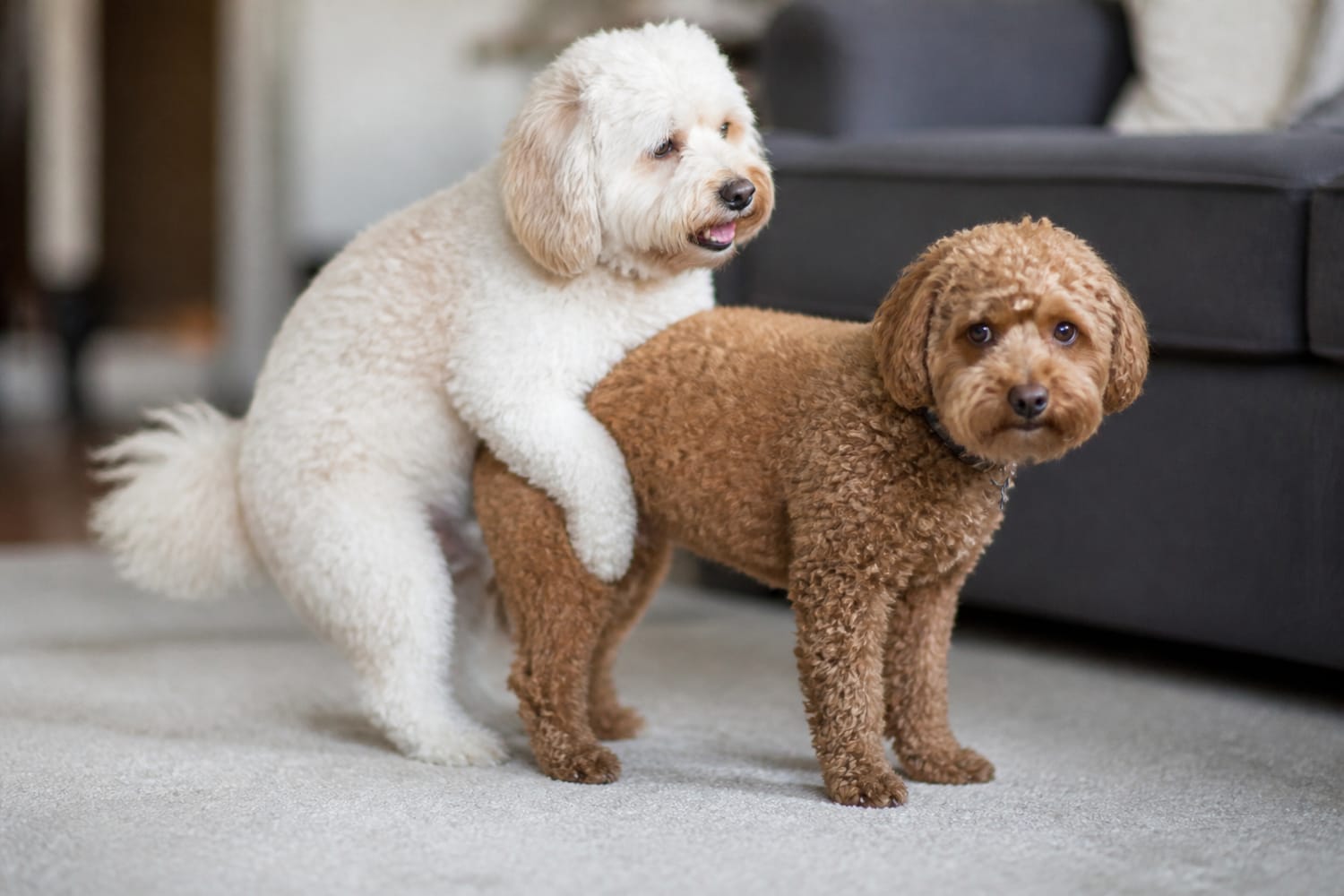
Your dog hops onto the couch, grabs a favorite pillow, and starts humping it. Or perhaps they mount a playmate just as the game gets lively. It can be surprising—and, when guests are watching, a little awkward. But humping, also called mounting, is a normal dog behavior, and it does not always mean what people assume.
Dogs may mount people, other pets, or objects because of sexual interest, play, excitement, stress, or a learned habit. Occasionally, physical discomfort contributes. The best response depends on the context: notice what happened just before the behavior, protect everyone’s comfort, and calmly guide your dog toward something else when needed.
Why Do Dogs Hump?
Sometimes it’s sexual—and sometimes it isn’t
Sexual motivation is one possible explanation, particularly for an unspayed or unneutered dog around another dog in heat. But puppies, female dogs, and spayed or neutered dogs hump too. A dog may also continue mounting after surgery, especially if it has become a familiar behavior. Spaying or neutering may reduce hormonally driven mounting, but it is not a guaranteed fix for every kind of humping. If you are considering either procedure, discuss your individual dog’s needs with your veterinarian.
Play and excitement are other common possibilities. Imagine two dogs chasing each other around the yard: the game gets faster, the pauses disappear, and one dog starts mounting. That moment may tell you less about mating and more about how wound up the dog has become. Similarly, a dog might hump a person’s leg when visitors arrive or turn to a cushion after an especially exciting interaction. Stress or uncertainty can also play a part, so it helps to look at the whole situation rather than the behavior alone.
Mounting is often described as a dog trying to “dominate” someone. That explanation is usually too simple. The UC Davis School of Veterinary Medicine’s guide to inappropriate mounting notes that dominance is rarely the cause. Treating every episode as a power struggle can distract you from more useful questions: Is your dog overwhelmed? Has play gone on too long? Are they seeking interaction, or could something be bothering them physically?
What the Target Can Tell You
If your dog humps a person, think first about the setting. Does it happen during greetings, when everyone is laughing and moving around, or when your dog is struggling to settle? The person’s comfort matters, even if your dog means no harm. Give the person room to step away, then redirect your dog without making the moment a big event.
If your dog humps another pet, watch both animals. Some dogs may briefly tolerate mounting during play; others find it unpleasant. A dog that freezes, tries to leave, hides, or gives a warning needs space. Don’t expect the other pet to teach your dog a lesson. Pause the interaction yourself, particularly if mounting keeps happening or the dogs are becoming tense. Petspiration’s guide to recognizing when pet play gets too rough offers more ways to read whether play is still mutual.
If your dog humps a toy, blanket, or bed, consider whether it is causing a problem at all. Occasional mounting that does not distress your dog, damage the item, or interfere with daily life may not need correcting. If it becomes difficult to interrupt, happens repeatedly during stressful moments, or replaces rest and other activities, take a closer look at what may be driving it.
How to Respond in the Moment
You do not need to scold, embarrass, or wrestle your dog away. A calm interruption gives you a chance to protect the person or pet being mounted and teach your dog a better option. The ASPCA’s guidance on mounting recommends redirecting dogs toward an enjoyable activity or a familiar cue, ideally before mounting begins.
Try this simple sequence:
- Notice the build-up. Your dog may become increasingly excited, hover around a playmate, or repeatedly approach someone. You do not have to identify a perfect warning sign; simply step in when the situation starts to look too intense.
- Create a little space. Invite your dog away in a friendly voice. If they are mounting a person, that person can calmly move away while you take over. If another pet is involved, give both animals a break.
- Ask for something your dog knows. A cheerful “come,” “sit,” or “leave it” gives them a clear alternative. Reward them for turning toward you or following the cue, then offer a toy, a sniffing break, or a chance to rest.
- Make the next attempt easier. If mounting starts again right away, end the greeting or play session for now. Your dog may need a quieter setting or more time to settle before trying again.
Practice cues away from the excitement first. A dog who has learned “leave it” in a quiet room is better prepared to use it around a playmate, though the real-life version may still take patient practice. Petspiration’s step-by-step “leave it” training guide can help you build that skill with rewards rather than corrections.
Help Your Dog Succeed Before It Starts
The gentlest solution is often to change a predictable setup. If your dog tends to mount when visitors walk in, arrange a calm activity before the door opens and greet guests at a pace your dog can manage. If it happens late in a long play session, call a break earlier. If a particular object reliably triggers mounting you would rather prevent, put it away and offer another activity.
Aim to meet your dog’s needs, not simply suppress the behavior. Appropriate walks, opportunities to sniff, enjoyable play, and quiet downtime can all be part of a balanced day. For dogs who find excitement hard to switch off, teaching a comfortable resting spot can provide a useful alternative; Petspiration explains how in its guide to helping a dog settle anywhere.
Consistency helps. If everyone in the household responds calmly and rewards the same alternative behavior, your dog gets a clearer message. Supervise interactions with children, visitors, and other pets, and have an adult handle interruptions. If a dog seems tense or might react badly when approached, do not try to pull them off; separate everyone safely and seek professional guidance.
When to Call the Veterinarian
A sudden change, frequent mounting, or a dog who cannot seem to stop deserves attention. Contact your veterinarian if humping comes with excessive licking or chewing around the genitals, rubbing, skin irritation, urinary changes, or other signs that your dog may be uncomfortable. Urinary problems and itchy skin are among the medical possibilities a veterinarian may need to rule out.
Seek help, too, if mounting disrupts your dog’s daily life, leads to conflict with other pets, or is accompanied by aggression when you try to intervene. Your veterinarian can assess health concerns and help you find an appropriately qualified behavior professional if needed. The PDSA’s advice on humping behavior also emphasizes patience and recommends contacting a vet when the behavior is excessive or a dog becomes aggressive when stopped.
Humping does not make a dog “bad,” and one awkward moment does not define your relationship. By noticing the circumstances, respecting everyone’s boundaries, and teaching a kind alternative, you can turn an uncomfortable situation into a chance to understand your companion a little better.