
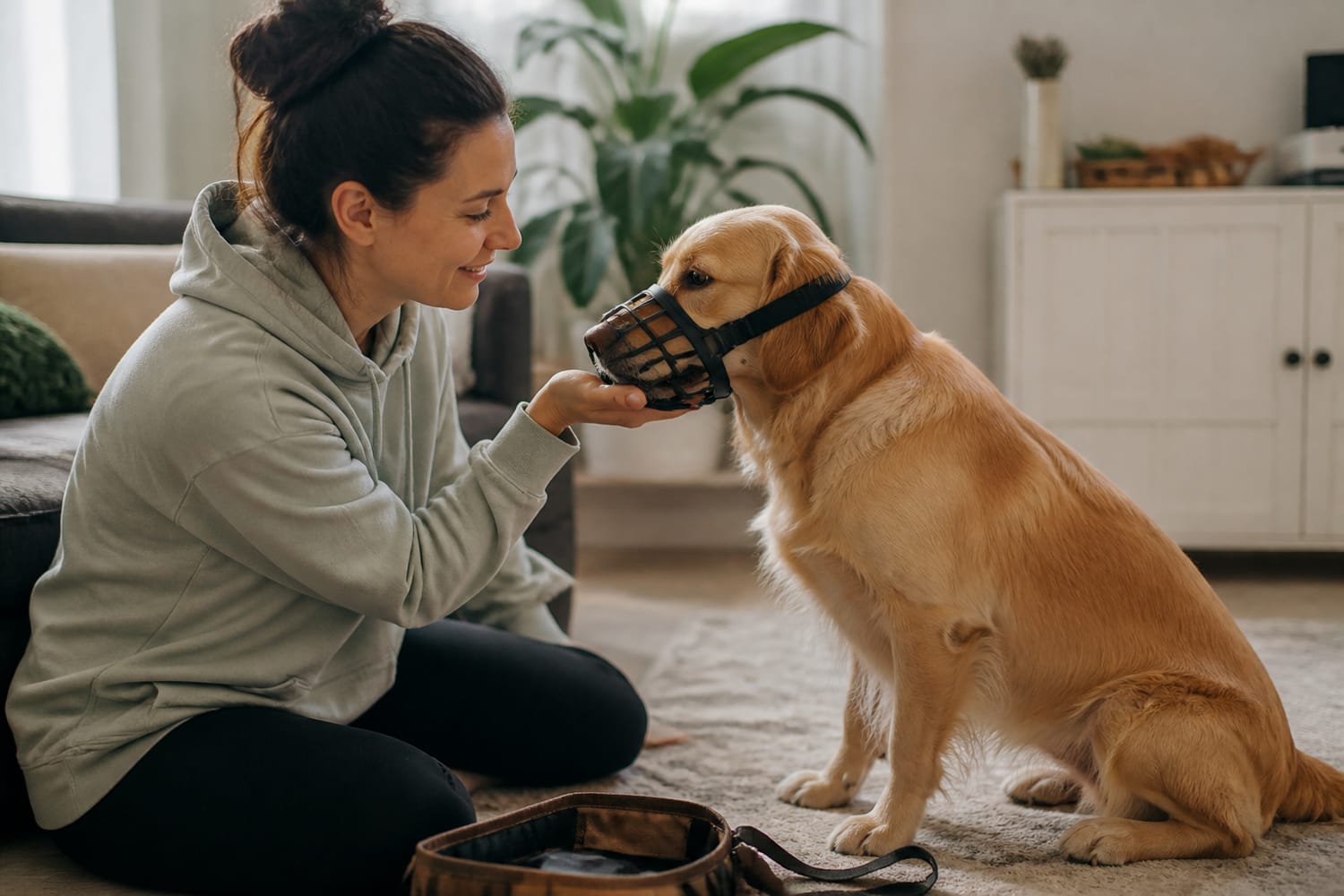
A muzzle can be a kind, practical safety tool—not a judgment about your dog. The key is to choose one that fits properly and introduce it slowly, with rewards and plenty of choice. When your dog learns that the muzzle predicts good things, wearing it can become an ordinary part of life rather than a struggle.
It’s understandable to feel uneasy the first time you pick one up. Muzzles have an unfair reputation, and many of us picture a dog who is frightened or in trouble. But consider another piece of equipment we teach dogs to wear: a harness. Its purpose is to help us care for them safely. A muzzle can serve that purpose, too.
Why Teach a Dog to Wear a Muzzle?
A dog might need a muzzle at the veterinary clinic, while receiving care for an injury, or as one part of a plan to manage bite risk. Some dogs also try to pick up unsafe things on walks. Teaching the skill before a stressful moment gives your dog a chance to become familiar with the equipment when they are relaxed. A dog wearing a muzzle isn’t necessarily dangerous; sometimes their person is simply prepared.
Preparation doesn’t mean putting your dog in situations they cannot handle. A muzzle won’t make a frightening dog park enjoyable or change how your dog feels about a stranger reaching toward them. If your dog is reactive, keep providing space and work on the underlying concern. Our guide to building calm focus around triggers offers ideas for supporting them alongside sensible safety measures.
Choose Comfort First
For most dogs, a well-fitted basket muzzle is the practical choice. Its open design lets the dog open their mouth to pant, drink water, and take treats. That matters for comfort, temperature regulation, and training. A close-fitting fabric or “sleeve” muzzle may hold the mouth shut, so it is not a substitute for a basket muzzle during a walk or an extended training session.
Looks alone won’t tell you whether a muzzle fits. Before training, check that your dog has room to pant fully, can see clearly, and has no pressure on their eyes or nostrils. The muzzle should stay secure without rubbing or digging into their face. Because dogs’ head shapes vary, it may take more than one size or style to find the right one. Ask your veterinarian or a qualified trainer for fitting help if you’re unsure; dogs with very short snouts may need particular care in finding a suitable option.
Think of this as choosing comfortable shoes. A dog can learn to like the routine, but rewards cannot make a painful fit feel good.
Turn the Muzzle Into a Welcome Sight
Begin in a quiet room with a few small treats your dog enjoys. Set the muzzle on the floor or hold it still where your dog can see it. If they glance at it or choose to sniff it, say a cheerful “yes” and give a treat. Do not push the muzzle toward their face. Let them approach and move away freely. Dogs Trust’s step-by-step muzzle training guide emphasizes this early choice as a way to build confidence.
At first, success may be no more than your dog noticing the muzzle and remaining relaxed. That counts! Try a few repetitions, then put it away while the experience is still pleasant. Short, easy sessions give you more opportunities to reward curiosity without asking for too much at once.
If your dog hangs back, don’t use a treat to draw them into something they find scary. Instead, place the muzzle farther away and reward them for being comfortable at that distance. You can gradually work closer over later sessions. This is a conversation with your dog, not a test they must pass.
Invite Your Dog to Put Their Nose In
When your dog happily approaches the muzzle, hold its opening toward them without advancing it. Place a treat near the opening, then just inside. Let your dog decide whether to reach for it. Over several sessions, you can position the treat a little deeper—but only while they remain eager and relaxed.
Next, see whether your dog will put their nose in before the treat appears. The moment they do, say “yes” and offer a reward through the front or side of the basket. This small change teaches them that entering the muzzle is their choice and that their choice pays off. If they withdraw, simply reset; there is no need to hold their head in place.
Once they’re comfortable, reward them for keeping their nose inside for a brief moment. Build from one moment to a few seconds, letting them leave whenever they wish. Clear timing helps here: our article on rewarding your pet at the right moment explains why it’s useful to mark the choice you want to encourage.
Add the Straps One Small Step at a Time
A dog who loves putting their nose into a muzzle may still find a buckle behind their ears surprising. Practice that part separately. Click the buckle at a distance, then reward your dog if they remain comfortable. Later, move the straps gently near their head without fastening them. Take as many short sessions as your dog needs.
When they’re ready, fasten the muzzle, give a treat, and unfasten it almost immediately. Gradually extend the time by a few seconds while offering rewards through the basket. If your dog begins pawing at the muzzle, repeatedly rubs their face, freezes, or tries to escape, pause. Check the fit and return to an easier step rather than asking them to endure it.
There is no prize for finishing in one afternoon. One dog may progress quickly; another may need many gentle sessions. What matters is that your dog remains willing to participate.
Practice for Real Life, Safely
Once your dog is relaxed with the straps fastened, make the experience pleasantly ordinary. Ask for an easy cue they already know, take a few steps together, or enjoy a brief sniff around the yard. Later, practice in another room and, eventually, on a quiet walk. Change only one challenge at a time: wearing the muzzle at home and wearing it beside a busy sidewalk are very different tasks.
A familiar routine can help. You might present the muzzle, reward your dog for entering it, fasten it, and then play a gentle “find it” game. Our article on simple pattern games that build calm confidence has more ideas for making training predictable and low-pressure.
Always supervise your dog while they wear a muzzle. Keep offering water when needed, monitor for rubbing or signs of distress, and remove it when the activity is over. A muzzle is not a way to stop barking, replace training, or leave a dog unattended. It is also not permission for people or other dogs to enter your dog’s space. If biting is a concern, combine muzzle training with distance, careful management, and professional guidance.
Let Your Dog Set the Pace
If your dog has already had a frightening muzzle experience, struggles with face handling, or becomes too worried to approach the muzzle, you do not have to solve it alone. Your veterinarian can help you consider discomfort or health concerns and connect you with a qualified, reward-based behavior professional. Seek individualized help if there is a bite risk, rather than attempting difficult handling exercises without a safety plan.
Muzzle training is ultimately about trust. Every time you let your dog choose, notice their comfort, and make the next step achievable, you show them that you are listening. The goal isn’t merely a dog who wears a muzzle. It’s a dog who can do so comfortably, with a person beside them who has their well-being at heart.