
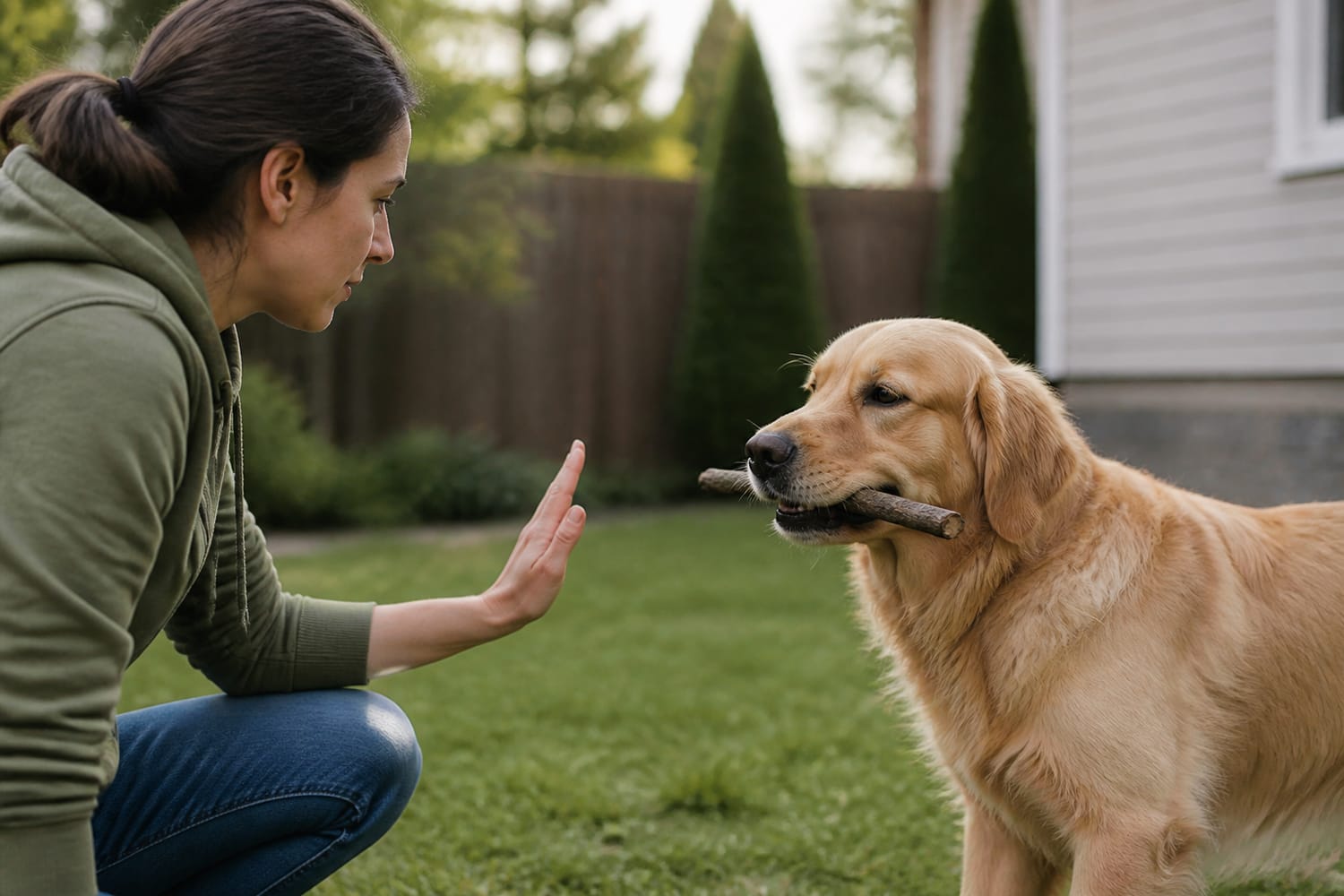
A Small Cue With Life-Saving Potential
A reliable “drop it” cue teaches your dog to release an object willingly, without being chased, physically forced, or shown food before responding. The secret is to make releasing things feel safe and worthwhile, then gradually move rewards out of sight. With patient practice, “drop it” can become a trusted habit rather than a tense negotiation.
Dogs explore the world with their mouths. A stolen sock may be amusing, but dropped medication, sharp plastic, toxic food, or a cooked bone can create a genuine emergency. “Drop it” gives you a calm, clear way to ask for an immediate release.
The cue is also useful during fetch, tug, household play, and everyday handling. Most importantly, it teaches your dog that you are not coming to steal their treasures. You are someone worth cooperating with.
Why Chasing, Grabbing, and Bribing Backfire
When your dog proudly trots away with a slipper, running after them can turn the incident into a thrilling game of keep-away. The next time they want attention, they may grab something even more interesting.
Grabbing at the object or forcing your dog’s mouth open can also create problems. Your dog may clamp down, swallow the item, run away, or become worried when people approach their possessions. The American Kennel Club similarly recommends teaching dogs to trade items willingly instead of chasing or physically forcing them to surrender something.
Then there is bribing: showing your dog a treat and pleading for cooperation every time. Food is a valuable teaching tool, but the goal is not to make your dog obey only when they see a snack. A bribe appears before the behavior; a training reward arrives after the correct choice.
Reward-based methods teach dogs what to do while supporting their emotional well-being and relationship with their people. This approach is also consistent with the American Veterinary Society of Animal Behavior’s guidance on humane dog training.
What You Need Before Training
Set yourself and your dog up for an easy first victory. Gather:
- A low-value toy your dog likes but does not guard
- Several tiny, high-value treats
- A second toy of similar or slightly greater value
- An optional clicker or marker word such as “yes”
- A quiet room with minimal distractions
Begin with an ordinary toy—not a favorite chew, food bowl, stolen object, or treasured possession. Training should start where your dog can comfortably succeed.
Keep each session between two and five minutes. You can practice several times throughout the day, but stop while your dog is still happy and engaged.
Precise timing helps your dog understand which action earned the reward. Petspiration’s guide to rewarding your pet at the right moment explains how a marker can capture the instant your pet makes a good choice.
How to Teach “Drop It” Step by Step
1. Begin With a Voluntary Release
Offer your dog the low-value toy and allow them to hold or play with it. After a few seconds, place a tasty treat close enough for your dog to smell it without pushing it against their face.
Say nothing yet. Wait.
The moment your dog opens their mouth and the toy falls, mark the action with “yes” or a click. Give the treat immediately. While your dog eats, calmly pick up the toy.
Then—and this part matters—offer the toy back.
Returning safe practice items teaches your dog that releasing something does not always make it disappear forever. Dropping the toy becomes a wonderful deal: they receive a reward and often get their toy back.
2. Repeat Until the Release Is Predictable
Practice the same exchange several times. Soon, your dog may begin dropping the toy as soon as they notice you preparing to trade.
At this stage, you are building the behavior before naming it. That prevents “drop it” from becoming background noise your dog hears while continuing to chew.
If your dog will not release the toy, do not pull. The toy may be too valuable, or the reward may not be appealing enough. Switch to an easier object or a better reward.
3. Add the Verbal Cue
Once your dog is reliably opening their mouth, say “drop it” just before you expect the release. When the object falls, mark, reward, and return the toy.
Use the cue once. Repeating “drop it, drop it, drop it” can teach your dog that the first several requests do not matter.
After several successful repetitions, say “drop it” before reaching for a treat. Pause for one second. If your dog releases the object, mark enthusiastically and reward from your pocket or a nearby container.
If they do not release it, calmly show the treat and complete an easier repetition. Your dog is not failing; they simply need more practice connecting the words with the action.
4. Fade the Visible Food
Begin keeping treats in a pocket or treat pouch instead of holding them in front of your dog. Ask for “drop it,” mark the release, and then produce the reward.
Gradually vary what follows a successful response:
- A small treat
- Another round of tug
- A tossed ball
- Cheerful praise
- Permission to take the toy again
- A different favorite toy
This is how you move from visible bribery to genuine learning. Your dog responds to the cue first because experience has taught them that cooperation produces good outcomes.
Build Reliability One Challenge at a Time
A dog who can drop a soft toy in the living room may not yet understand the cue outdoors with a fascinating object. Dogs need practice in different places and situations before a skill becomes reliable.
Increase only one type of difficulty at a time:
- Object value: Move from an ordinary toy to a favorite ball or tug.
- Location: Practice in another room, the yard, and then a quiet outdoor area.
- Distractions: Add another person, mild background activity, or interesting smells.
- Distance: Ask while standing slightly farther away.
- Excitement: Practice during livelier games after your dog succeeds in calmer ones.
If performance suddenly falls apart, return to an easier step. Making a lesson simpler is not going backward—it is how clear, confident learning is built.
It is equally helpful to teach a separate “leave it” cue. “Leave it” means, “Do not pick that up,” while “drop it” means, “Release what is already in your mouth.” You can develop both safety skills with Petspiration’s guide to teaching a reliable “leave it” cue.
Turn Tug Into a Training Game
Tug offers a lively way to practice without depending entirely on food. Begin playing with an appropriate tug toy. After several seconds, stop moving your hands and hold the toy still without pulling it away.
Wait patiently. When your dog lets go, mark the release and immediately restart the game. The renewed play is the reward.
Once your dog regularly releases the stationary toy, say “drop it” shortly before going still. Over time, practice the cue while the game is still mildly active.
Avoid lifting your dog by the toy, twisting their neck, or turning the game into a contest of strength. The lesson should be, “Releasing makes the fun continue,” not, “I must hold on before my person takes this away.”
Common Mistakes That Slow Progress
Taking Every Object Away
If “drop it” always ends the fun, your dog may become reluctant to respond. During safe training sessions, return the toy frequently or resume the game.
Reaching Before the Release
Moving your hand toward the object can cause a dog to grip harder. Wait until the item has fallen before picking it up.
Practicing With Something Too Valuable
Do not begin with bones, meals, stolen tissues, or intensely prized toys. Build a history of successful, low-pressure trades first.
Sounding Angry
A stern or panicked tone can make your dog flee or swallow faster. Practice saying the cue in a calm, friendly voice so it remains familiar during stressful moments.
Advancing Too Quickly
Reliability is created through many manageable successes. If your dog responds inconsistently, reduce the distraction or use a lower-value object.
What to Do During a Real Emergency
If your dog has something dangerous, stay as calm as possible. Do not chase unless immediate physical danger leaves no alternative.
Use your cue once and offer an exceptional trade if necessary. Toss several treats a short distance away so you can secure the hazardous item while your dog moves in the opposite direction. A cue that is still being learned may need this emergency assistance; safety takes priority over perfect training.
Never return dangerous objects. If your dog swallows medication, a toxic substance, a sharp item, or something that could cause an obstruction, contact a veterinarian or emergency veterinary service promptly. Training cannot replace medical care.
Know When to Seek Professional Help
Do not practice casual trading exercises if your dog freezes, stiffens, growls, snaps, guards objects, or has previously bitten when approached. These behaviors are warnings, not disobedience, and punishing the warning can make the situation more dangerous.
Resource guarding can range from running away with an item to aggressive behavior, as described in the ASPCA’s overview of guarding behavior in dogs. Seek help from a qualified reward-based trainer, veterinary behaviorist, or veterinarian who can create an individualized safety plan.
Build Cooperation, Not Conflict
A dependable “drop it” cue is more than a command. It is a promise between you and your dog: releasing an object will not lead to fear, force, or a frantic chase.
Celebrate the first loose jaw, the first toy dropped without seeing food, and the first successful response in the yard. Those small victories are building trust as well as skill.
With short sessions, generous rewards, and gradual practice, your dog can learn that giving things up is safe—and that listening to you is always worth it.