
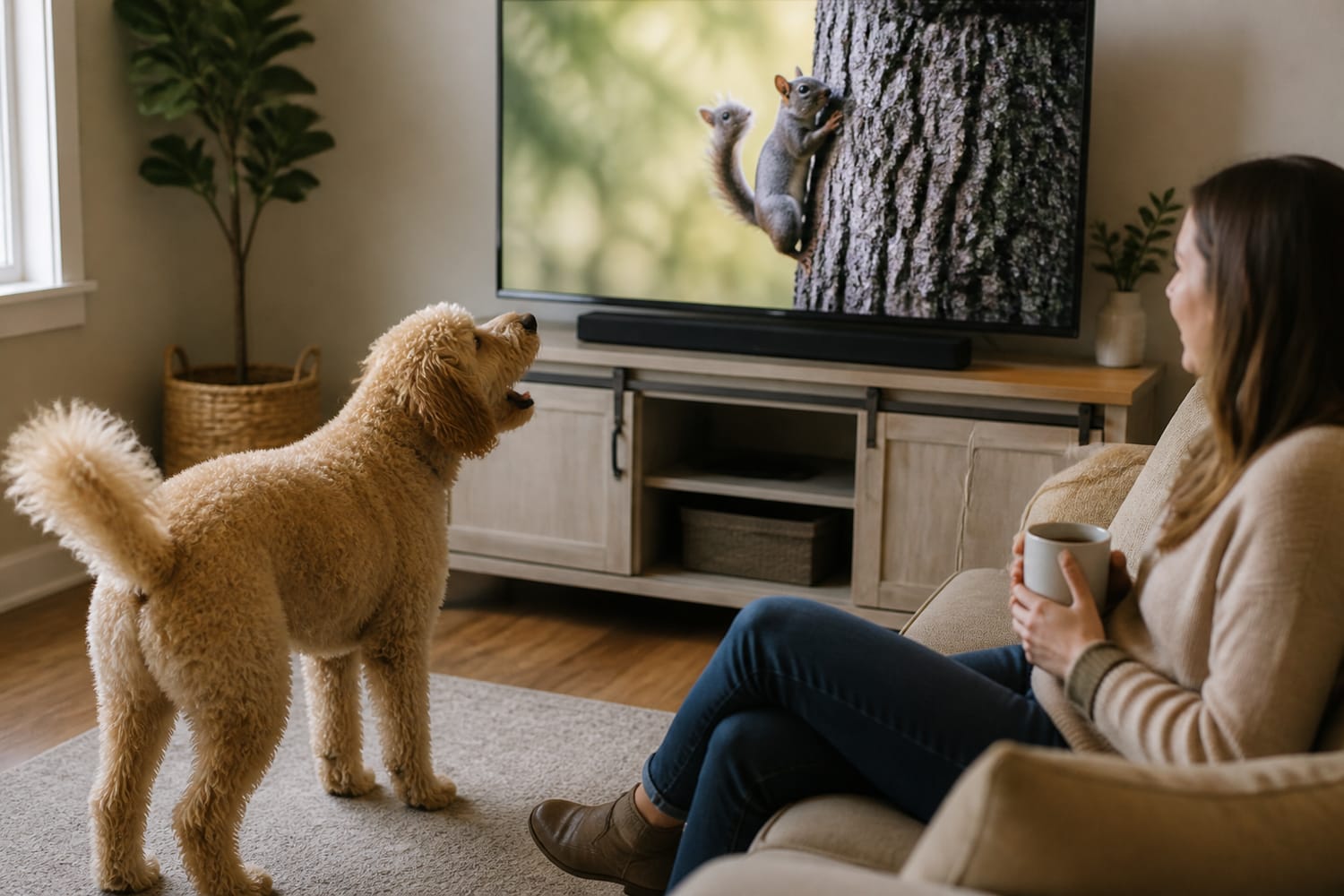
A dog on the screen darts across the room. Your dog springs up, barks, and checks behind the television. What looks like an interruption to movie night may be a perfectly understandable response to movement, barking, or a doorbell that sounds real to them. The good news: you can help your dog feel more comfortable without asking them to ignore their instincts.
What Is Your Dog Reacting To?
Dogs can notice animals and movement on a screen, but they do not experience a television program the way we do. A running squirrel may catch their eye; a bark from the speakers may catch their ear. Some dogs even investigate behind the TV, where the mystery animal ought to be. Other dogs barely glance up.
The reason for barking varies. Your dog might be excited by motion, startled by a sudden sound, alerting you to what seems like an intruder, or frustrated that they cannot reach the animal they see. Barking alone cannot tell you which explanation fits. Watch what happens before and after it: Does your dog bounce toward the screen with a loose body, or retreat with a tense one? Do they recover quickly when the scene changes?
A brief bark followed by an easy return to resting may not need much intervention. But if your dog repeatedly rushes the screen, cannot settle, or appears frightened, a little training can make evenings more pleasant for everyone—including your dog.
Start by Making TV Time Easier
Before teaching a new response, reduce the chances that your dog will spend an entire episode practicing frantic barking. You do not have to give up your favorite show. You can lower the volume, choose calmer programming while your dog is in the room, or invite them to rest farther from the screen.
If you know a wildlife documentary will be too exciting, offer your dog a comfortable spot in another room with a suitable chew or food puzzle. Make it an inviting option, not a punishment. A relaxed walk or a few minutes of sniffing before you sit down may also help a restless dog arrive at TV time ready to unwind. Choose chews appropriate for your dog and supervise them while they enjoy one.
Distance matters. A dog who can glance at the screen from across the room and then look away is in a better position to learn than one already barking at the TV stand. For more ideas on building that skill away from the television, see Petspiration’s guide to teaching your dog to settle anywhere.
Teach a New Movie-Night Routine
The aim is not to win a contest with the TV for your dog’s attention. It is to help them notice a sight or sound, remain comfortable, and discover another rewarding thing to do. Start with a scene you can pause and replay so you control the pace.
- Prepare away from the trigger. Put a mat or dog bed at a comfortable distance from the screen. With the TV off, reward your dog for stepping onto it, lying down, or simply relaxing nearby. Practice until the spot feels familiar.
- Begin with an easy clip. Play a short, mildly interesting scene at low volume. If your dog notices it without barking, calmly offer a small treat. You can reward a glance back at you, a relaxed posture, or a return to the mat.
- Pause before excitement builds. End the clip while your dog is still comfortable. Repeat in brief sessions, gradually changing one thing at a time—perhaps a little more volume, a longer clip, or slightly more movement.
- Make barking a signal to simplify. If your dog barks, pause or turn off the clip and give them space to recover. Next time, start with an easier scene, a lower volume, or more distance.
This combines gradual exposure with pleasant associations. The key is to keep the challenge small enough that your dog can still respond to you and enjoy the reward. Repeatedly playing a distressing scene until they stop reacting is not the same approach. VCA Animal Hospitals’ guide to desensitization and counterconditioning explains why gentle, controlled steps matter.
If treats make your dog more animated, try delivering them quietly onto the mat rather than waving them near the TV. The goal is a softer evening, not a high-energy training game. You can also practice a simple “come to me” cue when the television is off, then use it during an easy scene once your dog knows what it means.
What If the Barking Has Already Started?
In the moment, make the situation easier rather than louder. Pause or mute the show, speak normally, and invite your dog away from the screen if they can respond. Once they have relaxed, offer a familiar activity such as resting on their mat or finding a treat scattered nearby.
Avoid scolding, shouting over the television, or using a device that startles your dog into silence. Those responses may stop the noise briefly without addressing the excitement or worry behind it. Cornell’s guide to excessive barking recommends identifying why a dog barks and rewarding quiet behavior rather than relying on punishment.
If your dog is too worked up to respond, that is useful information: this is not the moment to ask for a new skill. Turn the TV off or help your dog move to a quieter space. You can return to training another day with an easier starting point. Petspiration’s article on building calm focus around triggers offers more ways to think about those moments when big feelings take over.
Match the Plan to Your Dog
A dog who barks only at on-screen dogs may need practice with those images. One who reacts to doorbells, dramatic music, and voices may benefit most from working with sound at a low volume. Keep a simple note of what was playing, how loud it was, where your dog was resting, and how quickly they settled afterward. Patterns can help you choose a starting point that is genuinely manageable.
Progress may look modest at first: your dog watches a clip without rushing forward, turns toward you after a sound, or settles sooner once the TV is paused. Those are meaningful steps. Reward the calm choices you see, and remember that your dog does not need to become a television fan. For some dogs, the happiest movie-night arrangement is a cozy bed where they cannot see the screen.
If the reaction is intense, seems fearful, puts your dog at risk of injury, or extends well beyond TV time, talk with your veterinarian. They can help you consider what is contributing to the behavior and whether support from a qualified behavior professional would be useful.
A Quieter Evening, Together
Your dog is not trying to spoil the ending. They are responding to a world of sights and sounds that feels different from the one you see on the sofa. By noticing their triggers, giving them room to feel safe, and practicing in small, rewarding steps, you can turn TV time into a calmer shared routine.
And if they still perk up when a dog appears on screen? That is okay. A curious glance, followed by a contented return to their bed, can be its own lovely ending.