
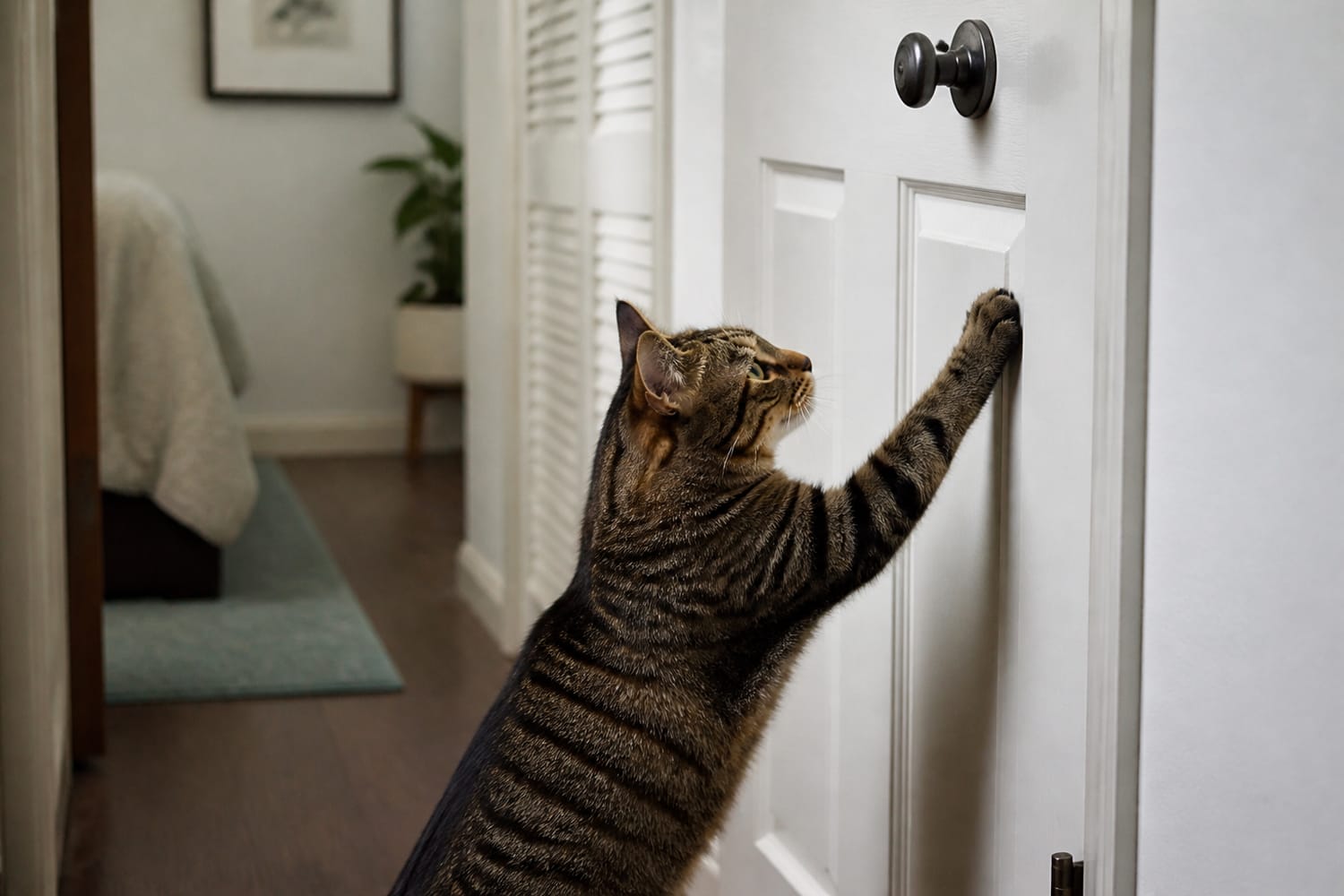
Why Does Your Cat Scratch at a Closed Door?
A closed door can mean several things to a cat: a favorite person is on the other side, an interesting space is suddenly unavailable, or a familiar route through the home has disappeared. Scratching may be an attempt to get through, a request for attention, or simply normal scratching aimed at a convenient surface. The best solution starts with finding out which one applies.
If your cat has ever announced your bedtime with a determined scritch-scritch-scritch, you know how persuasive those little paws can be. It’s tempting to call the behavior stubbornness, but your cat isn’t trying to ruin the door—or your sleep. They’re doing something that makes sense to them.
First, Look for the Reason Behind the Scratching
The timing and location of the scratching offer clues. Does it happen only when you’re behind the bedroom door? When dinner is approaching? Or even when no one is in the room beyond it? Watch for patterns over a few days before choosing a training plan.
Your cat wants access—or wants you
Cats need opportunities to explore, play, rest securely, and interact with their people. A door may block access to a beloved sleeping spot, a sunny window, or the person they usually curl up beside. If your cat scratches only when you close the bedroom door, being separated from you or their usual nighttime space may be the important part—not the door itself.
Sometimes a cat has also learned that scratching works. If you open the door, talk to them, or get up to offer food each time, those responses can encourage another try tomorrow. That doesn’t mean you should ignore a cat who is frightened or needs something essential. It means that, once you’ve checked their needs, you can teach a calmer way to get your attention.
The door is a satisfying place to scratch
Scratching stretches a cat’s body, helps maintain their claws, and leaves scent and visible marks. Doors and doorframes are prominent spots in the home, so a cat may scratch there even when the door isn’t keeping them from anything. Notice how your cat scratches: long strokes up the frame suggest a preference for a vertical surface, while digging at the carpet below it may point toward a horizontal scratcher.
Your cat needs more to do—or something has changed
A quiet house can leave an energetic cat looking for an activity. A new door rule, a visiting pet, or a change in household routine can also make a once-unremarkable doorway more significant. If scratching begins after a change at home, consider what your cat may have lost: access to a resting place, a predictable visit with you, or a comfortable route to food or the litter box. Cats benefit from suitable places to play, climb, perch, and scratch—not just a collection of toys on the floor.
Meet the Need Before You Train the Behavior
Before working on the scratching itself, check what’s available on your cat’s side of the door. They should be able to reach water and a litter box, as well as a comfortable place to rest. If the door shuts them into one room for a while, make sure that room has the essentials and opportunities to play and scratch.
Next, ask whether the door really needs to stay closed. If leaving it open is safe and practical, that may be the simplest answer. But privacy, visitors, allergies, or another pet may make a closed door necessary. You can keep that boundary while helping your cat feel comfortable with it.
For a cat who scratches at bedtime, try a predictable evening sequence: interactive play, food according to their normal feeding plan, then a calm settling period. A wand toy lets them chase and pounce with you before you turn in. For more ideas, Petspiration’s guide to resetting a cat’s nighttime routine can help you think through early-morning wake-ups, too. Feline veterinary guidance recommends regular interactive play and predictable, positive time with caregivers.
Give Those Claws a Better Destination
You don’t need to stop your cat from scratching altogether. You need to make an appropriate place more appealing than the door. Start by putting a stable scratcher close to the spot they already use. Choose a tall vertical post if they stretch up the frame, or a flat cardboard or other horizontal scratcher if they work at the floor. A wobbly post may lose the competition with a solid door.
Invite your cat to investigate with a toy, and reward them when they scratch the new surface. You can protect the door or frame with a suitable, securely fitted cover while the new habit develops. The aim is to protect your home and offer an alternative, not to frighten your cat away from the doorway. For help choosing scratchers and encouraging their use, see Petspiration’s guide to stopping furniture scratching humanely.
Teach a Calmer Response to a Closed Door
If your cat is trying to reach you rather than enjoying the scratching surface, practice when no one is tired or in a hurry. Keep sessions short and easy enough that your cat can succeed.
- Set up a pleasant spot away from the door. A mat, bed, or perch can become a place where good things happen. Reward your cat for going there voluntarily.
- Practice a tiny door closure. Close the door briefly while your cat is calm, then reopen it before they become distressed. Reward calm behavior on their spot.
- Build gradually. Increase the time only while your cat remains comfortable. If they scratch or seem upset, make the next practice easier rather than waiting them out.
- Keep the everyday rule consistent. When you can, open the door during a quiet moment instead of immediately after scratching. Continue rewarding the behavior you do want, including resting or playing away from the door.
For a food-motivated cat who scratches around breakfast, a timed feeder may help separate breakfast from your response to the door. Puzzle feeders can add interest to other parts of the day; Petspiration has a guide to introducing puzzle toys for mental enrichment. Rewards for calm behavior and attractive alternatives are more useful than scolding or spraying water, which can make a cat fearful without teaching them what to do instead.
What If Your Cat Still Scratches at Night?
Start by checking the basics again. Is your cat hungry, shut away from the litter box, or unable to reach a usual resting place? Has a new sound, person, or pet changed how safe the area feels? A recording or a few notes about when the scratching starts may reveal a pattern you miss while half asleep.
Then look at what happens before the first scratch. Playtime and an appealing activity are easiest to offer before your cat heads to the door. If you are changing a long-standing routine, be patient: your cat needs repeated chances to discover that the new arrangement is comfortable and predictable.
Avoid turning the doorway into a battleground. Yelling, startling devices, and punishment may add fear to a situation that is already frustrating. If your cat seems distressed by even a very brief closure, don’t force longer sessions. Ask your veterinarian for guidance on a gentler plan.
Know When to Ask for Help
A new or marked increase in scratching deserves attention, especially if it comes with louder vocalizing, changes in appetite or litter-box habits, withdrawal, or other changes in behavior. A veterinarian can help rule out a health problem and discuss whether anxiety or another behavioral concern needs support. The Feline Veterinary Medical Association’s behavior guidance recommends a medical assessment when a cat’s usual behavior changes.
A closed door doesn’t have to become an ongoing disagreement between you and your cat. By noticing what the scratching accomplishes, meeting the need behind it, and rewarding a better alternative, you can protect the door while helping your cat feel heard. That’s a happier outcome on both sides.