
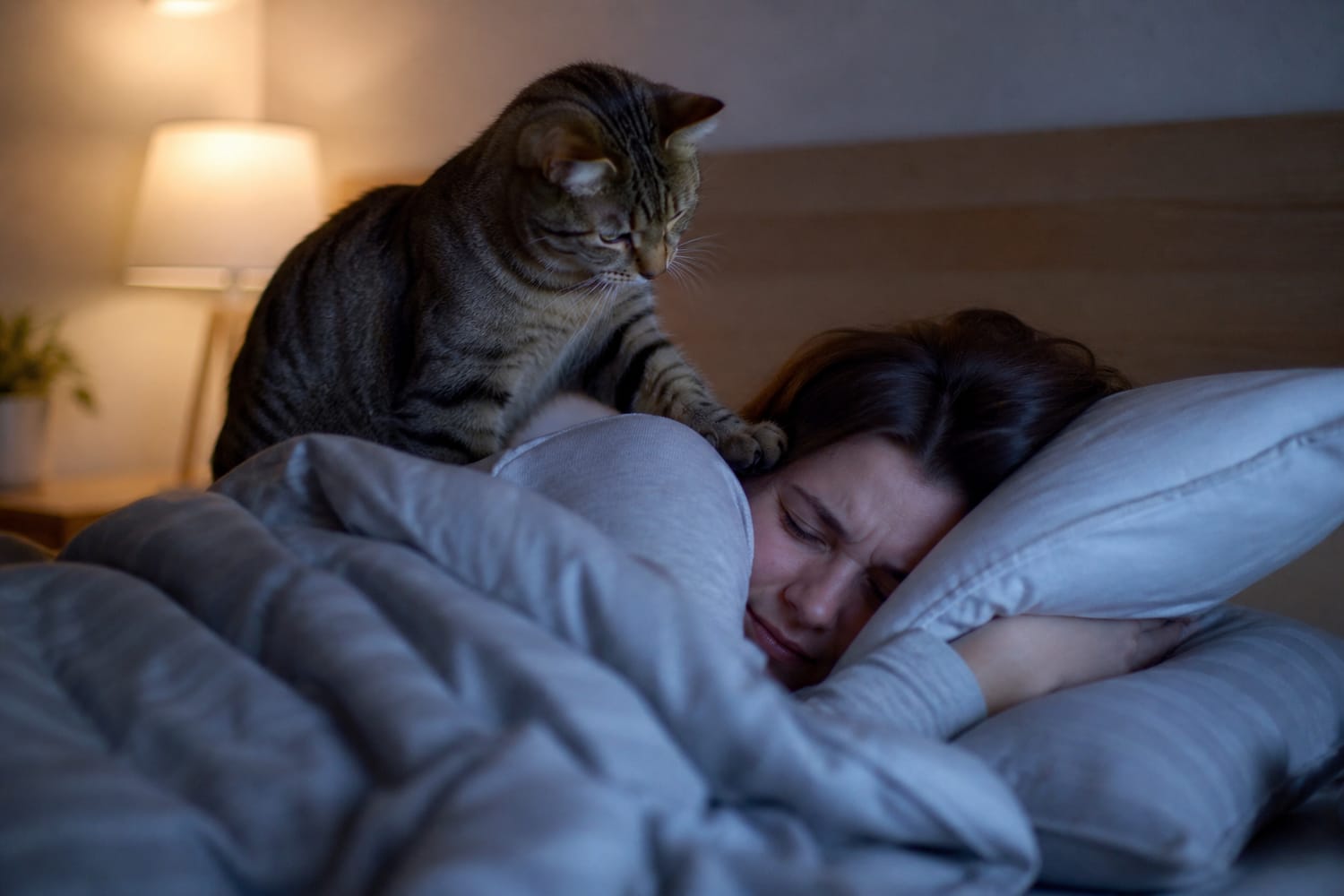
Your cat may wake you at night because their natural activity peaks around dawn and dusk, they have energy left from a quiet day, or they have learned that nighttime meowing earns food or attention. With well-timed play, consistent meals, daytime enrichment, and calm boundaries, most healthy cats can gradually adapt to a more peaceful household routine.
Your Cat Is Not Trying to Ruin Your Sleep
It is 3:17 a.m. You wake to a paw on your cheek, a dramatic meow in the hallway, or the unmistakable crash of something being pushed from a dresser. Your cat, meanwhile, looks delighted to discover that you are finally awake.
Although it may feel personal, nighttime activity is rarely an act of revenge or deliberate misbehavior. Cats are crepuscular, meaning they tend to be especially alert around dawn and dusk. Those are naturally useful hunting times, and the instinct remains even in cats whose “prey” comes from a can.
Cats also sleep in multiple periods rather than following one long nighttime sleep schedule like most people. Many spend much of the day resting, particularly when the house is quiet, before becoming energetic when their family returns. This can make bedtime feel like the beginning of the fun rather than the end of the day. VCA Animal Hospitals offers a helpful explanation of feline nighttime activity.
The Most Common Reasons Cats Wake Their People
Understanding what your cat wants—or needs—is the first step toward changing the pattern.
They Have Energy to Spend
An indoor cat who naps through a quiet afternoon may be fully recharged by midnight. Running through the hallway, pouncing on blankets, climbing furniture, and batting toys are all ways to release that stored energy.
This is especially common in kittens, young adults, and highly playful cats. Increasing appropriate daytime activity can help, and these ideas for keeping an indoor cat active and healthy offer useful ways to make the home more engaging.
They Are Hungry—or Expect Breakfast
If breakfast always arrives as soon as you get out of bed, your cat may decide that waking you is the fastest way to start the day. Even feeding them “just this once” at 4 a.m. can strengthen the behavior.
Cats quickly learn which actions produce results. Meowing, scratching the door, or walking across your pillow may continue if those behaviors have previously earned food, conversation, petting, or access to the bedroom.
They Want Attention
For a social cat, almost any reaction can be rewarding. Saying their name, moving them off the bed, or getting up to investigate a noise still provides interaction.
This does not mean your cat is being manipulative in a human sense. They are simply repeating a behavior that has worked before.
Something Outside Is Exciting Them
Outdoor cats, wildlife, headlights, insects, and early-morning birds can all trigger alertness. A cat sitting at the window may become vocal, restless, or frustrated when another animal appears near the home.
Try closing curtains or blinds at night if the window seems to be the source of the commotion. A perch at a quieter window can provide daytime entertainment without turning the bedroom into an overnight observation post.
Their Routine Has Changed
A move, a new baby, different work hours, houseguests, or another pet can disrupt familiar patterns. Cats often feel more secure when feeding, play, and quiet time occur predictably.
If life has recently changed, rebuild the schedule gradually. Petspiration’s guide to why routine matters in pet behavior explains how consistency can support calmer, more confident behavior.
First, Rule Out a Health Problem
A cat who has always been active at night may simply need a routine adjustment. However, a sudden change in sleep, appetite, vocalization, thirst, litter-box habits, or behavior deserves veterinary attention.
Nighttime restlessness can sometimes be associated with pain, anxiety, high blood pressure, an overactive thyroid, sensory decline, or cognitive changes. Senior cats may also become disoriented in dim light or have difficulty reaching food, water, bedding, and litter boxes. Cornell University advises caregivers not to dismiss behavioral changes as an unavoidable part of aging and notes that nightlights can help some older cats navigate safely. Read more about caring for older cats.
Arrange a veterinary appointment if nighttime behavior is accompanied by:
- Unexplained weight loss or increased appetite
- Increased thirst or urination
- Persistent howling, pacing, or confusion
- Vomiting, diarrhea, coughing, or breathing changes
- Difficulty jumping, climbing, or getting comfortable
- Hiding, irritability, or unusual clinginess
- Litter-box accidents
- A major change in sleeping habits
How to Reset Your Cat’s Routine
A successful reset is not about exhausting or punishing your cat. It is about moving rewarding activities into the daytime and evening while making nighttime calm, safe, and uneventful.
1. Add Short Play Sessions During the Day
Aim for several manageable play periods rather than one extremely long session. Even five to ten minutes can be valuable when repeated consistently.
Use toys that allow your cat to stalk, chase, leap, and pounce, such as feather wands, fabric mice, rolling balls, or toys pulled along the floor. Let your cat catch the toy regularly so the game remains satisfying. Hands and feet should never become prey, especially if your cat already attacks toes beneath the blankets.
The Ohio State University’s Indoor Pet Initiative recommends play as a way to increase daytime activity and support longer periods of nighttime rest.
2. Schedule the Biggest Play Session Before Bed
Create a predictable evening sequence:
- Begin an active play session about 30 to 60 minutes before bedtime.
- Encourage chasing, stalking, and pouncing.
- Gradually slow the game rather than stopping abruptly.
- Offer the final scheduled meal or a measured snack.
- Lower the lights and reduce household activity.
This play-and-meal pattern gives your cat an appropriate outlet before the home becomes quiet. Adjust the intensity to your cat’s age, health, and mobility; a senior cat may prefer gentle ground-level play over high jumps.
3. Make Daytime More Interesting
A rich environment prevents your cat’s entire day from becoming one long nap. Provide scratching surfaces, hiding places, sturdy climbing options, comfortable perches, and safe windows with interesting views.
Rotate toys every few days instead of leaving everything available at once. Puzzle feeders and food hunts can also turn part of your cat’s measured daily ration into a mentally engaging activity. The Feline Veterinary Medical Association emphasizes that meeting a cat’s normal environmental and behavioral needs supports physical and emotional well-being.
4. Separate Early Breakfast From You
If hunger is the main issue, consider using an automatic feeder programmed to open shortly before your cat usually wakes you. This can shift the breakfast connection away from your bedroom.
Use food from the cat’s normal daily allowance rather than adding extra calories. Ask your veterinarian how much your cat should eat if you are unsure, particularly if your cat needs to gain or lose weight.
You can then move the feeder time later in small increments. Gradual changes are generally easier than suddenly expecting a 5 a.m. diner to wait until 8 a.m.
5. Stop Rewarding Nighttime Demands
Once medical and basic care needs have been addressed, avoid responding to attention-seeking meows or door scratching. Do not speak, feed, pet, play, or repeatedly get up.
Consistency matters because occasional rewards can make the habit especially persistent. If one person ignores the cat but another offers a snack, the cat learns that continued effort may eventually succeed.
Expect a temporary increase in determination when the old strategy stops working. Stay calm and make sure every family member follows the same plan.
6. Create a Comfortable Night Zone
If your cat cannot settle in the bedroom, provide a safe sleeping area elsewhere with:
- A comfortable bed or blanket
- Fresh water
- A clean, accessible litter box
- A scratching surface
- A perch or hiding place
- A few quiet, safe toys
Close the bedroom door before the routine begins rather than waiting until everyone is frustrated. Never use yelling, spraying water, or frightening punishment. These responses can increase stress without teaching your cat what to do instead.
Be Patient With the New Pattern
A routine that developed over months may not disappear in one evening. Keep feeding, play, and bedtime as consistent as your household allows, and track when disruptions happen. A simple sleep diary may reveal that your cat is waking before breakfast, reacting to outdoor animals, or becoming restless on days with less play.
Celebrate gradual progress: a later wake-up, fewer meows, or one peaceful night is evidence that the new routine is taking hold. Your cat is not your nighttime opponent. They are a small hunter learning how to live on a human schedule—and with patience, enrichment, and loving consistency, both of you can look forward to calmer nights and happier mornings.