
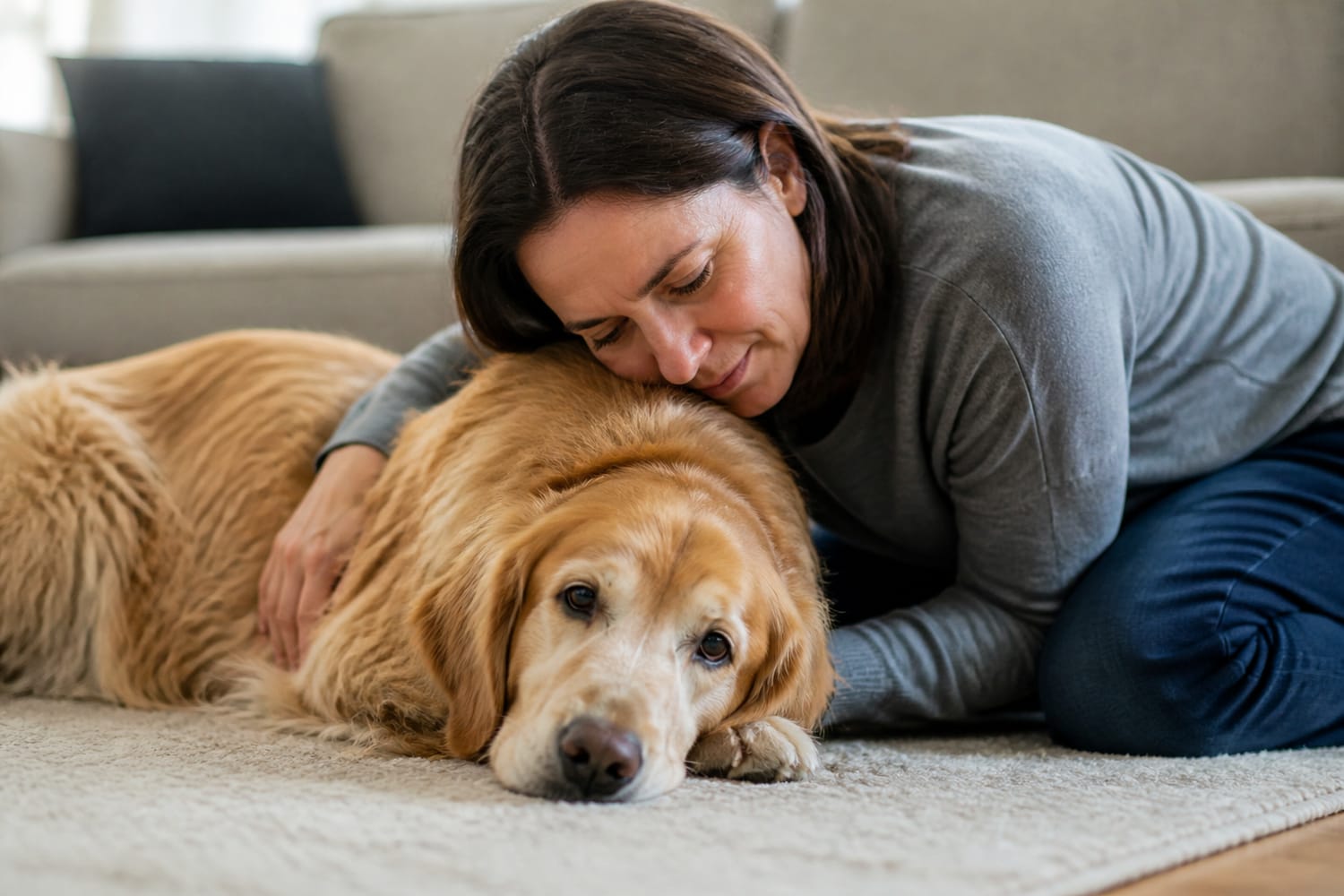
Help a dog or cat adjust to losing a companion by keeping daily routines steady, offering gentle attention and familiar activities, and watching appetite, sleep, and behavior. Give them choices about interaction, and contact your veterinarian about concerning changes rather than assuming every symptom is grief.
An empty bed or an unused leash can make a home feel very different. If you are mourning a beloved pet, watching your surviving dog or cat search the house can be especially heartbreaking.
You do not need to find a perfect way to make everything better. Start with small, caring steps—and give yourself permission to need support, too.
Do Dogs and Cats Grieve?
Dogs and cats can form close attachments to other animals. After a companion dies, some show behavioral changes consistent with grief. However, we cannot know exactly how they understand death or separate every response to loss from reactions to changed routines and household emotions. Cornell University’s guidance on grief in companion animals recognizes these overlapping possibilities.
Some pets seem deeply unsettled; others show little obvious change. A dog who continues enjoying breakfast and walks is not responding “incorrectly.” There may have been a different relationship between the animals than their humans imagined, and an outwardly unchanged routine does not tell us everything about an animal’s experience.
Try to replace “Should my pet be grieving?” with a more useful question: “What does my pet need today?”
Recognize Changes Without Overlooking Illness
Following a companion’s death, you might notice:
- Appetite changes: eating less or seeming less interested in meals.
- Different sleep patterns: sleeping more, resting elsewhere, or struggling to settle.
- Searching or calling: checking familiar places, whining, or meowing more.
- Changes in social behavior: seeking extra affection or withdrawing.
- Less interest in activities: playing less or moving through the day more quietly.
Pay particular attention to changes from your pet’s usual behavior. A normally reserved cat who suddenly follows you everywhere deserves the same thoughtful observation as an outgoing cat who begins hiding. Cats may become either more withdrawn or more affectionate following a loss.
These signs are not a diagnosis. Persistent behavioral changes, altered drinking, or new toileting problems warrant veterinary assessment rather than an assumption that grief is the cause.
Make Everyday Life Feel Predictable
When something important changes, familiar routines provide a practical starting point. Keep meals, walks, toilet breaks, and bedtime as consistent as you reasonably can. For dogs especially, Blue Cross recommends maintaining normal routines, including familiar feeding times and diet.
Aim for dependable anchors, not a flawless timetable. Breakfast, a morning outing, and quiet time together are manageable places to begin.
If grief makes daily care feel overwhelming, consider writing out a simple household checklist:
- Serve the usual meals and refresh water.
- Provide normal toilet opportunities or clean litter boxes.
- Offer a familiar activity.
- Make time for quiet companionship.
- Note anything concerning.
Let another family member help when needed. Caring for your surviving pet should not mean pretending you are unaffected by the loss.
Offer Connection Without Pressure
Comfort is welcome when your pet seeks it. A dog who leans against your leg may appreciate gentle petting; a cat who settles beside you may enjoy quiet company. Extra time together can include affection, play, or simply sharing the sofa.
Follow their response rather than insisting on a particular interaction. If your pet moves away, becomes tense, or stops engaging, give them space. Petspiration’s guide to reading stress signals during gentle training explains why lowering pressure matters when an animal appears overwhelmed.
Think of your role as offering invitations: “Would you like company?” rather than “You must feel better now.”
Reintroduce Enjoyment in Small, Familiar Ways
Activities your pet already enjoys can provide opportunities for engagement. Keep them easy and optional, adapting to your companion’s energy and interest rather than trying to fill every quiet moment. Cornell recommends enjoyable exercise, food toys, and positive-reinforcement training as ways to support pets after a loss.
For dogs
Offer a relaxed walk, a familiar toy, or a brief practice of an easy skill. If your dog already enjoys resting on a mat, reward a comfortable moment there. Petspiration’s guide to teaching your dog to settle emphasizes meeting basic needs, starting in quiet surroundings, and avoiding pressure when a dog feels worried.
For cats
Try a favorite game or a simple food-foraging toy if your cat is eating normally. Quiet time together is equally worthwhile; every interaction does not need to involve chasing or pouncing. Let your cat’s interest guide whether you continue.
Watch Appetite Closely—Especially in Cats
Do not wait for a pet to “get hungry enough” if they stop eating. Loss of appetite can reflect stress, pain, or illness, and the cause needs attention. Cornell’s feline appetite-loss guidance warns that not eating can seriously affect an adult cat’s health in as little as 24 hours. Contact your veterinarian promptly when a cat stops eating; do not treat that timeframe as permission to wait.
Keep track of what is actually eaten. Avoid forcing food into your cat’s mouth, which can worsen food aversion, and ask your veterinarian for a safe feeding plan. Kittens and pets with existing health conditions may need particularly urgent advice.
For dogs, monitor eating, drinking, and toileting as well. A sudden or substantial change deserves a call to your veterinary team.
Should You Let Your Pet See Their Companion’s Body?
If the opportunity arises, discuss it with your veterinarian. Blue Cross advises that allowing a surviving dog to see a deceased companion can be considered when the cause of death poses no infection risk and the owner feels comfortable. It also cautions that the body may smell different and the dog’s reaction may be unexpected.
This should not become another burden or a test of whether you handled the loss correctly. Focus on the care you can provide now.
Do Not Rush to Find a New Companion
A new animal is not an automatic remedy for loss. Introducing another dog or cat may add stress, and compatibility matters. Give yourself room to consider your surviving pet’s needs as well as your own readiness.
When adoption feels appropriate, think about temperament, energy, and the time needed for careful introductions—not simply finding an animal who resembles the companion you lost. There is no need to recreate the old relationship; a future friendship will be its own.
Move Forward With Patience and Support
Adjustment may take weeks to months. If your pet remains distressed, cannot settle, or develops concerning behavior, seek veterinary help. A qualified reward-based behavior professional may also help you build an individualized plan.
Meanwhile, leave room for your own memories. You might create a photo album, write down favorite stories, or keep a meaningful collar or tag. Remembering your companion and caring for your surviving pet can exist side by side.
You do not have to erase the empty space. For now, a familiar meal, a gentle invitation to play, and a place beside you are loving ways to begin.