
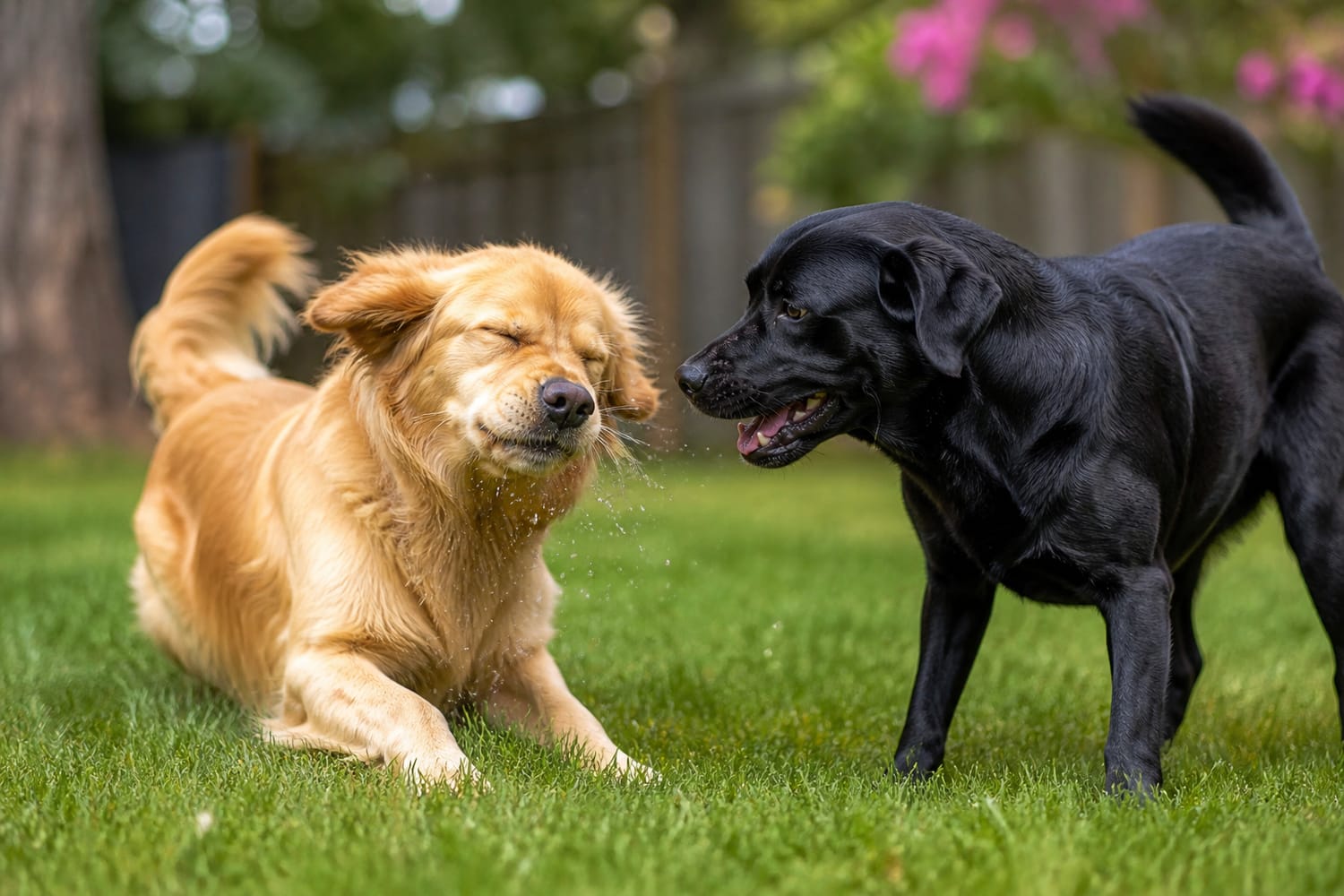
Dogs sometimes sneeze during play because they’re excited, and those little bursts may help signal friendly, playful intentions. A sneeze can also clear dust or other irritants from the nose. Brief sneezing in an otherwise comfortable dog is usually unremarkable, but persistent sneezing or other symptoms deserves veterinary attention.
Picture a familiar scene: your dog grabs a favorite toy, lowers into a dramatic bow, and launches into a wonderfully silly game. Then, right between two enthusiastic wiggles, comes an unexpected “achoo!”
Is that a canine joke? A request for a tissue? Not quite—but it’s worth understanding. The best clue isn’t the sneeze alone. It’s everything happening around it.
A Little Sneeze May Be Part of the Playful Conversation
Dogs communicate with movements, postures, facial expressions, and sounds. During play, sneezing is commonly interpreted as one way of expressing excitement or friendly intent. VCA Animal Hospitals describes play-related sneezing as a behavior that can accompany an invitation to have fun.
That interpretation makes sense in a setting where behavior can look surprisingly dramatic. Playmates may chase, wrestle, mouth each other, and growl without actually fighting. Loose movements and other friendly signals help distinguish a game from a threatening interaction.
Still, it’s wise not to translate every sneeze into a definite sentence such as “I’m only kidding!” A sneeze during a game may fit a playful pattern, but nasal irritation is another possible explanation. Context matters more than assigning one fixed meaning to the sound.
Think of that little achoo as one detail in a bigger picture—not a guarantee that every dog involved feels comfortable.
Read the Whole Dog, Not Just the Nose
A sneeze becomes more informative when you look at your dog’s body. The ASPCA’s canine body-language guidance emphasizes assessing the whole animal and the situation rather than interpreting an isolated feature. Playful dogs typically move loosely, with bouncy gestures and brief pauses.
Signs that a game is going well often include:
- Loose, wiggly movement, rather than a rigid body.
- Play bows, with the front end lowered and the rear raised.
- Relaxed facial expressions, without obvious tension.
- Breaks in the action, instead of relentless pursuit.
- Willing participation, with both dogs choosing to return to the game.
For example, imagine two dogs bouncing apart, pausing, and then approaching each other again. A sneeze in that scene fits a very different picture from sneezing while one dog freezes and the other keeps crowding them.
If you notice stiffness, repeated attempts to escape, or one-sided chasing, interrupt calmly and create space. A sneeze doesn’t cancel those warning signs. Petspiration’s guide to recognizing when pet play gets too rough offers more help with deciding when to pause.
Sometimes an Achoo Is Simply Nose Maintenance
Not every playtime sneeze has a social meaning. A regular sneeze is a reflex response to irritation in the nasal passages. Dust, soil, pollen, smoke, fragrances, and cleaning products can all trigger it.
Play can put a dog’s nose close to those irritants. A lively game on a dusty rug or a nose-first investigation of dry soil may provide a straightforward explanation for an occasional sneeze. Veterinary guidance lists airborne particles and plant material among possible causes of nasal irritation.
Notice the setting. Does sneezing happen mainly in one room, after a spray product is used, or while your dog noses through vegetation? Those details can help you identify a possible trigger and give your veterinarian useful information if the problem continues.
A sensible first step is to move away from an obvious irritant. Avoid using aerosols or strongly scented products around your dog, and choose a cleaner play area when dust seems to be involved. Don’t deliberately expose your dog again to “test” the reaction.
Is It a Sneeze, a Snort, or Reverse Sneezing?
Some dogs make a noise that sounds much more dramatic than a little achoo. Reverse sneezing involves repeated, rapid inhalations through the nose, producing loud snorting sounds. During an ordinary sneeze, air moves outward instead.
A dog having a reverse-sneezing episode may stand still, stretch the neck, and keep the mouth closed. Excitement can be a trigger, as can irritation in the upper airway. According to Cornell University’s guide to reverse sneezing, many episodes are mild, occasional, and resolve without treatment.
If this happens, stop the game and remain calm. When it’s safe, recording the sound and your dog’s posture can help your veterinarian understand what you’re seeing. New, frequent, or more severe episodes should be assessed rather than automatically labeled harmless.
Most importantly, don’t assume that any unusual breathing noise is reverse sneezing. Trouble breathing or shortness of breath requires emergency veterinary care.
When Sneezing Deserves a Vet Call
A couple of sneezes during an otherwise relaxed game is different from repeated, forceful sneezing that continues afterward. Occasional sneezing can be normal; persistent or unusually frequent sneezing warrants veterinary advice.
Contact your veterinarian promptly if you notice:
- Sneezing that persists, worsens, or occurs repeatedly outside play.
- Thick, colored, bloody, or excessive nasal discharge.
- Repeated pawing or rubbing at the nose.
- Signs of pain or facial discomfort.
- Coughing, reduced appetite, or unusual tiredness.
Sudden, vigorous sneezing after outdoor exploration deserves particular attention. A grass fragment or seed can become lodged in a nasal passage. If sneezing continues or your dog paws at the nose, contact your veterinarian rather than trying to remove something from inside the nostril yourself.
Persistent sneezing has several possible causes, including irritation, infection, foreign material, and dental problems. You don’t need to diagnose the cause at home, and human cold medicines or internet remedies may be unsafe for dogs. Let your veterinarian guide treatment.
Keep Play Comfortable, Flexible, and Fun
If your dog gives a brief sneeze and remains loose, comfortable, and eager to participate, there’s usually no reason to treat that single sound as a problem. Keep observing the whole picture rather than stopping every game at the first achoo.
Build in opportunities to pause, especially when excitement rises. Let your dog walk away, and don’t pressure a reluctant playmate to continue. Good play leaves room for both enthusiasm and choice.
For a broader look at those everyday signals, explore Petspiration’s guide to understanding your pet’s body language. Learning to notice posture, movement, and expression gives you more to work with than any one sound alone.
Those tiny sneezes are a lovely reminder to stay curious about our companions. You don’t have to decode every wiggle perfectly. Simply paying attention—and responding with patience, space, or veterinary help when needed—is a caring way to keep the fun going.