
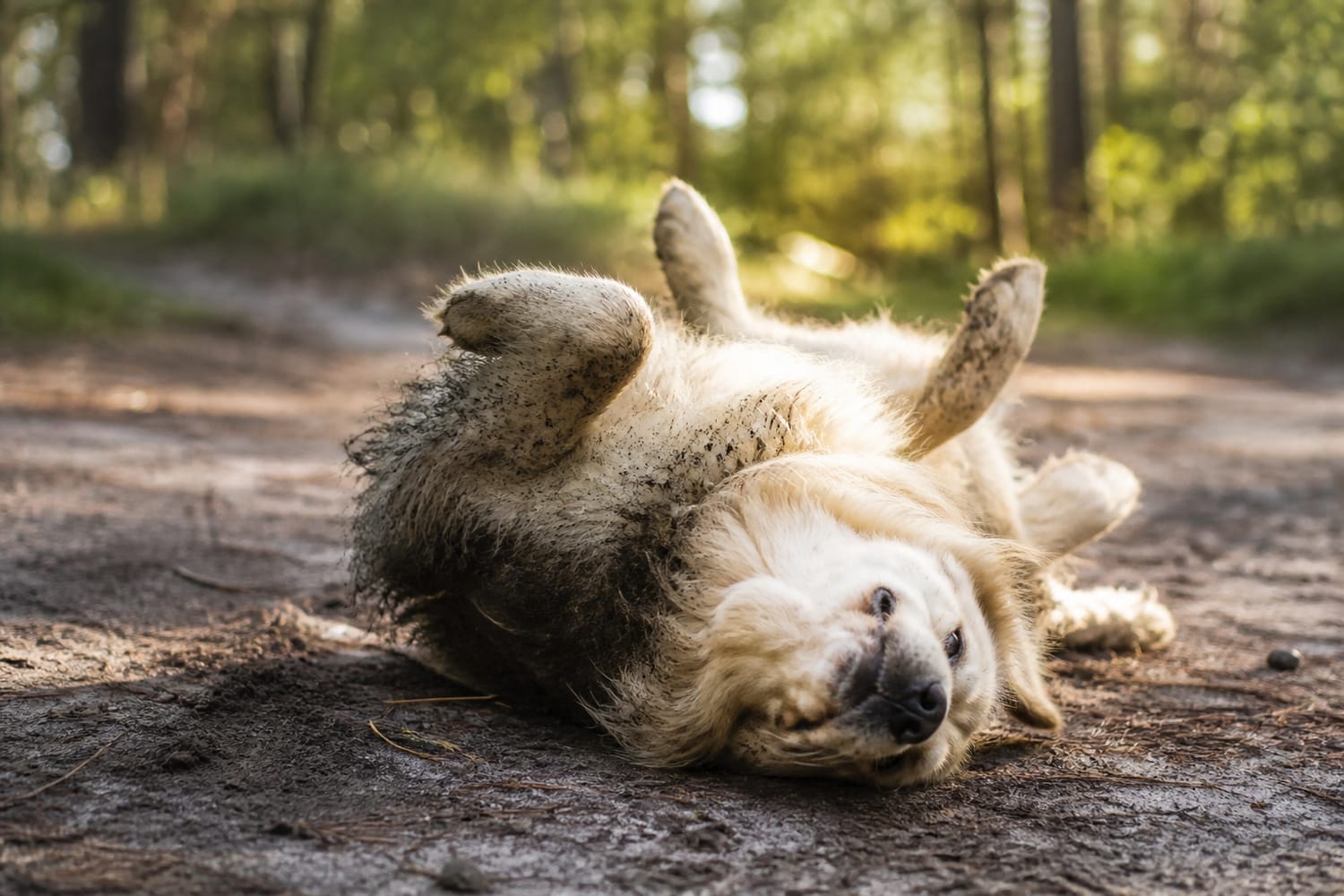
The Walk Takes a Turn
One moment, your dog is enjoying a perfectly pleasant walk. The next, they’ve planted a shoulder in a mysterious patch of grass and are wriggling with unmistakable enthusiasm. You lean closer, catch the smell, and realize your cheerful companion has found something you would have preferred to leave undiscovered.
Why do dogs roll in smelly things? No one knows for certain. Dogs and wolves both roll in strong odors, and researchers have proposed several explanations: gathering scent to share with others, disguising their own smell, marking a discovery, or simply enjoying an intriguing sensation. The good news is that you can respect your dog’s curiosity and steer them away from the truly revolting finds.
A Dog’s Walk Is Full of Scent Stories
We might notice a bright flower or a muddy puddle. A dog is also investigating a world of smells left by other animals, food, soil, and plants. A patch of grass that looks ordinary to us may be fascinating to a nose working close to the ground.
That helps explain why your dog may pause, sniff intensely, tilt their head, and rub their cheek or shoulder against one particular spot. To us, it can seem like an abrupt decision to get dirty. To them, the spot may have become the most interesting part of the outing. Dogs don’t need to agree with our taste in fragrances to be delighted by a smell.
Why the Stink? Four Possibilities
They may be carrying news
One idea is that scent rolling helps an animal bring information about a discovery back to others. A wolf that encounters an unusual odor and then returns smelling of it could give other wolves something to investigate. It’s an appealing explanation, though researchers have not established that this is what a pet dog intends when rolling in a smelly patch.
Imagine your dog returning from the yard wearing a powerful new smell like a badge. Another dog may be interested in sniffing it—but that observation alone does not tell us why the first dog rolled. Canine behavior rarely comes with subtitles.
They may be trying on a different scent
The best-known theory is scent camouflage: perhaps coating themselves in another odor helped ancestral canids approach prey without smelling quite so much like a predator. It’s possible, but it remains a theory rather than a proven explanation for dogs today.
There are reasons to be cautious about it. Rolling in a conspicuous odor might make an animal more noticeable, not less. Wolves have also been observed responding to surprising scents that would be unlikely to help them blend into a natural hunting environment. The camouflage idea makes for a memorable story, but it is not the settled answer.
They may be leaving a mark
Could your dog be rubbing their own scent onto an interesting object? That is another possibility. Dogs do communicate through scent, so the idea is understandable. But rolling also transfers the object’s odor onto the dog, and it is not clear that claiming an object explains the behavior.
It may simply feel wonderful
Sometimes the simplest possibility deserves attention: investigating and rolling in a novel smell may be rewarding in its own right. A dog doesn’t have to be planning a hunt—or sending a message—to enjoy an absorbing sensory experience.
Different dogs may have different preferences, too. One may ignore every muddy trail yet make a beeline for a particular patch of grass; another may happily roll on a clean lawn. Not every roll is about something foul.
Why Does It Happen Right After a Bath?
A freshly bathed dog diving onto the lawn can feel like a personal critique of your grooming efforts. It isn’t. A bath changes how your dog’s coat smells, and some dogs may be especially interested in picking up an outdoor scent afterward. But there is no reason to assume that every post-bath roll means your dog dislikes being clean. The same dog might have rolled there on any other day.
Watch where the rolling happens. An energetic wriggle over one intensely sniffed spot suggests interest in that spot. Repeatedly rubbing their back or ears in many places may tell a different story.
When Rolling Is More Than a Scent Adventure
Rolling can also be a way to scratch an itch. If your dog is doing it frequently, especially alongside scratching, licking, red skin, hair loss, or irritated ears, arrange a veterinary check. Fleas, allergies, and other skin problems can make a dog uncomfortable; a bath alone may not address the cause.
And while the behavior is usually normal, the substance your dog chooses may not be safe. Feces and animal remains can expose pets to contaminants. If your dog rolls in either, steer them away promptly, avoid letting them lick the mess, and clean their coat. Contact your veterinarian if you know they swallowed some, may have encountered a chemical, or develop signs of illness.
How to Prevent the Roll Without Spoiling the Walk
You do not have to choose between a dog who gets to explore and a dog who stays reasonably clean. The trick is to offer plenty of safe sniffing while staying ready to interrupt a risky discovery.
- Scan ahead. Notice litter, animal droppings, and other tempting messes before your dog reaches them. Keep them close enough to guide away where those hazards are common.
- Learn their pre-roll moves. For some dogs, the sequence is unmistakable: deep sniff, sideways lean, cheek rub, then a triumphant flop.
- Teach a friendly exit. Practice “leave it” with easy objects at home, reward your dog for turning toward you, and gradually work around harder distractions. Petspiration’s guide to teaching a reliable “leave it” cue offers a place to start.
- Give their nose something better to do. Try a treat-search game in a clean area or a relaxed scent-focused sniffari. Exploration need not end just because one smelly spot is off-limits.
Keep your response calm if you are too late. Move your dog away and deal with the cleanup; scolding after the fact cannot undo the roll. Supervision, a leash where needed, and a practiced cue give you a better chance next time.
The Post-Roll Cleanup
If your dog has coated themselves in something questionable, keep them off beds and soft furnishings until you can clean them. Remove any visible debris carefully, wash your hands afterward, and bathe your dog with a shampoo appropriate for dogs. Rinse thoroughly and keep shampoo away from their eyes and ears. For guidance on making cleanup comfortable without bathing more often than necessary, see Petspiration’s dog and cat bathing guide.
If the material may have been a chemical, pesticide, or another unknown substance, ask your veterinarian what to do rather than experimenting with household cleaners. Likewise, check in if your dog has sensitive or broken skin or seems unwell after the encounter.
Love the Explorer, Redirect the Stink
A smelly roll can test even the most devoted pet lover. Still, beneath that unfortunate new aroma is a dog engaging wholeheartedly with the world. We may never know exactly which instinct—or simple pleasure—drives every enthusiastic flop.
What we can do is notice their curiosity, protect them from unsafe discoveries, and give them plenty of clean places to sniff. The occasional emergency bath is a small price for sharing life with a companion who finds wonder in places we might otherwise walk right past.