
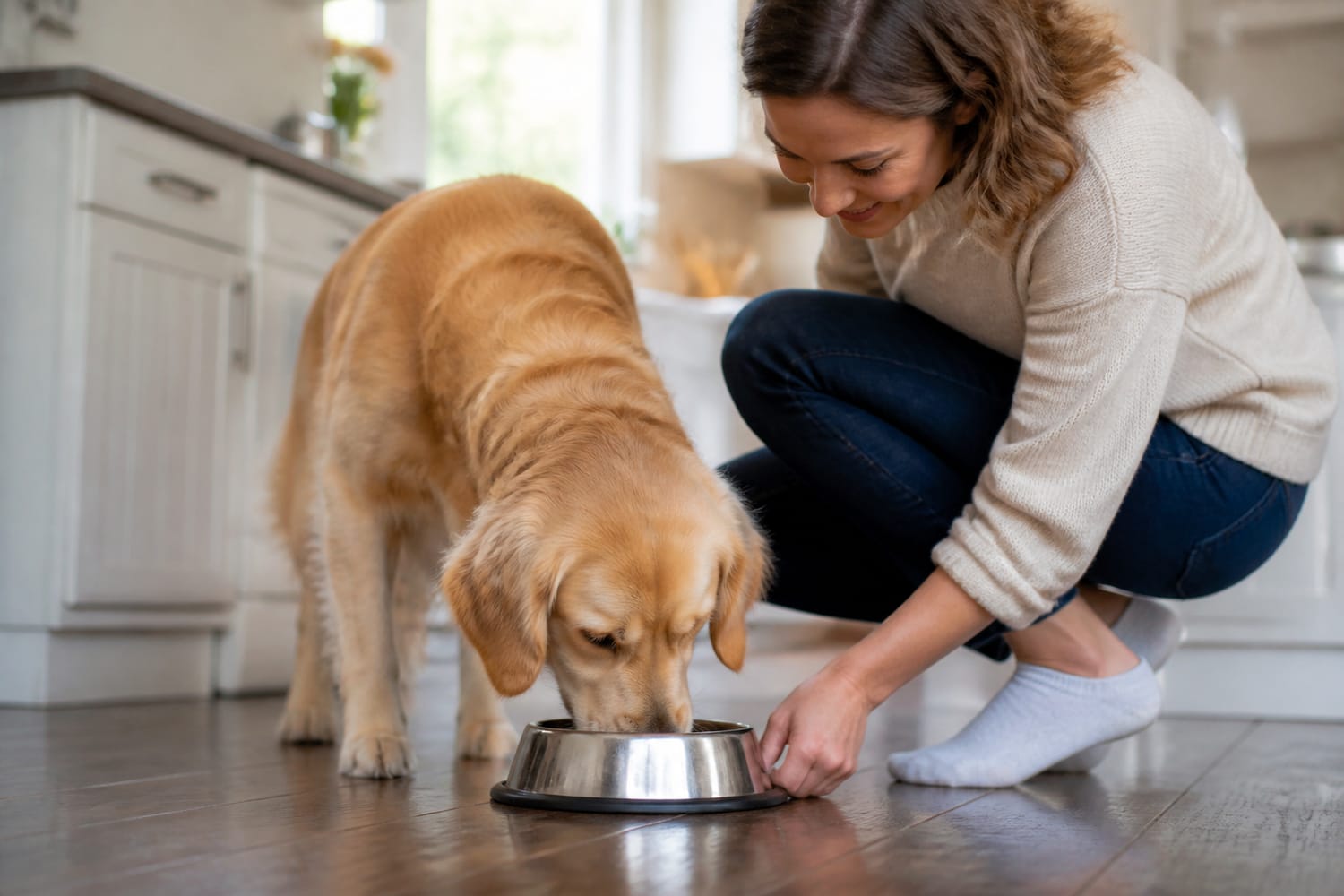
Your dog sniffs their breakfast, walks away, and then greets dinner as if it’s the best thing that happened all day. Is that just their routine—or a sign something is wrong?
A healthy adult dog may occasionally skip a meal, especially if they’re getting enough food elsewhere. But a new or persistent change in appetite deserves attention, even when dinner disappears from the bowl. The most useful clues are how much your dog eats over the whole day and whether anything else about them has changed.
Start With the Whole-Day Picture
It’s easy to focus on the untouched breakfast and miss what happens later. Does your dog eat their usual daily amount, or only a small dinner? Are they maintaining their weight? Are they drinking, playing, and behaving normally?
A dog who has always preferred eating later, maintains a healthy weight, and otherwise seems well presents a different picture from a dog who suddenly stops eating a breakfast they used to love. Neither pattern tells you the cause on its own, but the difference helps you decide what to do next.
Try measuring what goes into the bowl and what remains. Count training rewards, dental chews, food-filled toys, table scraps, and anything another person in the household offers. Petspiration’s guide to calculating daily calories and portions can help you see why a few “little extras” may matter more than expected.
Why Breakfast Might Be the Meal They Skip
Sometimes the explanation is close to the bowl. A generous dinner, late-night snacks, or morning treats may leave a dog less interested in breakfast. A changed routine, a busy feeding area, or a new food can also affect their willingness to eat. Some dogs become more interested in a meal after a walk or a little activity.
Check the food itself, too. Is it the usual recipe? Does it smell or look different? Has it been stored properly? If a bag is stale or a serving has been sitting out, replace it rather than trying to persuade your dog to finish it. For practical storage checks, see Petspiration’s guide to keeping kibble, cans, and treats fresh.
These possibilities are worth checking, but they aren’t reasons to dismiss a persistent change. “Picky” describes what you see; it doesn’t explain why it’s happening.
Could Morning Nausea Be Involved?
Pay attention to what your dog does before walking away. Lip-smacking, drooling, repeated swallowing, or vomiting yellow fluid in the morning may suggest nausea. For some dogs, an overnight stretch without food is associated with early-morning bile vomiting. But yellow vomit can have other causes, and recurring vomiting needs a veterinary assessment rather than a guess at home.
If your vet rules out a concerning cause, they may suggest adjusting meal timing—for example, dividing the day’s food differently so your dog has a small portion later in the evening. That means redistributing the daily allowance, not adding an extra meal’s worth of calories. You can read more about how feeding times and frequency can be tailored to an individual dog.
Watch for Clues Beyond the Food Bowl
A dog may still eat dinner even when something is bothering them. Dental pain can make chewing uncomfortable; digestive upset, other pain, illness, or medication effects can also change appetite. A dog who wants soft food but avoids kibble, drops pieces while chewing, or seems reluctant to lower their head to the bowl is giving you information worth sharing with a vet.
For the next day or two, notice:
- Energy: Are walks and playtime normal, or is your dog unusually quiet?
- Stomach and stools: Is there vomiting, diarrhea, constipation, or a painful-looking belly?
- Drinking and urination: Has either changed noticeably?
- Eating behavior: Do they refuse only breakfast, or are they less enthusiastic about dinner and treats, too?
- Weight: Are they staying steady or getting thinner?
You don’t need to diagnose your dog from this list. It’s simply a way to spot a change early and give your veterinary team a clearer picture. Unexplained weight loss or other symptoms alongside a reduced appetite calls for a veterinary assessment.
Gentle Changes to Try When Your Dog Seems Well
If your healthy adult dog misses breakfast once but is bright, drinking normally, and showing no other symptoms, you can observe them closely and see how they do at the next meal. In the meantime, keep fresh water available and try a calm, predictable mealtime without competing pets or distractions. Scheduled meals also make it easier to tell exactly what your dog has eaten.
Check portion sizes before offering something more tempting. If treats have been generous, reduce the extras rather than repeatedly replacing breakfast with richer foods. Veterinary guidance commonly recommends keeping treats and toppers to no more than about 10% of daily calories. A short morning walk or a food puzzle may also help an otherwise healthy dog engage with breakfast.
Avoid turning each refused meal into a rapid series of new foods. If you do need to change diets, a gradual transition is generally kinder to your dog’s stomach. And if breakfast refusal keeps happening, ask your vet about it rather than relying on mealtime tricks alone.
When to Call the Vet—and When Not to Wait
Call your vet promptly if skipping breakfast is new, continues over several days, comes with reduced dinner intake, or is accompanied by weight loss, vomiting, diarrhea, pain, unusual tiredness, or a change in drinking or urination. If an adult dog stops eating altogether for about 24 hours, contact your vet; don’t assume eating a small amount at dinner rules out a problem. Your clinic can advise how soon your particular dog should be seen.
Act sooner for puppies, especially very small puppies, and for dogs with medical conditions. Toy-breed puppies are more vulnerable to low blood sugar when they don’t get enough food. If a dog with diabetes skips a meal, contact their veterinarian for instructions about insulin rather than following the usual feeding plan without advice.
Seek emergency veterinary care immediately if your dog repeatedly tries to vomit but nothing comes up, has a swollen or painful abdomen, collapses, has trouble breathing, or seems severely weak. Repeated unproductive retching and abdominal swelling can be signs of life-threatening bloat; they are not a situation to monitor until dinner.
A Caring Routine Leaves Room for Questions
Breakfast doesn’t have to look identical for every dog. What matters is whether your dog is getting appropriate nutrition, maintaining a healthy weight, and feeling like themselves. Petspiration’s overview of feeding needs from puppyhood through the senior years is a helpful reminder that age and health affect the right routine.
So take a breath, watch the whole dog—not just the breakfast bowl—and write down what you notice. Sometimes a small routine adjustment is enough. When it isn’t, calling your vet is one more way to look after the companion who makes every mealtime, and every day, a little brighter.