
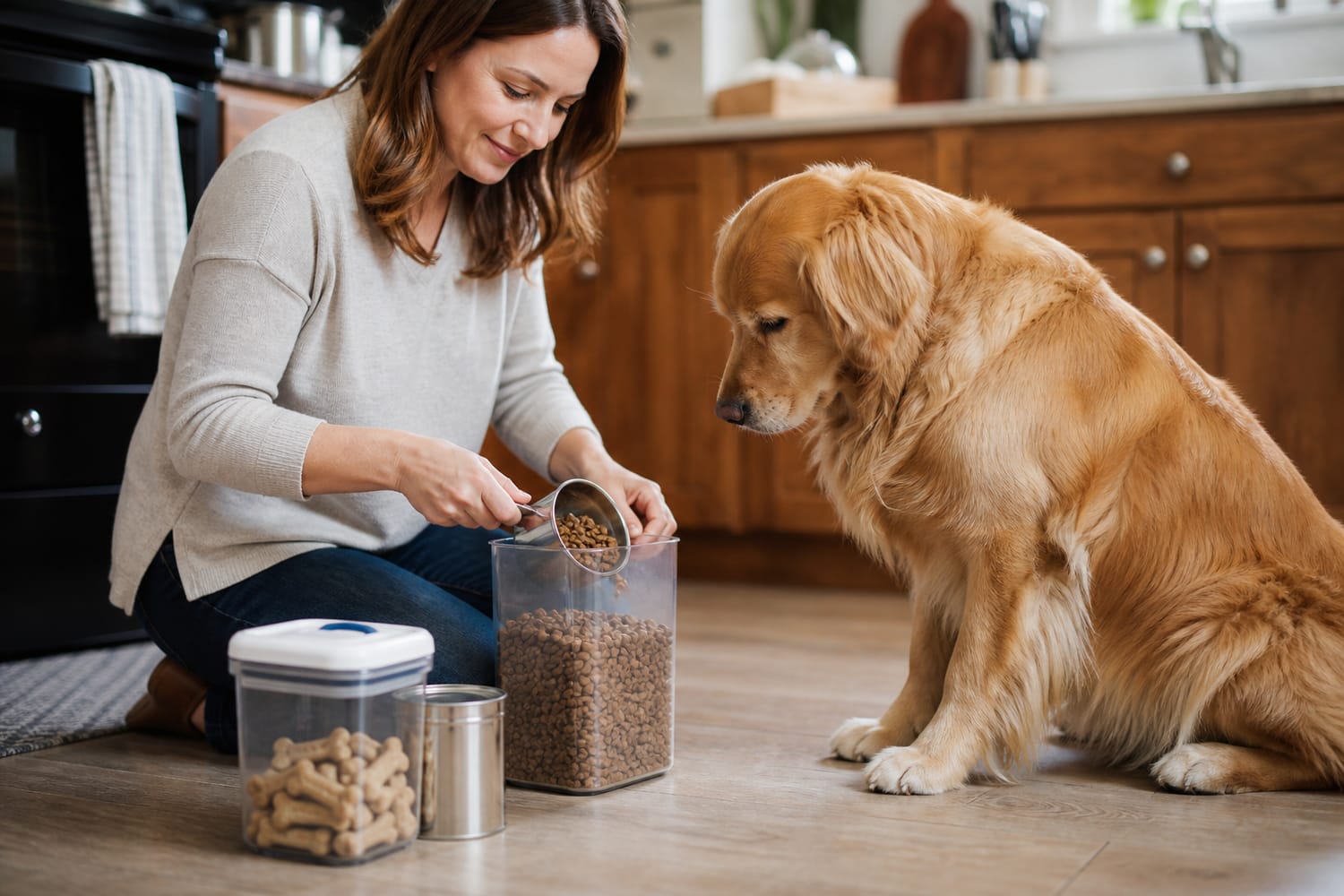
Is Your Pet Food Going Stale? How to Store Kibble, Cans, and Treats Safely
The Short Answer: Freshness Begins With Good Storage
Pet food stays freshest when it is protected from heat, moisture, air, pests, and contamination. Keep kibble in its original bag—ideally placed inside a clean, tightly sealed container—store unopened cans somewhere cool and dry, refrigerate opened wet food promptly, and follow the package directions for treats. When food smells unusual, looks damaged, or shows mold or insects, throw it away.
Why Pet Food Storage Matters
A bag of kibble may look sturdy, and an unopened can may seem nearly indestructible, but pet food is still food. Once exposed to unfavorable conditions, it can lose freshness, develop unpleasant flavors, attract pests, or become contaminated.
Dry foods commonly contain fats that can deteriorate after prolonged exposure to air, heat, and light. Humidity can also encourage clumping, mold growth, and insect activity. Wet food becomes perishable once its airtight can, tray, or pouch has been opened.
Safe storage also protects the people in your household. Pet food and treats can occasionally contain germs capable of making animals and humans ill, which is why clean hands, bowls, scoops, and storage areas are important. The CDC’s pet food safety guidance recommends following the storage and handling directions printed on each product.
How to Store Dry Pet Food and Kibble
Kibble is convenient and shelf-stable, but opening the bag introduces oxygen and humidity every time you prepare a meal. A few simple habits can help preserve its aroma, texture, and nutritional quality.
Keep the Original Bag
The original bag is designed to protect the food, so resist the temptation to pour every new purchase directly into a decorative bin. Instead, roll or fold the top securely and place the entire bag inside a tightly lidded container.
Keeping the bag also preserves vital information, including:
- The product and manufacturer names
- The ingredient and feeding information
- The UPC
- The lot or batch number
- The “best by” date
These details can be essential if a product is recalled or your pet becomes unwell. The FDA specifically recommends retaining the original packaging and, when possible, placing the whole bag inside the secondary container.
If you must pour kibble into another container, choose one intended for food storage. Wash it with soap and water, rinse it thoroughly, and let it dry completely before adding food. Never top up old kibble with a fresh bag; lingering crumbs and fatty residue can affect the new food.
Choose a Cool, Dry Location
Store kibble indoors in a dry cupboard, pantry, or feeding station. The FDA recommends keeping dry food and unopened cans below 80°F. Avoid garages, sheds, sunny windows, damp basements, and spaces beside ovens or heating vents, where temperatures and humidity can fluctuate dramatically.
Keep the food off the floor if ants, rodents, or moisture are concerns. A secure cupboard or raised shelf also prevents curious pets from helping themselves. A determined Labrador or clever cat can turn an unsecured bag into an unexpected midnight feast!
Buy a Sensible Bag Size
A giant bag may offer better value per pound, but it is not a bargain if the food loses quality before your pet finishes it. Select a size your household can use within the manufacturer’s recommended period after opening.
Write the opening date on the bag with a marker. This small step removes the guesswork, especially in homes with multiple foods or pets.
For help choosing among different formats, explore Petspiration’s guide to the pros and cons of dry, wet, and freeze-dried pet food.
How to Store Canned and Pouched Pet Food
Unopened wet food can be stored at room temperature until the date printed on the package, provided the container remains intact and is kept in a cool, dry place. Before serving it, inspect the can, tray, or pouch.
Do not use a package that is:
- Swollen or bulging
- Leaking
- Rusted through
- Punctured
- Deeply dented along a seam
- Spurting liquid or foam when opened
Once opened, wet food should be treated as perishable. Cover the unused portion and refrigerate it promptly at 40°F or below, following the manufacturer’s directions for how quickly it should be used. You can use a reusable can cover or transfer leftovers into a clean, sealed food-storage container.
Do not return food from your pet’s used bowl to the can. Saliva, crumbs, hair, and environmental germs may have entered the meal. Serve smaller portions if your pet frequently leaves food behind, then offer more if needed.
Wash wet-food bowls after every meal rather than simply wiping them out. The FDA also recommends washing and drying pet food bowls and feeding utensils after each use, while water bowls should be cleaned daily.
What About Treats, Chews, and Freeze-Dried Foods?
Treats are wonderfully varied, so there is no single storage rule for every product. A crunchy biscuit, soft training bite, dental chew, freeze-dried morsel, and homemade cookie may all have different requirements.
Start with the label. If the package is resealable, press out excess air and close it firmly after every use. Otherwise, place the original package inside a sealed container. Keep treats away from heat and humidity, and never combine new treats with old crumbs without cleaning the container first.
Freeze-dried and dehydrated products must remain dry. Moisture can shorten their usable life, so use dry hands and utensils when handling them. If the directions say to refrigerate the product after opening or rehydration, follow those instructions carefully.
Soft, semi-moist treats may have a shorter recommended period after opening than crunchy biscuits. Homemade treats containing meat, cheese, eggs, or other perishable ingredients generally require refrigeration or freezing. When in doubt, ask your veterinarian or follow a tested recipe’s storage instructions.
Treat storage is also about portion control. Keep bags and jars somewhere your pet cannot reach. Eating a large quantity at once can cause digestive upset and may be especially dangerous if the treats are rich, fatty, or intended for limited daily use.
How to Tell When Pet Food Has Gone Bad
Pets have impressive noses, but their reaction alone cannot confirm whether food is safe. Some pets reject a slightly changed aroma, while others will enthusiastically eat things that should never be considered dinner.
Check food before serving and watch for:
- A sour, rancid, unusually sharp, or otherwise unfamiliar odor
- Visible mold or fuzzy growth
- Unexpected moisture, clumping, or stickiness
- Insects, larvae, webbing, or rodent damage
- A significant change in color or texture
- A swollen, leaking, or damaged container
- Repeated refusal by a pet who normally enjoys the food
Do not taste questionable pet food to test it. If something seems wrong, discard it where animals and wildlife cannot retrieve it.
If your pet develops vomiting, diarrhea, weakness, loss of appetite, or other concerning signs after eating a particular food, stop serving it and contact your veterinarian. Save the packaging, lot number, purchase receipt, and a sample of the food if it can be stored without exposing anyone to it. Pet food concerns can also be reported to the manufacturer and through the FDA’s pet food storage and problem-reporting guidance.
Create a Pet Food Freshness Routine
Safe storage does not require a complicated system. A quick weekly check can keep your pet pantry tidy and make mealtimes easier.
Use this simple checklist:
- Confirm that bags and treat packages are fully closed.
- Check “best by” dates and opening dates.
- Look for moisture, crumbs, spills, and pests.
- Wipe pantry shelves and container exteriors.
- Wash and completely dry scoops and storage bins.
- Rotate older products to the front.
- Confirm that refrigerated leftovers are still within the manufacturer’s recommended timeframe.
- Keep food for different pets clearly labeled.
This is also a good opportunity to check feeding directions. Pet food labels contain more than dates, so learn how to read pet food labels like a pro.
Fresh Food, Happy Mealtimes
Thoughtful food storage is one of those quiet acts of love that pets may never notice—but certainly benefit from. A clean bowl, a securely closed bag, and a properly refrigerated can all help protect the meals that fuel their play, curiosity, and companionship.
If freshness concerns lead you to choose a replacement food, avoid making an abrupt dietary change unless your veterinarian advises it. Petspiration’s guide to transitioning your pet to a new food without upset can help you introduce the new diet gradually.
With a little organization and regular attention, your pet’s pantry can stay fresh, safe, and ready for every happy tail wag, excited chirp, or appreciative purr at dinnertime.