
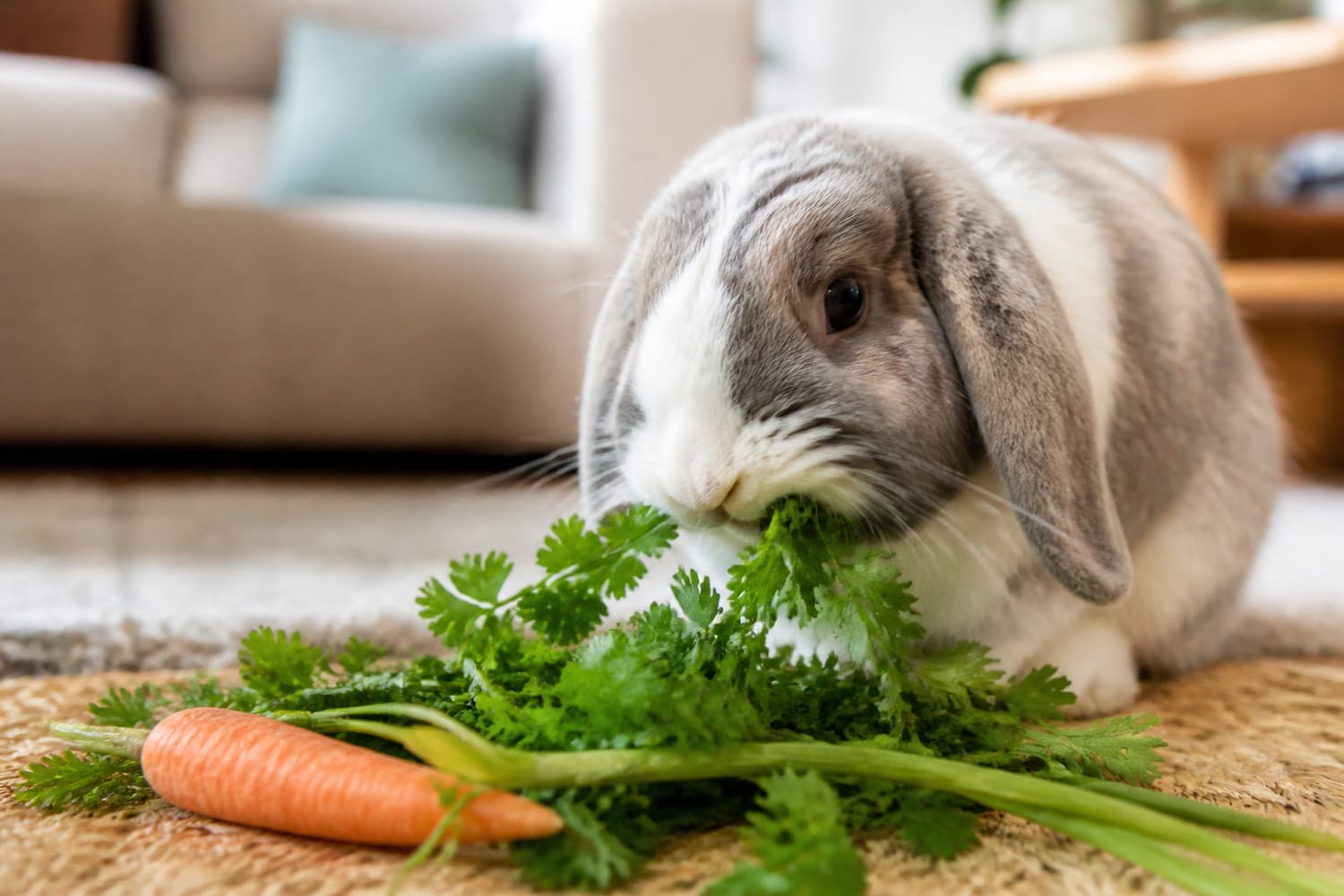
A healthy adult rabbit’s diet should center on unlimited grass hay, supplemented with varied leafy greens, a small measured portion of plain rabbit pellets, and constant access to fresh water. Carrots and fruit belong in the occasional-treat category—not the dinner bowl. Growing rabbits and those with medical conditions need tailored guidance.
That may look different from the carrot-clutching bunny we know from cartoons, but there is something lovely about getting rabbit nutrition right: everyday care becomes a chance to support those happy hops, curious noses, and enthusiastic munching sessions.
Here’s how to build a menu that puts your rabbit’s real needs first.
Hay Is the Main Course—and the All-Day Buffet
For most healthy adult rabbits, good-quality grass hay should make up the overwhelming majority of the diet. Timothy and orchard grass are common choices, and hay should always be available—not just served at breakfast and dinner.
Hay does two important jobs. Its fiber supports normal digestive function, while the prolonged chewing helps wear down rabbits’ continuously growing teeth. A bowl of pellets cannot replace those benefits, even if the packaging describes the food as nutritionally complete.
Choose hay that smells fresh and is free from mold and excessive dust. Keep it clean and dry, remove soiled portions, and replenish it regularly. Fresh-growing grass can also be appropriate when safely introduced, but never offer lawnmower clippings, which can make rabbits ill.
If your rabbit seems unimpressed by hay, try a different grass-hay variety or offer fresh portions in several accessible places. However, a rabbit who suddenly eats less hay may have dental pain or another health problem; don’t assume they have simply become picky.
Leafy Greens Bring Variety to the Menu
Think of leafy greens as the supporting cast: flavorful, interesting, and valuable, but not a replacement for hay. Offer a varied selection of washed, rabbit-safe greens rather than relying on one vegetable every day.
Good options include:
- Romaine lettuce
- Cilantro
- Basil
- Mint
- Arugula
- Carrot tops
Introduce unfamiliar greens one at a time, starting with a small amount. This makes it easier to notice a change in appetite or droppings before adding another ingredient. The RSPCA’s rabbit diet guide provides a useful starting point for choosing greens and herbs.
How much salad belongs in the bowl? The Merck Veterinary Manual gives approximately one cup of fresh vegetables per two pounds of body weight daily as a general guide. Because individual needs vary, ask your rabbit-experienced veterinarian how that translates into a suitable leafy-green portion for your pet.
A simple salad might combine romaine with a little cilantro and basil—once each ingredient has been introduced successfully.
Pellets Are a Supplement, Not an Unlimited Snack
Pellets can provide useful nutrients, but more is not necessarily better. For a healthy adult rabbit, choose a plain, grass-hay-based pellet formulated specifically for rabbits, without colorful pieces, seeds, nuts, or dried fruit. Mixed “muesli” foods encourage selective eating, allowing rabbits to pick out favorite bits and leave the rest.
A commonly used starting guideline is approximately ¼ cup of pellets daily for a five-pound adult rabbit. That is the total for the day, not the amount at every meal. Your veterinarian may recommend a different portion based on weight, body condition, activity, and health.
Store pellets somewhere cool and dry, and retain the packaging so you have the feeding instructions, expiration information, and batch details. Petspiration’s guide to storing pet food and treats safely offers practical packaging and storage habits. Hay, however, needs its own clean, dry storage arrangement rather than being treated like kibble.
So, Can Rabbits Eat Carrots?
Yes—healthy rabbits can generally enjoy a small piece of carrot occasionally. The problem is not that carrots are automatically poisonous; it is that their sugar content makes them unsuitable as a dietary staple. Large or frequent portions can contribute to weight gain and digestive problems.
Think “small taste,” not “whole carrot.” Fruit belongs in the same occasional-treat category, and dried fruit is not a necessary addition to a rabbit’s menu. A rabbit who enjoys their regular greens does not need sugary extras to have a happy life.
For everyday interaction, you can offer a familiar herb leaf or use a few pellets taken from the day’s measured allowance. That keeps the pleasure of a hand-fed reward without turning every visit into an extra meal.
Fresh Water Is Always on the Menu
Rabbits need continuous access to fresh drinking water. A heavy ceramic bowl is often a good choice because rabbits tend to prefer drinking from bowls, although some are accustomed to bottles. Keep containers clean and refresh the water regularly.
If you use a bottle, check that water actually flows through the spout; a full bottle does not guarantee a working one. Whatever setup you choose, make sure your rabbit can reach it comfortably and that it remains available throughout the day and night.
Baby Rabbits Need a Different Feeding Plan
The adult menu is not a one-size-fits-all plan for every life stage. Growing rabbits have different nutritional needs, and alfalfa hay and alfalfa-based pellets can be appropriate during growth. Most healthy, nonbreeding adults instead need grass hay and an appropriately limited adult pellet ration.
Ask your veterinarian when and how to transition your youngster. Breed, growth, current diet, and health all matter; avoid abruptly replacing a young rabbit’s familiar food with an adult feeding schedule. Pregnant, nursing, underweight, and medically vulnerable rabbits also need individualized advice. The Merck Veterinary Manual’s rabbit nutrition overview explains why life stage matters.
A Surprising Part of Rabbit Nutrition: Cecotropes
Rabbits produce ordinary dry droppings and a second type called cecotropes: softer, nutrient-rich material they normally eat directly from their bottom. This is a normal part of rabbit digestion, allowing them to recover important nutrients—not a habit to discourage.
You may rarely see cecotropes because your rabbit usually consumes them immediately. If you repeatedly find uneaten clusters or notice a persistently dirty bottom, speak with your veterinarian. Diet may be involved, but pain, mobility difficulties, or other health problems can also interfere with normal behavior.
Know When a Feeding Change Is an Emergency
Learning your rabbit’s normal appetite and droppings is part of good nutrition care. Contact a veterinarian immediately if your rabbit is eating less, refusing food, or producing markedly fewer or smaller droppings—especially with hiding, lethargy, or signs of pain.
Do not wait until tomorrow if your rabbit stops eating. Reduced appetite can signal dental disease, gastrointestinal stasis, an obstruction, or another serious condition. Seek veterinary instructions rather than experimenting with home remedies or starting syringe-feeding without guidance. PDSA’s advice on reduced appetite in rabbits explains the urgency.
Make Good Feeding an Everyday Act of Love
A helpful household routine is simple: check hay and water, serve the agreed greens and pellet portions, and notice what your rabbit actually eats. Write those instructions down for everyone who helps with care, including pet sitters. Petspiration’s pet-care binder checklist can help you organize the details.
You don’t need an elaborate menu to show your rabbit love. A dependable supply of the right foods, thoughtful observation, and a little patience can make mealtimes both nourishing and enjoyable.
Let carrots have their occasional cameo. Hay deserves the starring role.