
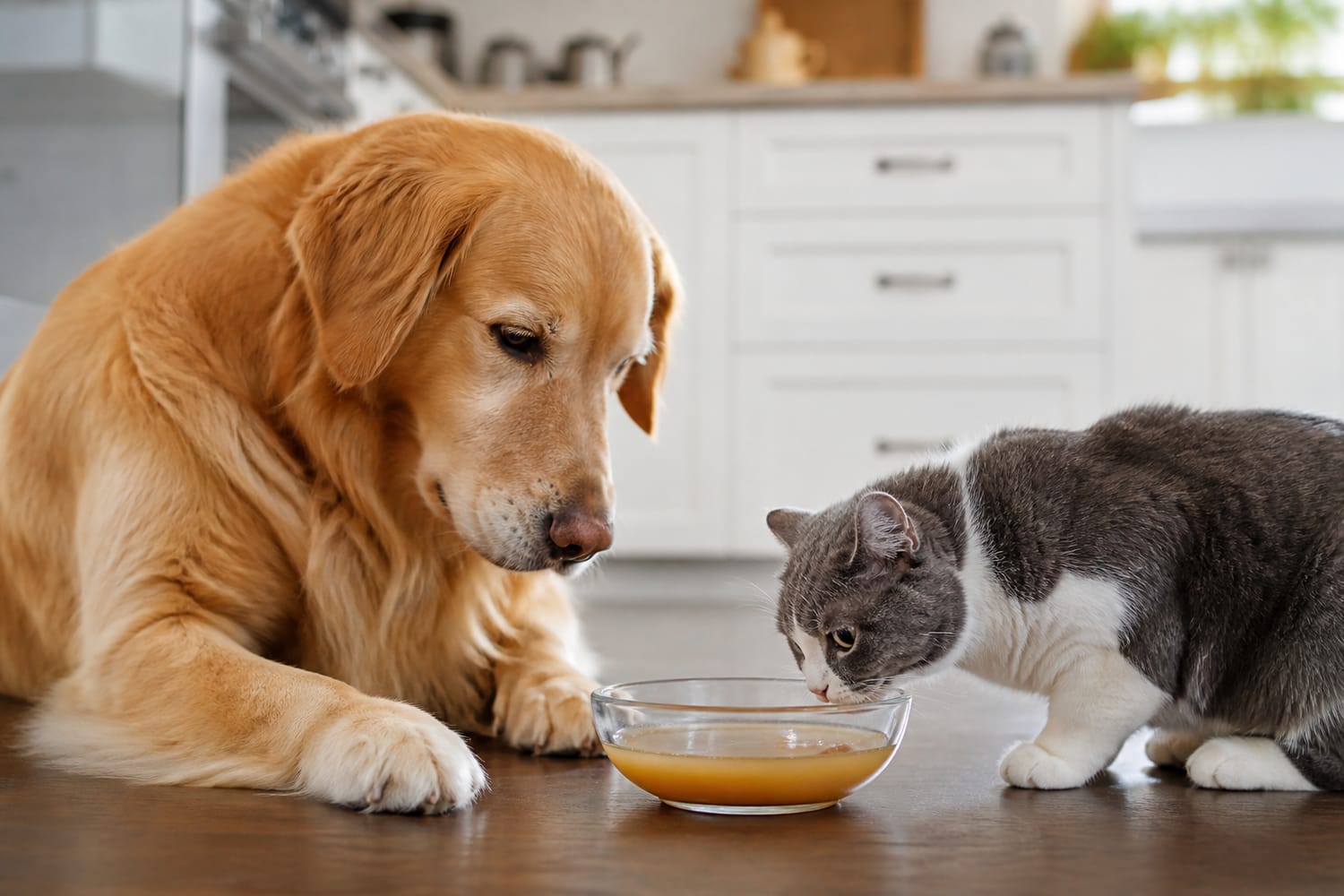
A little bone broth can make a familiar meal smell exciting again. For many dogs and cats, a small splash of plain, pet-safe broth is a pleasant topper and another way to take in water. But the broth in your soup pot or grocery cart is not automatically suitable for their bowl. Before you pour, check the ingredients, salt, fat, serving size, and your pet’s health needs.
The good news? You don’t need to become a nutrition expert to make a thoughtful choice. A few minutes with the label—or a few simple rules for homemade broth—can help keep this cozy extra just that: an extra.
Start With the Ingredient List
The most important question is not whether the package says bone broth. It is what else went into the pot.
Onion, garlic, leeks, and chives are unsafe for dogs and cats. They can damage red blood cells, and cooking them into broth does not make that broth pet-safe. Check for these ingredients in every form, including powders. A broth seasoned for people, a restaurant soup base, and pan drippings from dinner are poor choices when you cannot account for every ingredient. If your pet has already had broth containing onion or garlic, contact your veterinarian or an animal poison control service rather than waiting to see whether symptoms appear.
Choose a product with a short, understandable ingredient list and no added onion, garlic, or seasoning blends. If a label leaves you unsure what is in its flavorings, pick a clearer option or ask the manufacturer before serving it. A broth sold for pets may be convenient, but its pet-friendly packaging is not a substitute for reading the ingredients.
Check Salt, Fat, and What a “Serving” Means
Human broths are often made to season a whole recipe, not to be poured into a pet’s dish. Compare products using the sodium information on the label, paying attention to whether the stated serving is a tablespoon, a cup, or a concentrated broth that must be diluted. For an everyday topper, an unsalted option is generally the simpler choice. If your pet is on a sodium-restricted diet, ask your veterinarian before adding any broth—even one that appears low in salt. Too much salt can cause problems for pets, and some medical diets are carefully formulated to limit it.
Fat deserves a second look, too. Homemade broth may develop a thick layer of fat as it cools. Skimming that layer makes it easier to offer a modest, less-rich portion. Be especially cautious with a dog that has a history of pancreatitis or needs a low-fat diet; a “special treat” should not undo the plan that helps them feel well. Cats with pancreatic disease also need an individual feeding plan, so check with their veterinary team rather than assuming the same advice applies to both species.
When a package lists calories per serving, include them in your pet’s daily tally. Toppers and treats are best kept to a small share of daily calories so they do not crowd out the food that supplies essential nutrients. Petspiration’s guide to calculating daily calories and portions can help put that small splash in context.
Think “Topping,” Not “Complete Meal”
Bone broth may smell wonderful and add moisture, but it is not a replacement for a balanced dog or cat food. Protein or collagen mentioned on a package does not mean the broth supplies everything your pet needs. The FDA’s explanation of “complete and balanced” pet food is a useful reminder: that label statement identifies foods intended to serve as a pet’s sole diet, while treats and supplements usually are not.
Treat claims about joint repair, gut healing, or other sweeping benefits with similar care. Broth can be an appealing food topper; it should not take the place of veterinary advice or prescribed treatment. And although its name highlights bones, the finished liquid—not the bones used to make it—is what belongs in the bowl. Cooked bones can splinter and cause choking, blockages, or injury.
Making Broth at Home? Keep It Plain and Strain It Well
Homemade broth gives you control over the ingredients. Simmer bones or meat in water without onion, garlic, salt, or added seasonings. Once cooking is finished, carefully strain the liquid so no bones, fragments, or hard bits remain. Let it cool, remove excess fat, and serve it cool or gently warmed—never hot enough to burn an eager mouth.
Do not offer the cooked bones afterward, even to a dog who looks convinced they are the best part. Dispose of them securely, out of reach of curious noses and paws. If a pet gets into them, call your veterinarian for advice.
Broth is perishable, so handle it as carefully as other cooked leftovers. Divide a large batch into shallow containers for prompt cooling. Refrigerate it within two hours, use refrigerated portions within three to four days, or freeze small portions for later. Follow the package’s after-opening directions for store-bought broth; if you have lost track of how long a portion has been stored, discard it. These USDA leftover-storage guidelines offer a practical baseline for homemade batches.
Introduce It Like Any New Food
Even a carefully chosen broth is still something new to your pet. Start with a small splash mixed into their usual food, then watch how they respond. You are looking for an enjoyable meal, not a dramatic change: if your pet develops vomiting, diarrhea, or another concerning reaction, stop offering the broth and speak with your veterinarian. Petspiration’s advice on transitioning to new food without upset offers a reminder that gradual changes and careful observation matter at mealtime.
Keep fresh drinking water available, too. Broth can add moisture to a meal, but it should not replace the water bowl. If your goal is simply to make kibble more aromatic, try a little warm water first, stir, and check the temperature before serving. It is a simple option that adds no new ingredients.
Know When to Ask Your Vet First
A healthy pet enjoying an occasional plain topper is one situation. A pet with kidney disease, heart disease, pancreatitis, food allergies, a prescribed diet, or a poor appetite is another. Their veterinary team can tell you whether broth fits the plan, what ingredients to avoid, and whether a different approach would be more helpful. Kidney-support diets, for example, may control nutrients such as phosphorus and sodium; an unmeasured extra can complicate that careful balance.
Most importantly, do not use broth to mask a continuing refusal to eat or drink. A suddenly uninterested pet needs attention to the reason behind that change, not just a tastier bowl. This is particularly important for cats, which can become seriously ill when they do not eat enough.
The best broth moment is a simple one: you know what is in it, you offer a little, and your companion enjoys their regular meal. With those checks in place, that happy sniff at the food bowl can stay a small, comforting part of caring for them.