
A Year of Tiny Moments Worth Keeping
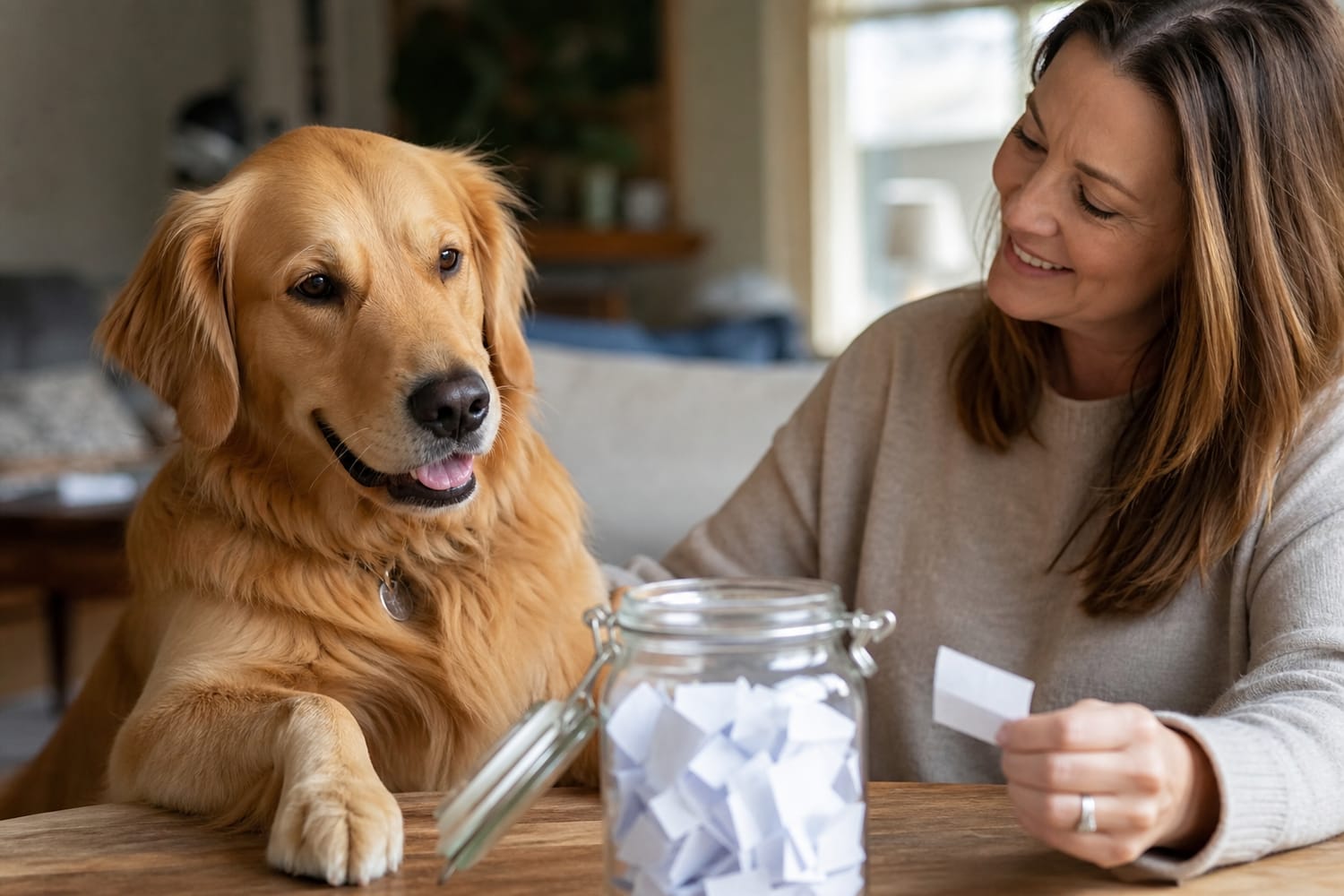
A pet memory jar is a simple container filled with handwritten notes about the everyday moments you share with your animal companion. Add one memory whenever something makes you smile, then read the notes at the end of the year. It is an easy, affordable tradition that turns ordinary days into a lasting celebration of love.
What Is a Pet Memory Jar?
The happiest pet memories are not always major milestones. They are often tiny moments: the sleepy greeting at breakfast, the enthusiastic reaction to a favorite toy, or the afternoon your cat discovered a particularly interesting cardboard box.
A pet memory jar gives those moments somewhere to live. Each memory is written on a small piece of paper, dated, and placed inside a jar or keepsake box. Over time, the colorful slips become a record of your pet’s personality and your life together.
This tradition works for dogs, cats, rabbits, birds, reptiles, fish, horses, and almost any other companion animal. It can also help children practice gratitude, observation, and writing while participating in a meaningful family project.
How to Make Your Pet Memory Jar
You do not need expensive craft supplies. Begin with a clean jar, tin, box, or other container with a secure lid. If your pet likes to investigate objects with paws, beaks, or teeth, choose a shatter-resistant container and keep it safely out of reach.
Gather a few basic materials:
- Small pieces of paper or blank cards
- Pens, pencils, or pet-safe markers
- A label with your pet’s name and the year
- Ribbon, stickers, photographs, or other decorations
- A small envelope for flat keepsakes, if desired
Decorate the container with colors that remind you of your pet. You might add paw prints, feathers, fish, bones, leaves, or a favorite photograph. Families with multiple pets can create one jar per animal or use a different paper color for each pet.
Place the finished jar somewhere visible so everyone remembers to contribute. A bookshelf, desk, or dedicated pet area works well. If you are refreshing that area, these pet room makeover ideas can help you create a comfortable, organized place for supplies and keepsakes.
30 Simple Pet Moments to Capture
Do not wait for an extraordinary adventure. Your pet’s habits, discoveries, friendships, and funny reactions are what make the finished collection personal.
Everyday Personality
The morning greeting: Record how your pet welcomes the day, whether it involves tail wags, cheerful chirps, quiet purrs, or an expectant look toward breakfast.
A favorite sleeping position: Write down the wonderfully strange pose your pet chose—or take a photograph and note where it is saved.
The funniest sound: Capture an unusual bark, squeak, trill, snore, grunt, or contented sigh.
A familiar routine: Describe the moment your pet seemed to know it was time for dinner, a walk, play, or bedtime.
A favorite hiding place: Note the drawer, blanket, plant, cave, tunnel, or corner your companion selected as a private retreat.
An expression you love: Record the head tilt, slow blink, bright-eyed stare, or other look that always wins your heart.
Daily routines are an important part of responsible pet ownership, but they are also worth celebrating. The same feeding, grooming, exercise, and rest rituals that support good care often become some of our warmest memories.
Play, Learning, and Discovery
A new trick or skill: Celebrate progress, from learning “sit” to stepping onto a hand, entering a carrier calmly, or using a new enrichment toy.
The return of a forgotten toy: Write about the excitement—or total indifference—when an old favorite reappeared.
A successful puzzle: Note how your pet solved a food puzzle, foraging activity, or homemade game.
A joyful burst of energy: Capture the zoomies, happy hops, excited wing flaps, or sudden race around the enclosure.
A new scent or texture: Record your pet’s reaction to snow, fallen leaves, a fresh blanket, a cardboard tube, or another safe sensory experience.
A moment of curiosity: Describe the day your pet carefully investigated a bag, shadow, reflection, household sound, or new piece of furniture.
Thoughtful enrichment can support natural behaviors and provide physical, mental, and sensory stimulation. Activities should always suit the animal’s species, age, health, abilities, and individual comfort level.
Connection and Affection
An unexpected cuddle: Remember when your pet chose to sit beside you, climb into your lap, or rest nearby.
A comforting moment: Write about a time your companion stayed close when someone was tired, sad, or unwell.
A special greeting: Capture the excitement when a favorite family member came home.
A peaceful shared silence: Record a quiet moment spent watching rain, enjoying sunshine, or resting together.
A trust milestone: Celebrate when a shy or newly adopted pet accepted gentle touch, took a treat, or relaxed in your presence.
A moment of communication: Note the glance, gesture, movement, or sound that made your pet’s request perfectly clear.
Learning to notice body language can deepen your appreciation of your pet’s preferences. Dogs, for example, pay close attention to human routines and emotional cues, as explored in how dogs read our emotions and strengthen our bonds.
Adventures Big and Small
A favorite walk or outing: Describe a route, destination, or scent-filled stopping place your pet especially enjoyed.
A seasonal first: Record the first warm sunbeam of spring, summer splash, autumn leaf pile, or winter snowfall.
A successful journey: Celebrate a calm car ride, carrier trip, trail walk, or visit to a pet-friendly destination.
A backyard discovery: Note the bird, butterfly, breeze, flower, or mysterious smell that captured your pet’s attention.
A new viewpoint: Remember when your pet found a window perch, climbing platform, safe outdoor enclosure, or sunny observation spot.
A household adventure: A blanket fort, open suitcase, empty box, or rearranged room can become an expedition when seen through a pet’s eyes.
Growth and Milestones
An adoption anniversary: Write about how your pet has changed since joining your family.
A birthday or estimated birthday: Include favorite activities, a pet-appropriate celebration, and what makes this age special.
A health or confidence victory: Celebrate calmly completing a grooming session, veterinary visit, nail trim, or other challenging experience.
A friendship moment: Record a gentle interaction with another animal or a trusted person.
A changing preference: Note the new bed, treat, perch, toy, or resting place that has become the latest favorite.
Today’s reason for gratitude: Write one quality you appreciate right now, from patience and courage to silliness, gentleness, or unstoppable enthusiasm.
Turn Memory-Making Into a Happy Habit
There is no required schedule for your jar. You can add a note every day, once a week, or whenever a memorable moment appears. A weekly reminder may help, but the activity should feel joyful rather than becoming another task.
Invite everyone in the household to participate. Younger children can draw pictures, while older family members can write longer stories. Guests, pet sitters, and relatives can also contribute memories that you may not have witnessed yourself.
Try varying the prompts throughout the year. One month might focus on funny habits, another on outdoor discoveries, and another on things your pet has learned. You can also use paper colors to represent different seasons or types of memories.
Do not worry about perfect handwriting or beautifully worded entries. “Poppy stole my warm seat again” may eventually mean more than a polished paragraph because it captures a real piece of daily life.
Celebrate the Jar at the End of the Year
Choose a meaningful day to open the jar: New Year’s Eve, an adoption anniversary, a birthday, or a quiet family evening. Read the slips aloud, arrange them by date, and enjoy the story they tell together.
Afterward, you could:
- Paste the notes into a scrapbook.
- Store them in envelopes labeled by year.
- Create a photo book using your favorite entries.
- Turn funny memories into captions for a family calendar.
- Select one note to frame beside a photograph.
- Return the slips to the jar and begin adding a new year’s memories.
A memory jar can also become a comforting tribute after a pet has died. There is no single correct way to honor an animal companion; writing down stories, collecting photographs, and creating keepsakes are among the memorial ideas shared by Cornell University’s pet loss resources.
Celebrate the Life Happening Right Now
Pets experience life in the present, finding delight in familiar voices, comfortable resting places, intriguing scents, and time spent near the people they trust. A pet memory jar encourages us to slow down and notice those same details.
Start with one slip of paper today. Write down the way your pet looked at you, the sound that made you laugh, or the quiet moment you shared. By the end of the year, you will have more than a jar of notes—you will have a collection of ordinary days transformed into an extraordinary record of love.