
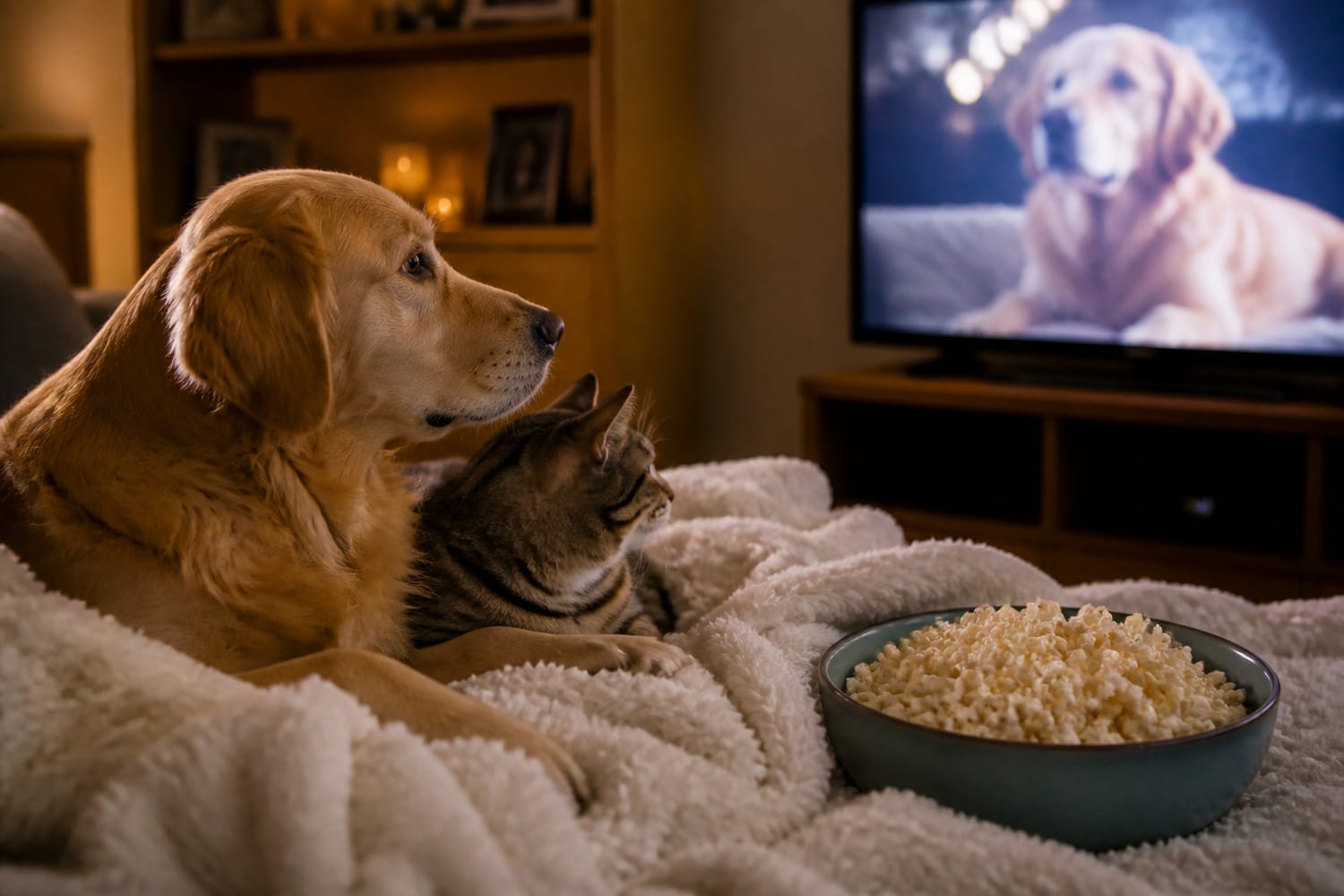
Turn an Ordinary Evening Into a Pet-Friendly Celebration
The perfect pet movie night combines three simple ingredients: a comfortable setup, carefully chosen snacks, and entertainment that respects your pet’s individual preferences. Keep the volume gentle, provide an easy escape route, serve only species-appropriate treats, and remember that your companion may enjoy cuddling beside you more than watching the screen.
A movie night with your pet does not need elaborate decorations or expensive accessories. What makes it special is the chance to slow down and share a peaceful experience with the animal who brings so much happiness to your home.
Your dog might curl up with their head on your foot. Your cat may watch the opening scene, investigate the snack tray, and then fall asleep behind a cushion. Rabbits, guinea pigs, birds, and other companion animals may prefer enjoying the evening from the security of their familiar enclosure or supervised play area. Every version can be perfect.
Create a Cozy Pet Movie Theater
Start by choosing a familiar room where your pet already feels relaxed. Movie night is generally not the ideal time to introduce a nervous animal to a new space, an unfamiliar blanket, and unusual sounds all at once.
Arrange several comfortable options rather than assigning your pet one “perfect” seat. You might include:
- A washable blanket on the sofa
- A supportive bed on the floor
- An open crate for a crate-trained dog
- A cardboard hideaway for a cat
- A stable perch away from the television for a bird
- A supervised tunnel or hide for a rabbit or guinea pig
- A quiet retreat outside the room
Protect senior pets from slippery floors and difficult jumps. A small ramp, pet stairs, or floor-level bed can allow an older companion to join the family without straining sore joints.
Keep the room at a comfortable temperature and leave fresh water accessible. If you use string lights, electric blankets, candles, or decorative garlands, make sure they cannot be chewed, pulled down, overheated, or knocked over. Flameless candles are usually the simplest choice around curious paws, noses, whiskers, and wings.
Plan a Little Activity Before Pressing Play
A pet who has had an appropriate opportunity to move, sniff, play, or forage may find it easier to relax during a film. The goal is not to exhaust your companion but to meet some of their physical and mental needs before asking them to settle.
Take your dog on a relaxed sniffing walk, play a gentle game of tug, or practice a few familiar cues. Invite your cat to stalk and catch a wand toy, then finish with a small portion of food. Rabbits and guinea pigs might enjoy supervised exploration or species-safe food hidden among hay, while birds may appreciate a short training or foraging session.
Match the activity to your pet’s health, age, and personality. A senior dog may prefer searching for a few pieces of kibble around the room, while an energetic youngster may benefit from a longer walk. Petspiration’s guide to planning activities around your pet’s fun personality can help you find an approach that feels genuinely rewarding.
After the activity, allow time for a bathroom break and a drink of water. Then dim the lights and let everyone settle naturally.
Choose a Movie Your Pet Can Live With
There is no single movie that every animal will enjoy. Some dogs notice movement and animal sounds on television, while others show no interest at all. Dogs also perceive color and motion differently from people, and their response to television often depends on individual personality and breed tendencies, according to the American Kennel Club’s explanation of how dogs watch TV.
Cats may become fascinated by birds, fish, insects, or quick movements. Others prefer a warm lap and ignore the screen completely. Neither reaction is better—the important question is whether your pet appears comfortable.
For a peaceful evening, consider:
- Gentle nature documentaries without intense predator scenes
- Cheerful animated films with moderate sound effects
- Family movies you already know are not filled with explosions
- Slow-moving scenery or aquarium footage
- Short videos created for feline visual enrichment
- A familiar television program associated with quiet family time
Start at a low volume, especially if the film includes barking, doorbells, thunder, sirens, or high-pitched music. Sudden animal cries or frantic chase scenes can upset sensitive pets even when the human audience understands that nothing is happening in the room.
Use subtitles if you want to follow dialogue while keeping the sound soft. Keep the remote nearby so you can quickly mute a stressful scene.
Watch Your Pet, Not Just the Screen
A successful movie night is based on participation, not pressure. Your pet should always be able to leave, change seats, hide, or fall asleep.
Signs of comfortable engagement may include a loose body, soft eyes, relaxed ears, normal breathing, casual grooming, or the ability to settle. A curious pet may briefly approach the screen and then return to their bed.
Possible signs of discomfort include:
- Repeated barking, growling, or lunging
- Flattened ears or a tucked tail
- Hiding, crouching, or trying to escape
- Restless pacing
- Panting when the room is not hot
- Dilated pupils and frantic screen-pawing
- Fixation that continues after the screen is turned off
If your pet appears worried or overstimulated, lower the volume, change the program, offer a break, or end the screening. Petspiration’s article on reading a pet’s “yes” and “no” during one-on-one time offers additional guidance on recognizing comfort and respecting disengagement.
Serve Safe Movie-Night Snacks
Snacks make movie night feel festive, but the safest menu gives people and pets separate treats. Never allow a pet to eat directly from a communal snack bowl, where unsafe ingredients or wrappers may be mixed together.
For dogs, possible options include tiny portions of their regular treats, measured kibble, plain cooked chicken, carrot pieces, cucumber, or blueberries. Cats are usually better served by a small amount of their normal food, a feline-specific treat, or a little plain, fully cooked, boneless meat.
Plain air-popped popcorn can be offered to some dogs or cats in very small quantities, but it must be free from butter, salt, sugar, flavoring, and hard unpopped kernels. The ASPCA’s pet-safe snack guidance emphasizes small portions and unseasoned ingredients.
For rabbits, guinea pigs, birds, and other animals, do not assume a dog-safe food is appropriate. Offer their usual species-appropriate food or a veterinarian-approved treat instead. Medical conditions, allergies, sensitive digestion, and prescription diets may further limit suitable choices.
Treats should generally remain a small part of a dog or cat’s daily calories. The American Animal Hospital Association recommends keeping treats to no more than 10% of total daily calorie intake. Consider reserving part of your pet’s regular dinner and serving it during the movie in a puzzle feeder or lick mat.
Keep Dangerous Human Treats Out of Paw’s Reach
Movie-night favorites can contain ingredients that are hazardous to pets. Keep snack trays on a stable surface and immediately discard wrappers, skewers, bones, toothpicks, and empty containers.
Do not share foods containing:
- Chocolate, cocoa, coffee, or caffeine
- Grapes or raisins
- Onions, garlic, or related seasonings
- Alcohol
- Macadamia nuts
- Excessive salt, fat, or sugar
- Cooked bones
- Raw yeast dough
- Xylitol, which may appear in sugar-free candy, gum, baked goods, and some nut butters
Xylitol is especially dangerous to dogs and can cause a rapid, life-threatening drop in blood sugar. The FDA advises contacting a veterinarian, emergency clinic, or animal poison control center immediately if a dog may have eaten it.
Do not wait for symptoms after a possible toxic exposure. Save the packaging, note approximately how much was eaten, and seek professional guidance promptly.
Add Screen-Time Fun Without Creating Hazards
If your cat likes pawing at moving images, make sure the television is securely anchored. Supervise tablet games, protect cords from chewing, and remove small accessories such as earbuds, batteries, and remote-control covers.
A screen can provide temporary visual interest, but it should not replace exercise, social contact, sniffing, climbing, training, or interactive play. Cats in particular benefit from real opportunities to stalk, chase, pounce, and catch. Explore more balanced ideas in Petspiration’s guide to keeping an indoor cat active and healthy.
Consider adding simple intermission activities:
- Pause for a bathroom or litter-box break.
- Scatter a few pieces of measured kibble for a supervised search.
- Offer a gentle chew or food puzzle.
- Play briefly with a favorite toy.
- Refill water and allow everyone to choose a new seat.
These breaks are especially helpful for young, energetic, or easily distracted pets.
End the Evening on a Peaceful Note
When the credits roll, turn up the lights gradually and take dogs outside for a final bathroom break. Put food away, collect wrappers, inspect toys for damage, and return small pets or birds to their normal nighttime routine.
Most importantly, do not judge movie night by how long your pet watched the screen. A dog sleeping through the entire film may have felt wonderfully safe. A cat who stayed for ten minutes and then moved to a quiet room made a healthy choice. The real entertainment is the companionship—the shared blanket, the soft snoring, and the familiar presence beside you.
With thoughtful preparation, safe snacks, and respect for your pet’s signals, movie night can become a cozy tradition worth repeating.