
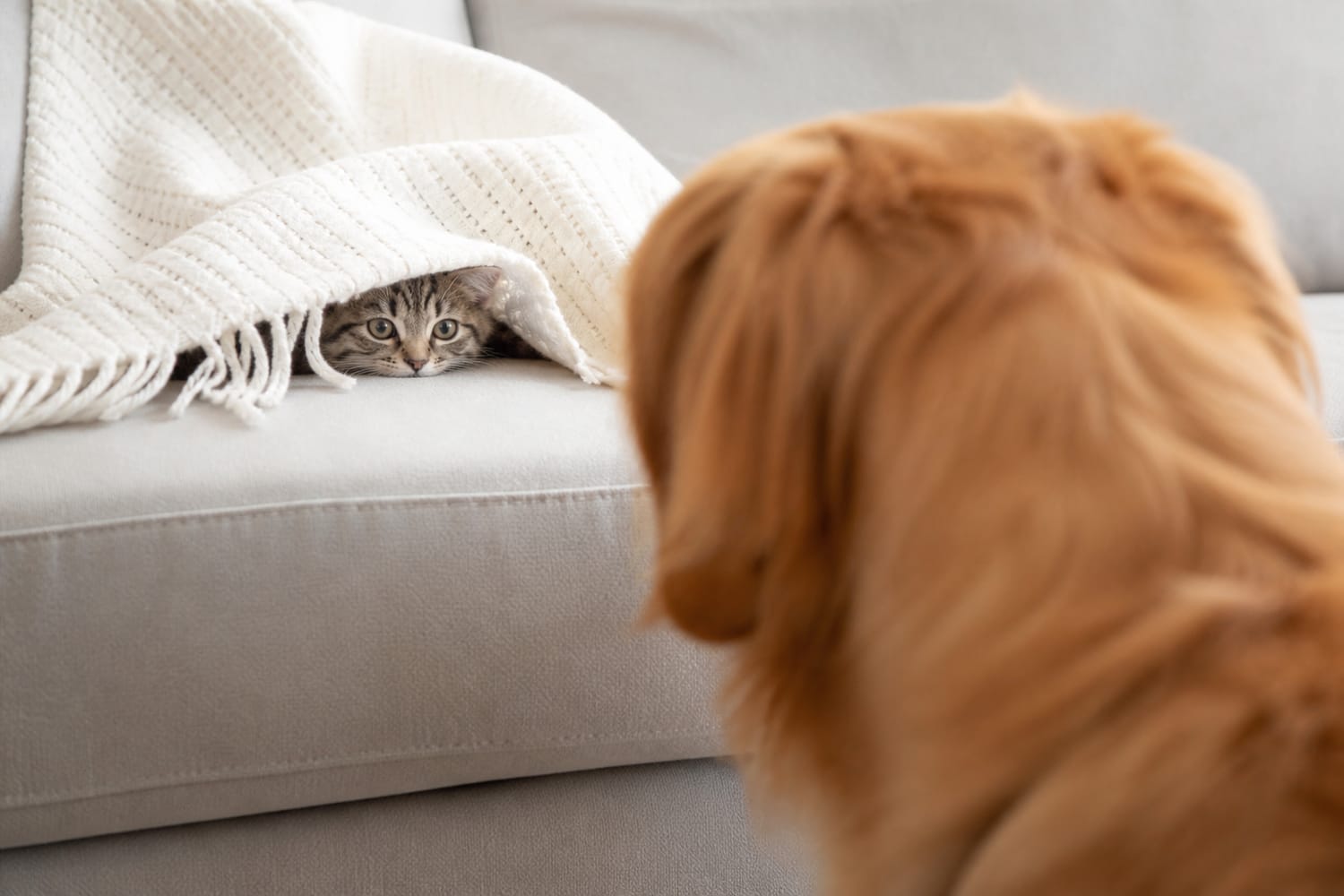
The best pet games don’t always begin with a trip to the store. A familiar towel, a cardboard box, a few pieces of your pet’s usual food—and you—can turn an ordinary afternoon into an adventure. Dogs may delight in sniffing out a hidden prize, while cats often enjoy the chance to stalk, investigate and pounce. The secret is to start easy, celebrate every discovery and let your pet choose how to play.
Before You Hide Anything, Set the Stage
Choose a quiet, familiar space where your pet can move comfortably. Put away anything fragile or unsafe, and check household items for staples, loose parts or sharp edges. If you use food, choose something your pet already eats safely; you can set aside a small portion of their regular meal rather than adding extra treats.
Think of these games as invitations, not tests. Show your pet the answer the first few times, then make each search a little harder if they seem eager. Keep sessions short enough to end on a happy note. For more ways to fit play into a busy day, explore Petspiration’s five-minute pet rituals.
1. The Classic: Come Find Me
Best for: Dogs who enjoy coming when called, and sociable cats who like following you from room to room.
Begin where your pet can see you. Step behind an open door or around a corner, then call their name once in a cheerful voice. When they reach you, greet them warmly. If they stay put, peek out and make the hiding place obvious—finding you should be the fun part.
Once your pet understands, try a new spot a few steps farther away. Another family member can gently hold a dog nearby while you hide, then release them to search. With a cat, there’s no need to ask them to wait: slip around the corner when they’re already watching, and see whether curiosity brings them after you.
Avoid jumping out or shouting “surprise.” This is a reunion game, not a scare game. A nose around the corner or a cautious little head appearing in the doorway counts as a win.
2. The One-Room Snack Hunt
Best for: Pets who are motivated by food.
Place one piece of your pet’s regular dry food on the floor in plain sight. For a dog, you might say “find it”; for a cat, simply let them notice and collect it. Repeat a few times, then put a piece beside a chair leg or near the edge of a rug. Gradually spread several pieces around one room, keeping them reachable and away from places you don’t want your pet exploring.
Dogs often enjoy following their noses through this kind of search. Some cats prefer to watch you place each piece before investigating at their own pace. The ASPCA recommends beginning dog scent games with an easy find before hiding food in more challenging spots.
Check that you’ve picked up any uneaten food afterward, particularly if you’re playing in a room your pet doesn’t usually eat in.
3. Which Cup Holds the Treasure?
Best for: Curious pets who like to nudge, paw or make a choice.
Find two or three sturdy, lightweight cups or small bowls that your pet cannot swallow or easily break. Let them watch you place a morsel of their usual food beneath one, then set the cups down a little apart. Encourage them to investigate. Lift the chosen cup when they nudge or paw at it; if they choose an empty one, calmly show them where the food is.
At first, don’t move the cups. The puzzle is simply discovering that something can be under an object. Later, you can gently switch the cups’ positions while your pet watches. A cat might solve it with one careful paw; an enthusiastic dog may prefer a decisive nose-boop.
Keep your hand on an easily tipped cup if needed, and put the cups away when the game ends.
4. The Towel Treasure
Best for: Pets who enjoy sniffing or working at a simple puzzle.
Spread a clean towel flat and place a few pieces of dry food on top. Let your pet collect them. For the next round, tuck the food just beneath one loose fold so your pet can uncover it with a nose or paw. If that goes well, make another shallow fold or loosely roll part of the towel.
The goal is discovery, not a tightly wrapped package. If your pet pulls at the towel, chews the fabric or seems frustrated, open it up and make the prize easier to reach. Supervise throughout, and skip this game if your pet tends to swallow cloth. Petspiration’s rainy-day indoor adventures offer more ways to turn familiar household items into gentle activities.
5. Cardboard-Box Peekaboo
Best for: Cats who love to hide and dogs who like a low-pressure investigation.
Set an open, sturdy cardboard box on the floor and let your pet inspect it before you do anything else. For a cat, move an existing toy briefly behind the box, pause, and let it appear again along one edge. Give them chances to catch it. You can also place the toy inside the open box and see whether they choose to climb in or reach for it.
For a dog, place a familiar toy partly inside the box, where it’s easy to see and retrieve. As they grow more confident, move it farther in. Keep the box open and stable; remove packing tape, staples and loose scraps first.
Cats Protection notes that games involving stalking, chasing and batting suit many cats, and that cardboard boxes offer an inexpensive place to hide and play. An occupied box is a perfectly good outcome, even if your cat decides the “game” is watching you from inside it.
6. The Disappearing Prey
Best for: Cats who love movement and dogs who enjoy searching for a favorite toy.
Lay a light blanket flat and slowly move a familiar toy across the floor. Let it disappear partway beneath the blanket, then pause. Your cat may stalk the mysterious bump before pouncing; your dog may nose the blanket aside to recover the toy. Reveal it before your pet loses interest, and let them catch or claim it.
For cats, use a toy rather than your fingers or toes under the blanket. Keep any wand or string toy in your hands during play and put it away afterward. Cats Protection recommends giving cats opportunities to catch their “prey” and warns against leaving them alone with toys they could shred, swallow or become tangled in.
A gentle, easy-to-catch version can be lovely for a pet who prefers a quieter pace. There’s no need for a dramatic chase.
7. Find Your Old Favorite
Best for: Pets with a familiar toy they already enjoy carrying, batting or investigating.
Choose a toy your pet knows well and let them watch you place it just out of sight—behind a cushion on the floor, for example. Invite a dog to “find it,” or encourage a cat by making the toy move slightly before leaving it still. When they discover it, join them for a brief game or give them space to enjoy their prize.
On later rounds, try a different easy hiding place. Change only one thing at a time: a new corner or a longer wait, not both. If your pet seems puzzled, show them the toy and reset. You’re building a happy pattern of searching and finding, not measuring how clever they are.
This is also a chance to bring an overlooked favorite back into the spotlight. Petspiration’s guide to rotating familiar toys has ideas for keeping play varied without buying more.
Let Your Pet Write the Rules
One dog may want to play “find me” again and again. One cat may ignore every hidden snack but spend the afternoon sitting proudly in the box. Pay attention to the game your pet actually enjoys, rather than the one you expected them to choose.
Start with an easy win, stay nearby for games involving household items, and stop if your pet walks away or seems uneasy. Then, the next time you have a few spare minutes, look around the room. You may already have everything you need for a little shared adventure.