
A Simple Way to Make Old Toys Feel New Again
Toy rotation is a simple enrichment method: instead of leaving every toy available all the time, offer a small, varied selection and store the rest out of sight. Swap the collection periodically based on your pet’s interest. The result is less clutter, less unnecessary shopping and more opportunities for meaningful play.
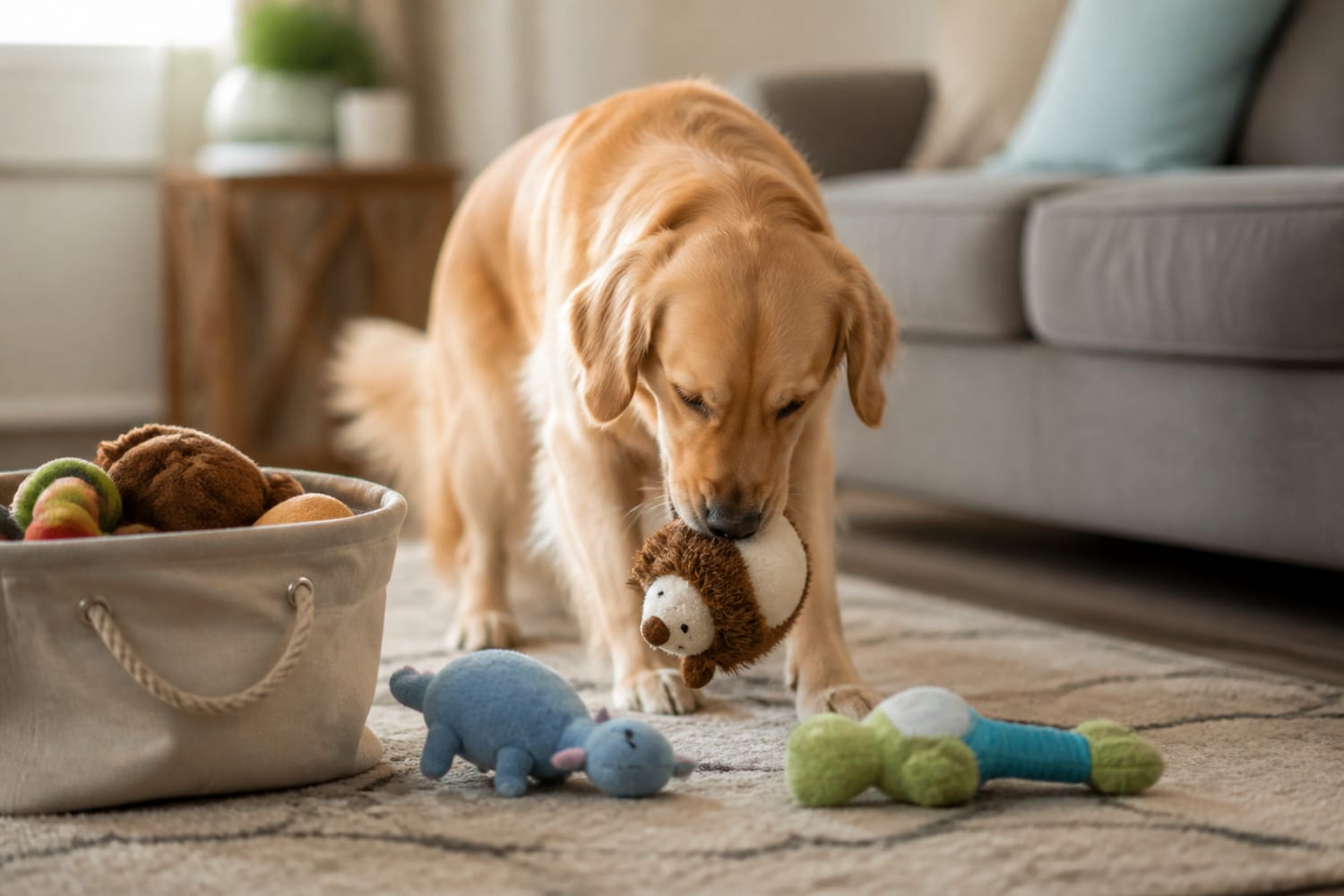
For many pet lovers, the toy basket seems to multiply overnight. There are balls under the sofa, plush animals in every room and mysterious chew toys waiting in the hallway to surprise bare feet. Yet despite this abundance, your pet may still parade around looking thoroughly unimpressed.
The problem may not be a shortage of toys. It may be that constant access has made them too familiar.
Why Toy Rotation Can Keep Pets Interested
Pets are naturally drawn to opportunities that let them investigate, forage, chase, chew, climb, scratch or solve problems. When the same objects remain available day after day, some animals gradually pay less attention to them. Putting selected toys away and reintroducing them later restores an element of novelty.
That does not mean every returning toy will receive a delighted reaction. Pets have individual preferences, and genuine enrichment depends on whether the animal chooses to engage. However, rotation gives familiar objects another chance to spark curiosity without requiring another trip to the pet store.
Variety can also support different natural behaviors. A dog may enjoy carrying a plush toy one day and solving a food puzzle the next. A cat might alternate between stalking a wand toy, batting a ball and investigating a cardboard box. Birds, rabbits and other companion animals can similarly benefit from safe, species-appropriate opportunities to explore, manipulate and forage.
This approach works especially well as part of a larger plan for preventing pet boredom and related behavior changes. Toys are helpful tools, but they work best alongside exercise, social interaction, training, rest and chances to explore.
How to Build a Balanced Toy Collection
You do not need a huge collection. Start with the toys you already own and sort them by the kind of activity they encourage.
Useful categories may include:
- Movement toys: Balls, rolling toys and objects designed for chasing or fetching
- Interactive toys: Tug toys, teaser wands and other items used during shared play
- Foraging toys: Puzzle feeders, snuffle activities and treat-dispensing toys
- Chewing or shredding toys: Safe items suited to your pet’s species, size and chewing habits
- Comfort toys: Familiar plush toys or other objects your pet carries, cuddles or rests beside
- Exploration toys: Tunnels, boxes, climbing objects and toys with interesting textures
- Training rewards: Special toys reserved for short, positive training sessions
A balanced rotation offers different experiences rather than several versions of the same activity. For example, four nearly identical balls may be less interesting than one ball, one food puzzle, one tug toy and one sniffing game.
According to VCA Animal Hospitals’ guidance on enrichment toys, foraging activities can encourage species-typical behaviors while providing mental and physical engagement. Difficulty should match the individual animal, especially when a pet is learning how a puzzle works.
The Toy Rotation Method, Step by Step
1. Gather and Inspect Every Toy
Collect toys from around the home and examine each one carefully. Discard items with dangerous damage, such as loose pieces, exposed stuffing, split rubber, sharp edges or badly frayed rope.
Wash reusable toys according to their care instructions. Cleaning matters even in a single-pet home because saliva, food and dirt can build up. Let everything dry completely before storing it.
2. Identify the True Favorites
Watch which toys your pet seeks out independently. A cherished comfort toy does not necessarily need to join the rotation. If your dog sleeps with the same plush animal every night or your cat frequently carries one soft toy around the house, consider leaving that special item available.
Rotation is intended to make life more interesting—not to remove something that helps your pet feel secure.
3. Create Small Groups
Divide the remaining collection into several groups. Each group should contain a mix of activities rather than one toy type.
A dog’s set might include:
- One fetch toy
- One tug toy
- One durable chew toy
- One puzzle or food-dispensing toy
A cat’s set might contain:
- One small ball or toy mouse
- One kicker toy
- One puzzle feeder
- One interactive wand used only with supervision
For birds, rabbits and other small pets, create groups using items approved for that particular species. Consider opportunities for foraging, chewing, climbing or safe manipulation while accounting for the animal’s enclosure, physical abilities and habits.
4. Store the Extras Properly
Place toys that are out of rotation in a closed container, cabinet or closet. Keeping them out of sight—and away from curious noses, beaks and paws—helps preserve their novelty.
Organized storage also makes safety checks easier. If your toy collection is taking over the room, these pet-room organization and makeover ideas can help create a more functional play area.
5. Rotate According to Interest
There is no universal schedule. Some pets enjoy a new group every few days, while others stay interested in one selection for a week or longer. A practical starting point is to offer a few toys and rotate one or two when interest noticeably fades.
You do not need to replace the entire group at once. A single returning toy can be enough to create excitement while preserving familiar choices.
Let Your Pet’s Behavior Guide the Schedule
A calendar can help you stay organized, but your pet should determine whether the system is working. Observe their body, energy and willingness to engage.
Positive signs may include:
- Approaching or sniffing the toy willingly
- Relaxed, playful body language
- Carrying, batting, chewing or pawing appropriately
- Returning to the activity after a brief pause
- Inviting you to join the game
Walking away is useful information too. Your pet may dislike that toy, find the puzzle too difficult or simply prefer to rest. Avoid pushing a toy toward an animal that appears worried, frustrated or overstimulated.
Learning to read your pet’s body language will help you distinguish happy engagement from tension. The goal is voluntary, enjoyable play—not participation at any cost.
Add Freshness Without Adding More Stuff
Rotation becomes even more effective when you change how familiar toys are presented.
Try these no-buy ideas:
- Move playtime to another room. A familiar toy can feel different in a new setting.
- Hide a toy for a supervised search. Begin somewhere easy and gradually make the game more challenging.
- Pair a toy with training. Use it as a reward for a simple cue or desired behavior.
- Place a ball inside a large box. Make sure the box has no staples, tape, handles or loose pieces your pet could swallow.
- Use part of a meal in a suitable puzzle feeder. This provides enrichment without automatically adding extra treat calories.
- Change your own movements. A cat wand that skitters, pauses and hides may be more appealing than one waved continuously in the air.
- Create a short toy “trail.” Place safe items in different locations to encourage exploration.
The ASPCA’s at-home enrichment suggestions include scavenger hunts, food puzzles, training and carefully selected household materials. Any homemade activity should be appropriate for your pet and supervised until you know how they interact with it.
Keep Every Rotation Safe
A toy does not remain safe simply because it was safe when purchased. Pets can weaken materials over time, and an item that suits one animal may be completely inappropriate for another.
Before each rotation:
- Check for cracks, tears, exposed filling and loose components.
- Choose toys large enough that they cannot be swallowed.
- Match durability to your pet’s chewing strength.
- Keep string, ribbon and wand toys out of reach between supervised sessions.
- Follow manufacturer instructions and age or species recommendations.
- Remove any toy if your pet begins pulling off or swallowing pieces.
- Introduce unfamiliar toys under supervision.
- Separate pets when offering high-value toys if competition or guarding is possible.
VCA’s pet-toy safety guidance recommends removing damaged soft toys and preventing pets from ingesting stuffing or broken pieces. If you are uncertain about a chew, homemade activity or toy material, ask your veterinarian.
Food-based toys deserve extra care. Count the food inside them as part of your pet’s daily intake, and avoid ingredients that are unsafe or unsuitable for their health needs. A veterinarian can offer personalized guidance for pets with allergies, digestive conditions or prescription diets.
Remember That Toys Are Only One Part of Enrichment
A beautifully organized rotation cannot replace walks, social contact, training, climbing, sniffing, scratching, species-appropriate exercise or quiet time with a trusted person.
Some of the best enrichment does not involve an object at all. Letting a dog pause and sniff during a walk, teaching a cat to touch a target, offering a bird safe interaction or rearranging a rabbit’s exploration area can make an ordinary day more engaging.
If your pet suddenly stops playing, becomes withdrawn or shows a significant behavior change, do not assume boredom is the only explanation. Pain and illness can affect activity and interest, so contact your veterinarian when a change is unusual, persistent or accompanied by other symptoms.
More Joy, Less Clutter
The toy rotation method is not about creating a perfect schedule or turning every play session into a complicated project. It is about noticing what delights your pet and using what you already have with greater intention.
Begin with one basket, a few safe toys and a little observation. The old ball that seemed forgotten may inspire another joyful chase. The puzzle tucked in a closet may become fascinating again. Best of all, each rotation offers a fresh invitation to play, connect and celebrate the wonderfully curious animal sharing your home.