
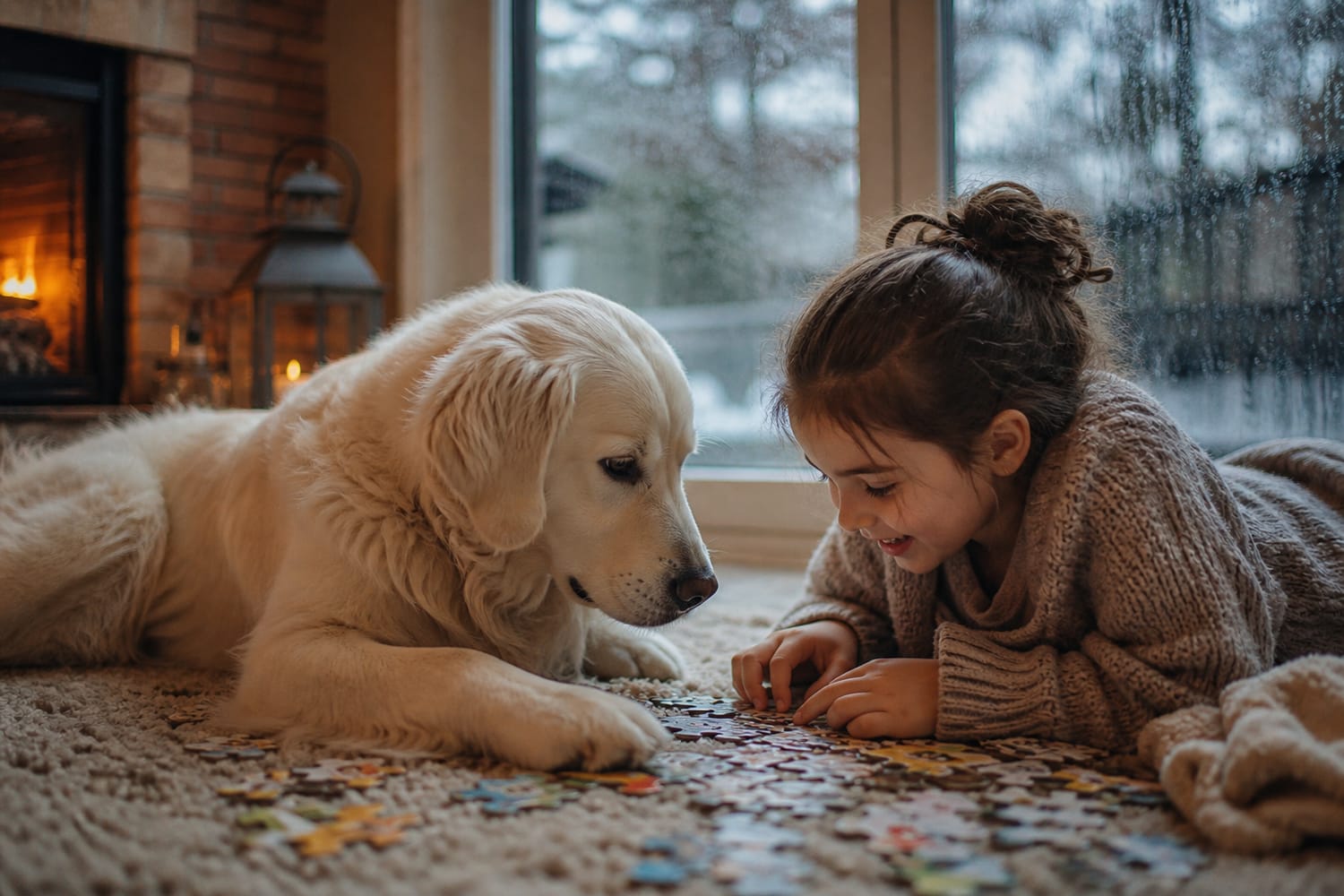
When the Rain Taps the Window, Adventure Moves Indoors
Rainy days have a special kind of magic. The world slows down, sidewalks glisten, and the cozy corners of home suddenly feel a little warmer. But if you share your life with a pet, you may also recognize the look: ears perked, tail twitching, paws ready, eyes asking, “So… what now?”
For many pets, especially dogs and curious cats, bad weather can mean less outdoor exercise, fewer smells to investigate, and a lot of unused energy. But a rainy day doesn’t have to become a boring day. In fact, it can become one of the best opportunities to strengthen your bond, introduce enrichment, and create joyful routines that support your pet’s mental and physical well-being.
Indoor adventures are not just “backup plans.” They are meaningful experiences. They can help reduce stress, prevent boredom-related behaviors, build confidence, and remind our pets that the best part of any day—rainy or sunny—is spending it with us.
Why Indoor Enrichment Matters
Pets need more than food, water, and a soft place to nap. They need stimulation. Just like people, animals benefit from activities that challenge their minds, engage their senses, and give them a sense of purpose.
When outdoor walks are shortened or playtime in the yard is impossible, pets may become restless. Dogs might bark more, chew things they normally ignore, or pace around the house. Cats may become extra mischievous, pouncing on ankles, knocking items off shelves, or demanding attention at 3 a.m. Small pets like rabbits, guinea pigs, and ferrets may also need extra enrichment to stay active and content.
The good news? A living room, hallway, kitchen, or bedroom can become a whole world of discovery with just a little creativity.
Indoor enrichment is not about overwhelming your pet with constant entertainment. It is about offering healthy choices: sniffing, searching, learning, chasing, climbing, solving, and interacting. These activities give pets a chance to use their natural instincts in safe, rewarding ways.
Turn Mealtime Into a Mini Quest
One of the easiest ways to make a rainy day more exciting is to transform mealtime into an adventure. Instead of placing food in a bowl, invite your pet to work for it in a fun and safe way.
For dogs, try scattering kibble on a towel and loosely rolling it up so they have to sniff and nudge it open. You can also hide small portions of food around one room and encourage them to “find it.” Start with easy hiding places, such as beside a chair leg or under the edge of a blanket, then gradually increase the challenge as your dog understands the game.
Cats often enjoy hunting-style meals. Hide a few treats or pieces of kibble in different spots, such as on a cat tree, behind a cushion, or inside a treat puzzle designed for cats. This taps into their natural pattern of seeking, stalking, and “catching” food.
For rabbits and guinea pigs, tuck hay into safe cardboard tubes, paper bags, or enrichment toys designed for small animals. Always make sure materials are pet-safe, free from staples, tape, glossy coatings, or anything that could be harmful if chewed.
Food-based enrichment should be adjusted to your pet’s diet. Treats and extras should be counted as part of their daily intake, especially for pets who need weight management. If your pet has a medical condition, allergies, or a special diet, ask your veterinarian before introducing new foods.
Create a Rainy Day Training Party
Training is one of the most underrated rainy day activities. It is not just about obedience—it is communication. Every cue your pet learns becomes a tiny bridge between their world and yours.
For dogs, rainy days are perfect for practicing basics like sit, stay, come, touch, and leave it. Keep sessions short and cheerful. Five minutes of focused learning can be more effective than a long session that leaves everyone tired or frustrated.
You can also teach fun tricks: spin, shake, crawl, bow, or put toys in a basket. Trick training builds confidence and gives your dog a positive outlet for energy. Even senior dogs can enjoy gentle training, especially if you adapt activities to their mobility and comfort level.
Cats can learn too. Many cats respond well to clicker training or marker words paired with treats. You might teach your cat to come when called, sit, high-five, touch a target, or enter a carrier calmly. Training a cat requires patience and a sense of humor, but it can be incredibly rewarding.
Birds, rabbits, and other pets can also learn simple behaviors using positive reinforcement. The key is to reward what you want to see more of and never force your pet into participation. If they walk away, the session is over—and that’s okay.
Build an Indoor Obstacle Course
You do not need fancy equipment to build a pet-friendly adventure course. Household items can become tunnels, jumps, platforms, weave poles, and balance challenges.
For dogs, use cushions to step over, chairs to weave around, a broomstick laid low as a gentle jump, and a blanket tunnel to crawl through. For small dogs, puppies, senior dogs, or pets with joint concerns, keep everything low-impact. Avoid slippery floors, sharp edges, and unstable objects.
Cats may enjoy a vertical obstacle course using cat trees, shelves, boxes, and tunnels. Encourage them with a wand toy or treat trail. Let them leap only from safe heights and never push them to jump if they seem unsure.
Ferrets often love tunnels, crinkly bags, and boxes with entrance holes. Rabbits may enjoy hopping over low obstacles or exploring cardboard hideouts. Always supervise and make sure any setup is safe for your specific pet’s species, size, and personality.
The goal is not perfection. If your dog walks around the “jump,” your cat sits inside the tunnel instead of running through it, or your rabbit decides the cardboard castle is best used for nibbling, that still counts as enrichment. Let your pet turn the activity into their own version of fun.
Host a Sniffari Without Leaving Home
A “sniffari” is a walk where sniffing is the main event. But sniffing adventures can happen indoors too. For dogs especially, scent work can be calming, satisfying, and wonderfully tiring.
Try hiding a favorite toy or treat in one room. Let your dog watch at first, then release them to find it. As they improve, hide the item while they wait in another room. You can use a cheerful cue like “search” or “find it.”
You can also make a scent box by placing a few pet-safe objects in a cardboard box—such as a towel, a toy, and a treat hidden among them. Let your dog investigate at their own pace. For cats, try rotating toys with different textures or adding catnip or silvervine if your cat enjoys them. Not all cats respond to catnip, and kittens under a few months old often show little interest, which is completely normal.
For multi-pet households, scent games are often best done one pet at a time to prevent competition over treats or toys. This also gives each animal individual attention, which is especially valuable on days when everyone is indoors together.
Make Cozy Time Meaningful
Not every rainy day adventure has to be high-energy. Sometimes the best bonding happens in quiet moments: a cat purring beside you, a dog resting their chin on your knee, a rabbit stretching out nearby, a bird softly chattering from a perch.
Cozy time can still be enriching. Try a gentle grooming session if your pet enjoys being brushed. Grooming helps remove loose hair, supports coat health, and gives you a chance to notice changes such as lumps, skin irritation, tender spots, or overgrown nails. Keep it positive and brief, especially for pets who are sensitive to touch.
You can also create a calm “rainy day nest” with blankets, beds, and favorite toys. Some pets love background music or white noise during storms, while others prefer a quiet room away from windows. If your pet is fearful of thunder, comfort them calmly. Contrary to old myths, reassuring a frightened pet does not “reward fear.” Your calm presence can help them feel safer.
For pets with storm anxiety, speak with a veterinarian or qualified behavior professional. Some animals benefit from behavior modification plans, calming products, pressure wraps, or medication in more serious cases.
Try DIY Toy Time
Rainy days are perfect for rotating toys or making simple DIY enrichment items. Toy rotation keeps familiar items exciting. Instead of leaving every toy out all the time, put some away and reintroduce them later. To your pet, an old toy can feel brand new after a break.
For dogs, try a muffin tin puzzle: place a few treats in some cups, then cover all the cups with tennis balls or safe toys. Your dog has to move the objects to find the reward. Always supervise to make sure they do not chew or swallow anything unsafe.
For cats, cardboard boxes are practically legendary. Cut a few holes in a box and dangle a wand toy through them, or place crinkly paper inside for supervised exploration. Avoid string, yarn, ribbon, or small parts if your cat might swallow them—linear foreign bodies can be very dangerous.
For small pets, cardboard tubes stuffed with hay can be a simple joy. Birds may enjoy shreddable toys, foraging cups, or safe branches depending on their species. Because safety varies widely between animals, always check that materials are appropriate for your pet.
Include the Whole Family
Indoor pet adventures can bring families together. Children can help hide treats, build obstacle courses, read aloud to a pet, or practice simple training cues under adult supervision. These moments teach empathy, patience, and responsibility.
It is important to help children understand pet body language. A wagging tail does not always mean a dog wants a hug. A cat walking away is asking for space. A rabbit that freezes may be frightened. Rainy day play should always respect the pet’s comfort.
Family activities work best when they are structured. For example, one person hides treats, another gives the cue, and another cheers when the pet succeeds. Keep voices upbeat but not overwhelming. Pets are sensitive to energy, and the goal is joyful connection—not chaos.
Match the Activity to Your Pet’s Personality
Every pet is an individual. Some dogs want a full indoor agility course. Others prefer a treat puzzle followed by a nap. Some cats love chasing feather toys; others want to observe from a cozy perch. Senior pets may enjoy scent games and gentle stretching more than active play. Puppies and kittens may need short bursts of activity followed by plenty of rest.
Pay attention to your pet’s signals. Bright eyes, relaxed body language, playful movement, and voluntary engagement usually mean they are enjoying themselves. Turning away, lip licking, yawning, hiding, flattened ears, growling, or refusing treats can mean stress or fatigue.
Rainy day enrichment should be flexible. If one idea does not work, try another. The best activity is the one your pet feels safe and happy doing.
A Rainy Day Can Become a Favorite Memory
The beauty of indoor adventures is that they turn ordinary moments into shared stories. The dog who proudly finds a hidden biscuit under the laundry basket. The cat who claims the cardboard castle as a royal throne. The child who teaches the family dog a new trick. The senior pet who enjoys a slow puzzle and a soft blanket while rain hums against the glass.
Bad weather may change the plan, but it does not have to dim the day. With imagination, patience, and love, your home can become a playground, classroom, spa, and sanctuary all at once.
So the next time clouds gather and puddles appear, take it as an invitation. Put on the kettle, gather a few toys, open a cardboard box, or hide a treat behind the sofa. Your pet does not need sunshine to feel joy. More than anything, they need connection—and rainy days are full of chances to give it.