
The Best Adventures Leave Room for Rest
Yes, your pet may need a quieter day after a big adventure—especially if the outing involved more activity, travel, socializing, or excitement than usual. A rest day does not mean skipping every walk or abandoning your pet’s routine. It means easing the pace, offering comfort, and watching how your companion feels before planning the next big thing.
Think of a dog after a long trail hike, a cat after a busy family gathering, or a rabbit after an unusually lively afternoon in a new play space. The experiences are different, but the question is the same: What would help this pet feel comfortable today? Sometimes the answer is a short sniff around the block. Sometimes it is a peaceful corner and the freedom to nap undisturbed.
Look at Your Pet, Not the Calendar
There is no universal rule that every big outing must be followed by exactly one day off. The same adventure can affect pets differently depending on their age, health, fitness, temperament, and familiarity with the activity. A regular hiking companion may bounce back quickly from a familiar route; a dog trying that route for the first time may need a much gentler next day. Veterinary guidance recommends tailoring exercise to the individual pet and watching for fatigue rather than relying on a fixed distance or schedule.
Start by comparing your pet with their usual self. Are they settling comfortably, getting up normally, eating and drinking as expected, and showing interest in familiar activities? Or are they unusually quiet, reluctant to move, slow to respond, or having trouble getting comfortable? After exercise, changes such as irritability, difficulty rising, or an altered posture can signal overexertion and warrant a call to your veterinarian.
Excitement can be tiring, too. A day full of unfamiliar people, sounds, smells, or handling may leave a pet wanting less interaction afterward—even if they barely ran a step. Respect a companion who chooses a quiet room over another round of attention. A restful day should respond to their signals, not simply replace a packed schedule with a different kind of entertainment.
Begin the Rest Day the Night Before
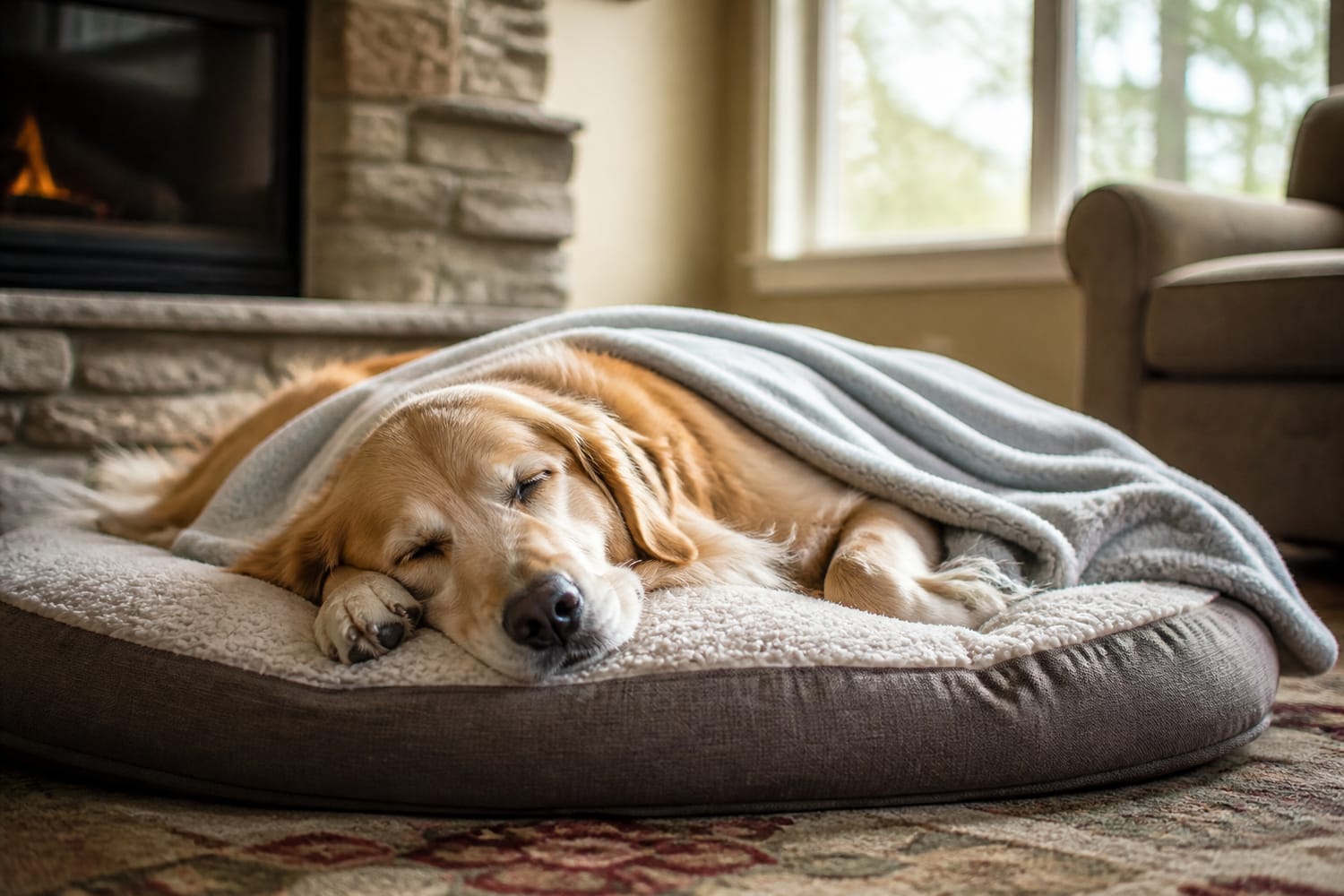
The gentlest recovery plan starts when you get home. Offer fresh water and a calm place to settle. Keep your pet’s usual mealtime and bedtime routine where possible; familiarity can be comforting after a day that felt out of the ordinary.
If you have been outdoors, take a few unhurried minutes to check for problems that are easy to miss in the excitement. Look at paw pads and between toes for cuts or lodged debris, and check your pet’s coat and skin for ticks. Notice whether they move comfortably when they stand up or turn around. A pet who seems eager at the trailhead may show discomfort only after resting at home.
Make a welcoming resting space without insisting your pet use it. One animal may prefer a soft bed near the family; another may choose a cooler floor or a tucked-away spot. Let them pick from safe, comfortable options, and remind children that a sleeping pet gets to keep sleeping. For more ideas, Petspiration’s guide to giving pets more choice in their daily lives includes ways to make rest and interaction feel more comfortable on the pet’s terms.
Build a Gentle Day, Not an Empty One
A rest day works best as a change of pace, not a punishment. Keep essentials in place: water, meals, bathroom breaks, and any care your pet normally needs. Then trade strenuous or overstimulating activities for easy choices.
For a healthy dog who seems comfortable, that might mean a short, relaxed walk with plenty of time to sniff instead of a run or a vigorous game of fetch. Sniffing lets a dog explore at their own pace without turning the outing into a distance goal. If your dog is sore, limping, or has a condition that affects mobility, ask your veterinarian what movement is appropriate rather than assuming a walk will help. Dogs with osteoarthritis, for example, may benefit from regular, controlled activity rather than a pattern of intense exercise followed by prolonged inactivity.
An indoor cat might enjoy watching the neighborhood from a familiar window perch, then retreating for a nap. A rabbit or guinea pig might prefer ordinary access to hay, shelter, and a peaceful enclosure over another novel setup. Even enthusiastic pets do not need a full program of enrichment every waking hour.
If your companion seems interested, offer one low-key activity and let them decline it:
- Scatter part of a dog’s regular meal for a brief, easy sniff-and-find game.
- Offer a cat a familiar puzzle feeder or a short, gentle play session.
- Sit nearby while your pet rests, without asking for cuddles or attention.
Keep food games suitable for your pet’s diet, count the food toward their usual intake, and supervise any new toy or setup. Petspiration’s indoor enrichment ideas can be adapted to a rest day by choosing the calmest activities and stopping while your pet is still comfortable.
Know When Rest Is Not Enough
A quiet day is helpful for ordinary tiredness; it is not a substitute for veterinary care when something seems wrong. If your pet limps, appears painful, cannot move normally, or seems unusually unwell, contact a veterinarian. VCA’s guidance on pain and limping recommends prompt assessment for persistent new limping and emergency care for a pet who cannot stand or walk without help.
Be especially alert after an outing in warm weather. Excessive panting, heavy drooling, unsteadiness, abnormal gum or tongue color, or collapse can be signs of dangerous heat stress. The American Veterinary Medical Association’s warm-weather safety advice says to seek emergency veterinary care for these signs—do not wait for a rest day to see if they pass.
And resist the temptation to reach into your own medicine cabinet for a sore pet. Human pain medicines should not be given unless your veterinarian specifically directs you to do so; ibuprofen, for instance, is toxic to dogs and cats. Your veterinary team can help you decide what your pet needs safely.
Let Tomorrow’s Plans Follow Today’s Pet
By the end of a quieter day, check in again. Does your pet seem comfortable moving around? Are they returning to their usual curiosity and routine? If so, you can ease back toward normal activities while paying attention to their response. If they are still off, or you are unsure whether their behavior reflects fatigue or pain, ask your veterinarian before repeating the adventure.
Rest days can also teach us what makes an outing truly enjoyable. Perhaps your dog loved the woodland smells but found the long route too demanding. Perhaps your cat enjoyed watching visitors from a distance but wanted a private retreat afterward. Small observations help you shape future plans around the animal beside you, rather than an idea of what a “fun pet day” ought to look like. Petspiration’s guide to discovering what your dog or cat enjoys most offers a way to notice how pets respond before, during, and after an activity.
The next adventure will be there when your companion is ready. Today, love might look like a water bowl refilled, a familiar blanket, a slow stroll, and the simple kindness of letting your pet set the pace.