
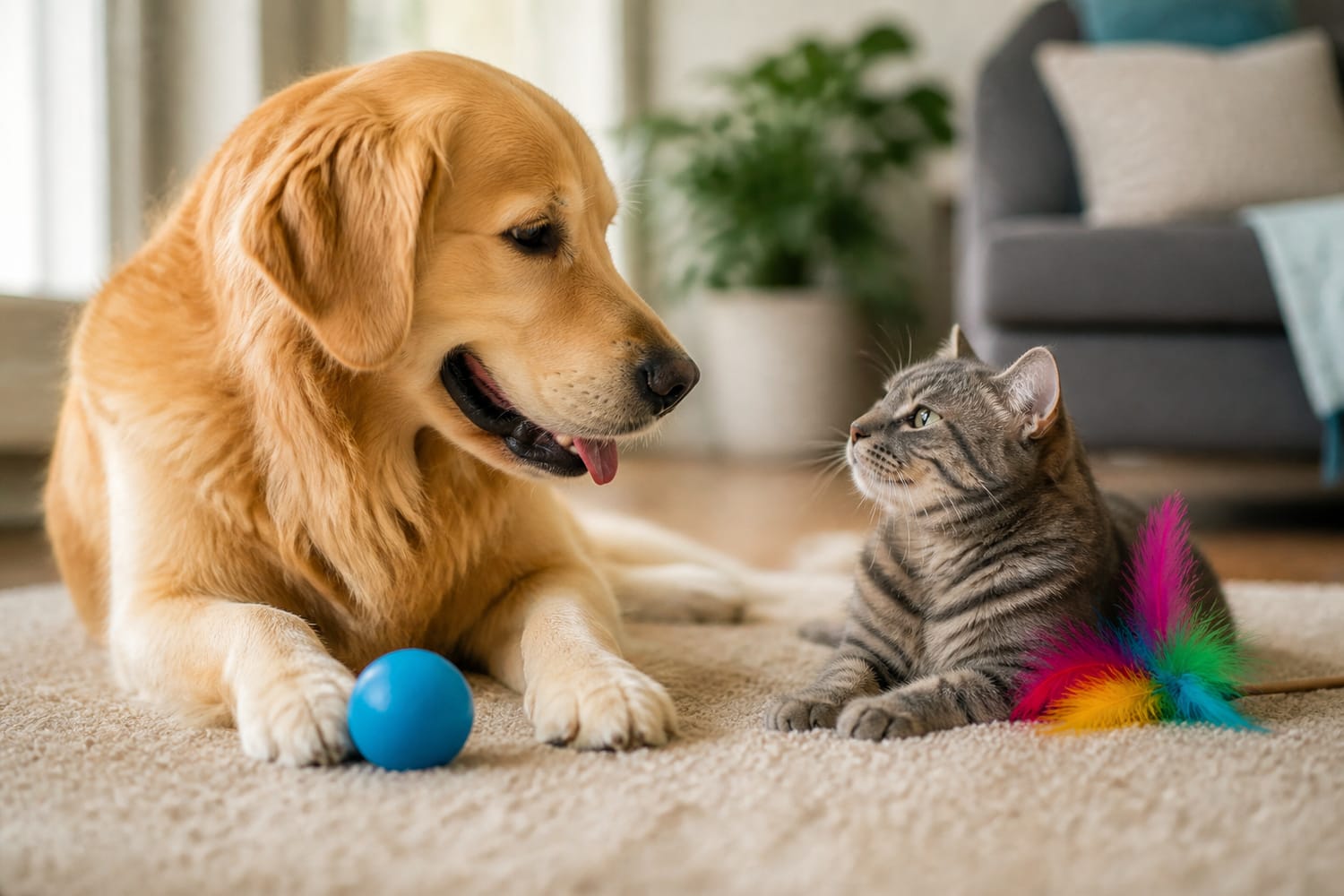
What Is a Pet Joy Map?
A Pet Joy Map is a simple, personalized record of the activities, places, people, sensations, and routines that make your dog or cat feel happiest and most secure. By observing choices and body language, trying safe experiments, and noting patterns, you can create a richer daily life shaped around what your pet genuinely enjoys.
The idea is not to fill every moment with entertainment. Joy can look like a thrilling game of fetch, but it can also be a peaceful nap in a patch of sunlight. One dog may adore busy neighborhood walks, while another prefers quietly sniffing along a familiar trail. One cat may leap after a wand toy; another may be happiest watching birds from a high perch.
Your map helps you appreciate the individual behind the paws—and turn ordinary days into more meaningful ones.
Start With Curiosity, Not Assumptions
We naturally want to share things we enjoy with our pets. However, a friendly dog may not enjoy crowded dog parks, and a cuddly cat may not want to be held. Even two pets of the same breed, age, or household can have completely different preferences.
Begin by asking questions:
- What activity does my pet choose without prompting?
- Where do they go when they want to relax?
- Which toys inspire immediate interest?
- Do they prefer active games, slow exploration, or social contact?
- What makes them return for more?
- How do they behave afterward?
Pay particular attention to voluntary behavior. If your cat repeatedly returns to a cardboard box or your dog keeps bringing you the same battered toy, those choices are valuable clues.
Preferences can also change with age, health, confidence, weather, and experience. Your Pet Joy Map should therefore be treated as a living document rather than a permanent personality label.
Learn to Recognize Genuine Enjoyment
Excitement and enjoyment are not always the same. A highly aroused dog may bark, jump, or race around because they are thrilled—but similar behavior can also appear during frustration or stress. A cat’s rapidly swishing tail may look playful to us while actually signaling irritation.
Look at the whole animal and the surrounding situation. Petspiration’s guide to understanding pet body language offers a helpful foundation for interpreting these signals.
Possible signs of comfortable engagement include:
In Dogs
- A loose, wiggly body
- Soft eyes and relaxed facial muscles
- Play bows or bouncy movement
- Voluntarily returning to the activity
- Comfortable sniffing and exploration
- The ability to pause and settle afterward
In Cats
- Ears in a neutral or forward position
- An upright tail during a friendly approach
- Relaxed whiskers and body posture
- Curious investigation
- Repeatedly approaching a toy or person
- Resting, grooming, or settling comfortably afterward
Context matters. Purring does not always mean happiness, and a wagging tail does not automatically mean a dog wants interaction. The strongest evidence is often a combination of relaxed body language, freedom to move away, and a voluntary decision to re-engage.
Explore the Six Regions of Joy
A useful Pet Joy Map includes several kinds of positive experiences. Enrichment is not simply about buying more toys; it is about providing safe opportunities for natural behavior. The American Animal Hospital Association’s enrichment guidance highlights the value of varied activities that support physical, mental, and emotional well-being.
1. Food and Foraging
Some pets love working for part of their meal. Try a treat-dispensing toy, snuffle mat, simple indoor treasure hunt, or small portions hidden in safe locations.
Start with easy challenges. A puzzle that is too difficult may create frustration rather than pleasure. If your companion is new to this activity, follow these tips for introducing puzzle toys gradually.
Account for food used during games as part of your pet’s daily intake. Ask your veterinarian about appropriate treats if your pet has allergies, digestive problems, weight concerns, or a prescription diet.
2. Movement
Movement preferences vary widely. Your dog’s favorites might include sniff walks, swimming, tug, fetch, digging in an approved area, or gently exploring new routes. Cats may enjoy climbing, stalking, chasing, pouncing, or moving through tunnels.
Match activities to your pet’s age, fitness, physical condition, and confidence. Joyful movement should not require pushing through fear, exhaustion, or pain.
3. Sensory Discovery
Dogs often gain enormous satisfaction from investigating scents. Instead of hurrying through every walk, allow time for safe sniffing. Cats may enjoy watching outdoor activity from a secure window, investigating paper bags with handles removed, or exploring boxes and tunnels.
Novelty should be optional and introduced gently. Strong fragrances, sudden noises, unfamiliar objects, and rapid environmental changes can overwhelm sensitive pets.
4. Social Connection
Social joy may involve playing with another compatible pet, training with a favorite person, greeting trusted visitors, or simply resting near the family.
More interaction is not always better. Some pets flourish in lively company, while others prefer short encounters followed by quiet time. A cat sitting beside you rather than on you is still choosing companionship.
5. Problem-Solving and Learning
Positive, reward-based training can be playful enrichment. Dogs and cats can learn to touch a target, enter a carrier, come when called, find a hidden object, or participate in cooperative care.
Keep sessions short and achievable. End while your pet is still interested, and reward progress instead of waiting for perfection.
6. Rest, Safety, and Comfort
Rest belongs on every joy map. Dogs may favor a soft bed near family activity or a quiet retreat away from household traffic. Cats commonly appreciate warm sleeping areas, hiding places, scratching surfaces, and elevated perches.
The Feline Veterinary Medical Association recommends multiple, separated resources and positive interactions tailored to each cat’s preferences. In multi-cat homes, providing choices can reduce competition and help every cat feel secure.
Conduct Simple Choice Experiments
You do not need special equipment to discover your pet’s favorites. Offer two safe options and watch what happens.
For example:
- Place a soft toy and a rolling toy several feet apart.
- Allow your pet to approach without pointing or coaxing.
- Note which one they investigate first.
- Observe how long they remain engaged.
- Repeat on different days and switch the objects’ positions.
You can test walking routes, resting surfaces, treat textures, scratching materials, training rewards, and styles of affection. Change only one variable at a time so the result is easier to interpret.
Avoid turning every choice into a competition. The goal is not to prove that one option is universally “best.” You are looking for tendencies, including preferences that depend on mood or context.
Record the Before, During, and After
A simple notebook or phone note can transform scattered observations into a useful map. Create columns for:
- Activity: What did you offer?
- Setting: Where and when did it happen?
- Before: Was your pet calm, sleepy, restless, or excited?
- During: Did they approach freely and remain engaged?
- After: Did they settle comfortably or seem overstimulated?
- Joy rating: Use a simple score from one to five.
The “after” column is especially important. An activity may look exciting in the moment but leave a pet unable to settle. Another may appear quiet—such as sniffing, licking a food toy, or sitting on a perch—yet lead to deep relaxation.
Patterns should become clearer after a week or two. You may discover that your dog prefers long sniffing opportunities over fast-paced walks, or that your cat plays most enthusiastically shortly before dinner.
Turn Discoveries Into a Joyful Routine
Once you identify reliable favorites, weave them into everyday life. A predictable rhythm can provide security, while small variations keep enrichment interesting. Petspiration’s article on why routine matters in pet behavior explains how consistency can support confidence and reduce uncertainty.
A balanced day might include:
- A dependable feeding and rest schedule
- One favorite physical activity
- One short mental or sensory activity
- Opportunities for social connection
- Uninterrupted quiet time
- Occasional, low-pressure novelty
Not every day needs to be an adventure. Ten attentive minutes doing something your pet truly loves may be more valuable than an hour of unwanted activity.
Know When a Preference Change Needs Attention
Sudden changes deserve careful consideration. A dog who stops chasing a beloved ball or a cat who no longer jumps onto a favorite perch may not simply be “getting lazy.” Reduced activity, withdrawal, irritability, appetite changes, reluctance to climb, and sensitivity to touch can be signs of pain or illness.
The AAHA notes that behavioral changes are often important indicators of discomfort in dogs and cats. Contact your veterinarian if a favorite activity suddenly becomes difficult, unwanted, or physically uncomfortable.
Never force an activity your pet avoids. Respecting a “no” protects trust and may reveal a health issue that needs professional attention.
Let Your Pet Help Design the Good Life
The greatest gift of a Pet Joy Map is not a busier schedule or a collection of expensive toys. It is deeper understanding.
As you observe your companion closely, you begin to notice the tiny choices that make them who they are: the dog who pauses at every interesting tree, the cat who treasures a morning sunbeam, or the senior pet who simply wants a soft bed beside someone they love.
Keep exploring, listening, and updating the map. When pets are given safety, choice, and opportunities to express natural behavior, joy becomes more than an occasional treat. It becomes part of the life you create together.