
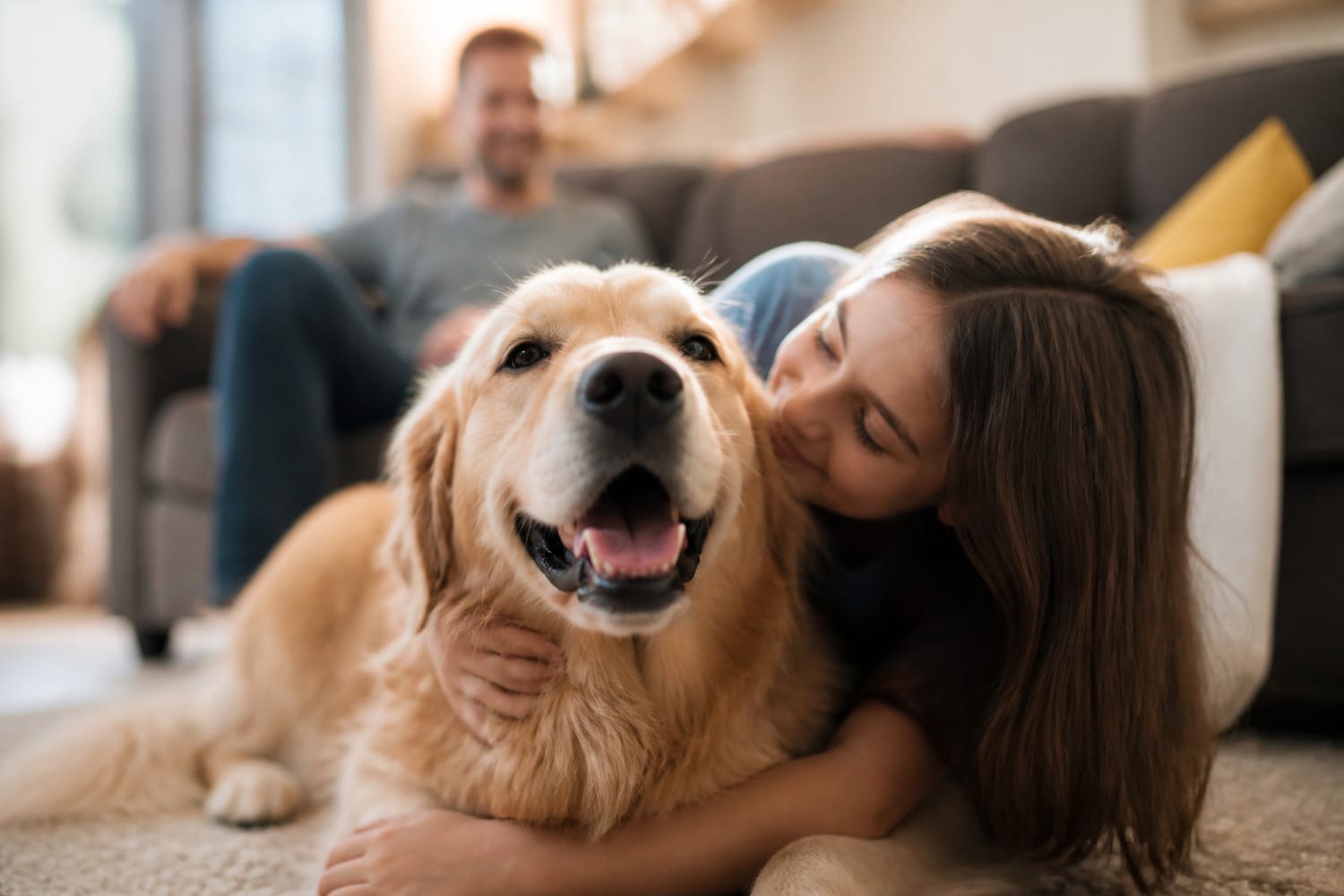
Does Your Pet Have a Favorite Person? How Everyone Can Build a Bond
The Short Answer: Maybe—and That’s Okay
Your pet may seek out one person more often than anyone else. That preference can grow from familiar routines, enjoyable experiences, or simply feeling comfortable with that person’s way of interacting. But a favorite person isn’t necessarily the only person your pet trusts. Relationships can grow and change, and everyone in the household can find a way to connect.
Perhaps your dog races to greet your partner but settles beside you when the house is quiet. Perhaps your cat follows one family member into the kitchen and chooses another for a peaceful afternoon nap. Those aren’t contradictions. They’re a reminder that a pet can enjoy different people for different reasons.
The most rewarding question isn’t “How do I become number one?” It’s “What helps this pet feel safe and happy with me?”
What Does a “Favorite Person” Look Like?
A pet’s preference might show up in small, repeated choices: approaching someone for play, resting nearby, greeting them at the door, or seeking them out in an unfamiliar situation. Yet no single behavior tells the whole story. An exuberant greeting may reflect the excitement of seeing someone who has been away, not a ranking of everyone in the household.
Look for patterns over time and in different settings. Your dog might want a lively game with one person but turn to another for reassurance. A cat who rarely sits on laps may still choose to spend time in the same room as someone they trust.
And don’t measure every species by a cuddle standard. A rabbit hopping over to investigate you, or a bird willingly joining a short training session, may be offering a meaningful moment of connection. Affection is easier to appreciate when we let the pet show us what it looks like.
Why Might a Pet Gravitate Toward One Person?
Time together matters, but how that time feels matters, too. A person who takes unhurried walks, plays a favorite game, or notices when a pet needs space may become especially appealing. Temperament can play a part as well: a cautious animal might relax around a gentle, predictable companion, while an energetic one might eagerly seek a playmate.
Caregiving alone doesn’t guarantee that you’ll be the person your pet runs to first. You might handle meals and veterinary appointments while someone else is available for games. That can sting a little—especially when you do so much—but it isn’t a verdict on your relationship. Instead of competing with an existing bond, build experiences that belong to the two of you.
If your pet is new to the family, allow room for their history and personality. Some animals settle in quickly; others need time before they feel comfortable approaching anyone. Petspiration’s guide to building trust with a new rescue dog or cat offers more ideas for taking that process at your pet’s pace.
Start by Learning Your Pet’s Language
Before reaching for affection, pause and observe. Does your pet move closer when you speak softly, or drift away? Do they lean into a touch, remain relaxed, and choose to stay—or turn their head, stiffen, hide, or leave? Responding to those signals helps make your company easier to enjoy.
For cats, choice is particularly important. Offer an opportunity to interact rather than assuming a cat wants to be picked up or petted. If they approach, try a brief interaction and pause to see whether they ask for more. Feline veterinary guidance recommends finding what that individual cat values, whether it’s play, food, or attention, instead of deciding for them.
The same respectful approach helps with other pets. The House Rabbit Society suggests sitting at a rabbit’s level and letting them come to you; many rabbits dislike being lifted, even if they enjoy gentle company. With birds, calm, patient, positively reinforced interaction can help build trust. Connection needn’t involve holding an animal who would rather keep their feet on the ground or choose their own perch.
Give Everyone a Way to Share the Good Moments
A bond usually grows through ordinary moments repeated with care. You don’t need an elaborate outing or an endless supply of treats. Start with a little time your pet genuinely enjoys, then make it a dependable part of life.
- With a dog: Take a relaxed walk that leaves time to sniff, play a short game of fetch or tug if they enjoy it, or practice a familiar cue for a reward.
- With a cat: Move a wand toy for a brief play session, offer a cozy place to sit nearby, or let the cat initiate a gentle greeting.
- With a rabbit: Sit quietly on the floor and let curiosity bring them over. You can offer an appropriate toy or simply share the space.
- With a bird: Speak calmly and, when the bird is comfortable, practice a short interaction that rewards willing participation.
These are invitations, not assignments. If your dog would rather sniff than fetch, or your cat would rather watch from across the room than be stroked, adjust the plan. Petspiration’s pet joy map can help you identify the activities and routines your companion actually enjoys.
Reward-based training can be another shared activity, especially for dogs. The American Veterinary Society of Animal Behavior’s guidance on humane dog training supports reward-based methods and notes their benefits for the dog–human relationship. Keep sessions brief and pleasant: the goal is to learn together, not to make your pet earn your attention.
Make Bonding a Family Effort, Not a Contest
If one person is currently your pet’s go-to companion, ask what seems to work about their interactions. Do they give the dog time to settle before reaching out? Do they wait for the cat to approach? Those habits are more useful to learn from than a tally of who gets the most cuddles.
Give other household members chances to take part in enjoyable care without overwhelming the pet. Someone can prepare a meal, offer a toy, or sit nearby during a calm moment. Children can help in age-appropriate ways with adult supervision, while learning that a pet’s resting place and decision to walk away must be respected. Never ask a child to chase, restrain, or hug an animal to prove affection.
Consistency helps, but so does flexibility. A pet may welcome play on one day and prefer rest on another. Even five attentive minutes can feel more worthwhile than a longer interaction your pet didn’t choose. For easy starting points, try Petspiration’s five-minute pet rituals.
When “Picking Favorites” May Mean Something Else
Preferences are normal. A sudden change, though, deserves attention. If a pet who usually welcomes you begins avoiding touch, hiding, or acting unlike themselves, don’t assume they’ve stopped liking you. Discomfort, illness, stress, or a change in the household could be involved. Contact your veterinarian if a behavior shift is new, pronounced, or accompanied by changes in appetite, movement, or daily habits.
Likewise, there’s a difference between happily choosing one person and becoming distressed whenever that person leaves. If absences bring persistent signs of distress, ask your veterinarian for guidance rather than trying to solve the problem by forcing the pet to spend time with someone else.
There’s Room for More Than One Special Bond
Your pet doesn’t have to divide their affection equally for every relationship to matter. One person may be the adventurer, another the patient playmate, and another the reassuring presence at the end of a busy day. Each bond can be real without looking the same.
So begin where your pet is. Notice what they enjoy, offer your company, and let them choose how close to come. Over time, the sweetest sign of connection may not be a dramatic greeting at all. It may be a small, familiar moment: your pet looking up, seeing you there, and deciding to stay.