
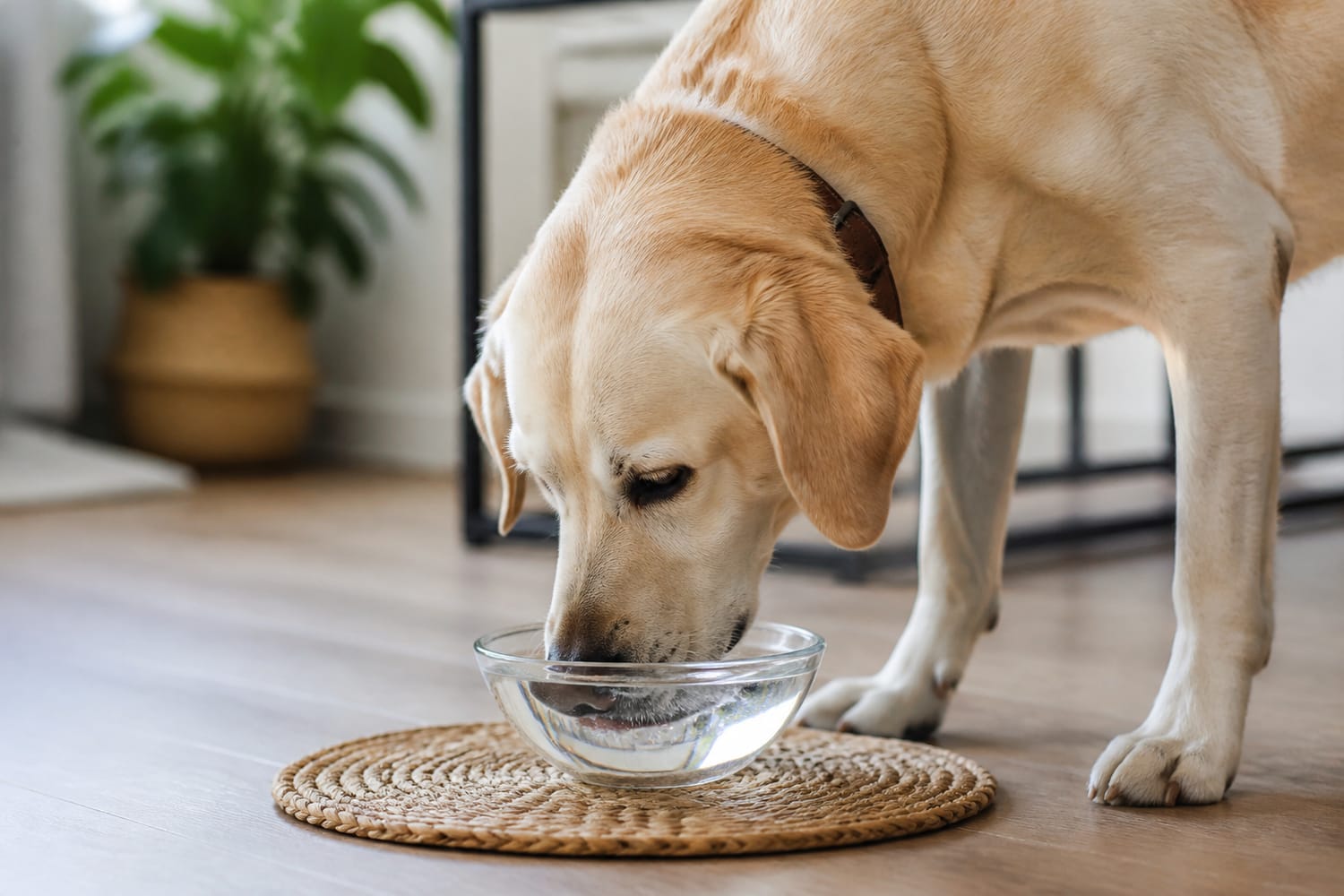
A Bigger Thirst Is a Clue, Not a Diagnosis
A pet may suddenly drink more because of warm weather, exercise, dry food, or another harmless change. However, persistent excessive thirst—especially when paired with increased urination, weight loss, vomiting, appetite changes, or low energy—can signal diabetes, kidney disease, hormonal disorders, infection, or another condition that needs veterinary attention.
Your pet’s water bowl may seem like an ordinary part of the household, but it can provide valuable information about their health. An empty bowl that needs refilling more often, a cat suddenly drinking from faucets, or a dog waking you to go outside may be your first clue that something has changed.
Veterinarians call excessive thirst polydipsia. It frequently appears alongside polyuria, meaning increased urine production. You may see these terms shortened to “PU/PD” in veterinary notes.
How Much Water Should a Pet Normally Drink?
There is no single perfect amount for every pet. Water requirements vary according to:
- Body size and activity level
- Weather and indoor temperature
- Pregnancy or nursing
- Health and age
- Medications
- The moisture content of food
- Recent vomiting, diarrhea, or exercise
A pet eating canned or fresh food may drink less from a bowl because the food already supplies moisture. A pet switched to dry kibble may naturally visit the bowl more frequently.
Cats can be especially difficult to monitor. According to Cornell University’s feline hydration guidance, a cat needs roughly four ounces of water per five pounds of lean body weight each day, including moisture obtained through food. Individual needs still vary, so your cat’s usual pattern matters more than a single observation.
When Drinking More Water May Be Normal
Before assuming the worst, consider whether something in your pet’s daily life has changed.
Hot Weather or Increased Exercise
Dogs may drink significantly more after a long walk, energetic play session, or warm afternoon. Panting helps dogs regulate body temperature but also increases fluid loss. Cats may drink more during hot weather, even if their activity level appears unchanged.
A Change in Diet
Switching from wet food to dry food commonly increases drinking. Salty treats may also make a pet temporarily thirstier, although heavily salted human foods are not appropriate pet snacks.
Pregnancy or Nursing
A nursing mother requires additional water to support milk production. Her bowl should remain full of fresh, easily accessible water.
Medication
Corticosteroids, diuretics, and certain anti-seizure medications can increase thirst and urination. Never stop a prescribed medicine without veterinary guidance. Instead, report the change and ask whether it is an expected side effect.
Temporary thirst after exercise or on a hot day should settle as your pet cools down and returns to their usual routine. A noticeable increase that continues without an obvious explanation deserves closer attention.
Health Problems That Can Cause Excessive Thirst
In many illnesses, the kidneys produce more urine or lose their ability to conserve water effectively. Your pet then drinks more to replace the fluid being lost. Excessive drinking is therefore often the body’s attempt to maintain balance—not simply an unusual habit.
Diabetes Mellitus
Diabetes prevents the body from using glucose normally. Excess glucose spills into the urine and draws water with it, increasing both urination and thirst.
Other possible signs include:
- Increased appetite
- Weight loss despite eating
- Tiredness or weakness
- Cloudy eyes in dogs
- Changes in walking or hind-leg weakness in cats
- Recurrent infections
Pet parents can learn more about these patterns in Petspiration’s guide to the early warning signs of pet diabetes. Blood and urine tests are generally needed for diagnosis; thirst alone cannot confirm diabetes.
Kidney Disease
Healthy kidneys filter waste while conserving the water the body needs. When kidney function declines, urine may become more dilute, causing a pet to urinate larger amounts and drink more.
Chronic kidney disease is particularly common in older cats, although dogs and younger animals can also develop kidney problems. Early signs may be subtle. Over time, pets may develop weight loss, poor appetite, vomiting, weakness, bad breath, or a dull coat. Increased thirst and urination can appear when the kidneys lose some of their ability to concentrate urine.
Hormonal Conditions
Hormone-related illnesses can disrupt fluid balance. Cushing’s disease, which is more common in dogs, may cause excessive thirst, frequent urination, increased hunger, panting, thinning hair, and a pot-bellied appearance.
In older cats, hyperthyroidism can cause increased thirst alongside weight loss, restlessness, vocal behavior, vomiting, or a surprisingly large appetite. Rarely, dogs or cats may develop diabetes insipidus, a condition involving the hormone that helps the kidneys conserve water.
Urinary, Liver, or Uterine Disease
Urinary tract and kidney infections may alter drinking and bathroom habits. Watch for straining, accidents, blood in the urine, discomfort, or repeated attempts to urinate. Petspiration’s overview of UTIs in dogs and cats explains why similar urinary symptoms can have very different causes.
Liver disease, abnormal blood calcium levels, and several other metabolic disorders can also cause increased thirst.
In an unspayed female dog or cat, excessive drinking accompanied by lethargy, vomiting, loss of appetite, abdominal swelling, or vaginal discharge may indicate pyometra, a potentially life-threatening uterine infection requiring urgent care.
How to Monitor Water Intake at Home
You do not need sophisticated equipment to collect useful information. A simple 24-hour record can help your veterinarian understand what is happening.
- Measure how much water you place in the bowl.
- Record every refill.
- Measure what remains after 24 hours.
- Note spills or water obtained from other sources.
- Track urination, appetite, energy, vomiting, and stool changes.
- Repeat for two or three days if your pet otherwise seems comfortable.
If several pets share bowls, monitoring one animal is harder. Separate them temporarily only if doing so is safe and does not cause distress. Automatic fountains also make measurement challenging, but you can record how much water you add each day.
Never deliberately withhold water to “test” your pet. A thirsty animal may be replacing large fluid losses, and restricting access could lead to dangerous dehydration. Specialized water-deprivation testing, when appropriate, must only be conducted under close veterinary supervision.
When Should You Call the Veterinarian?
Arrange a veterinary appointment when excessive thirst is persistent, unexplained, or clearly different from your pet’s normal behavior. Contact the clinic sooner if your pet is senior, very young, pregnant, taking medication, or already living with diabetes, kidney disease, or another chronic condition.
Seek same-day or emergency care if increased thirst occurs with:
- Repeated vomiting or inability to keep water down
- Severe diarrhea
- Extreme weakness, confusion, collapse, or seizures
- Breathing difficulty
- A painful or swollen abdomen
- Straining without producing urine
- Blood in the urine
- Suspected antifreeze, medication, or toxin exposure
- Signs of severe dehydration
- Rapid deterioration in behavior or responsiveness
Antifreeze exposure is a true emergency. Early signs may include vomiting, excessive thirst, increased urination, poor coordination, and lethargy, but severe kidney damage can follow. Do not wait for symptoms to worsen.
For additional warning signs, review Petspiration’s guide on when to call the vet.
What to Expect at the Veterinary Visit
Your veterinarian will begin with questions about when the thirst started, how much your pet appears to drink, and whether urination, appetite, weight, medication, or behavior has changed.
A physical examination may be followed by:
- A urinalysis to assess urine concentration, glucose, blood, or infection
- Blood chemistry to evaluate kidney and liver function, glucose, calcium, and electrolytes
- A complete blood count
- A urine culture when infection is suspected
- Thyroid or adrenal testing
- Blood pressure measurement
- X-rays or ultrasound when appropriate
Because many conditions produce similar symptoms, testing is important. The VCA guide to testing increased thirst and urination explains how a pet’s history, examination, bloodwork, and urine results work together to narrow down the cause.
Attentive Pet Care Can Make a Meaningful Difference
Finding an empty water bowl does not automatically mean your pet is seriously ill. Sometimes the explanation is a warm day, a lively adventure, or a new diet. The key is noticing when the change continues or appears alongside other symptoms.
Pets cannot tell us that they feel unusually thirsty, but their routines speak for them. By paying attention, recording changes, and contacting a veterinarian when something feels wrong, you become your pet’s most important health advocate.
Many conditions associated with excessive thirst can be managed successfully, especially when recognized early. That everyday moment beside the water bowl may be a small clue—but your loving attention can turn it into timely care and a healthier future together.