
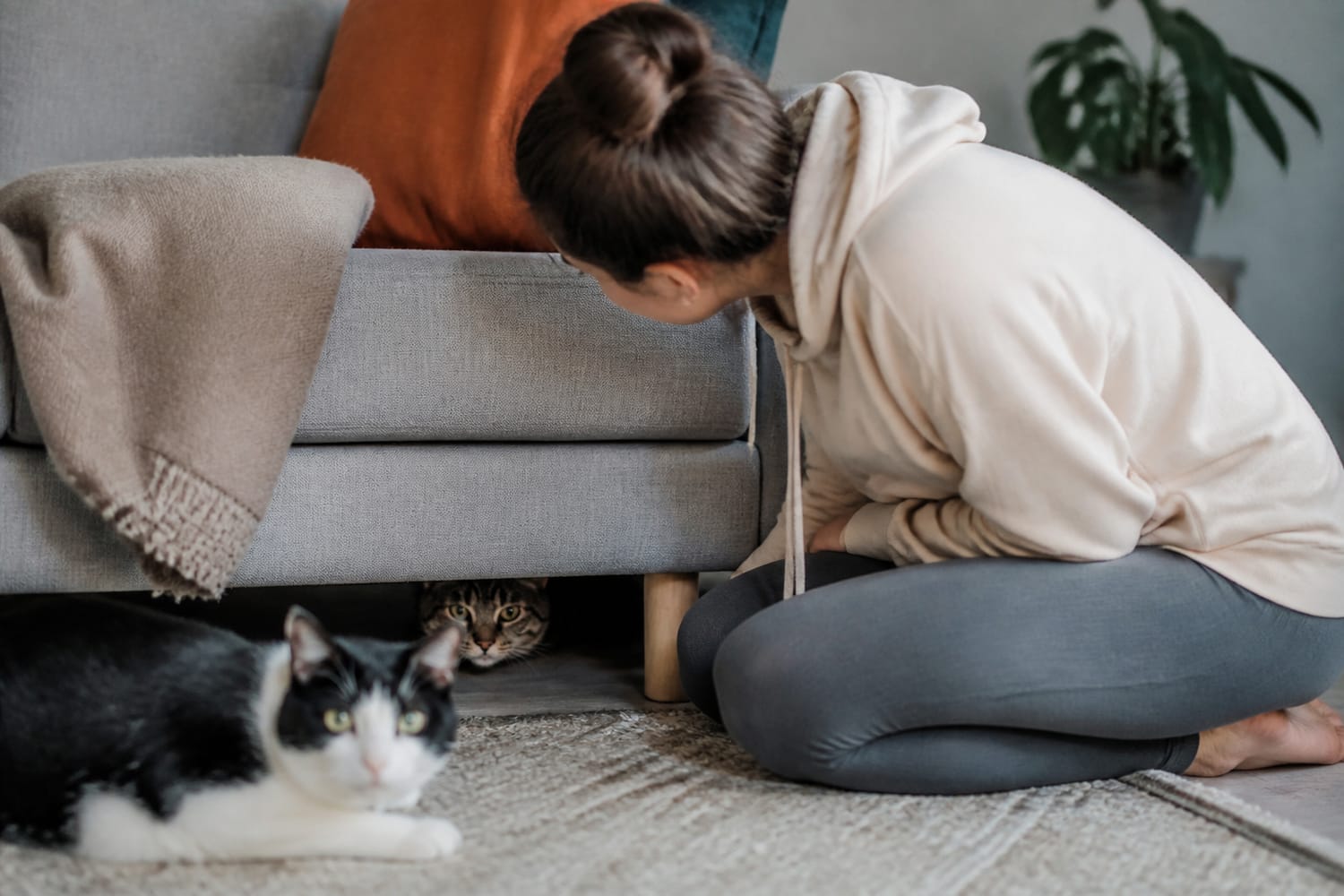
Why Is Your Cat Hiding More Than Usual? Start With What’s Changed
A cat tucked into a quiet corner may simply want a peaceful nap. But hiding more than usual can also signal stress, pain, or illness—especially if your cat is eating less, using the litter box differently, or acting unlike themselves. The first step is to check on their basic needs without dragging them out of their safe spot.
If your normally sociable cat skips one evening on the sofa, think about what happened that day. Were there visitors, a thunderstorm, or a noisy repair? If they stay hidden through mealtime or seem uncomfortable when they emerge, pay closer attention. The question is not “Do cats hide?” They do. It’s “Is this different for my cat?”
Hiding Can Be a Healthy Choice
Cats need places where they can rest undisturbed. A box, an open carrier, or a quiet perch gives them some control over their surroundings. That matters in a busy home, where people, pets, and sounds may come and go without warning. Feline veterinary guidance recommends providing safe hiding places and making food, water, and litter boxes easy to reach without competition from other pets.
Hiding may be especially understandable after a move or adoption. An unfamiliar home has new smells, routines, and people to learn. Give a new cat a calm room with the essentials, then let them explore at their own pace; our guide to helping a new dog or cat feel safe on the first night offers more ways to make that transition gentle.
Even a longtime resident may retreat during a party or when a new pet arrives. If they still come out to eat, drink, use the litter box, and enjoy familiar activities once things settle, that is reassuring. It is not a guarantee that all is well, though. A change that continues or comes with other symptoms deserves a call to your veterinarian.
Check Food, Water, and the Litter Box First
Before trying to solve the mystery of why your cat is hiding, gather a few clues. You do not need to pull them out or perform an examination yourself. Observe quietly, check their dishes and litter box, and note what has changed.
- Food: Did they eat their usual meal? If you have several cats, can you tell who ate it?
- Water: Are they drinking noticeably more or less than usual?
- Litter box: Are there normal urine clumps and stools? Are they making repeated trips, straining, crying, or producing little or no urine?
- Movement: Do they walk, climb, and jump as they normally would?
- Everyday behavior: Are they grooming, playing, and responding to you in familiar ways?
A cat who hides and stops jumping onto a favorite chair may be avoiding a painful movement. One who hides and leaves most of breakfast untouched may feel unwell. Neither clue tells you the cause on its own, but both are useful to share with a vet. Cats can be subtle about illness, so changes in appetite, movement, coat, energy, and litter-box habits are worth noticing.
Do not wait to see whether a cat who is straining to urinate improves overnight. Passing little or no urine can mean a urinary obstruction, a life-threatening emergency that needs immediate veterinary care. Male cats are at greater risk, but any cat with these signs needs prompt assessment.
Look for a Stressor—Without Assuming That’s the Answer
Once you have checked the basics, think back over the past few days. Has furniture moved? Did you switch litter, bring home a new animal, host guests, or start a noisy project? Even a change that seems small to us can affect a cat who relies on familiar places and predictable routines.
Watch how other pets use shared space, too. Your cat may have a clear path to their bowl when you look, but does another animal block the hallway at dinner? Do they have to pass a dog’s bed to reach the litter box? Offering separated resources and more than one safe resting spot can help reduce household tension.
If a recent disruption seems likely, make the home quieter and more predictable. Keep meals on a familiar schedule. Offer a safe spot where your cat will not be disturbed, and let them decide when to come out. For gentle ideas that respect a pet’s pace, see our article on simple routines that build calm confidence.
Still, a plausible stressor does not rule out a medical problem. A cat can be stressed and sick at the same time. If the hiding is sudden, pronounced, or accompanied by another change, contact your veterinarian rather than trying to explain it away.
Know When Hiding Means “Call the Vet”
You know your cat’s usual rhythm better than anyone. If a friendly cat suddenly avoids everyone, a confident cat stays tucked away, or a shy cat becomes even harder to find, it is reasonable to call your vet—even if you cannot spot another symptom. Describe when the change began and what you have observed. Your vet can help decide how soon your cat should be seen.
Seek emergency veterinary care right away if your cat is:
- Straining to urinate or repeatedly visiting the litter box while passing little or no urine
- Having trouble breathing, breathing with an open mouth, or collapsing
- Showing severe weakness or sudden inability to use their back legs
These signs need more than home monitoring. A cat who has not eaten properly for 24 hours also needs prompt veterinary attention; call sooner if your cat seems ill or you are concerned.
For less urgent changes, such as ongoing hiding alongside reduced play, poor grooming, vomiting, or an altered appetite, arrange veterinary advice promptly. It helps to have a short record: when you first noticed the hiding, whether your cat has eaten and urinated, and any changes at home. A brief video of unusual movement or behavior may also help your vet understand what you are seeing.
Help Them Feel Safe While You Find Out What’s Wrong
Whether you are waiting for a veterinary appointment or giving a startled cat time to settle, keep your response gentle. Speak softly. Check that they are safe, warm, and able to reach water and the litter box. Avoid reaching deep into a hiding place unless immediate safety requires it; pulling a frightened cat out can add to their distress.
You can sit nearby and let them choose whether to approach. Our piece on quiet togetherness with your pet explores why sharing space without demanding attention can be meaningful, too. If your vet advises a visit, follow their guidance rather than postponing care because your cat dislikes being handled.
A hiding cat is not giving you the cold shoulder. They may be asking for quiet, or they may be showing you the only way they can that something feels wrong. By noticing what is different, checking the essentials, and getting help when the signs call for it, you give your cat something every pet deserves: a safe place to land and a person who listens.