
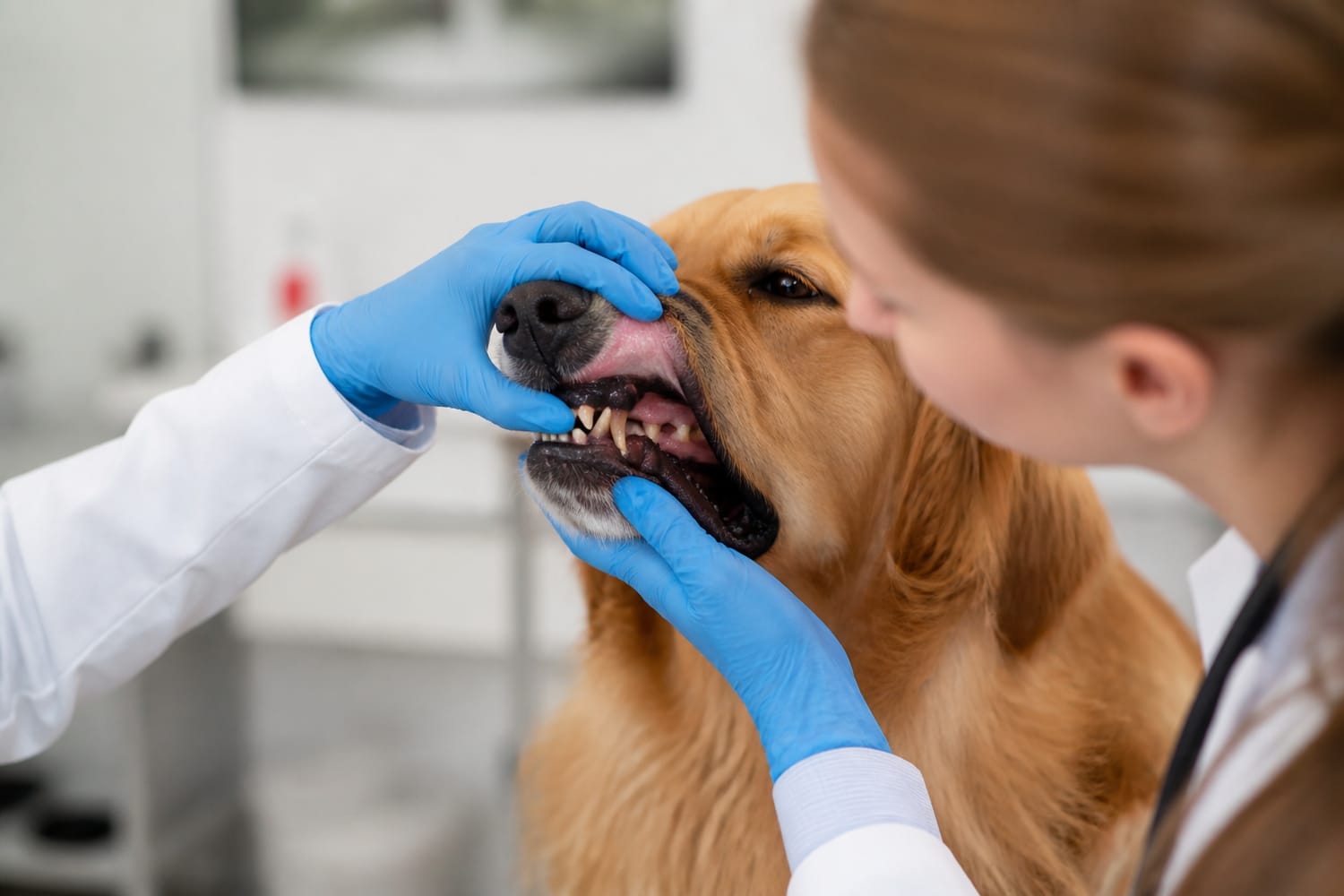
Your Pet’s Mouth Is a Window Into Their Health
A pet’s gums can offer valuable clues about circulation, oxygen levels, dental health and possible illness. Healthy gums are usually moist and pink, although natural dark pigmentation is common. Pale, white, red, blue, gray, purple, yellow, brown or newly darkened areas may require veterinary attention—sometimes immediately.
Gum color cannot diagnose a medical condition on its own. However, knowing what is normal for your dog or cat can help you recognize a meaningful change and seek care sooner.
This guide focuses primarily on dogs and cats. Rabbits, birds, reptiles and other companion animals have different anatomy and normal coloring, so owners of exotic pets should ask their veterinarian what to monitor.
First, Learn What “Normal” Looks Like
Healthy gums are generally smooth, moist and some shade of pink. Many pets also have harmless black or brown pigmentation, either in spots or across much of the mouth. What matters most is your pet’s personal baseline.
During a calm moment, gently lift your pet’s lip and look at the gums in good natural light. Notice their usual color, moisture and markings. Taking a clear photograph can give you something to compare against later.
If your pet has heavily pigmented gums, look for a naturally pink area. Your veterinarian may also examine other tissues, such as the inner eyelid, when assessing circulation and color.
Never force open an unwilling pet’s mouth. Painful, frightened or breathless animals may bite or scratch without meaning to. Cooperative handling practice can make future checks easier, as explained in Petspiration’s guide to teaching pets consent cues for grooming and health checks.
The 7 Gum Color Changes You Should Never Ignore
1. Pale Pink or White Gums
Gums that look noticeably lighter than usual—or nearly white—may indicate anemia, blood loss, shock or reduced circulation. Possible underlying problems include trauma, internal bleeding, immune-mediated disease, clotting disorders, parasites and other serious illnesses.
Treat pale or white gums as urgent, especially if your pet is weak, unusually sleepy, breathing rapidly, trembling, vomiting, bleeding or collapsing. After an injury, white gums can be a warning sign of blood loss even when no external wound is visible.
Veterinary sources such as VCA Animal Hospitals’ overview of pallor in pets emphasize that paleness is a sign rather than a diagnosis; an examination and diagnostic testing are needed to find the cause.
2. Bright or Cherry-Red Gums
A pet’s gums may temporarily become pinker after energetic play or excitement. They should return to their normal color once the pet rests and cools down.
Persistently bright, brick-red or cherry-red gums are different. They can occur with heatstroke, certain toxins, carbon monoxide exposure or severe circulation problems. If the color change accompanies heavy panting, drooling, vomiting, confusion, weakness or collapse, go to an emergency veterinarian immediately.
Heatstroke can progress rapidly. Move your pet away from the heat, begin gentle cooling with cool—not ice-cold—water, and follow veterinary instructions while traveling for care. Review Petspiration’s advice on keeping pets safe during heatwaves before the next hot day arrives.
3. Redness Along the Gumline
A thin red line where the gums meet the teeth usually points toward inflammation rather than a whole-body circulation emergency. Plaque and bacteria can irritate the gums, causing gingivitis—the earliest stage of periodontal disease.
Other signs may include:
- Bad breath
- Swollen or bleeding gums
- Yellow-brown tartar
- Drooling
- Dropping food
- Chewing on one side
- Pawing at the mouth
- Reluctance to eat hard food
Dental disease can be painful even when a pet continues eating and playing. Arrange a veterinary dental examination rather than waiting for the redness to spread. The American Animal Hospital Association’s pet dental care guide explains why professional examinations, dental X-rays and treatment beneath the gumline are important.
4. Blue, Gray or Purple Gums
Blue, gray or purple tissue can mean that the blood is not carrying or circulating enough oxygen. This is called cyanosis and is always an emergency.
Potential causes include choking, severe breathing problems, heart disease, airway obstruction, pneumonia, hypothermia and certain poisonings. Your pet may also gasp, breathe with an open mouth, stretch their neck, make unusual breathing sounds or collapse.
Do not wait to see whether the color improves. Call the nearest emergency veterinary hospital and leave immediately. If choking is possible, follow professional instructions and use first aid only when appropriate. Petspiration’s guide to pet CPR and choking first aid can help families prepare before an emergency occurs.
5. Yellow or Orange-Tinted Gums
Yellow gums may be a sign of jaundice, also called icterus. The color can result from an accumulation of bilirubin, a yellow pigment produced when red blood cells break down.
Jaundice may be associated with liver or gallbladder disease, obstruction of bile flow or unusually rapid destruction of red blood cells. You might also notice yellowing in the whites of the eyes, inside the ears or on lightly pigmented skin. Urine may appear unusually dark or orange.
Contact a veterinarian immediately. Yellow gums are not a change to monitor at home for several days, even if your pet appears relatively comfortable.
6. Muddy Brown or Chocolate-Colored Gums
Brown or muddy-looking gums are uncommon and potentially life-threatening. They may indicate that the blood cannot carry oxygen normally due to a condition called methemoglobinemia, which can be caused by exposure to certain drugs or chemicals.
Acetaminophen is especially dangerous to cats and can also harm dogs. Never give a pet human pain medication unless a veterinarian has prescribed the exact product and dose for that individual animal.
If the gums suddenly appear brown, particularly alongside facial swelling, breathing difficulty, weakness, vomiting or dark urine, seek emergency care. Bring any medication packaging or suspected toxin container with you, but do not induce vomiting unless a veterinary professional specifically instructs you to do so.
7. New or Changing Black Spots
Flat black or brown patches may be completely normal pigmentation, particularly when they have been present for years. A new dark area, however, deserves attention—especially if it grows, becomes raised, bleeds, develops an irregular surface or causes bad breath and difficulty eating.
New markings can result from benign pigment changes, inflammation, injury or an oral growth. Some oral tumors are darkly pigmented, but appearance alone cannot tell you whether a spot is harmless or serious.
Schedule a veterinary examination promptly and photograph the area so you can document changes. Seek faster care if the spot is accompanied by facial swelling, bleeding, obvious pain, difficulty swallowing or breathing problems.
How to Perform a Quick Gum Check
Choose a calm time when your pet is relaxed and breathing normally.
- Use good lighting. Natural daylight is best because colored indoor lights can alter how the gums appear.
- Lift the lip gently. You do not need to force the mouth open.
- Check color and moisture. Normal gums should generally feel moist rather than dry, tacky or sticky.
- Look around the teeth. Note redness, swelling, bleeding, sores, lumps or unpleasant odor.
- Observe the whole pet. Breathing, energy, appetite and behavior matter as much as color.
On a pink, non-pigmented area, you can gently press the gum until it turns pale, then release. The pink color should generally return within about two seconds. This is called capillary refill time. A delayed return may indicate poor circulation, but the test is imperfect and should never delay emergency care.
Know When to Call—and When to Go Now
Go to an emergency veterinary hospital immediately if you see:
- Blue, gray, purple, muddy brown or distinctly white gums
- Abnormal gum color with breathing difficulty
- Collapse, severe weakness or confusion
- Heavy bleeding or recent significant trauma
- Suspected poisoning
- Signs of choking or heatstroke
Contact your veterinarian promptly about yellow gums, persistent paleness, unusual redness, bleeding, sores, lumps or new dark patches. When calling, describe the exact color, when it began and whether your pet is eating, breathing and behaving normally.
A Small Habit That Can Make a Big Difference
Regular gum checks take only a few seconds, yet they can help you notice dental disease, circulation problems and other concerning changes earlier. Pair them with routine veterinary examinations, daily dental care when possible, and plenty of patient, reward-based handling.
You do not need to diagnose the problem yourself. Your most important job is simply to know your pet, recognize when something looks different and act with calm, loving urgency. That attentive care is one of the greatest gifts we can give the animals who brighten our lives.