
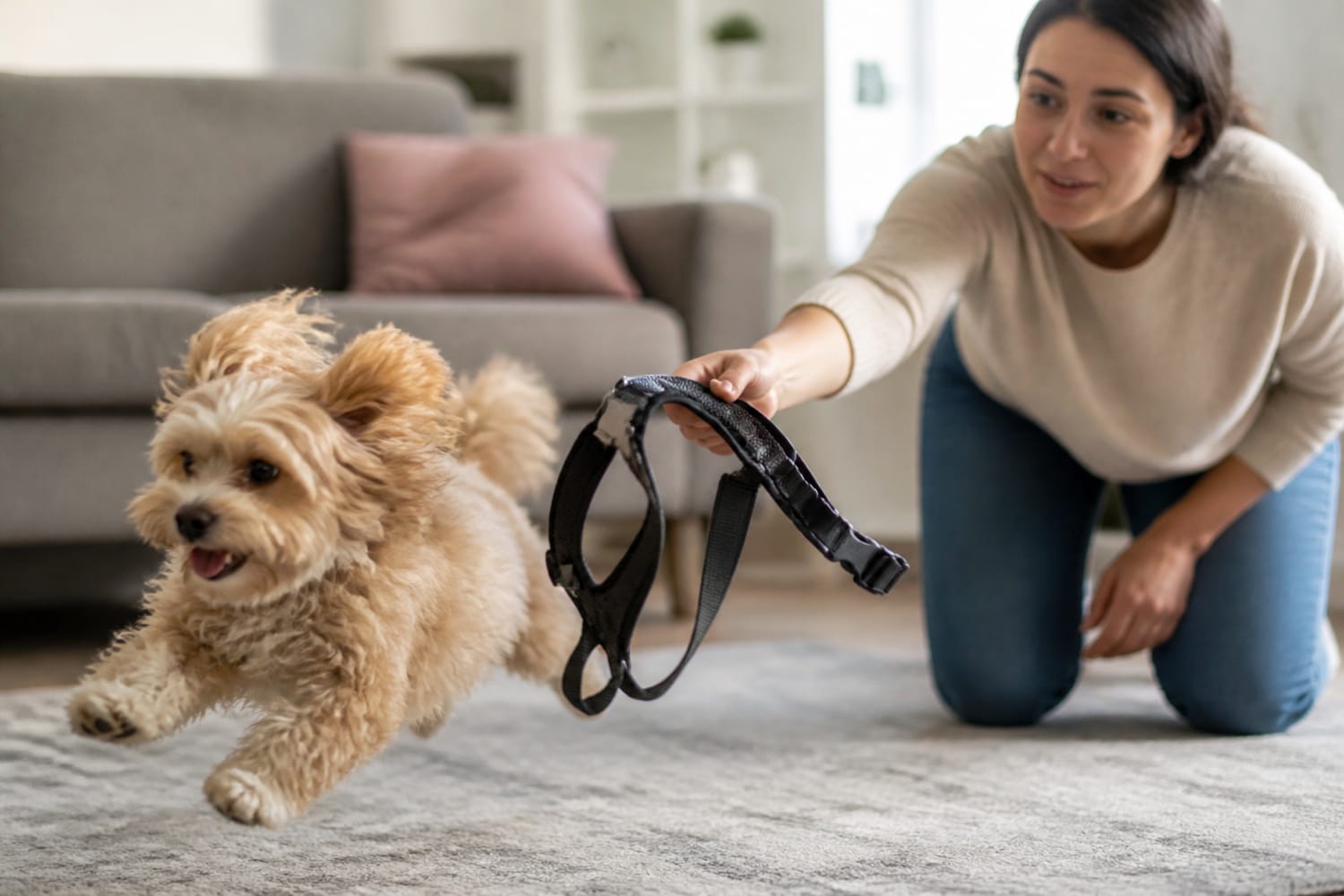
Your dog may run away from the harness because it feels uncomfortable, putting it on worries them, or it predicts something stressful. The solution is to check comfort, notice exactly when your dog hesitates, and rebuild the routine with small, rewarding steps—not chase them down and push through.
You pick up the harness, ready for fresh air and a sniff-filled adventure. Your dog promptly disappears behind the sofa. It can feel puzzling, especially when that same dog seems delighted once the walk begins.
Rather than asking, “Why won’t you cooperate?” try asking, “Which part feels difficult?” That question gives you a kinder, more useful starting point.
Why a Walk-Loving Dog Might Avoid the Harness
Enjoying a walk and enjoying getting dressed for it are different things. A dog can love exploring outside while feeling uneasy about the equipment or handling that comes first. Woodgreen notes that harness reluctance can even affect a dog’s enjoyment of their walk.
Possible sticking points include:
- The head opening. Bringing a harness toward the face or passing it over the head may feel worrying.
- Unfamiliar sensations. Straps around the chest and body take some getting used to.
- The fastening process. Buckle sounds or fur caught in clips can make fitting unpleasant.
- Restricted movement. An unsuitable harness may interfere with comfortable movement.
- What happens afterward. Some dogs worry about going outside or getting into the car, rather than the harness itself.
Look for the exact moment your dog’s behavior changes. Do they retreat when you reach for the harness, when you lift it, or only when you touch a particular area? Those details can help you identify what needs attention.
Listen to the Quiet Signals Before the Getaway
Running away is an obvious request for space, but earlier signs can be much subtler. Watch for turning away, leaning back, lowered posture, ears held back, lip-licking unrelated to food, or sudden stillness. Interpret these signs together, considering the situation and your individual dog—not one gesture in isolation.
A dog standing motionless is not necessarily comfortable. Freezing can be a sign of distress, so “at least they stopped moving” is not a reliable measure of success. Look instead for loose posture, relaxed movement, and willingness to approach.
Petspiration’s guide to understanding pet body language offers a useful introduction to observing the whole animal.
Responding before your dog feels overwhelmed helps keep the exercise manageable. If they move away, let them; next time, make the task easier.
Check Comfort Before Asking for More Practice
Training cannot solve uncomfortable equipment. Check that the harness allows natural movement, stays in position, and cannot slip off. Dogs Trust recommends avoiding designs that restrict the shoulders and checking equipment regularly for wear. Its harness selection and training guide is a helpful starting point.
Consider the fitting process, too. A harness that clips around the neck and body may suit a head-shy dog better than an overhead design. A clip-around option can also avoid lifting legs into openings when that is uncomfortable. No single style is right for every dog.
New or worsening avoidance deserves a veterinary check, particularly if your dog also flinches at touch, moves stiffly, limps, or becomes reluctant to do familiar activities. Cornell’s guidance on recognizing pain in dogs explains that behavior changes can be important clues to discomfort.
Avoid repeatedly touching a sore-looking area to “test” it. Tell your veterinarian what changed and when.
Reintroduce the Harness in Small, Friendly Steps
Think of this as teaching a new skill, not getting one piece of equipment onto one reluctant dog. Practice when you are not rushing out the door, and keep sessions short. Woodgreen suggests two to three minutes followed by play; worried dogs may need even shorter attempts.
The following progression draws on Woodgreen’s step-by-step harness guidance. Each stage may need its own practice sessions.
1. Make Seeing the Harness Predict Something Pleasant
Place the harness where your dog can notice it without needing to approach. Reward a comfortable glance or voluntary investigation. You can put treats nearby if your dog is happy to explore.
Next, practice holding the harness still. This is a separate challenge from seeing it on the floor, so do not assume your dog will feel equally comfortable with both.
2. Introduce Movement Without Dressing Your Dog
Lift or reposition the harness slightly, then offer a treat. Keep movements small enough that your dog remains relaxed.
The goal is not to sneak closer while they eat. It is to help them become comfortable with the equipment moving before it touches their body.
3. Practice the Opening or Strap Placement
For an overhead harness, begin by offering a treat with your hand through the opening so your dog can eat without putting their head inside. Gradually invite a small, voluntary nose movement through it.
If your dog retreats, remove the harness and return to an easier step. Do not use food to draw them into position and then suddenly trap them. For clip-around styles, introduce positioning the straps just as gradually.
4. Separate Buckle Sounds From Buckling Up
Practice closing a buckle while holding the harness away from your dog, then reward. Once the sound is comfortable, work toward fastening it on their body.
Keep your handling gentle and ensure fur is clear of the clips. Fastening and removal both deserve calm practice.
5. Build Comfortable Wearing Time
Once the harness is fastened comfortably, encourage a little movement with an easy game or familiar activity. Let your dog get used to moving, sitting, and lying down before expecting a full outing.
Increase wearing time gradually, observing comfort rather than aiming for a particular number of minutes.
Make Getting Ready Predictable, Not Pressured
A brief verbal cue can announce what comes next. For example, say “Harness time” before presenting it, then pause for your dog to approach. Woodgreen recommends verbal clues to help dogs anticipate handling rather than be surprised by it.
Petspiration’s guide to consent cues for handling explores ways to build participation into everyday care.
Stay beside your dog rather than leaning over them, and move slowly. If they back away, resist following them around the room with the harness. Return to a step they can comfortably manage instead.
If you need outdoor bathroom trips while training is underway, ask your veterinarian or qualified reward-based trainer about a secure, comfortable temporary arrangement. Never trade escape prevention for a faster training session.
When Progress Needs Extra Support
Seek professional help if your dog panics, growls, snaps, remains persistently fearful, or stops making progress. Start with your veterinarian to investigate discomfort; they can help arrange appropriate behavioral support. Do not keep repeating a frightening fitting routine in the hope your dog will simply adjust.
There is no universal timetable. Some dogs accept equipment quickly, while others need a more individualized plan. Measure progress in comfortable moments: choosing to investigate, remaining relaxed during a buckle sound, or willingly returning for another repetition.
The aim is not merely a dog wearing a harness. It is a getting-ready routine that leaves room for trust, comfort, and cooperation—so the adventure can begin before you even open the door.