
Why Your Cat Ambushes Your Ankles
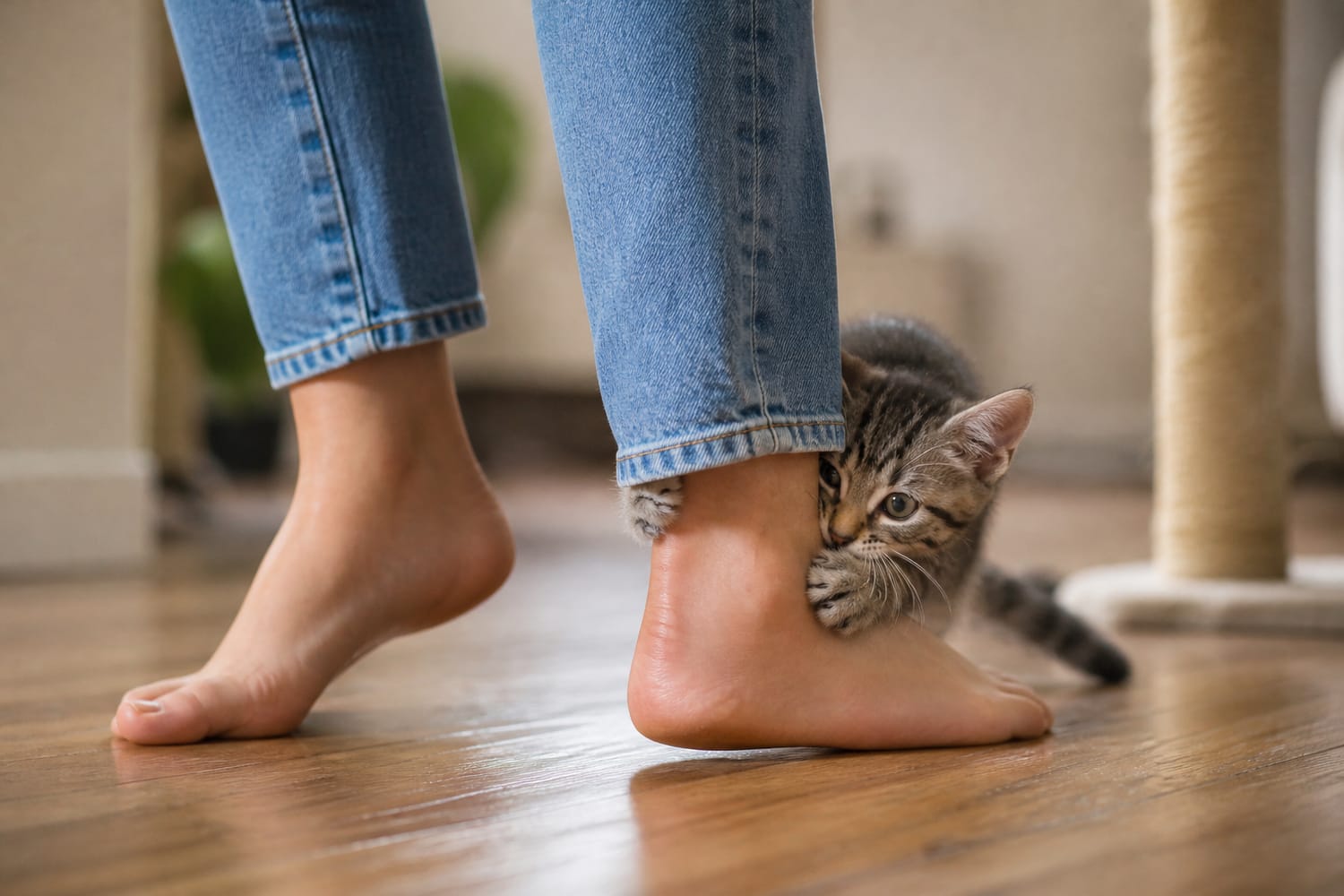
You round a corner, and a small blur launches from behind the sofa. Your cat grabs your ankle, gives it a quick nip, and darts away. In many cases, this is play aimed at the wrong target, not a sign that your cat dislikes you. The way forward is to make toys more exciting than feet—and to offer play before the next ambush.
That doesn’t mean you have to welcome scratches. It means you can address the problem without treating your cat as a troublemaker. Once you understand what makes ankles so tempting, you can help your little hunter choose something safer to chase.
Why Moving Feet Look Like a Game
Stalking, chasing, pouncing, grabbing, and kicking are normal parts of feline play. A foot passing the edge of a bed or disappearing around a doorway moves like an intriguing target. Kittens and young cats are especially likely to play this way, but an adult cat may do it too. If your cat has few chances to play with an appropriate target—or has learned that wiggling toes start a game—your ankles may become the most interesting thing in the room.
The location can become part of the routine. Perhaps your cat waits beside the same hallway table each morning, or pounces when you walk past the couch in the evening. Notice when and where it happens: those details tell you where to place a toy and when to start a play session. Cornell’s feline behavior guidance recommends looking for patterns so you can interrupt play aggression before it begins.
Is It Play—or Is Your Cat Upset?
Context matters more than any single tail flick or ear position. A playful cat may crouch, stalk, spring forward, then look ready to chase again. But don’t assume every bite is an invitation to play. Hissing, growling, flattened ears, a stiff or defensive posture, or an attack that follows a frightening event can point to fear or another form of aggression.
If an adult cat suddenly starts attacking, the bites become intense, or you notice changes in appetite, movement, or other behavior, arrange a veterinary visit. Pain and illness can affect how a cat responds to people. A veterinarian can help rule out a health problem before you work on the behavior.
What to Do When Your Cat Goes for Your Feet
When your cat starts watching your ankles from an ambush spot, act before the leap if you can. Toss a small cat-safe toy away from your path, or move a wand toy along the floor well away from your legs. The goal is to give your cat something appropriate to pursue—not to wait for a bite and then begin an exciting game.
If your cat has already latched on, try not to kick, yank your foot, or turn the moment into a noisy chase. Pause, protect yourself, and give your cat room to let go. Once you can move safely, end the interaction briefly. Never hit, scruff, or otherwise physically punish your cat; doing so can cause fear or make the encounter more exciting.
Keep toys within easy reach of common ambush spots. A lightweight ball near the hallway or a wand toy stored where you can pick it up before walking past the couch makes the better choice convenient for both of you. If bites or scratches break your skin, take the injury seriously and seek medical advice when needed.
Give Your Cat a Better Hunt
The most useful change happens away from your ankles: regular, interactive play. Try a few short sessions at times your cat is usually lively, especially before a predictable ambush. Let a wand toy creep around a chair leg, pause, then dart across the floor. Move it away from your cat rather than pushing it toward their face. Allow your cat to catch it often enough for the game to feel rewarding.
Follow your cat’s lead. One cat may love a fast feather lure; another may prefer a fabric toy that inches along the floor. A larger kicker toy can give a cat who likes to grab and kick something suitable to wrestle. You needn’t make every session long or energetic—the aim is enjoyable play that suits your cat’s age and comfort.
When play winds down, slow the toy and let your cat make a final catch. You can then offer part of their usual meal or a small treat if appropriate for their diet. Put wand toys with strings away afterward so your cat can’t become tangled in or chew them unsupervised. The Wisconsin Humane Society recommends storing wand toys out of reach between sessions.
Teach “Toys, Not Toes”
A consistent household rule helps: hands and feet are never toys, even when a kitten’s tiny paws seem harmless. Wrestling with a kitten using your fingers can teach a habit that is much less comfortable when the kitten grows. Offer a toy instead, and ask everyone at home to do the same. The UC Davis School of Veterinary Medicine advises against using body parts in rough play or punishing a kitten for it.
You can also reward the choice you want to see. When your cat approaches a toy instead of your moving feet, start a game. When they wait calmly while you pass, offer praise or another reward they enjoy. Rewarding a desired action promptly makes it easier for your cat to connect that action with a good outcome. For more ideas, explore Petspiration’s guides to training your cat and using positive reinforcement.
There’s no need to demand perfection after one play session. If the old hallway ambush returns, use it as information: could you play earlier, keep a toy closer, or change the game to better suit your cat? A patient, repeatable plan gives your cat more chances to practice the new habit.
Make Everyday Life More Interesting
Interactive play is important, but your cat’s day includes plenty of hours when you aren’t holding a wand. Rotate a few suitable toys, provide places to perch and explore, and consider a food puzzle that fits your cat’s usual diet. Variety gives your cat opportunities to investigate and play without relying on your passing ankles for entertainment. Petspiration’s article on why cats knock things over offers more ideas for redirecting curious feline paws.
If you have children, show them how to play with a wand toy at a comfortable distance rather than offering fingers or running past a cat who is ready to pounce. Supervise their interactions, and give the cat an easy way to leave when playtime is over.
A Happier Way Through the Hallway
An ankle ambush can be startling, but it can also tell you something useful: your cat is ready for an activity, and the current target isn’t working for either of you. Watch for the pattern, offer an enticing toy before the pounce, and make room in the day for play your cat can truly enjoy.
With consistency, the hallway can become less of an obstacle course and more of an invitation: the toy comes out, the chase begins, and everyone’s ankles stay out of the game.