
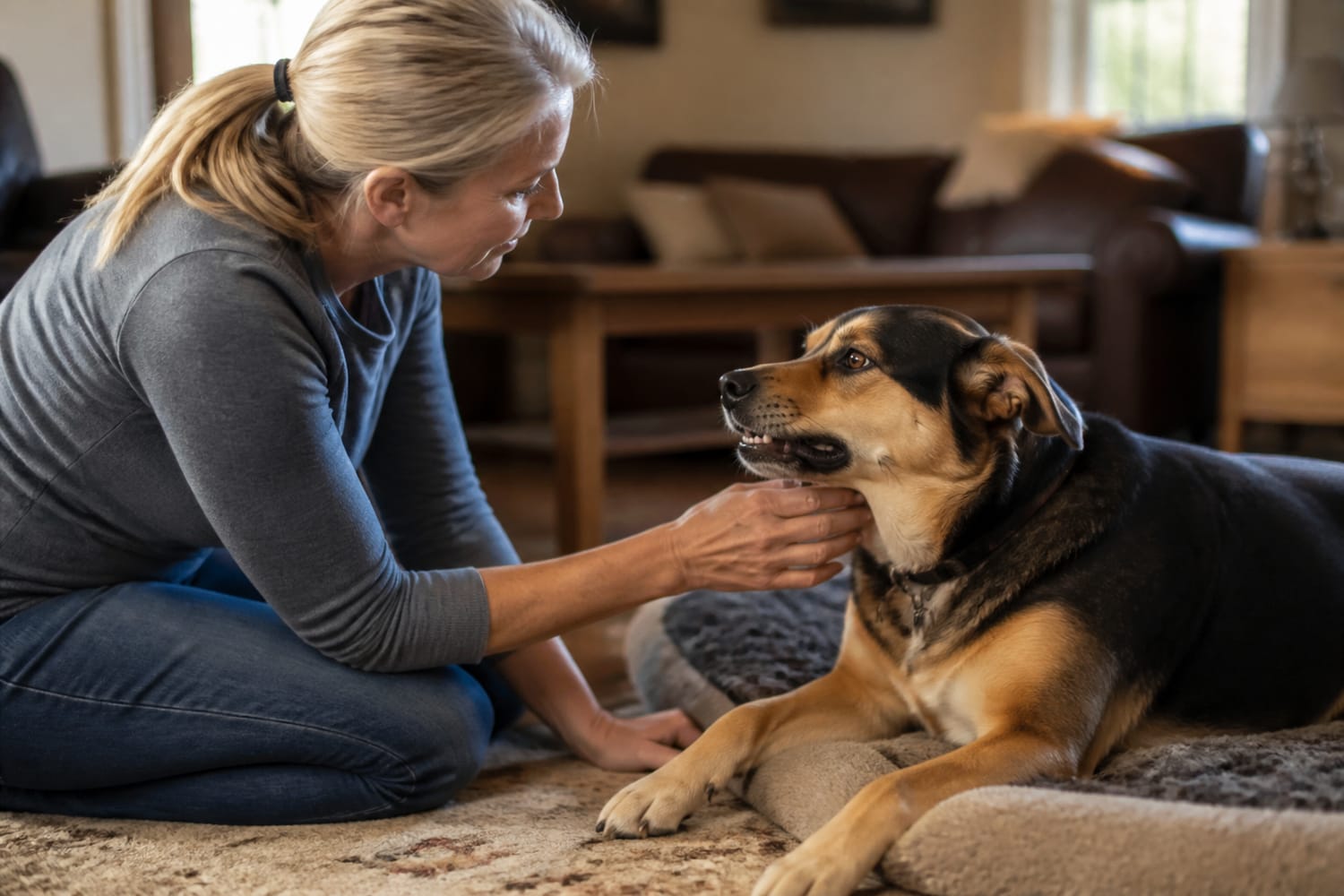
A Growl Is Communication, Not Disobedience
Never punish a dog for growling. A growl is an important warning that usually means, “I’m uncomfortable,” “I’m frightened,” or “Please give me space.” Punishment may silence the sound without changing the emotion behind it, potentially removing a valuable warning and making future reactions harder to predict.
Although growling can sound alarming, it is a normal part of canine communication. Dogs may growl when protecting a valued item, experiencing pain, meeting an unfamiliar person, feeling trapped, or becoming overwhelmed. Some dogs also growl during energetic play, so context and body language matter.
Rather than viewing a growl as bad behavior, think of it as useful information. Your dog is telling you that something about the situation needs to change. By listening calmly, you can reduce tension, protect everyone involved, and show your companion that communicating with you is safe.
Why Punishing a Growl Can Be Dangerous
Scolding, shouting, leash corrections, physical restraint, “alpha rolls,” and other intimidating responses may stop a dog from growling in that moment. Unfortunately, stopping the noise is not the same as solving the problem.
Imagine that your dog is frightened by a stranger leaning over them. The dog growls, and you respond by yelling. Your dog may now associate the stranger’s approach with both fear and punishment. The next time someone leans over, your dog may feel even more worried—but hesitate to growl because growling previously brought an unpleasant consequence.
The fear remains, while one of the clearest warning signals may disappear. A dog that learns warnings are unsafe might move more quickly to freezing, snapping, lunging, or biting when pushed beyond their limits. That does not mean every punished dog will bite, but suppressing communication can make an already difficult situation less predictable.
Punishment can also damage trust. The American Veterinary Society of Animal Behavior’s guidance on humane dog training recommends reward-based methods rather than techniques involving fear, pain, or intimidation. These methods focus on changing the cause of the behavior and teaching the dog what to do instead.
What Your Dog May Be Trying to Say
A growl should always be interpreted alongside the situation and the rest of the dog’s body. Common reasons include:
- Fear: An unfamiliar person, animal, sound, object, or environment feels threatening.
- Resource guarding: The dog worries that food, a toy, a resting place, or another valued resource will be taken away.
- Pain or illness: Touching, lifting, grooming, or approaching the dog causes discomfort.
- Handling sensitivity: The dog dislikes being hugged, restrained, moved, or touched in a particular area.
- Feeling trapped: A cornered, tethered, crated, or tightly held dog may believe escape is impossible.
- Overstimulation: Busy gatherings, intense play, or repeated attention can become too much.
- Play: Some dogs vocalize dramatically while playing, especially during tug or friendly wrestling.
A playful growl is generally accompanied by loose movement, bouncy behavior, relaxed facial muscles, pauses, and play bows. A warning growl is more likely to appear with stiffness, freezing, a closed mouth, a hard stare, weight shifted forward or backward, pinned ears, a tucked or rigid tail, raised lips, or attempts to move away.
Learning to read the whole dog is more reliable than judging one sound in isolation. Pet parents can explore more signals in Petspiration’s guide to understanding pet body language.
What to Do the Moment Your Dog Growls
Your immediate goal is safety, not training. This is not the moment to prove a point, demand obedience, or investigate how much the dog will tolerate.
- Stop what you are doing. Pause any petting, grooming, reaching, or approach that may have triggered the growl.
- Stay calm and avoid confrontation. Do not shout, stare into the dog’s eyes, grab the collar, or loom over them.
- Create space. Step away, call other people or pets back, or calmly help the dog leave if that can be done safely.
- Remove pressure—not necessarily the guarded object. If the dog is guarding food or a toy, do not reach in and take it. Move people away and address the guarding later with a safe plan.
- Observe what happened. Note who was present, what occurred immediately before the growl, and what the dog’s body looked like.
- Prevent a repeat for now. Use doors, gates, distance, schedules, or separate spaces while you determine the cause.
If a dog is growling at a child, an adult should calmly separate them immediately. Children should never be asked to discipline the dog, take away a guarded item, or “make friends” by moving closer. Young children and dogs require active adult supervision, especially around food, sleep, toys, and handling.
For more family-friendly guidance, see Petspiration’s advice on raising pets with kids safely and compassionately.
Address the Feeling Behind the Growl
Once everyone is safe, ask: What did my dog need in that moment?
A dog growling when hugged may need people to stop hugging them. A dog growling over a chew may need a quiet eating area and a carefully designed resource-guarding plan. A dog reacting to strangers may need more distance and gradual training that builds positive associations.
Management is a vital first step. It prevents the dog from repeatedly experiencing situations they cannot handle while you work on a long-term solution. Management might include feeding pets separately, using a baby gate during visitors, avoiding crowded dog parks, or giving the dog a peaceful resting area where nobody disturbs them.
Behavior modification can then change how the dog feels. Two commonly used approaches are:
Desensitization
The trigger is introduced at a low enough intensity that the dog notices it but remains relaxed and able to eat, play, or respond. For example, a dog worried about strangers might begin by seeing a person from a generous distance.
Counterconditioning
The trigger predicts something the dog loves, such as delicious treats. Over time, the dog may begin to feel safer because the once-worrying event now signals a positive outcome.
These exercises must progress at the dog’s pace. If the dog stiffens, stops accepting treats, retreats, barks, or growls, the situation is probably too intense. Increase distance or make the exercise easier. The goal is not to lure a frightened dog closer—it is to help them feel genuinely safe.
Teach Helpful Alternatives With Positive Reinforcement
Reward-based training gives dogs practical ways to respond before discomfort becomes a growl. Depending on the trigger, useful skills may include:
- Moving away with a cheerful “Let’s go”
- Going to a bed or mat
- Dropping an object in exchange for something better
- Touching their nose to your hand
- Looking toward you when they notice a trigger
- Remaining behind a gate while visitors enter
- Cooperating voluntarily with grooming and handling
A check-in behavior can be particularly useful. By rewarding your dog for turning toward you, you teach them that you can help when the world feels confusing or stressful. Petspiration’s check-in cue training guide explains how to build this skill gradually.
Positive reinforcement does not mean ignoring dangerous behavior or allowing a dog to do whatever they want. It means using sensible boundaries, environmental management, and rewards to teach safer choices without adding fear.
When Growling May Be a Medical Warning
A sudden behavior change deserves veterinary attention. A previously relaxed dog who begins growling when touched, lifted, approached while resting, or fitted with a collar may be experiencing pain.
Possible causes include dental discomfort, arthritis, an ear infection, an injury, skin irritation, digestive problems, or changes in hearing or vision. Older dogs may also become less tolerant when movement is painful or their senses are declining.
Do not press, squeeze, or repeatedly touch a suspected painful area to test your dog’s reaction. Contact your veterinarian and explain exactly when the growling occurs. Petspiration’s overview of signs that a pet may be in pain can help you recognize other changes worth mentioning at the appointment.
When to Seek Professional Help
Contact a qualified professional if your dog has bitten or snapped, guards resources, growls unpredictably, reacts toward children, or becomes difficult to move away from a trigger. Assistance is also wise when the behavior is increasing in frequency or intensity.
Begin with your veterinarian to rule out medical causes. Depending on the situation, your veterinary team may recommend a credentialed reward-based trainer, certified behavior consultant, or board-certified veterinary behaviorist. The American College of Veterinary Behaviorists provides information about veterinary behavior care and a specialist directory.
Avoid professionals who recommend provoking the growl, forcing the dog to “submit,” or using pain and intimidation. A responsible professional will prioritize safety, identify triggers, explain the plan clearly, and help your dog learn without fear.
Listening Builds a Safer, Stronger Bond
Hearing your beloved dog growl can feel upsetting, but it does not mean your companion is bad, spiteful, or trying to take over the household. It means your dog has reached a point of discomfort and is asking for help in the clearest way they know.
When you pause, create space, and respond with compassion, you teach your dog an extraordinary lesson: “I hear you, and you can trust me.”
That trust is the foundation of humane training and responsible pet ownership. By protecting the growl rather than punishing it, you preserve an important warning system—and open the door to understanding, healing, and a happier life together.