
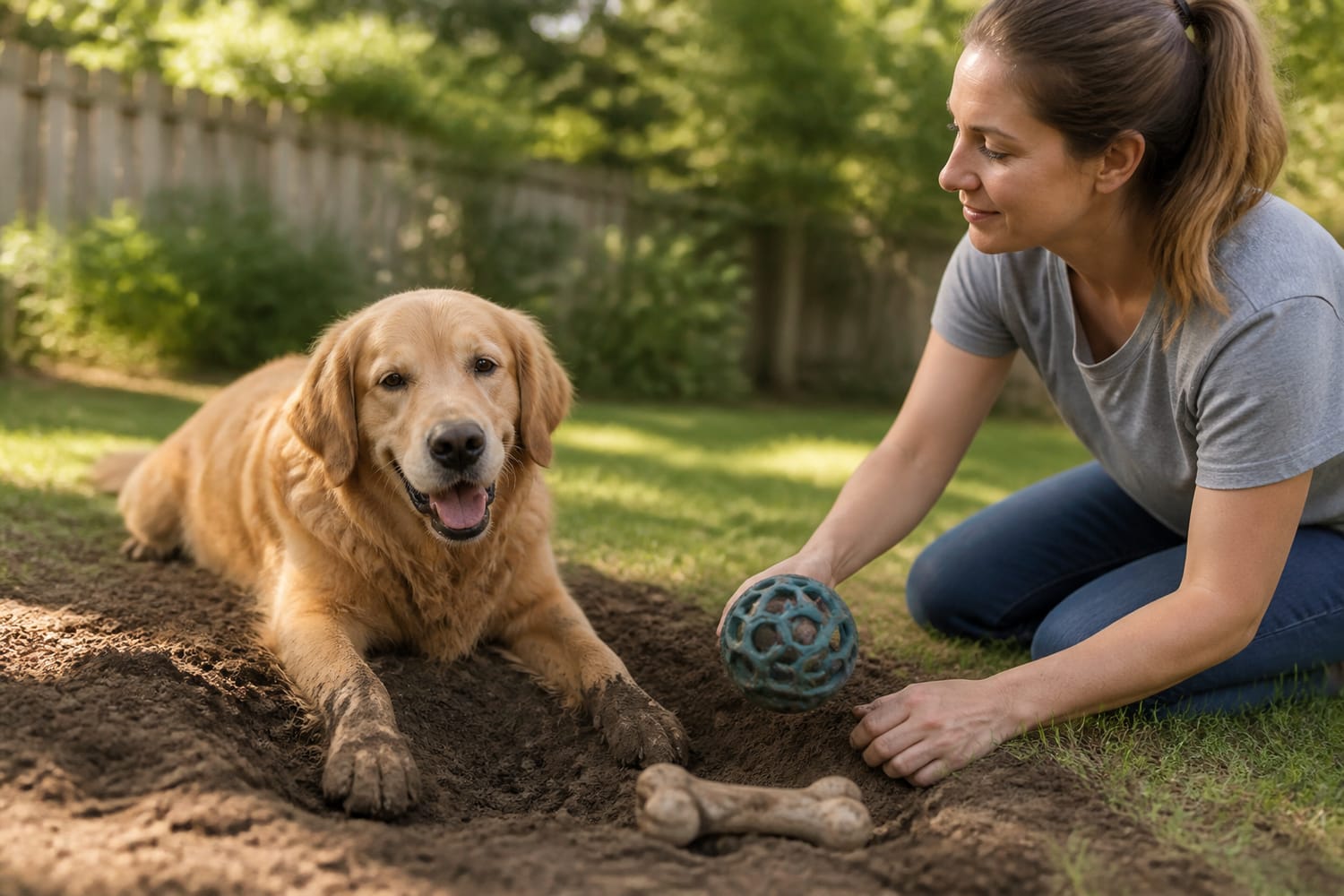
Digging Is a Message, Not Mischief
Dogs dig because the behavior meets a need: it may provide entertainment, release energy, uncover interesting scents, create a cool resting place, hide valued objects, or offer an escape route. The kindest solution is to identify that need, prevent unsafe digging, and teach your dog where and how digging is allowed.
A freshly excavated flower bed can certainly test a pet lover’s patience. Yet your dog is not plotting against the lawn—or judging your landscaping choices. Digging is a normal canine behavior with roots in exploration, hunting, comfort-seeking, and play.
Rather than asking, “How do I make my dog stop?” try asking, “What is my dog getting from this?” That small shift can turn frustration into understanding and lead to a solution that works for everyone.
Why Dogs Dig Up the Yard
The location, timing, and style of your dog’s digging can offer valuable clues. Before filling another hole, watch what happens immediately before, during, and after the behavior.
Digging Is Naturally Rewarding
For some dogs, digging simply feels wonderful. Soil moves beneath their paws, fascinating scents rise from the ground, roots tug back, and insects scatter. Every scoop produces an immediate result, making digging an exciting activity even when nothing is found.
Genetics can also influence the behavior. Some terriers and hounds were historically developed to pursue animals around or beneath the ground, so digging may come especially naturally to them. However, any dog—from a tiny puppy to a senior mixed breed—can enjoy it.
Something Interesting Is Underground
Dogs have powerful noses. A person may see an ordinary patch of grass while a dog detects insects, roots, fertilizer, or the scent and movement of a burrowing animal.
Prey-related digging is often focused and intense. Your dog may repeatedly return to one location, sniff deeply, tilt their head toward the ground, whine, or dig around visible tunnels. The UC Davis School of Veterinary Medicine’s guide to digging recommends addressing rodents through pet-safe methods rather than using products or traps that could harm dogs.
The Ground Offers Relief From Heat
Beneath the sun-warmed surface, soil may be cooler and more comfortable. A dog that digs a shallow hollow and lies in it—particularly near shade or during warm weather—may be trying to regulate their body temperature.
Provide fresh water, reliable shade, indoor access, and an appropriate cooling area. On hot days, the safest answer may be bringing your dog into an air-conditioned or otherwise cooler space.
Boredom Creates Its Own Activities
A yard may look spacious to us, but space alone does not provide enrichment. A dog left outside without company, interesting activities, or opportunities to explore may invent a job. That job could become digging, barking, chewing, fence running, or rearranging the garden one muddy pawful at a time.
If digging mainly happens when your dog is alone, consider whether they need more physical activity, mental stimulation, social time, or rest inside the home. Petspiration’s guide to the connection between boredom and pet behavior offers additional ideas for making daily life more engaging.
Dogs Sometimes Bury Valued Possessions
Some dogs cache food, chews, or toys for later. This can be especially common when a dog has more than they want at that moment or feels uncertain about another animal taking the item.
These holes are often small and carefully covered. If burying is becoming disruptive, offer special chews indoors, supervise dogs around valued items, and avoid giving your pet more long-lasting treats than they can comfortably enjoy.
Digging Can Signal Escape or Distress
Digging beneath gates and fences deserves immediate attention because it can lead to traffic accidents, fights, or a lost pet. A dog may try to escape to follow wildlife, reach another dog, investigate neighborhood activity, or get away from something frightening.
An anxious dog may dig frantically while also pacing, whining, panting, barking, or damaging doors and windows. If the behavior appears connected to being left alone, Petspiration’s article on helping dogs with separation anxiety feel safe can help you recognize the wider pattern.
Become a Detective Before Changing the Habit
For several days, keep a simple digging diary. Record:
- Where it happens: flower bed, shade, fence line, soft soil, or animal tunnel
- When it happens: hot afternoons, after rain, while alone, or during high excitement
- What your dog does beforehand: sniffs, patrols, watches wildlife, paces, or seeks attention
- What happens afterward: lies in the hole, finds something, escapes, or invites you to play
- How often it occurs: occasionally, daily, or suddenly and intensely
Patterns make solutions clearer. A dog seeking cool soil needs a different plan from a young dog entertaining themselves or a terrier following the scent of a mole.
Create a Dog-Friendly Digging Zone
When digging is enjoyable in its own right, eliminating it completely may be unrealistic and unnecessary. A designated digging area lets your dog enjoy a natural behavior while protecting the rest of the yard.
How to Build One
Choose a safe location and use a child-sized sandbox, raised garden bed, or clearly bordered patch of loose soil or sand. Make sure the material is clean and free from sharp objects, pesticides, cocoa mulch, toxic plants, or treated wood that could cause harm.
Then make the new area more rewarding than the lawn:
- Bury a few treats or durable toys close to the surface.
- Bring your dog to the area and encourage investigation.
- Praise or mark the moment their paws touch the soil.
- Reward enthusiastically when they begin digging.
- Gradually bury treasures a little deeper.
- Refresh the area regularly so it remains interesting.
You can add a cheerful cue such as “dig here” once your dog is reliably using the spot. If they start digging elsewhere, calmly interrupt before they become deeply absorbed, guide them to the approved area, and reward them for continuing there.
Meet the Need Behind the Digging
A digging zone is helpful, but it should be combined with a plan that addresses your dog’s underlying motivation.
Add Meaningful Exercise
Walks are about more than covering distance. Give your dog time to sniff, explore, and investigate safely. Sniffing walks, age-appropriate play, retrieve games, and gentle training sessions can provide productive outlets for physical and mental energy.
Exercise needs vary with age, health, breed traits, and personality. A veterinarian can help you choose suitable activities for puppies, seniors, and dogs with medical conditions.
Make the Yard Interactive
Instead of expecting your dog to entertain themselves, spend time together outdoors. Try:
- Scatter-feeding part of a meal in safe grass
- Treat searches and scent games
- Short recall or hand-targeting sessions
- Food puzzles designed for supervised outdoor use
- Hide-and-seek with family members
- Rotating toys rather than leaving everything out continuously
Supervision is especially important while changing the habit. Every unsupervised digging session strengthens the old routine, while each successful redirection helps build the new one.
Protect Important Areas
Temporary fencing, garden barriers, raised beds, and supervised yard access can prevent mistakes while training develops. For fence-line digging, securely reinforce the boundary and block visual triggers where appropriate. Avoid exposed wire, sharp materials, or anything that could trap paws and nails.
Management is not a failure. It creates an environment in which your dog can make better choices.
Why Punishment Is the Wrong Tool
Yelling, spraying a dog with water, dragging them from a hole, or placing frightening objects in the soil may interrupt digging temporarily, but these methods do not resolve its cause. They can also teach a dog to avoid digging only when a person is present—or to feel worried around the person delivering the correction.
The American Veterinary Society of Animal Behavior recommends reward-based methods for dog training and behavior modification instead of techniques involving physical or psychological punishment.
Positive training does not mean allowing unlimited destruction. It means preventing unwanted behavior, teaching an acceptable alternative, and making that alternative rewarding. Petspiration’s guide to teaching a reliable “leave it” cue can help you build a calm way to redirect your dog before digging begins.
When to Ask for Professional Help
Contact your veterinarian if digging begins suddenly, becomes frantic or repetitive, causes injured paws or broken nails, or appears alongside changes in appetite, sleep, mobility, awareness, or general behavior.
Professional support is also important if your dog repeatedly escapes, shows severe anxiety, or cannot be redirected safely. A qualified reward-based trainer or veterinary behaviorist can help identify triggers and develop a personalized plan.
Trade Frustration for Curiosity
A hole in the lawn is inconvenient, but it is also information. Your dog may be saying, “I need something to do,” “I smell an animal,” “I’m too warm,” “I want to explore,” or simply, “This is fun!”
When we listen to the need behind the behavior, we can protect the yard without damaging trust. With supervision, enrichment, thoughtful management, and an irresistible digging zone, your four-legged landscaper can learn a happier rule: digging is welcome—just in the right place.