
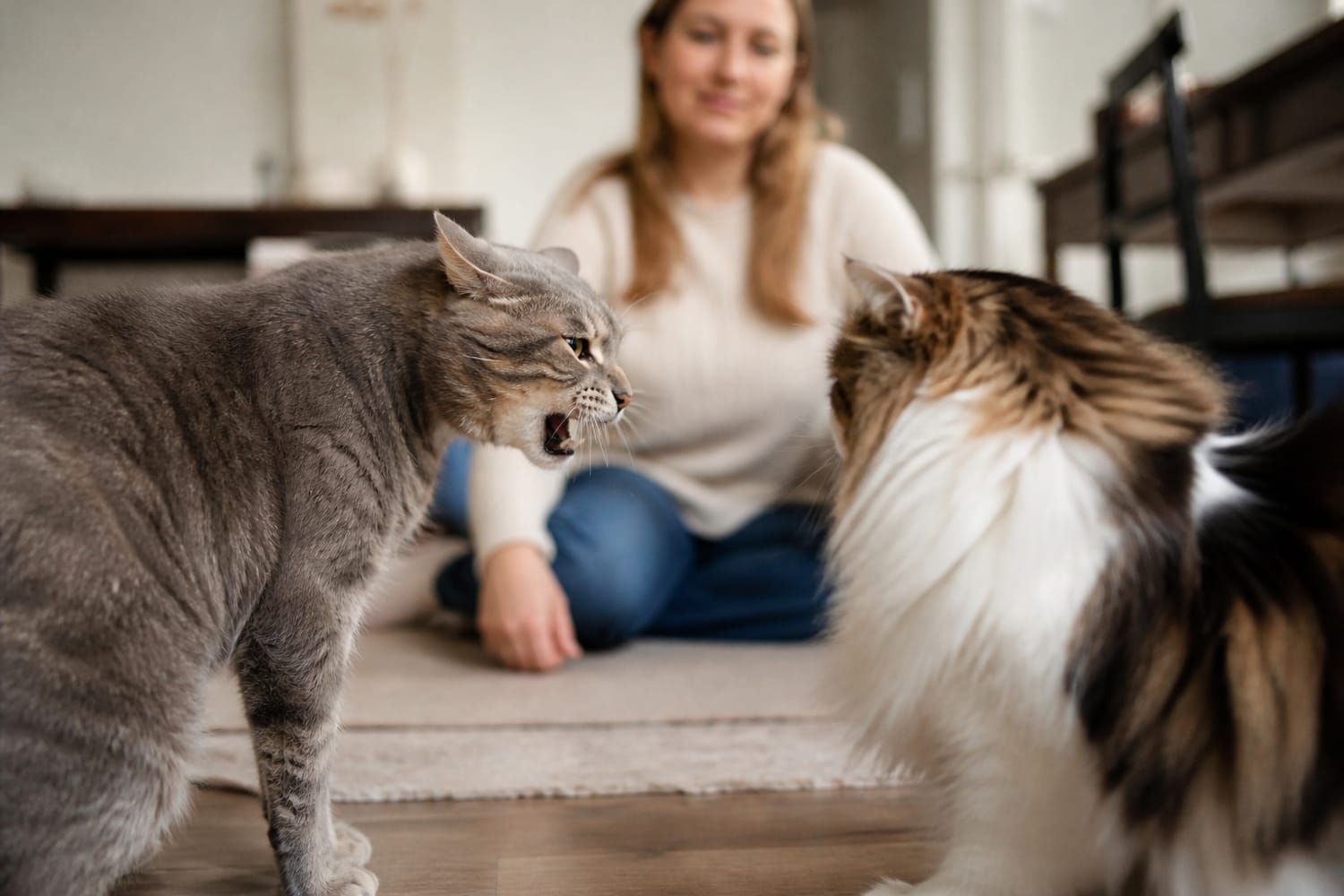
Cats may fight after a vet visit because unfamiliar clinic smells, stress, or changes in appearance make a familiar companion seem threatening. Often called non-recognition aggression, this reaction calls for space—not punishment. Separate tense cats, allow recovery, and rebuild comfortable contact gradually rather than forcing a reunion.
It can feel heartbreaking: yesterday, your cats shared a sunny windowsill; today, one returns from an appointment and the other growls. But a difficult homecoming does not automatically mean their friendship is over. Think of reintroduction as an opportunity to help both cats feel safe again.
Why a Familiar Friend Suddenly Seems Different
Cats gather important information through scent. After a veterinary visit, a returning cat may carry unfamiliar odors from the clinic. That change can unsettle a housemate—even when the returning cat looks almost exactly the same to you. Cat Friendly Homes explains this reaction in its guide to reducing tension after a veterinary visit.
Scent is not the whole story. A protective collar, bandage, or clipped coat can change a cat’s appearance. Stress and pain can also affect behavior, so the returning cat may be less tolerant of an approaching companion. Either cat may hiss, retreat, or react defensively.
“Non-recognition aggression” describes the pattern; it does not prove that a cat has literally forgotten their friend. Its causes are not fully understood, and new aggression should not automatically be dismissed as “just the vet smell.”
First, Make the Situation Safe
Do not let cats “fight it out.” If they are growling, stalking, chasing, or swatting, create distance before the encounter escalates. Never put your hands between fighting cats or try to scoop up an intensely aroused cat: aggression can be redirected toward you.
If you can do so safely, use a large piece of cardboard or another solid barrier to interrupt their view of each other and guide them into separate spaces. Keep children and other pets away. Avoid shouting, spraying water, or physical punishment, which can increase fear and worsen aggression.
Give the returning cat a quiet room containing:
- Food and water in separate spots.
- A litter box away from feeding areas.
- Familiar bedding and a comfortable hiding place.
- A resting area appropriate for any recovery restrictions.
Provide the other cat with their own essentials, too. Separation is not a punishment; it gives both cats a chance to settle without another confrontation.
How to Reintroduce Cats Safely, Step by Step
There is no prize for reaching the final step quickly. Move forward only when both cats are comfortable, and return to an easier stage whenever tension appears. Cat Friendly Homes’ step-by-step introduction guidance also provides a useful framework for reintroductions.
1. Allow Recovery Before Practicing Togetherness
Start with a closed door and no direct meetings. Follow your veterinarian’s discharge instructions, including medication, activity limits, and any guidance about separation. A cat recovering from surgery or sedation may need additional time before social contact is appropriate.
Look for a return toward each cat’s usual behavior: resting comfortably, eating as expected, and showing interest in familiar activities. Do not begin another encounter while either cat remains agitated. A quiet cat hiding motionless is not necessarily a relaxed cat.
2. Reintroduce Scent Without Face-to-Face Contact
Once both cats have settled, exchange small bedding items between their spaces. Place each item where the other cat can investigate—or ignore—it voluntarily. Do not push scented bedding toward a cat’s face.
If a cat becomes tense around the item, move it farther away and slow down. The aim is comfortable familiarity, not a strong reaction. Returning to normal grooming and spending time among familiar household smells can also help the returning cat smell more familiar again.
3. Build Pleasant Associations Through a Closed Door
Offer meals, suitable treats, or separate play sessions on opposite sides of the closed door. Begin far enough away that each cat can comfortably eat or engage. There is no need to place bowls directly against the door.
For example, start several feet away rather than trying nose-to-nose dining through a gap. If one cat freezes, growls, or stops eating when the other approaches, increase the distance. Keep sessions short and easy, and follow any dietary or activity restrictions from the veterinarian.
4. Allow Brief, Protected Visual Contact
When closed-door sessions are consistently calm, introduce a secure visual barrier, such as a properly fitted screen. Make sure neither cat can climb over, squeeze through, or knock it down. Begin with enough distance for both cats to remain relaxed and take rewards.
End the session before either cat becomes uncomfortable. Hard staring, crouching, flattened ears, growling, or repeated attempts to approach aggressively mean the session is too difficult. Restore the visual barrier and return to an earlier step.
5. Try Short, Supervised Time Together
After repeated relaxed barrier sessions, allow brief contact in a room with space to move away. Provide separate resting places and avoid narrow areas where one cat could block the other. Do not carry them toward each other or insist that they sniff noses.
Reward calm behavior and gradually extend successful sessions. Continue separating them when you cannot supervise until they have shown that they can share space comfortably. If chasing or intimidation returns, step back rather than testing whether they will tolerate more.
Read the Whole Cat, Not Just the Hiss
A hiss is a request for distance—not a reason to scold. More subtle tension matters, too: one cat may stare, guard a doorway, or prevent another from reaching food or the litter box without starting a noisy fight.
Look for loose posture, relaxed ears, and the ability to look away or move on with normal activities. Read these signals together rather than treating one movement as proof of comfort. Petspiration’s guide to cat slow blinks and relaxed body language explores why context matters.
How Long Does Reintroduction Take?
There is no dependable countdown. Some cats tolerate contact again after a short recovery period; others need days, weeks, or longer, particularly after serious conflict. Their behavior—not a deadline—should determine the pace.
Success does not have to mean immediate cuddling. Peacefully resting in different parts of a room, passing without intimidation, and accessing essentials freely are worthwhile goals.
When to Call Your Veterinarian
Contact your veterinarian promptly if a fight may have caused injury, even when you cannot see an obvious wound. Cat teeth can leave small punctures that close quickly, trapping bacteria beneath the skin. Swelling, tenderness, limping, and unusual lethargy warrant attention.
Also seek advice for new or worsening aggression, suspected pain, poor appetite, or recovery that differs from your discharge instructions. Cornell’s overview of feline aggression and its possible medical causes emphasizes ruling out health problems. Persistent conflict may require a veterinarian-led behavior plan or referral to a veterinary behaviorist.
Make the Next Homecoming Gentler
Before future visits, leave the carrier accessible at home and build positive associations with bedding and rewards. Bring familiar bedding to appointments, and tell the veterinary team about previous post-visit conflict so you can plan a calmer return.
At home, maintain separate, accessible feeding areas, litter boxes, hiding places, and resting spots. A synthetic feline pheromone product may be a helpful addition, but it does not replace separation and gradual reintroduction.
Most importantly, trade urgency for patience. Your cats do not need to prove their friendship at the front door. Give them the space, choice, and gentle support to feel comfortable together again.