
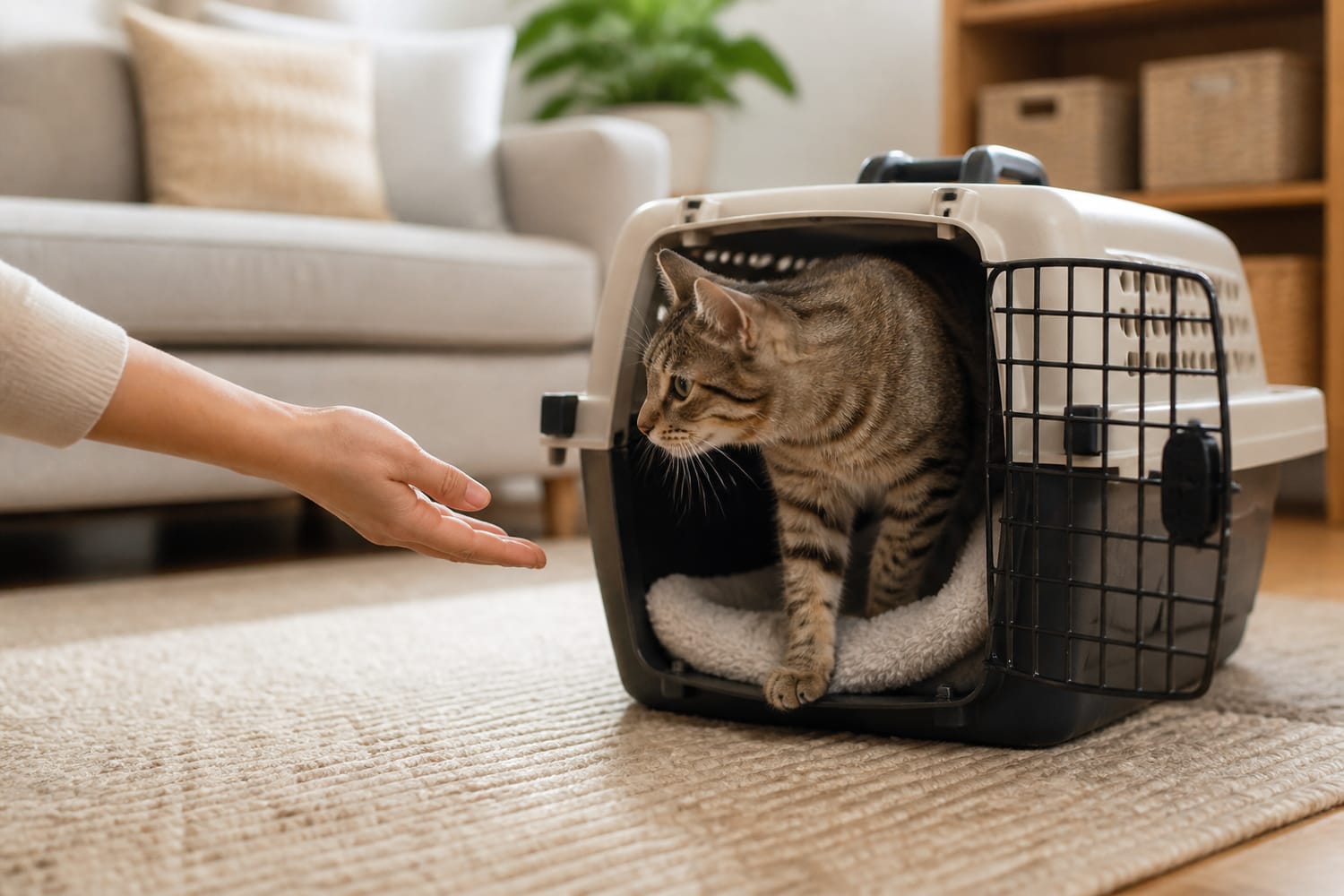
Turn the Carrier From a Threat Into a Safe Place
The secret to peaceful carrier trips is simple: stop introducing the carrier only when something unpleasant is about to happen. By leaving it out, adding familiar comforts, and rewarding small steps toward voluntary entry, you can gradually teach your cat that the carrier is a predictable, secure place—not a trap.
For many households, “carrier time” begins with a suspicious cat, a hurried human, and an increasingly desperate chase under the bed. Even when everyone starts with good intentions, the experience can end in scratches, stress, and a cat who becomes even more determined to disappear next time.
Your cat is not being stubborn or trying to make you late. If the carrier usually predicts confinement, a noisy car ride, or a veterinary examination, avoiding it makes perfect sense from your cat’s point of view. Previous frightening experiences can strengthen that response.
Fortunately, cats can form new associations. Positive reinforcement training can help them voluntarily enter and travel in a carrier, improving welfare and making veterinary visits easier for everyone. The feline-friendly handling guidelines summarized by the Feline Veterinary Medical Association identify carrier training as an especially beneficial skill.
Begin With the Right Carrier
A well-designed carrier makes training and travel safer and more comfortable. Look for one that is:
- Large enough for your cat to stand, turn around, and lie down
- Strong, secure, and well ventilated
- Easy to clean
- Simple to open and close without loud snapping sounds
- Equipped with a removable top or both front and top openings
- Stable when lifted and carried
A hard-sided carrier with a removable top is often practical because a nervous cat may be examined while resting in the bottom half. It also gives you more options if your cat needs assistance entering.
Check the door, screws, clips, and handle regularly. A carrier that flexes, tips, or rattles can feel unsafe. Place a washable, nonslip blanket or towel inside so your cat is not sliding across bare plastic.
Whenever possible, each cat should have an individual carrier. Sharing a small carrier can increase tension, restrict movement, and make safe handling more difficult.
Make the Carrier Part of Everyday Life
The fastest way to make a carrier suspicious is to store it in a closet for 364 days and dramatically bring it out before an appointment. Cats notice changes in their environment, and many quickly learn exactly what that mysterious plastic box predicts.
Instead, leave the carrier open in a quiet area where your cat already enjoys spending time. A bedroom corner, home office, or peaceful living room may work well. Avoid placing it beside noisy appliances, busy doorways, or another pet’s favorite resting place.
Make the interior inviting with:
- Familiar bedding carrying your cat’s scent
- A favorite small blanket
- Occasional treats
- A safe toy
- A sprinkle of catnip or silver vine, if your cat enjoys it
At first, remove the carrier door or secure it so it cannot swing shut. If the top comes off, begin with only the bottom half and treat it like a regular cat bed.
Then wait. Your cat may investigate immediately, or they may ignore it for several days. Both responses are normal. Curiosity grows more easily when there is no pressure to perform.
Teach Voluntary Entry One Small Step at a Time
Carrier training works best when the lesson is divided into tiny, achievable steps. Rather than focusing only on getting your cat completely inside, reward each sign of progress.
1. Reward Interest
Sit near the carrier with several small, high-value treats. Reward your cat for looking at it, sniffing it, or calmly approaching it.
Deliver the reward immediately so the connection is clear. Petspiration’s guide to rewarding behavior at the right moment explains why prompt reinforcement helps pets understand exactly what they did well.
Never push your cat closer. If they stay several feet away, begin there.
2. Create a Treat Trail
Place one treat near the carrier entrance. Once your cat comfortably eats it, put the next treat just inside. Over several sessions, gradually move treats farther toward the back.
If your cat stretches dramatically while keeping every paw outside, that still counts as progress. Resist the temptation to close the door or move suddenly.
3. Reward Paws Inside
Reward one paw inside, then two, and eventually all four. You may use a marker word such as “yes” the instant your cat takes the desired step, followed by a treat.
Once full entry becomes predictable, add a cue such as “carrier,” “inside,” or “travel.” Say it just before your cat walks in, not while they are still uncertain about the behavior.
4. Build Comfortable Time Inside
When your cat willingly enters, offer several small treats through the open door. You can also serve part of a meal inside or provide a lickable treat.
Let your cat leave whenever they wish. Freedom to exit is important during early training because it shows them that entering does not always lead to confinement.
Keep sessions brief—often one to three minutes is enough. End while your cat is still relaxed and interested.
Introduce the Door Without Rushing
A cat who walks into an open carrier is not automatically ready to be enclosed. Treat the door as a separate training stage.
Begin by touching or moving it slightly, then reward calm behavior. Next, close it for one second, offer a treat, and open it again. Gradually progress to three seconds, five seconds, and longer intervals.
Stay nearby and remain relaxed. If your cat paws urgently at the door, stops eating, crouches tightly, or tries to force an escape, the exercise has become too difficult. Open the door calmly and return to an easier step during the next session.
Learning to recognize subtle discomfort is essential. Petspiration’s overview of pet body language and emotional signals can help you distinguish relaxed curiosity from rising fear.
Common signs that your cat needs a break include:
- Flattened or sideways ears
- Dilated pupils
- Rapid tail flicking
- A tense, low posture
- Heavy breathing or panting
- Growling, hissing, or swatting
- Refusing a normally irresistible treat
- Repeated escape attempts
Do not punish these warnings. They are valuable communication, not bad behavior.
Add Lifting, Walking, and Car Practice
Once your cat can remain relaxed behind the closed door, introduce movement gradually.
Start by lifting the carrier an inch, setting it down, and rewarding your cat. Progress to holding it for a few seconds, taking one step, and eventually walking around the room.
Carry it level and close to your body, supporting the bottom when necessary. Avoid swinging it by the handle or bumping it against doors and furniture.
The next stage is the car. Begin by sitting with your cat in the parked vehicle for a minute, followed by a reward at home. Then try starting the engine, backing out of the driveway, or driving around the block.
The carrier should be positioned securely according to its manufacturer’s instructions so it cannot slide or tumble. Never allow your cat to travel loose in the vehicle. Short practice rides can help teach your cat that getting into the car does not always lead to a veterinary procedure. AAHA’s guidance on reducing veterinary stress also recommends carrier preparation, practice rides, and calm handling.
What If Your Cat Is Already Terrified?
A deeply frightened cat may need to begin much farther from the carrier. Reward calm behavior across the room before gradually decreasing the distance. If the carrier itself triggers panic, try removing the top, covering it with familiar bedding, or introducing a different style.
Progress may take days for one cat and months for another. Age does not automatically prevent learning; even senior cats can build more positive carrier associations when training proceeds at a comfortable pace. Published feline-friendly guidelines include examples of older cats learning to enter carriers voluntarily after difficult earlier experiences.
For unavoidable appointments, contact your veterinary team before carrier day. They can help you create a safe plan and may recommend prescription anti-anxiety medication for a cat with severe travel or veterinary fear. Never give human medication, supplements, or sedatives without veterinary direction.
Synthetic feline pheromone products may help some cats when applied to the carrier or bedding before travel, but they are an optional support—not a replacement for gradual training. Follow the product instructions and allow sprayed bedding to air out before your cat enters.
Keep the Good Association Going
Carrier training should not end after one successful appointment. Continue leaving the carrier available as a bed or hiding place. Drop treats inside unexpectedly, feed an occasional meal there, and repeat short door-closing or carrying exercises.
Most importantly, create carrier experiences that do not end at the veterinarian. Your cat might enter, receive a treat, rest for a minute, and come straight back out. These easy repetitions protect the trust you have built.
The goal is not to make every cat love car rides. It is to replace panic and pursuit with familiarity, predictability, and cooperation. With patient practice, that once-dreaded carrier can become an ordinary part of your home—and perhaps even one of your cat’s favorite places to nap.