
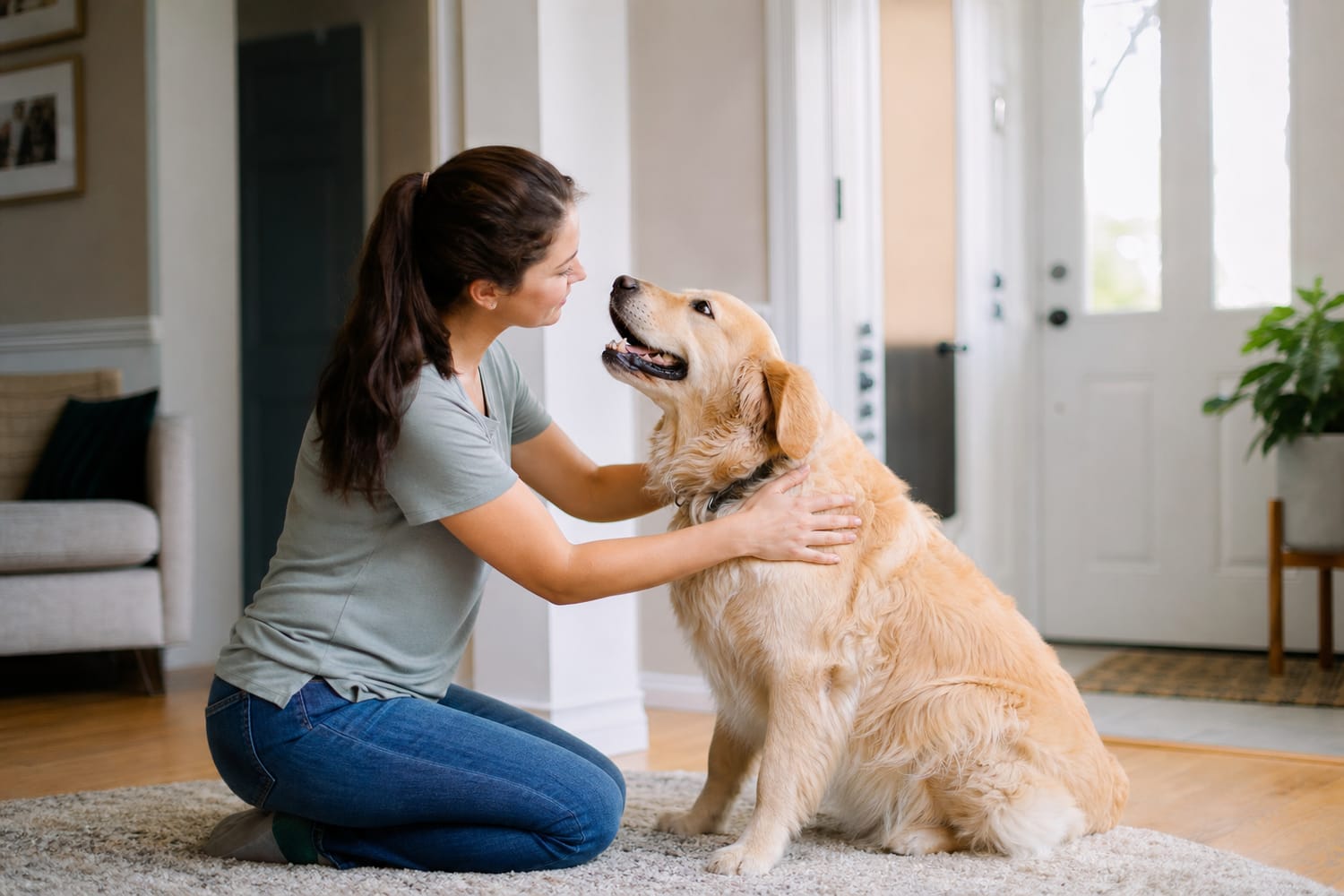
The Doorbell Drama: Why Dogs Get So Excited
For many dogs, guests arriving is one of the most thrilling events of the day. There are new smells, familiar voices, exciting movement, and the possibility of attention, play, or even dropped snacks. From your dog’s point of view, the doorbell might as well announce, “Something amazing is happening!”
Overexcitement before guests arrive can look different from dog to dog. Some bark nonstop. Some jump, spin, whine, mouth hands, race around the house, or shove toys into visitors’ knees. Others may appear “happy,” but their body is so wound up that they struggle to listen or settle.
The good news? Your dog is not being “bad.” They are overwhelmed by anticipation and need help learning what to do instead. With the right plan, you can turn chaotic greetings into calmer, more confident moments for everyone.
Start Before the Knock: Set Your Dog Up for Success
The best time to calm an overexcited dog is before guests are at the door. Once your dog is already barking, jumping, and sprinting to the entryway, their brain may be too stimulated to easily respond to cues. Prevention and preparation are your best friends.
If you know guests are coming, begin your calming routine 20 to 60 minutes beforehand, depending on your dog’s energy level. A young Labrador may need more preparation than a senior Pug. A high-drive herding breed may need a different approach than a laid-back companion dog. The key is to match the routine to the dog in front of you.
Try to reduce “hype triggers” before guests arrive. If your dog becomes excited when you tidy quickly, open the front curtains, or say “They’re here soon!” in a cheerful voice, keep your own energy steady. Dogs are brilliant observers. They often notice our pre-guest rituals long before the doorbell rings.
A calm dog often begins with a calm household. Speak softly, move at a normal pace, and avoid last-minute excitement. You’re not trying to trick your dog; you’re helping them feel safe, guided, and ready.
Burn Energy the Smart Way
A common piece of advice is to “tire the dog out” before visitors come over. That can help, but there’s an important catch: not all exercise creates calm. A frantic game of fetch right before guests arrive may leave some dogs more wired, not less. Physical exercise is helpful, but mental exercise and decompression are often even better.
Before guests arrive, consider one of these activities:
- A relaxed sniffing walk around the neighborhood
- A short training session with easy cues your dog knows well
- A food puzzle, snuffle mat, or stuffed rubber toy
- A calm game of “find it” with treats hidden around a room
- A few minutes of gentle massage or quiet brushing, if your dog enjoys it
Sniffing is especially powerful. Dogs gather huge amounts of information through their noses, and sniffing can be naturally calming. A 15-minute sniff walk may do more for your dog’s emotional state than a high-speed run around the yard.
The goal is not exhaustion. The goal is balance. You want your dog pleasantly fulfilled, not overstimulated.
Teach a “Place” Cue Your Dog Can Trust
One of the most useful skills for guest greetings is teaching your dog to go to a specific spot, such as a bed, mat, crate, or cozy corner. This is often called a “place” cue. It gives your dog a clear job when exciting things happen.
Instead of yelling “No jumping!” or “Stop barking!” you can say, “Place,” and reward your dog for moving to their mat. Over time, the mat becomes a predictable station for calm behavior.
To teach it, start when there are no guests and no distractions:
- Place a mat or bed in a quiet area.
- Toss a treat onto it and let your dog step on.
- Praise gently when all four paws are on the mat.
- Toss another treat away so your dog steps off.
- Repeat until your dog happily returns to the mat.
- Add the word “place” just before they move toward it.
- Gradually reward longer stays on the mat.
Keep early sessions short and cheerful. You are building a positive association, not forcing stillness. Once your dog understands the cue, practice with mild distractions: a family member walking by, a knock on an inside door, or the sound of the doorbell played softly from your phone.
When guests are coming, send your dog to their place before the door opens. Reward generously. If needed, use a leash, baby gate, or playpen to prevent a joyful launch toward the entryway.
Use Management Without Guilt
Training is wonderful, but management is often what makes training possible. Management means arranging the environment so your dog can succeed. It is not cheating. It is kind, practical, and responsible.
If your dog struggles with greetings, consider using:
- A baby gate to create distance from the front door
- A leash attached to a harness so you can guide your dog calmly
- A crate or playpen if your dog is crate-trained and comfortable
- A closed room with enrichment, such as a stuffed food toy
- White noise or calming music to reduce hallway or door sounds
Not every dog needs to greet every guest immediately. Some dogs do best when they settle behind a gate for the first 10 minutes, then say hello once the initial excitement has passed. Others may be happier staying in a quiet room with a chew, especially during busy gatherings.
This is especially important for dogs who are not just excited, but anxious or conflicted. Barking, lunging, jumping, or pacing may come from stress as well as joy. Giving your dog space does not mean they failed. It means you listened.
Practice Calm Greetings in Stages
Many overexcited dogs are expected to go from zero to perfect manners in one of the hardest situations possible: visitors entering the home. Instead, break greetings into smaller, teachable steps.
Begin with familiar people who can follow instructions. Ask your helper to approach calmly and avoid high-pitched greetings, direct staring, or reaching over your dog’s head. These human behaviors can be very exciting or intimidating to dogs.
A simple practice plan might look like this:
- Dog is on leash or behind a gate.
- Guest enters quietly and ignores the dog at first.
- You reward your dog for four paws on the floor.
- If your dog jumps or barks, the guest turns away or pauses.
- When your dog settles, calm attention may resume.
- Repeat in short sessions.
The reward for calm behavior can be treats, praise, or permission to greet. For many dogs, greeting the guest is the biggest reward of all. Use that wisely. If jumping makes the guest interact, jumping has been rewarded. If sitting or standing politely makes the guest interact, polite behavior becomes more valuable.
Remind guests to keep their energy low at first. Even dog lovers sometimes accidentally make overexcitement worse by squealing, bending down, patting rapidly, or saying, “It’s okay! I don’t mind!” Your dog may love that attention, but it can make learning calm manners much harder.
Create a Pre-Guest Calming Routine
Dogs thrive on patterns. A predictable routine teaches your dog, “When people come over, this is what we do.” Over time, the routine itself can become calming.
Here is a sample routine you can adjust:
45 minutes before guests arrive: Take your dog for a relaxed sniff walk or do a short enrichment activity.
25 minutes before: Offer water and a bathroom break.
15 minutes before: Set up your dog’s mat, treats, leash, gate, or enrichment toy.
5 minutes before: Guide your dog to their place and reward calm behavior.
When the doorbell rings: Keep your voice soft and steady. Reward your dog for staying on their mat or behind the gate.
After guests enter: Let guests settle first. Then allow greetings only if your dog is calm enough to respond to you.
The exact timing is less important than the consistency. If your dog learns that guests arriving always predicts guidance, rewards, and a safe place to settle, the whole event becomes less overwhelming.
Reward What You Want to See Again
Dogs repeat behaviors that work for them. If barking gets the door opened, barking becomes powerful. If jumping gets attention, jumping becomes exciting. But if calm behavior brings treats, praise, and access to guests, calm behavior grows.
Watch for tiny moments of success. Reward your dog when they:
- Looks at you after hearing a knock
- Keeps four paws on the floor
- Takes a breath and pauses
- Goes to their mat
- Chooses to sniff the floor instead of jumping
- Lies down while people talk
- Turns away from the door
These small choices matter. Calm is not always dramatic. Sometimes it begins with one second of self-control. Catch that second and reward it.
Use treats your dog truly enjoys, especially in the beginning. Small, soft treats work well because your dog can eat them quickly and stay focused. As your dog improves, you can use a mix of food, praise, petting, and life rewards like greeting a visitor.
What Not to Do When Your Dog Is Overexcited
It can be frustrating when your dog seems to forget every bit of training the moment someone arrives. Still, punishment usually makes things worse. Yelling, grabbing, kneeing, or scolding may increase arousal, confusion, or anxiety. Even if it stops the behavior temporarily, it does not teach your dog what to do instead.
Avoid repeating cues over and over. If you say “sit” ten times while your dog bounces like popcorn, the word may lose meaning. Instead, create distance, use a leash or gate, lower the difficulty, and reward success.
Also avoid putting your dog in situations they cannot handle yet. If your dog jumps on every visitor, inviting six excited guests in at once and hoping for the best is not a fair training setup. Start with easier practice and build gradually.
Patience is not just kind; it is effective.
When Excitement Might Be Something More
Some dogs are overjoyed by guests. Others are overwhelmed, nervous, territorial, or unsure. Signs of stress can include barking with a stiff body, growling, hiding, lip licking, yawning, pacing, trembling, or refusing treats. A wagging tail does not always mean a relaxed dog; dogs may wag when excited, conflicted, or stressed.
If your dog has ever bitten, snapped, cornered a guest, or seemed truly distressed by visitors, consult a qualified professional such as a certified positive-reinforcement trainer, veterinary behaviorist, or behavior consultant. Your veterinarian can also help rule out pain, age-related changes, or medical issues that may affect behavior.
There is no shame in getting support. In fact, it is one of the most loving choices a pet parent can make.
A Calmer Welcome Is Possible
Helping an overexcited dog calm down before guests arrive is not about taking away their joy. It is about giving that joy a safe, polite, and manageable path. Your dog can still love visitors. They can still wag, greet, and be part of the fun. They simply need practice, structure, and compassionate guidance.
Start small. Prepare early. Use management. Reward the behavior you want. Teach your dog where to go and what to do when the world becomes exciting. Celebrate progress, even if it looks like five seconds of quiet where there used to be chaos.
With time, your front door can become less of a launchpad and more of a peaceful welcome point. And when your dog learns to greet guests with a calmer heart and a softer body, everyone wins: your visitors, your household, and most of all, your beloved dog.