
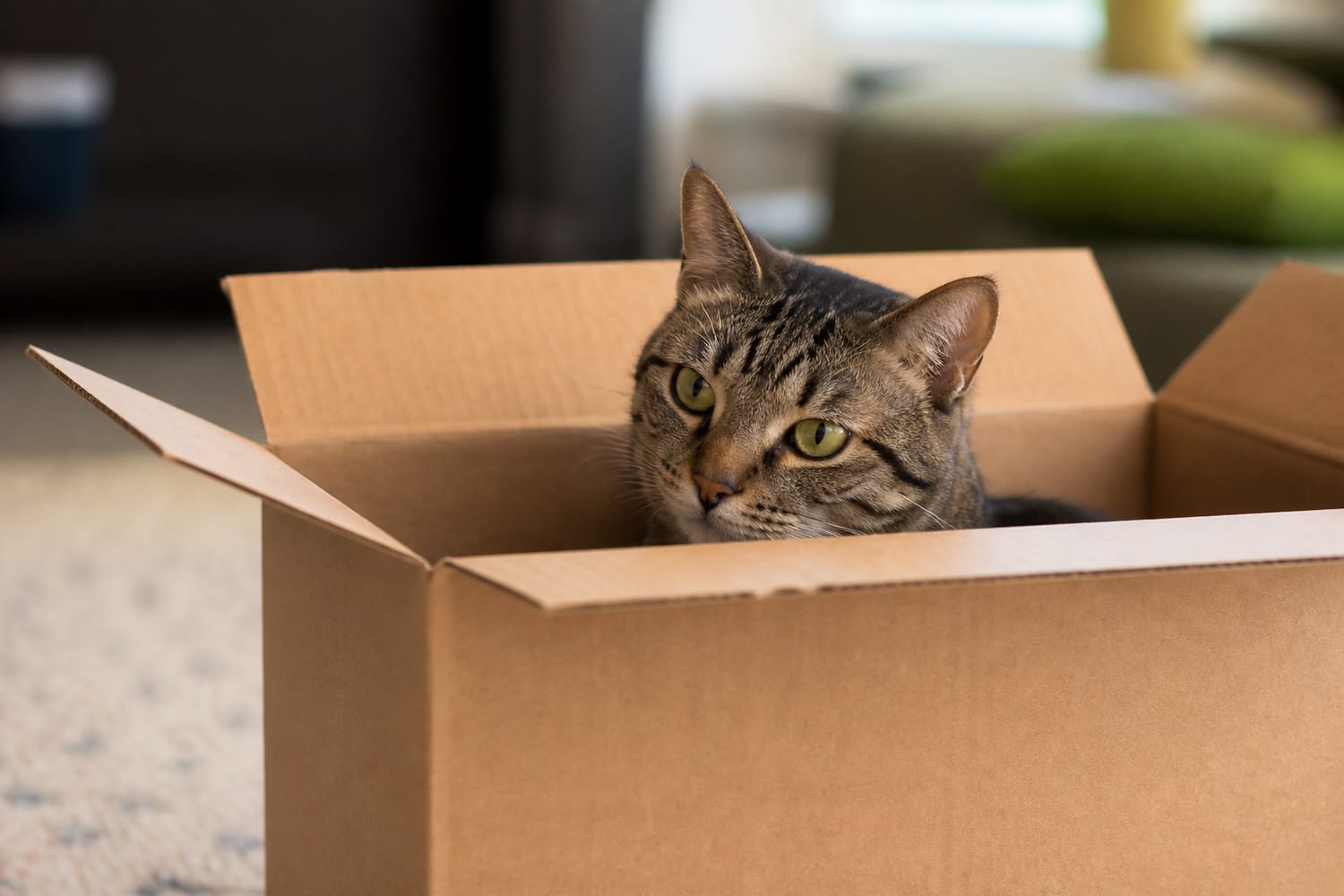
Set a new cat bed beside an empty delivery box, and there’s a fair chance the box will win. To us, it’s packaging. To a cat, it can be a sheltered resting place, a lookout post, a hiding spot, and the setting for an excellent game of pounce.
Cats are drawn to boxes for several reasons, not just one. A box offers cover when they want to feel secure, a place to watch the room, and a way to turn ordinary play into a miniature hunt. Understanding that appeal gives us a lovely glimpse into how cats experience their world.
A Box Offers the Comfort of Cover
Cats may be confident explorers, but they also value the option to retreat. Inside a box, a cat can rest with much of their body out of sight while still keeping an eye on what’s happening nearby. That can be especially appealing when the household feels busy or unfamiliar.
This isn’t merely a charming theory. In a study of newly arrived shelter cats, cats given hiding boxes showed a faster decrease in behavioral stress scores than cats without them. The study took place in a shelter, so it doesn’t mean every box has the same effect on every cat at home. It does show why access to a hiding place can matter during an unsettling time.
Think of a new adoption, a house move, or a visit from guests. Your cat may want to observe before joining in. A box gives them a place to make that choice without disappearing into an inaccessible corner.
The Tiny Hunter Has Found an Ambush Spot
Watch a cat crouch inside a box while a feather toy skitters past. Their eyes follow it. Their body goes still. Then—pounce! What looks like a silly cardboard game gives them a chance to practice stalking and chasing.
Cats don’t need to catch dinner to retain hunting instincts. A box can provide cover for play, allowing a cat to peer over an edge or wait just inside an opening before springing toward a toy. Cats Protection notes that hiding and pouncing are natural parts of feline play, and that an empty box can become a playground.
To join the game, move a wand toy past the box rather than poking it at your cat inside. Pause, let the toy dart away, and give your cat opportunities to catch it. When they’ve had enough, let the box become a peaceful resting spot again. For more ways to support those hunting-style games, explore Petspiration’s guide to keeping your indoor cat active and healthy.
A Good Lookout Doesn’t Have to Be High Up
Cats are attentive observers. A windowsill offers a view from above; a box offers a view from behind cover. Both can let a cat watch household activity on their own terms.
Where you put the box may be as important as the box itself. One cat might enjoy an open carton near the family room, where they can watch without being in the middle of things. Another might prefer a box on its side in a quieter corner. Some may ignore both and head straight for a perch instead.
Rather than searching for a universally “perfect” box, watch what your cat chooses. Do they nap in one location but play in another? Do they want a clear view of the doorway? Those small choices tell you more about their preferences than the price tag on a cat bed ever could.
Why the Snug Fit Can Be Appealing
A box’s walls create a defined little space. For some cats, curling up with their sides near the cardboard may feel pleasantly sheltered. Cardboard can also make a comfortable resting surface, particularly with a soft towel or familiar blanket inside.
Still, snug should never mean stuck. A cat needs room to enter, turn around, settle naturally, and leave without a struggle. Some cats adore a close-fitting box; others prefer a roomy one they can stretch across. Older cats or cats with limited mobility may appreciate a low-sided option that’s easier to step into. Cats Protection recommends arranging boxes so cats can get in and out easily.
If you offer two shapes—perhaps a shallow open box and a larger box on its side—you can let your cat cast the deciding vote.
Why a New Box Is So Interesting
A fresh box changes the landscape of a familiar room. It has edges to investigate, an opening to peer through, and a new place to sit. A curious cat may inspect it at once; a cautious cat may circle it, sniff it, and return later.
There’s no need to put your cat inside or insist that they explore. Leave the box where it won’t block their usual routes, then give them time. If they choose to investigate, wonderful. If they don’t, that’s useful information too.
Cats can also have different ideas about what a box is for. Today’s play fort might be tomorrow’s nap spot. Petspiration’s Pet Joy Map offers a helpful way to notice the activities and resting places your own companion repeatedly chooses.
Make an Ordinary Box a Safe Little Haven
The best cat box doesn’t need elaborate decorations. Start with a clean, dry, sturdy box, set it on a stable surface, and check that your cat can leave easily. Remove loose packing materials, plastic wrapping, staples, and dangling tape. If you add a blanket, keep it dry and wash it when needed.
For a hideaway, place a box on its side or make a generous entrance in an upright box. Check cut edges for anything sharp. If you share your home with more than one cat, offer several resting and hiding options in different places so no one has to compete for the only retreat. Cat-care guidance emphasizes the value of accessible hiding places and choice.
You can change things up without making the space overwhelming:
- Put a familiar towel inside a box intended for naps.
- Set out a second box with a different opening and let your cat choose.
- Use a wand toy nearby for a short, cat-led play session.
- Replace a worn, damp, or heavily chewed box.
For another gentle way to turn an ordinary day into a cat-centered adventure, see Petspiration’s ideas for a safe, simple Pet Yes Day.
When Hiding Deserves a Closer Look
A cat relaxing in their favorite box is usually no cause for concern. A sudden change in hiding behavior is different. If a normally social cat stays hidden much more than usual, or hiding comes with reduced appetite, low energy, vomiting, or changes in litter box habits, contact your veterinarian. Cats can be subtle about showing illness, so it’s worth paying attention to what’s unusual for your cat.
Try not to judge by the box alone. Notice whether your cat still comes out to eat, play, move comfortably, and follow their usual routines. A box is a wonderful choice for privacy, but it shouldn’t make a worrying change easy to overlook.
The Small Gift Inside the Big Mystery
A cardboard box reminds us that feline happiness often comes from opportunities rather than expensive things: somewhere to retreat, something to investigate, and the freedom to decide what happens next.
The next time your cat chooses the box over what came inside it, take a moment to watch. You might see an alert little hunter, a cautious explorer, or a contented companion settling in for a nap. Whichever version appears, the message is much the same: when we make room for a cat’s instincts, even an ordinary box can feel like a gift.