
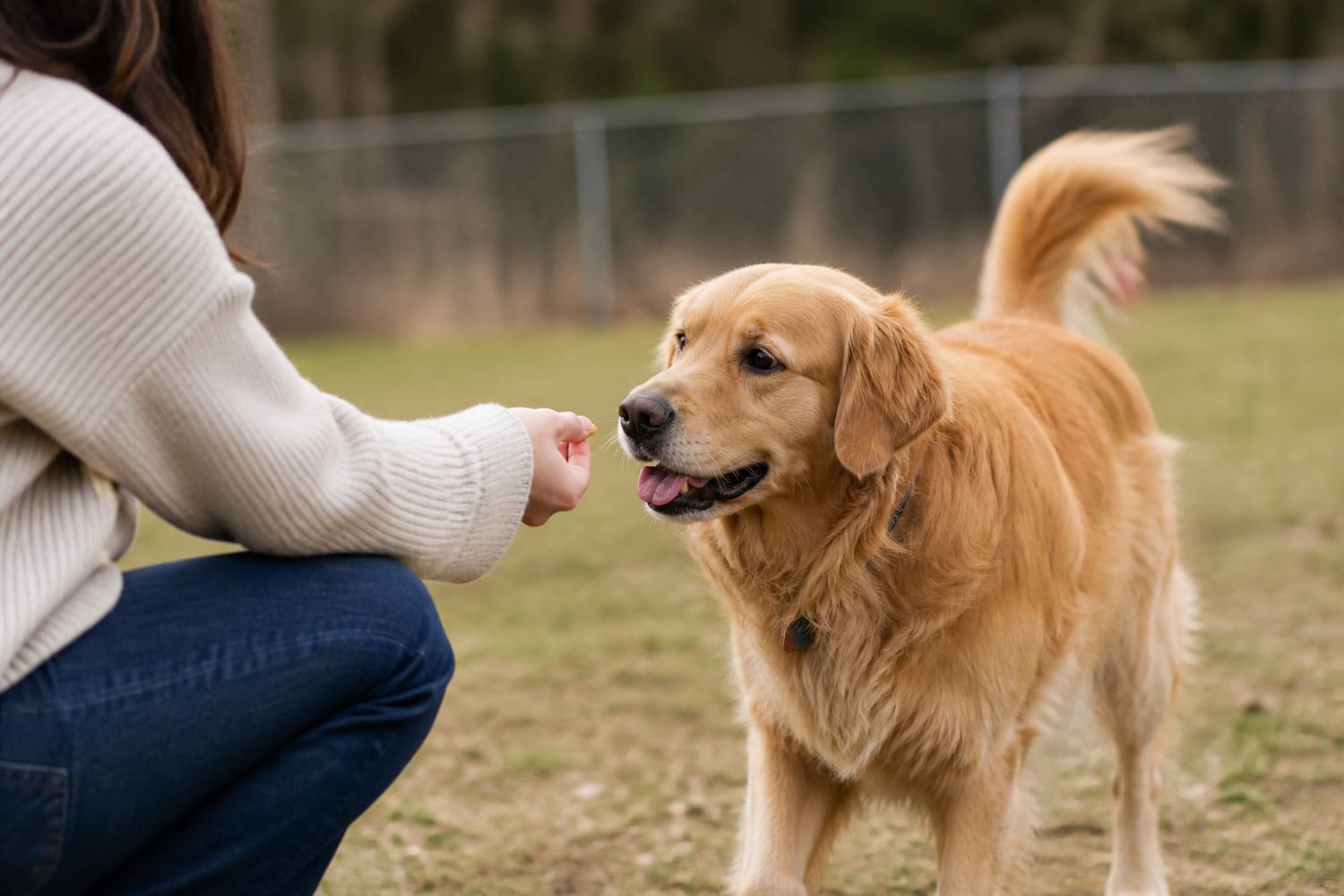
A Wagging Tail Is Only One Clue
A wagging tail tells you a dog is feeling something, but it doesn’t tell you what. Joy, excitement, uncertainty, and tension can all come with a wag. To understand the message, look at the whole dog: the looseness of their body, their eyes and mouth, the position of their tail, and what is happening around them.
Picture a dog watching a visitor come through the front door. Their tail moves back and forth, so the visitor bends down to say hello. But the dog’s legs are planted, their body is stiff, and their eyes stay fixed on the newcomer. That wag isn’t a clear invitation to pet them. It’s a reason to pause and give them room.
The lovely thing about learning dog body language is that it helps us do more than avoid misunderstandings. It helps us notice when our dogs feel comfortable, offer support when they don’t, and make everyday encounters kinder for everyone.
Read the Wag, Not Just the Tail
If you want to know what a wag might mean, start with how the tail moves. A broad, loose sweep that seems to travel through the hips often goes with friendly, relaxed behavior. A short, tight wag on an otherwise rigid dog deserves more caution. Tail height matters, too: a high, stiff tail can accompany unease, while a low or tucked tail may signal fear or discomfort. None of these clues should be read alone.
Speed isn’t a happiness meter. An energetic wag may mean a dog is highly excited, but excitement doesn’t always mean they’re ready for a close greeting. Imagine your dog spotting a favorite friend across the park, then compare that with the same dog noticing an unfamiliar animal near their food. Both moments might produce tail movement; the rest of the dog tells the more useful story.
Every dog also has a different starting point. Some tails curl naturally over the back; others hang low even when the dog is comfortable. Compare a tail with that dog’s usual position, rather than expecting every breed—or every individual—to hold it the same way. This is especially helpful with short, curled, or docked tails, where a wag may be harder to see.
Look for the Whole-Body Picture
A comfortable dog often looks soft rather than posed. Their muscles are loose, their movements are fluid, and their eyes have their usual shape rather than a fixed stare. Their mouth may be gently open, and their ears tend to sit naturally for that dog. If they approach, they can do so without seeming frozen, crouched, or driven forward by tension.
Signs of discomfort can be quieter than a bark or growl. A dog may turn their head away, avoid eye contact, lick their lips when no food is around, or yawn when they aren’t sleepy. You might see the whites of their eyes as they keep watch while turning their head. These signs are clues, not a diagnosis: dogs yawn and lick their lips for other reasons, too. Look for several signals together and ask what changed just before they appeared.
A sudden shift is particularly worth noticing. Did a dog’s loose body become still when someone leaned over them? Did they move away when a child reached for their collar? Did they stop enjoying a game and begin to avoid the other dog? Their behavior may be saying, “I need a break,” even if their tail is still moving. For a broader guide to these everyday clues, explore Petspiration’s article on understanding pet body language.
Context Changes Everything
A greeting at home is different from a greeting through a fence. A dog who wiggles toward a familiar person in the living room may become watchful when a stranger reaches over the gate. The tail is part of each scene, but it cannot explain the scene by itself. The American Veterinary Society of Animal Behavior’s guide to tail signals describes how a high, stiff wag can be mistaken for a friendly invitation.
Consider the veterinarian’s waiting room, too. A dog may wag as someone approaches while also licking their lips and edging behind their person. Rather than deciding the dog is “fine” because the tail moves, notice that they may feel conflicted: interested in what’s happening, but not comfortable with closeness. More space may make that moment easier.
Play calls for the same whole-body reading. Bouncy movement and a loose posture can make an excited wag look very different from one paired with stiff legs and hard staring. If a game changes from springy to tense, pause it and see whether both dogs choose to re-engage. The goal isn’t to decode every tail flick perfectly; it’s to notice when the mood changes.
Let the Dog Help Decide Whether to Say Hello
Want to greet a dog you don’t know? Ask their person first. Then give the dog a chance to choose whether to approach rather than reaching into their space. Even with permission, don’t assume a wag means they want to be touched. The ASPCA’s dog bite prevention guidance recommends watching for fearful or anxious body language and avoiding dogs who appear uncomfortable.
With a dog you know well, try a simple pause during petting. Give a few gentle strokes, stop, and watch what happens. If the dog moves closer with a loose body, they may welcome more. If they turn away, step aside, or stiffen, let the interaction end. Affection is better when the dog has a say.
Children can learn an easy rule: a wag is not permission. Adults should supervise children with dogs, make sure the dog has a place to rest undisturbed, and step in when either needs a break. A dog who walks away has made a good choice; give them the space to keep it.
What to Do When the Signals Say “Not Now”
If a dog’s body goes stiff, they freeze, growl, or try to retreat, stop approaching. Give them room and avoid pressuring them to accept a greeting. If they’re your dog, calmly help them move away from whatever is troubling them when you can do so safely. A growl is useful information that they need space—not a reason to insist on more contact.
Sometimes the gentlest plan is to prevent an overwhelming greeting in the first place. A visitor can settle in before meeting your dog; your dog can relax behind a gate or in a quiet room instead of being expected to welcome everyone at the door. Petspiration’s guide to helping an overexcited dog before guests arrive offers ideas for making those moments more manageable.
If your dog repeatedly seems distressed around people or other dogs—or their behavior changes suddenly—talk with your veterinarian. They can help check for a health issue and, if appropriate, guide you toward a qualified behavior professional. Support is especially important if a dog has snapped or bitten.
A Better Way to Love the Wag
Of course, plenty of wagging tails do accompany wonderful moments: the whole-body wiggle when a beloved person comes home, the easy swish on a relaxed walk, the joyful bounce before a game. Learning that a wag can mean more than happiness doesn’t make those moments less special. It makes us better at recognizing them—and better at noticing when our dogs need something else.
So the next time you see a tail in motion, take one extra second. Look at the body attached to it. Notice the setting. Let the dog’s choices help shape yours. That small habit can turn “I think they’re happy” into a more caring question: “What are they telling me right now?”