
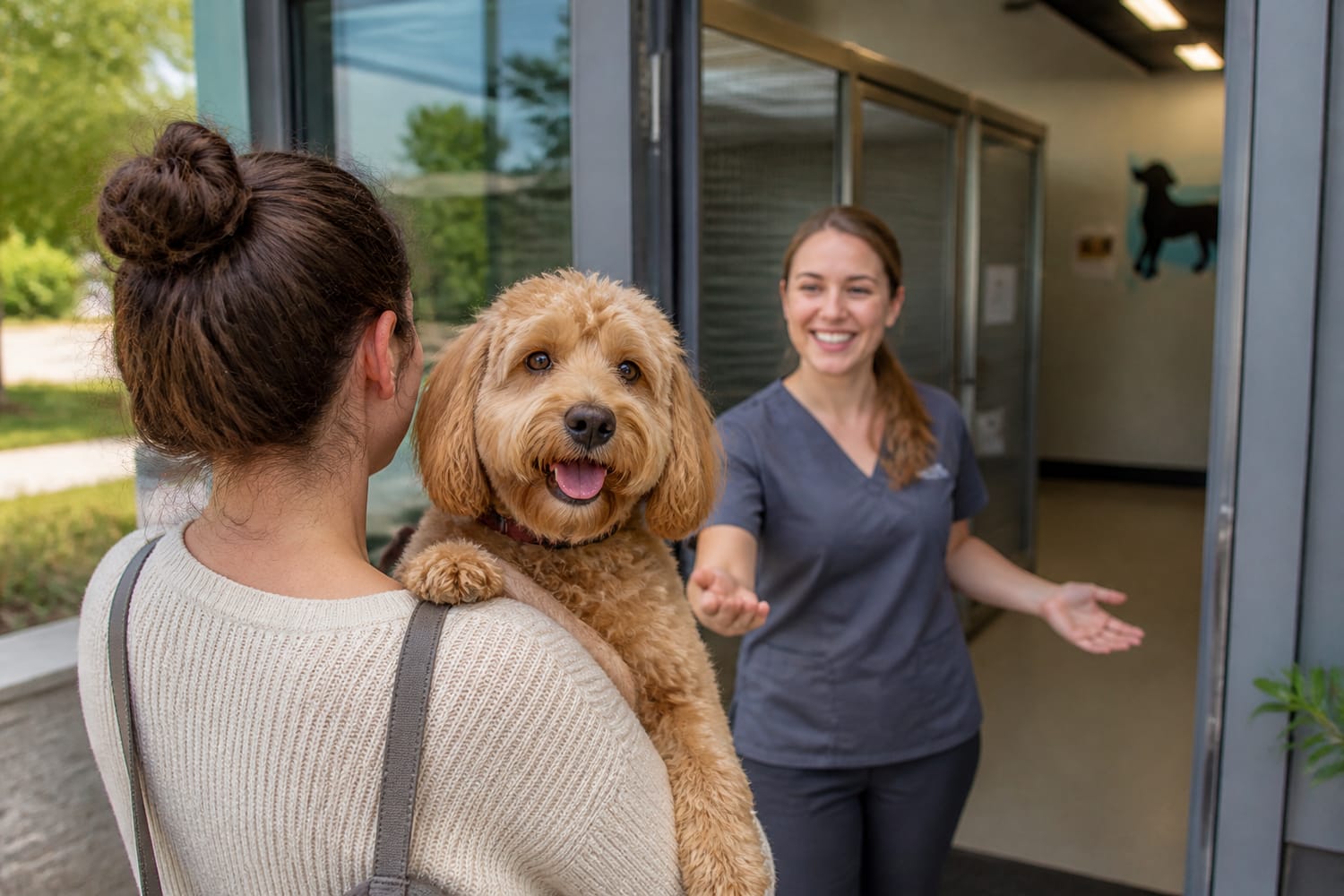
For your pet’s first boarding stay, choose a facility that welcomes questions, provides clean and secure accommodations, explains its supervision and emergency procedures, and can meet your companion’s individual needs. Visit before booking, confirm health requirements early, and send familiar food plus clear care instructions to help make the transition easier.
Leaving your best friend behind can tug at your heart—even when something wonderful awaits on the other side of your trip. Think of preparation as another expression of love: you’re choosing the people who will notice the little things while you’re away.
Start With Your Pet, Not the Amenities
A luxury suite sounds lovely, but the most important question is simpler: Does this setting suit your pet?
Consider your companion’s health, personality, and daily routine. A sociable dog may enjoy carefully supervised activities, while another may need individual attention without interaction with unfamiliar dogs. Pets with complex medical needs may benefit from veterinary boarding; confirm exactly what medical supervision is available rather than assuming it comes with the location.
For cats, look for quiet accommodations separated from barking dogs, with room to move, hide, perch, and rest. Food, water, and litter should be arranged so the litter area is separated from eating and sleeping spaces. An experienced in-home sitter is also worth considering if your pet struggles with unfamiliar surroundings.
For rabbits, birds, reptiles, and other species, ask specifically about appropriate housing, diet, handling, and veterinary access. General boarding availability does not establish that a provider can meet your particular animal’s needs.
Tour the Facility With a Caregiver’s Eye
Ask your veterinarian and trusted pet owners for recommendations, then arrange a visit. Online reviews can help you form questions, but seeing the accommodations and meeting the caregivers provides information a photo gallery cannot.
During your tour, check:
- Cleanliness: Sleeping areas should be clean and dry, with waste removed promptly.
- Comfort: Your pet should be able to stand, turn around, stretch out, and rest comfortably.
- Security: Inspect fencing, gates, doors, and procedures designed to prevent escapes.
- Air and temperature: Ask how ventilation, heating, and cooling are maintained.
- Daily essentials: Confirm access to fresh water, appropriate meals, exercise, and quiet rest.
Watch the people, too. Do staff members handle animals respectfully? Can they explain how they recognize distress and when they seek help? The MSPCA-Angell boarding checklist offers useful questions about personnel, housing, and emergency planning.
A facility may restrict entry into animal areas for health or stress-related reasons. That alone is not proof of poor care, but staff should explain the policy and offer a reasonable way to view where your pet will stay.
Ask What Happens During an Ordinary Day—and Overnight
“Lots of attention” is reassuring language, but a concrete schedule is more useful. Ask staff to describe your pet’s day from breakfast to bedtime, including toilet breaks, exercise, individual interaction, and time spent resting in their enclosure.
For dogs offered group play, ask how participants are assessed and grouped, how many dogs participate, and whether staff actively supervise throughout. Find out whether individual walks or play sessions are available instead. Group activities should match the dog, not simply the package you purchased.
Clarify overnight arrangements directly: Is someone physically present, or are pets monitored remotely? Ask how long animals are unattended and who responds to an alarm or illness. Cameras can provide information, but they are not an on-site caregiver.
Before booking, also confirm medication capabilities, update frequency, veterinary arrangements, and what happens if staff cannot reach you. Request a written estimate covering meals, medication administration, individual activities, holiday surcharges, and pickup deadlines.
Recognize Red Flags Without Expecting Perfection
A busy facility may have barking dogs or a freshly muddied play area. Look for patterns of poor care or evasiveness rather than expecting a silent showroom.
Reasons to pause include:
- Unexplained secrecy: Staff will not show or meaningfully describe the accommodations.
- Unsafe conditions: Damaged fencing, unsecured exits, dirty enclosures, or inadequate water.
- Unsupervised mixing: Unfamiliar animals roam together without appropriate oversight.
- Unclear health procedures: Staff cannot explain vaccination requirements, cleaning practices, or how sick animals are separated.
- No workable emergency plan: Nobody can explain veterinary transport or responses to fire, severe weather, and power failures.
- Dismissal of individual needs: Your concerns about medication, fear, mobility, or handling are brushed aside.
A thoughtful provider should ask questions about your pet, too. Be candid about previous bites, escape attempts, guarding, medical conditions, and situations that cause fear. Accurate information helps caregivers decide whether they can provide suitable care.
Prepare Health Records Well Before Departure
Request the facility’s written health requirements early and review them with your veterinarian. Requirements vary, and your pet’s vaccination plan should reflect their health, exposure risk, and circumstances. Petspiration’s guide to understanding pet vaccines provides a helpful starting point.
Ask about timing as well as which vaccines are needed. Some vaccines require multiple initial doses, so this is not a last-minute task. Review parasite prevention and any requested testing, and discuss anxiety concerns before the stay rather than introducing an unfamiliar product at drop-off.
Vaccination reduces risk but does not eliminate every infection. The American Veterinary Medical Association’s kennel cough guidance explains why respiratory disease remains a consideration wherever dogs gather. Contact your veterinarian and the facility if illness develops before boarding.
Build Familiarity, Then Pack the Essentials
For a dog new to boarding, consider a short introductory visit or trial stay before a longer booking. Ask afterward whether your dog ate, rested, interacted comfortably, and showed signs of distress. A trial provides useful information; it is not a guarantee that every subsequent stay will be easy.
Keep familiar routines where practical. Our article on why routine matters in pet behavior explores the value of predictable meals, activities, and downtime.
Prepare a clearly labeled boarding bag containing:
- Regular food: Include measured portions or precise quantities and feeding times.
- Medication: Use original labeled containers with written directions; document the last dose given.
- Approved comfort items: Ask whether familiar bedding or a favorite toy is permitted.
- Care notes: Include allergies, mobility limitations, behavior concerns, and handling preferences.
- Contacts and authorization: Provide your veterinarian’s details, an alternate contact, and agreed emergency-care instructions.
Make Drop-Off Calm and Homecoming Gentle
Allow enough time for an unhurried handover. Review any changes in health, meals, or medication, confirm the communication plan, and keep your goodbye warm and brief. UC Davis’s boarding advice recommends short goodbyes and familiar belongings to help reduce disruption for dogs.
At pickup, request a care summary, including appetite, toileting, behavior, and the last medication dose. Return to familiar routines and give your companion room to settle. Contact your veterinarian about concerning changes rather than automatically attributing them to boarding stress; a cat refusing food deserves prompt veterinary attention.
You don’t need to find the fanciest pet hotel. Your goal is a capable, transparent team that treats your companion as an individual. With thoughtful questions and a little preparation, that first goodbye can become a more confident one—and the reunion will still be something special.