
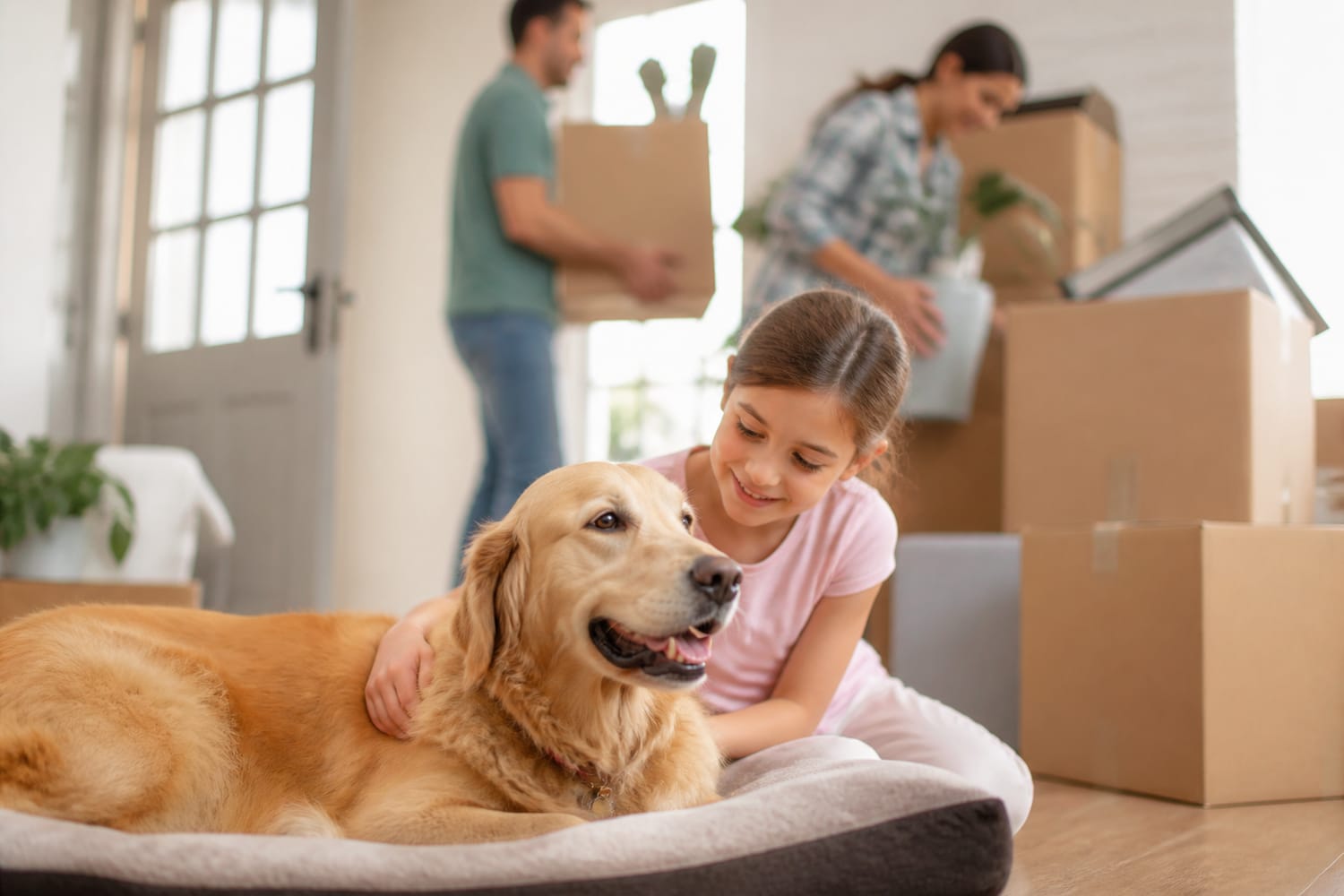
A Calm Move Begins Before the Boxes
Moving with pets is easier when you plan around their safety, routines, and emotional needs. Before moving day, organize veterinary records, update identification, introduce carriers, and prepare a pet travel kit. During the move, keep pets securely separated from the commotion. After arriving, let them explore gradually while rebuilding familiar routines.
Pets may not understand why their home is disappearing into boxes, but they certainly notice the changes. New smells, unfamiliar people, open doors, and disrupted schedules can make even a confident companion feel unsettled.
The good news is that thoughtful preparation can turn a potentially stressful event into a safe new adventure. Whether you share your life with a dog, cat, rabbit, bird, reptile, or another beloved animal, this checklist will help your whole family arrive feeling secure.
Before Moving Day: Prepare for a Safe Transition
Confirm That Your New Home Is Pet-Friendly
Before signing a lease or finalizing a purchase, consider the home from your pet’s perspective. Check pet policies, deposits, breed or species restrictions, fencing, nearby traffic, stairs, outdoor access, and the location of veterinary clinics.
Walk through the new property and look for potential hazards. Loose screens, gaps beneath fences, exposed cords, toxic plants, pest-control products, and small hiding spaces should be addressed before your curious companion begins exploring. Petspiration’s room-by-room pet-proofing guide can help you create a safer environment.
If you are moving with an older pet or one with limited mobility, consider slippery floors, steep stairs, and the distance to an appropriate bathroom area. Small adjustments—such as rugs, gates, ramps, or a downstairs resting space—can make the new home much more comfortable.
Schedule a Veterinary Visit
Arrange a veterinary appointment several weeks before the move, particularly if you are traveling a long distance or crossing state or national borders. Ask your veterinarian to:
- Perform a general health check
- Refill necessary medications
- Provide copies of vaccination and medical records
- Discuss motion sickness or travel anxiety
- Recommend an emergency plan for your pet’s health needs
- Help you identify a veterinarian near your destination
If veterinary appointments make your companion nervous, review these ideas for creating a less stressful vet visit.
Travel rules vary by destination. A state or territory may require vaccinations, tests, treatments, or a health certificate, so check the official USDA interstate pet travel requirements as soon as your plans are confirmed. International moves may require months of preparation, depending on the destination.
Never give your pet a sedative, calming supplement, or human medication without veterinary guidance. Your veterinarian can explain which options, if any, are appropriate for your pet’s species, age, health, and method of travel.
Update Identification
A move is a high-risk time for accidental escapes, making reliable identification especially important. Your pet should have a secure collar or harness with an identification tag displaying your current mobile number.
If your pet is microchipped, confirm that the registry contains your correct phone number, email address, and new address. A microchip stores an identification number rather than your personal details, so the associated registry record must remain current for you to be contacted.
Make Carriers and Crates Feel Familiar
Do not wait until moving morning to bring out a carrier. Place it in a familiar room several weeks in advance, leave the door open, and add comfortable bedding or a favorite toy. Offer treats or meals nearby, then gradually encourage your pet to enter.
For animals traveling by car, practice with short drives before attempting a long journey. Begin with a few quiet minutes in the parked vehicle, then progress to brief trips that end with something pleasant.
Choose a secure, well-ventilated carrier that allows the animal to stand, turn around, and rest naturally. Birds, reptiles, rabbits, and other exotic pets may have specialized temperature, ventilation, enclosure, and feeding needs, so consult a veterinarian experienced with that species.
Protect Your Pet’s Routine
Pets often feel more secure when life remains predictable. As much as possible, keep meals, walks, litter-box cleaning, medication, bedtime, and play sessions on their usual schedule.
Pack your pet’s room or favorite area last. Leave familiar beds, blankets, scratching posts, and toys available while the rest of the home changes around them. If your pet becomes worried, watch for hiding, pacing, trembling, unusual vocalization, appetite changes, or attempts to escape. Learning to recognize pet body-language signals can help you respond before stress escalates.
Pack a Pet Moving-Day Kit
Your pet’s essentials should travel with you—not inside an inaccessible moving truck. Pack a clearly labeled bag containing:
- Food for the journey and the first several days
- Bottled water and portable bowls
- Medications and written instructions
- Veterinary and vaccination records
- Collar, harness, leash, and spare identification tag
- Carrier or travel crate
- Bedding and familiar toys
- Treats
- Waste bags, litter, and a portable litter tray
- Paper towels and pet-safe cleaning supplies
- Grooming supplies
- A pet first-aid kit
- Recent photographs and emergency contacts
Keep food changes to a minimum. Moving day is generally not the ideal time to introduce a new diet, because unfamiliar food combined with travel stress may upset a sensitive stomach.
During Moving Day: Create a Quiet, Secure Zone
The safest place for most pets during loading and unloading is away from the action. Arrange for your pet to stay with a trusted friend, relative, pet sitter, boarding facility, or veterinarian if possible.
If your pet must remain at the property, place them in a quiet, climate-controlled room with the door securely closed. Add water, bedding, toys, and a litter box where appropriate. Place a large sign on the door telling movers and helpers not to enter.
Check on your pet regularly, but avoid repeatedly moving them through busy areas. Open doors, strangers, loud equipment, and shifting furniture can create a serious escape risk. The ASPCA likewise recommends using a closed quiet room or arranging off-site care during loading.
Before leaving, walk through the old home and count every pet. Check carriers, closets, cupboards, behind appliances, and favorite hiding places. Small animals can become remarkably creative when their surroundings feel unfamiliar.
Traveling to Your New Home
Secure carriers so they cannot slide, tip, or become dangerous during a sudden stop. Dogs should travel in an appropriate restraint or secured crate rather than roaming through the vehicle. Never allow a pet to ride in the driver’s lap or in an open truck bed.
Plan reasonable breaks during long car journeys. Dogs should remain leashed before any vehicle door opens. Cats and small animals should usually stay inside their secured carriers unless they are in a completely enclosed, escape-proof space.
Offer water during stops and monitor your pet for excessive panting, drooling, vomiting, weakness, breathing difficulty, or unusual distress. Never leave an animal unattended in a parked vehicle; interior temperatures can become dangerous quickly, even when the weather feels mild.
If you are flying, confirm the airline’s current carrier dimensions, documentation rules, weather restrictions, and check-in procedures directly with the airline. Requirements can differ between cabin and cargo travel and may change, so verify them before departure.
After the Move: Introduce the New Home Slowly
Begin With a Home-Base Room
Instead of immediately giving your pet access to the entire property, begin with one calm room. Set it up before bringing your pet inside, if possible.
Include familiar bedding, food, water, toys, and a hiding place. Cats should have a litter box positioned away from food and water. Rabbits and other small pets should have their usual enclosure, hay, bedding, and shelters arranged in a familiar way.
Allow your pet to explore at their own pace. Some animals investigate immediately, while others need hours or days before feeling brave. Neither response is wrong. The ASPCA’s moving guidance recommends starting with a home base and gradually opening additional rooms as the animal becomes comfortable.
Rebuild Familiar Routines
Resume regular feeding, walking, play, and bedtime schedules as soon as possible. Familiar routines communicate that, although the surroundings have changed, your pet’s family and daily care remain dependable.
Dogs should initially be walked on a leash, even in a fenced yard, until you have carefully inspected the boundaries. Cats should remain indoors while adjusting. Check screens, doors, gates, fences, balconies, and possible escape routes before allowing greater freedom.
Keep introductions to neighbors, visitors, and unfamiliar animals calm and gradual. Your pet has already processed many changes, so a quiet first week is often more helpful than a packed social calendar.
Watch for Signs That Help Is Needed
Temporary hiding, reduced enthusiasm, mild clinginess, or cautious exploration can occur after a move. However, contact a veterinarian if your pet refuses food or water, repeatedly vomits, develops diarrhea, has difficulty breathing, cannot urinate, appears extremely lethargic, injures themselves, or shows severe or persistent distress.
Cats that stop eating require prompt attention, and any animal with an existing medical condition may need closer monitoring. When in doubt, call your veterinarian rather than waiting for symptoms to worsen.
Your Final Moving-With-Pets Checklist
Before considering the move complete, confirm that you have:
- Updated identification tags and microchip records
- Transferred medical and vaccination records
- Located a nearby veterinarian and emergency clinic
- Inspected the new home for hazards and escape routes
- Established a quiet home-base room
- Returned to familiar feeding, exercise, and medication schedules
- Allowed exploration without forcing interaction
- Monitored eating, drinking, bathroom habits, and behavior
Moving is a major life change, but it can also begin a wonderful new chapter. With preparation, patience, and plenty of reassurance, your pet can learn that home is not simply a building—it is the safe, loving life you share together.