
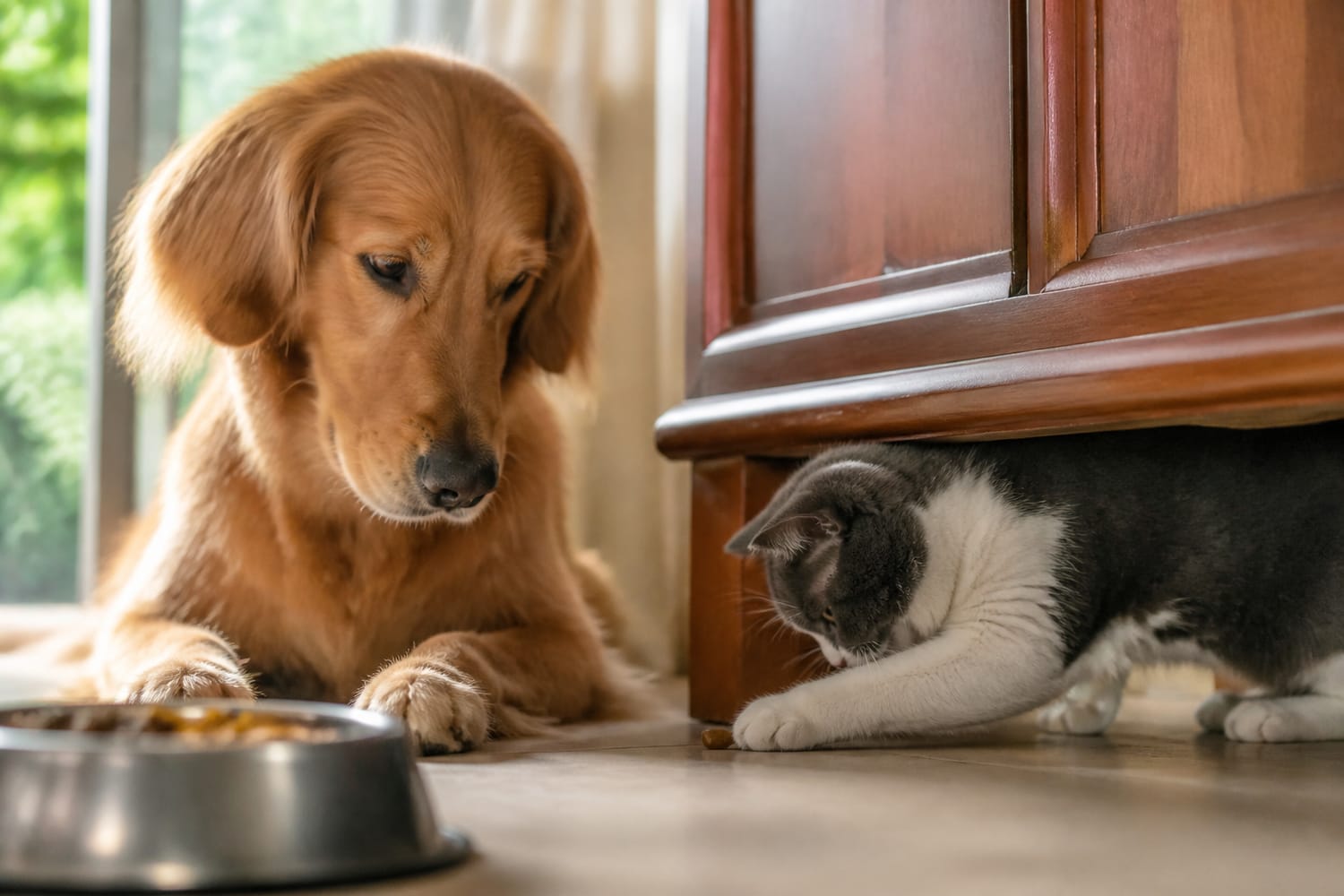
The Short Answer: Why Pets Hide Food
Dogs and cats may hide, bury, carry away, or “cover” food because of natural instinct, a desire to protect valuable resources, stress around mealtimes, or simply because they are full. The behavior is often harmless, but sudden or excessive food hiding—especially alongside appetite, weight, or behavior changes—deserves closer attention.
What Food Hiding Looks Like
Food hiding is not always as dramatic as burying a bone in the backyard. Dogs may push kibble beneath a blanket, tuck a treat behind the sofa, or carry food into another room. Some carefully nudge imaginary soil over their treasure with their noses.
Cats are more likely to scratch or sweep the floor around their bowl as though covering the meal. They may paw at a nearby mat, pull a light object over the dish, or walk away after a few bites. Although this can look like a negative review of dinner, it does not necessarily mean the food is disliked.
The first step is to observe the entire situation. What is being hidden? When does it happen? Are other animals nearby? Does your pet eventually return to eat? Context often reveals more than the behavior itself.
Instinct: A Pantry Built by Nature
Why Dogs Cache Food
When dogs hide food for later, the behavior is known as caching. Before meals arrived in neatly measured bowls, wild canids could not predict when they would find their next food source. Saving surplus food helped protect it from competitors and made it available during leaner times.
Modern dogs no longer need an underground pantry, but inherited behavior does not disappear simply because dinner is served on schedule. A well-fed dog may still bury a prized chew or hide kibble under a cushion. Veterinary guidance from VCA Animal Hospitals on why dogs bury food and bones explains that this can be a normal expression of canine instinct.
Dogs often cache items they consider especially valuable. If your pup immediately hides a favorite treat, it may not be rejection—it may be safekeeping.
Why Cats “Cover” Their Meals
Cats commonly perform covering motions around uneaten food. Rather than digging an actual hole, an indoor cat may scratch the floor, paw at a placemat, or attempt to pull nearby fabric toward the bowl.
This behavior is generally viewed as an instinctive response related to dealing with leftover food and its scent. Cats are both hunters and, in the natural world, vulnerable to larger animals. Reducing obvious signs of a meal may have offered a survival advantage.
Cats also naturally prefer smaller, more frequent meals rather than one enormous serving. The Feline Veterinary Medical Association’s feeding guidance recommends feeding arrangements that support solitary eating, foraging, and multiple small meals.
Could Stress Be Behind the Behavior?
Food is a valuable resource, so mealtime can become emotionally complicated in a busy or multi-pet household. A dog may carry food away from another dog, while a cat may try to cover leftovers or leave the bowl quickly if another animal is watching.
Possible sources of mealtime stress include:
- Competition with another pet
- A noisy appliance near the feeding area
- Children or visitors approaching during meals
- A bowl placed in a busy hallway
- An unpredictable feeding schedule
- A recent move, adoption, or household change
- Previous experiences with food scarcity
- Discomfort caused by people repeatedly taking food away
Look at your pet’s body as well as the bowl. Crouching, flattened ears, repeated scanning of the room, freezing, rushing through food, growling, or retreating can suggest tension. Pet parents can learn more from Petspiration’s guide to understanding dog and cat body language.
Never punish a pet for hiding food, and do not chase them or forcefully retrieve it from their mouth. Punishment can increase worry and may contribute to resource guarding. Calm management and positive reinforcement are safer, kinder approaches.
Is Overfeeding the Real Reason?
Sometimes, food hiding simply means, “I have more than I need right now.”
A dog given a large meal, several training treats, and a long-lasting chew may save the extra item for later. A cat offered more food than it wants in one sitting may perform covering motions before leaving the bowl.
However, hiding food does not prove that a pet is overfed. Portions should be assessed using several clues:
- Body condition: Can you feel the ribs beneath a light layer of tissue?
- Waist shape: Is there a visible waist when viewed from above?
- Weight trend: Is your pet gradually gaining or losing weight?
- Total daily intake: Are treats, table scraps, chews, and food from other family members included?
- Life stage and activity: Puppies, kittens, seniors, working dogs, and indoor pets have different needs.
Feeding directions on packaging are starting points rather than perfect prescriptions. Your veterinarian can calculate a more appropriate daily calorie target based on your pet’s size, age, health, activity, and body condition. Petspiration’s portion guide for dogs and cats can also help you begin reviewing the amount in the bowl.
Do not make a severe food reduction simply because your pet hides a meal. Sudden restriction can create nutritional problems, increase food anxiety, and be especially dangerous for cats. Adjust portions gradually with veterinary guidance.
Other Reasons Pets Walk Away or Hide Food
Instinct, stress, and excess food are the leading explanations, but they are not the only possibilities.
They Want to Eat Somewhere Safer
Some dogs prefer carrying kibble from a slippery bowl or noisy feeding station to a rug. Cats may avoid a location near a litter box, doorway, loud television, or another pet’s territory.
The Food Has Changed
A new recipe, unfamiliar smell, different texture, or stale food may cause hesitation. Cats are particularly sensitive to aroma and temperature, while dogs may investigate or relocate unusual food before deciding whether to eat it.
The Bowl Is Uncomfortable
A deep or unstable dish may be unpleasant for some pets. Tags striking a metal bowl can also make a startling sound. Try a clean, stable dish in an appropriate size and place it on a nonslip surface.
They Are Saving the Best Part
A pet may eat ordinary food immediately but hide an exceptional chew or treat. This pattern usually points toward value and instinct rather than illness.
Something Hurts
Dental pain, nausea, digestive discomfort, or another medical problem can make a pet approach food without eating normally. They may pick it up, drop it, move it, or appear interested before walking away.
How to Create a Happier Feeding Routine
Small environmental changes can make meals feel safer and more predictable.
- Feed pets separately. Use different rooms, visual barriers, gates, or supervised stations.
- Create a quiet dining area. Keep bowls away from heavy foot traffic, litter boxes, and startling appliances.
- Measure meals consistently. Include treats and toppers in the daily total.
- Offer predictable mealtimes. A dependable routine can reduce uncertainty; Petspiration explains more about why routine matters in pet behavior.
- Try smaller portions more frequently. This can be particularly helpful for cats, provided the total daily allowance remains appropriate.
- Use enrichment thoughtfully. Puzzle feeders and supervised food-searching games can provide a healthy outlet for natural foraging behavior.
- Remove hidden perishables. Wet food, meat, and other moist items should not remain beneath furniture or outdoors where they can spoil or attract pests.
- Keep a short behavior diary. Record what was served, who was present, how much was eaten, and where food was hidden.
If a dog guards a hidden cache by stiffening, growling, snapping, or blocking access, avoid confrontation. Prevent access to unsafe hiding locations and consult a qualified positive-reinforcement trainer, veterinary behaviorist, or veterinarian.
When Food Hiding Calls for a Veterinarian
Occasional hiding by an otherwise healthy pet is usually no cause for alarm. A sudden change, however, can be meaningful—especially in an older pet or one that previously loved every meal.
Contact your veterinarian if food hiding occurs with:
- Reduced or absent appetite
- Weight loss or rapid weight gain
- Vomiting, diarrhea, or constipation
- Drooling, bad breath, or difficulty chewing
- Pawing at the mouth
- Low energy or unusual hiding
- Increased thirst or urination
- Signs of pain
- New aggression around food
- A major and unexplained behavior change
Cats require particular attention when they stop eating. Prolonged loss of appetite can lead to serious complications, so do not assume a cat is merely being fussy. Cornell University’s guidance on feline appetite loss recommends prompt veterinary evaluation when a cat is not eating.
Listen to the Story Behind the Stash
A biscuit under the blanket or a cat paw sweeping beside the bowl is more than an amusing quirk. It can be a tiny glimpse into ancient instinct, an attempt to create security, or a useful clue about portions and mealtime comfort.
Approach the behavior with curiosity rather than frustration. By observing patterns, providing personal feeding spaces, measuring food carefully, and responding quickly to health changes, you can make every meal feel safer.
Our pets cannot explain why they are saving dinner behind the sofa—but with patience and compassion, we can become wonderfully good listeners.