
A Sticky Question Pet Lovers Ask
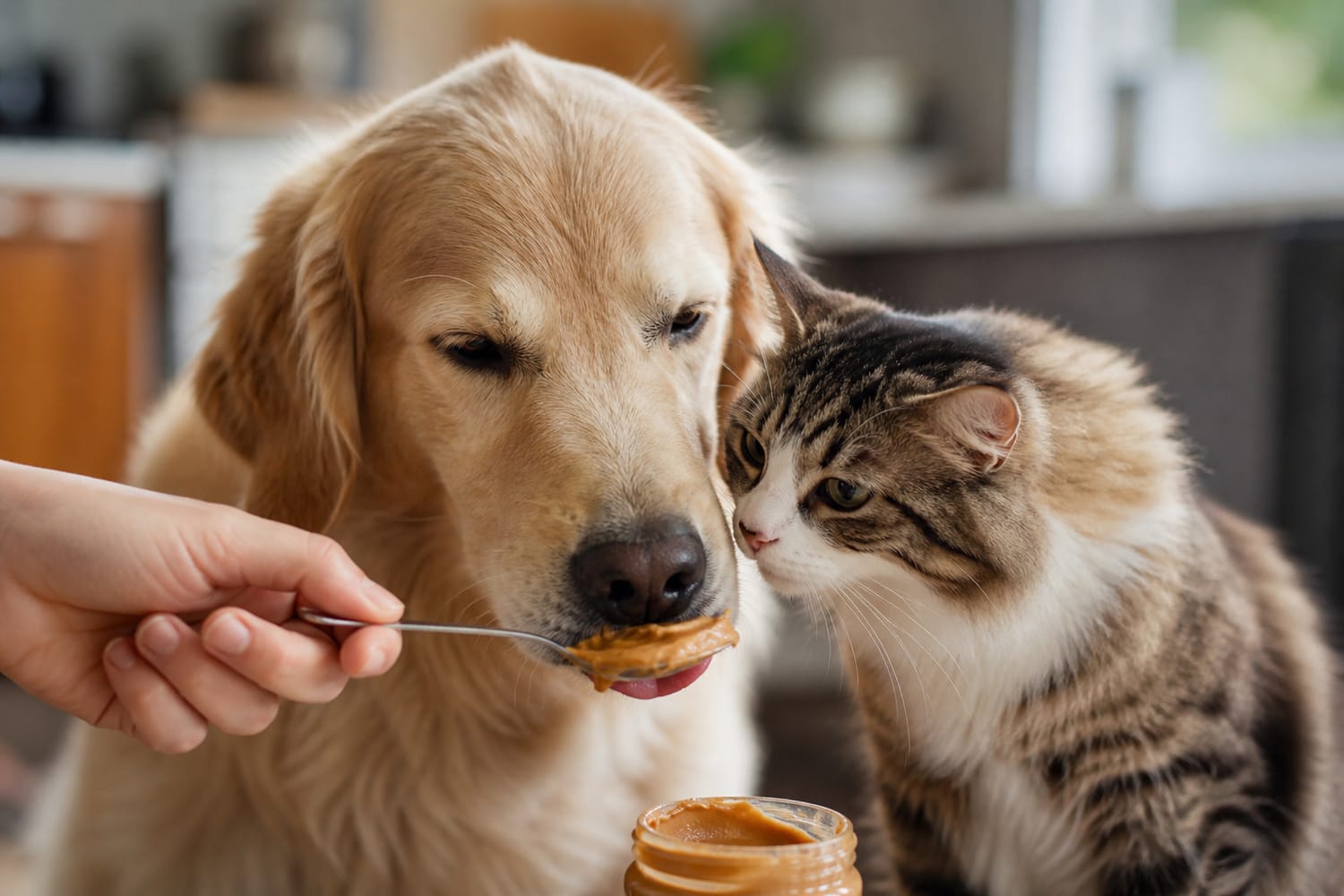
Peanut butter has a special kind of magic. Twist open the jar, and suddenly your dog appears from another room like they heard a secret dinner bell. Some cats may wander over too, curious about the smell, the spoon, or simply what their favorite human is enjoying.
So, can dogs and cats eat peanut butter?
The short answer: Dogs can usually eat peanut butter in small amounts if it is xylitol-free and served safely. Cats can have a tiny taste of safe peanut butter, but it is not especially beneficial for them and should be treated as an occasional novelty rather than a regular snack.
Like many human foods, peanut butter sits in the “sometimes and carefully” category. It can be useful, enjoyable, and even enriching for pets—but only when you know what to look for and how much to offer.
Is Peanut Butter Safe for Dogs?
For many healthy adult dogs, plain peanut butter can be safe as an occasional treat. Dogs often love the rich smell and creamy texture, which makes peanut butter a popular choice for stuffing treat toys, hiding pills, or creating a fun distraction during grooming or nail trims.
However, the most important rule is this:
Always check the ingredient label before giving peanut butter to your dog.
Some peanut butters contain xylitol, also called birch sugar, a sweetener that is extremely toxic to dogs. Even small amounts can cause a dangerous drop in blood sugar, seizures, liver failure, or death. Xylitol is more commonly found in sugar-free products, but it can appear in certain nut butters, baked goods, candies, and dental products.
Safe peanut butter for dogs should ideally contain only:
- Peanuts
- Maybe a small amount of salt, though unsalted is better
Avoid peanut butter with:
- Xylitol or birch sugar
- Chocolate
- Excess sugar
- Added oils
- Artificial sweeteners
- Candy pieces or dessert flavors
Can Cats Eat Peanut Butter?
Cats are a little different. While a small lick of plain, xylitol-free peanut butter is unlikely to harm many healthy cats, peanut butter is not an ideal treat for cats.
Cats are obligate carnivores, which means their bodies are designed to thrive on nutrients from animal-based foods. Peanut butter does not offer cats much nutritional value. It is high in fat and calories, sticky in texture, and can be difficult for some cats to swallow comfortably.
Some cats are curious and may sniff or lick peanut butter from a spoon. Others will turn away dramatically, as if you have personally offended them. Both reactions are completely normal.
If you do let your cat try peanut butter, keep it to a very tiny amount—think a small dab, not a spoonful—and only use plain peanut butter with no harmful additives. But in general, cats are better served with species-appropriate treats, such as small pieces of cooked plain chicken, freeze-dried meat treats, or vet-approved cat treats.
Potential Benefits of Peanut Butter for Pets
Peanut butter is not a necessary part of a pet’s diet, but it can have some practical benefits when used wisely.
For dogs especially, peanut butter can be helpful for:
- Enrichment: Spread a small amount inside a puzzle toy or lick mat to keep your dog busy and mentally engaged.
- Training rewards: A tiny smear can be a high-value reward for dogs who love it.
- Medication help: Peanut butter can hide certain pills, making medicine time less stressful. Always ask your veterinarian if a specific medication can be given with food.
- Positive distractions: It may help during baths, brushing, or nail trimming when used on a lick mat.
Nutritionally, peanut butter contains protein, fat, vitamin E, niacin, and other nutrients. That said, pets should already be receiving balanced nutrition from their regular food. Peanut butter should be viewed as a treat or tool—not a health supplement.
For cats, the “benefits” are mostly limited to curiosity and occasional medication assistance, but many cats do not like the texture. If you need help giving your cat medicine, your veterinarian may recommend a safer and more appealing option.
The Biggest Risks to Know
Peanut butter may seem harmless, but there are several risks pet owners should understand.
Xylitol Toxicity
This is the most serious risk for dogs. Xylitol can be life-threatening and requires urgent veterinary care. Symptoms may include vomiting, weakness, stumbling, collapse, tremors, seizures, or unusual tiredness. Signs can appear quickly, sometimes within 30 minutes.
If your dog eats peanut butter containing xylitol, contact your veterinarian, emergency animal hospital, or pet poison hotline immediately. Do not wait for symptoms.
Too Many Calories
Peanut butter is calorie-dense. A small spoonful may not look like much, but it can add a surprising number of calories to your pet’s day. For small dogs and cats, even a teaspoon can be a lot.
Too many extra calories can contribute to weight gain, which increases the risk of health problems such as arthritis, diabetes, breathing issues, and reduced mobility.
High Fat Content
Because peanut butter is high in fat, it may upset some pets’ stomachs. Dogs with a history of pancreatitis, sensitive digestion, or those on low-fat diets should avoid it unless a veterinarian says otherwise.
Signs of digestive upset may include:
- Vomiting
- Diarrhea
- Loss of appetite
- Belly discomfort
- Lethargy
Choking or Swallowing Trouble
Peanut butter is sticky. Dogs who gulp food quickly may try to swallow too much at once, and cats may struggle with the texture. This is why it is better to spread peanut butter thinly rather than offer a big blob.
Allergies and Sensitivities
Peanut allergies are uncommon in dogs and cats compared with humans, but sensitivities can happen. If your pet develops itching, swelling, hives, vomiting, diarrhea, coughing, or trouble breathing after eating peanut butter, contact a veterinarian right away.
How Much Peanut Butter Can Dogs Have?
The right serving size depends on your dog’s size, health, activity level, and overall diet. Peanut butter should be given sparingly and should fit within the general rule that treats make up no more than about 10% of a pet’s daily calories.
A simple occasional serving guide for healthy dogs:
- Small dogs: ¼ teaspoon to ½ teaspoon
- Medium dogs: ½ teaspoon to 1 teaspoon
- Large dogs: 1 to 2 teaspoons
These amounts are not meant to be daily requirements—just modest treat portions. For dogs with weight concerns or medical conditions, ask your veterinarian first.
If you are using peanut butter in a toy, spread it thinly along the inside rather than packing in large amounts. You can also mix a small amount with your dog’s regular food, plain pumpkin, or unsweetened applesauce to stretch the flavor without adding too much fat.
How Much Peanut Butter Can Cats Have?
Cats should have even less. If your cat is healthy and curious, a tiny dab—about the size of a pea or smaller—is enough. It should not become a frequent treat.
Because cats have different nutritional needs than dogs, it is usually better to choose cat-friendly rewards. Many cats prefer:
- Freeze-dried chicken or salmon treats
- A small bite of plain cooked turkey or chicken
- Cat treat pastes made specifically for felines
- A spoonful of their favorite wet food
If your cat has diabetes, pancreatitis, digestive issues, obesity, or food allergies, skip the peanut butter and talk to your veterinarian about safe treats.
The Best Type of Peanut Butter for Pets
The safest peanut butter for pets is usually plain, unsweetened, and xylitol-free. Look for natural peanut butter with a short ingredient list.
Good choices often say:
- 100% peanuts
- No added sugar
- No artificial sweeteners
- No chocolate
- Low sodium or unsalted
Natural peanut butter may separate, with oil rising to the top. Stir it well before serving so your pet does not get a mouthful of concentrated oil.
You can also find peanut butter products made specifically for dogs. These can be a good option, but still read the label. “Made for dogs” does not mean you should stop checking ingredients, calories, or serving recommendations.
Creative and Safe Ways to Serve Peanut Butter
Peanut butter can be more than a spoon-licking moment. Used thoughtfully, it can become part of your pet’s enrichment routine.
For dogs, try:
- A thin smear on a lick mat
- A small amount inside a rubber treat toy
- A dab on a training spoon for recall practice
- A tiny coating on a pill, if vet-approved
- A frozen snack mixed with plain pumpkin
Avoid giving peanut butter on chunks of bread, crackers, cookies, or sweet treats. These add unnecessary ingredients and calories.
For cats, if you offer it at all, keep it simple: a tiny dab on your finger or a spoon. Never force your cat to try it, and do not use large amounts to hide medication unless your vet approves.
When to Avoid Peanut Butter Completely
Peanut butter is not right for every pet. Avoid it if your dog or cat:
- Has eaten or may have eaten xylitol-containing peanut butter
- Has pancreatitis or requires a low-fat diet
- Is overweight and on a calorie-controlled plan
- Has frequent vomiting or diarrhea
- Has a known peanut sensitivity
- Has diabetes or another condition requiring strict diet control
- Struggles with sticky foods or swallowing
When in doubt, your veterinarian is your best guide. They know your pet’s health history and can help you choose treats that support your pet’s wellbeing.
A Loving Treat, Not a Daily Need
One of the joys of living with pets is sharing little moments—tail wags in the kitchen, happy sniffs, curious whiskers, and the delighted focus of a dog working on a peanut butter-filled toy. Food can be part of bonding, enrichment, and care.
But love is also reading the label. Love is serving the right amount. Love is knowing that what is safe for one pet may not be safe for another.
For dogs, peanut butter can be a fun occasional treat when it is plain, xylitol-free, and served in small portions. For cats, it is usually unnecessary, though a tiny taste of safe peanut butter may be okay for some healthy felines.
So the next time you open the jar and see hopeful eyes watching you, you can smile, check the label, and make the safest choice. Because our pets give us their whole hearts—and they deserve treats given with just as much care.