
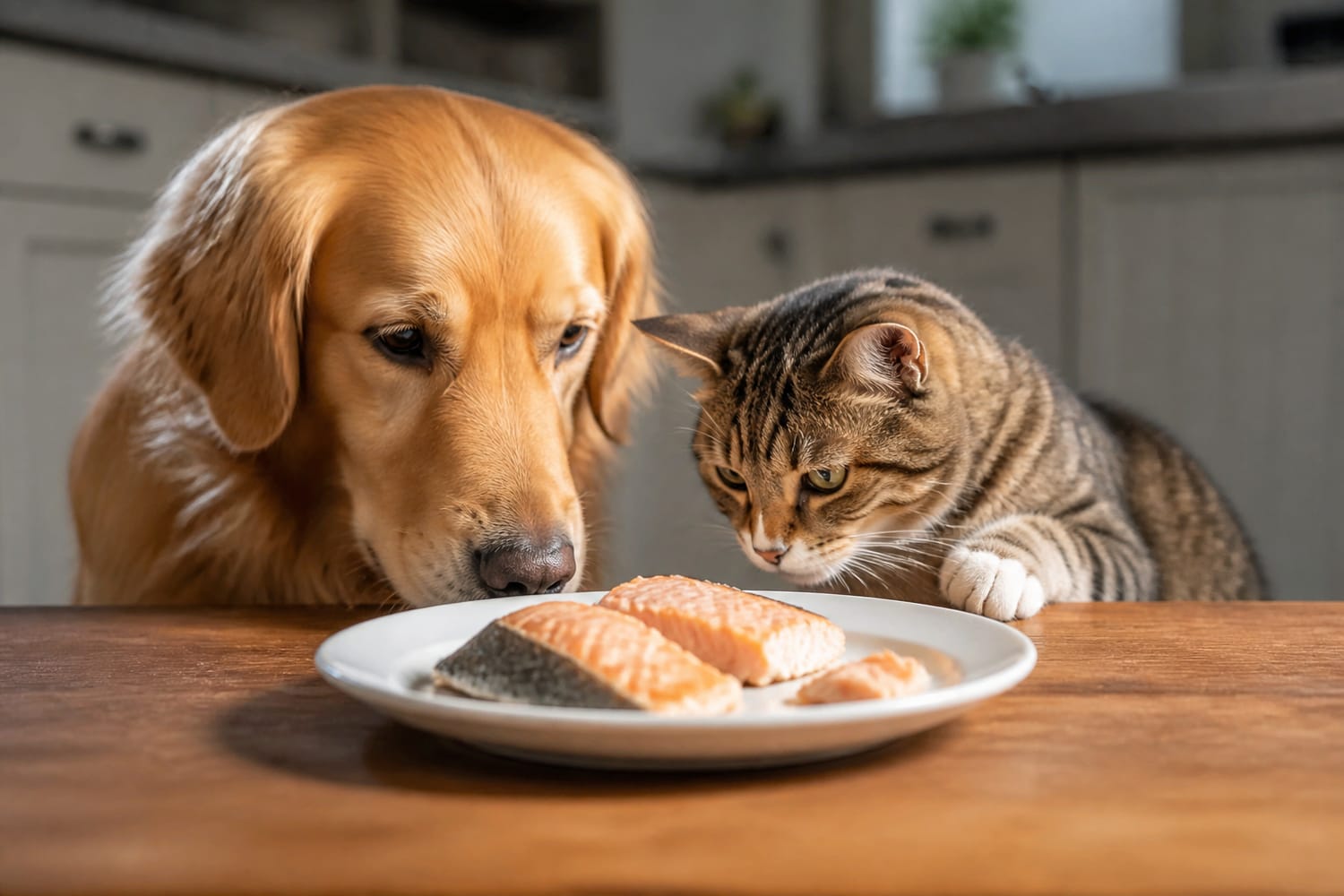
Can Dogs and Cats Eat Fish? The Short Answer
Yes, most dogs and cats can enjoy plain, fully cooked, boneless fish in small portions. Lower-mercury choices such as salmon, sardines, herring, cod, pollock, and flounder are generally preferable. Avoid raw fish, sharp bones, heavy seasonings, rich sauces, and frequent servings of high-mercury species.
Why Fish Can Be a Nutritious Choice
Fish can be much more than an irresistible smell drifting through the kitchen. It provides high-quality animal protein, along with vitamins, minerals, and varying amounts of omega-3 fatty acids. Oily fish such as salmon, sardines, and herring tend to contain more omega-3s than lean white fish.
These nutrients help the body perform many essential functions. However, a few bites of fish should not be treated as medicine or expected to transform your pet’s health overnight. Dogs and cats eating a complete and balanced diet should already receive the nutrients they need.
Fish may be offered as:
- An occasional treat
- A small topper for regular food
- An ingredient in complete and balanced commercial pet food
- Part of a veterinarian-formulated homemade diet
Plain fish by itself is not a balanced meal, especially for cats, which have strict nutritional requirements. If you are considering making fish a major part of your pet’s diet, consult a veterinarian or board-certified veterinary nutritionist first.
Pet parents exploring other shareable snacks may also enjoy Petspiration’s guide to human foods that are surprisingly safe for pets.
The Best Types of Fish for Dogs and Cats
Smaller, shorter-lived fish generally accumulate less mercury than large predatory fish. Preparation and portion size still matter, but the following are often sensible choices:
Salmon
Cooked salmon is flavorful, protein-rich, and naturally high in omega-3 fatty acids. Remove the skin if it is especially fatty, and carefully check the flesh for bones before serving.
Never offer raw or undercooked salmon. In addition to general parasite and bacterial concerns, raw salmonids from parts of the Pacific Northwest can transmit salmon poisoning disease to dogs.
Sardines
Because sardines are small and relatively short-lived, they are generally considered a lower-mercury option. Choose sardines packed in water with no added salt, sauces, chili, garlic, or other seasonings.
Although canned sardine bones are often softened during processing, inspect and mash the fish thoroughly before serving—particularly for cats and small dogs.
Herring
Plain cooked herring is another oily fish that can provide protein and omega-3 fatty acids. Avoid pickled, smoked, salted, or creamed herring, which can contain excessive sodium and unsuitable seasonings.
Cod, Pollock, Flounder, and Whitefish
These leaner choices can work well for pets that tolerate fish but do not need a rich, oily treat. Serve the flesh cooked, plain, and completely free of bones, fins, and skin.
Trout
Fully cooked, boneless trout can be offered occasionally. As with salmon, never allow dogs—especially those in the Pacific Northwest—to eat raw trout or discarded fish remains.
What About Tuna and Mercury?
Tuna is not inherently poisonous to dogs or cats, and a tiny occasional serving is unlikely to cause mercury poisoning. The concern arises when tuna becomes a frequent snack or begins replacing nutritionally balanced meals.
Mercury accumulates through the aquatic food chain. Larger, longer-lived predators generally contain more than smaller fish. The FDA’s reader-friendly advice about mercury levels in fish lists salmon, sardines, pollock, trout, and canned light tuna among its lower-mercury choices for people. Bigeye tuna, shark, swordfish, king mackerel, marlin, orange roughy, and Gulf of Mexico tilefish are among the highest-mercury choices. While this guidance was written for humans rather than pets, it provides a useful comparison between species.
For pets, choose lower-mercury fish whenever possible. If you offer canned tuna, select light tuna packed in water with no added salt, rather than albacore or oil-packed varieties. Keep it occasional and serve only a very small amount.
Cats can become especially enthusiastic about tuna, but enthusiasm is not proof of nutritional completeness. Human tuna lacks the carefully balanced nutrients found in complete cat food. Feeding it too often can displace essential nutrition, contribute unnecessary calories, and increase long-term mercury exposure.
Why Raw Fish Is Not Worth the Risk
Sushi may be a treat for people, but raw fish is not the safest choice for pets. It can contain parasites and disease-causing bacteria, while freezing does not reliably eliminate every microbial risk.
The FDA reports that raw pet foods are more likely than other tested pet foods to contain harmful bacteria such as Salmonella and Listeria monocytogenes. These organisms can affect pets and may spread around the home through hands, bowls, preparation surfaces, saliva, or feces. The FDA’s raw pet food safety guidance recommends thorough cooking to destroy harmful foodborne bacteria.
Raw fish diets can also contribute to thiamine deficiency. Certain raw fish contain thiaminase, an enzyme that breaks down vitamin B1. Cats are particularly vulnerable, although dogs can also be affected.
Cooking makes fish safer, but it does not turn an unbalanced fish-only diet into a complete one. Think of cooked fish as a little addition to a good diet—not the entire menu.
Fish Bones, Skin, and Seasonings
Fish bones are thin, sharp, and easy to miss. They can become lodged in the mouth or throat, cause choking, scratch the digestive tract, or penetrate the stomach or intestines. Carefully debone fish before it reaches your pet’s bowl.
Skin is not necessarily toxic, but it can be fatty and may hold seasonings or cooking oil. A small amount of plain, thoroughly cooked skin may be tolerated by some healthy pets, but removing it is the simpler option—especially for animals with sensitive stomachs, obesity, or a history of pancreatitis.
Avoid serving fish prepared with:
- Onion, garlic, leeks, or chives
- Butter, cream, or rich sauces
- Large amounts of oil
- Salt or salty brine
- Spicy seasoning
- Batter or breading
- Smoke flavoring or marinades
Fried fish and fish sticks may be convenient for people, but they contain unnecessary fat, salt, breading, and seasonings. Set aside a plain piece before preparing the family meal instead.
How Much Fish Can a Pet Eat?
There is no universal spoonful that suits every dog and cat. A Chihuahua, Labrador, kitten, and senior cat all have very different calorie needs. As a general rule, treats and unbalanced extras should provide no more than about 10% of a pet’s daily calories.
For a first taste, begin with:
- Cats and toy-sized dogs: One or two tiny flakes
- Small to medium dogs: One small bite
- Large dogs: A few bite-sized pieces
Wait and watch for vomiting, diarrhea, itching, swelling, excessive licking, or loss of appetite. If your pet remains comfortable, fish can continue as an occasional treat while staying within that 10% allowance.
Pets with kidney disease, pancreatitis, heart disease, food allergies, obesity, gastrointestinal disorders, or prescription diets may require different rules. Puppies and kittens also need tightly balanced nutrition for growth, as explained in Petspiration’s guide to life-stage nutrition for puppies and kittens.
A Simple Safe-Serving Checklist
Before sharing fish with your furry dining companion, ask:
- Is it fresh and safe for human consumption?
- Has it been cooked thoroughly?
- Is it completely plain?
- Have all bones, fins, and hard pieces been removed?
- Is it a lower-mercury species?
- Is the portion small enough to count as a treat?
- Is it appropriate for my pet’s health and current diet?
Refrigerate leftovers promptly and discard fish that smells unusual or has been left at room temperature for an extended period. For broader pantry guidance, see Petspiration’s tips for storing pet food and treats safely.
When to Contact a Veterinarian
Contact your veterinarian promptly if your pet eats raw fish, swallows fish bones, or develops repeated vomiting, diarrhea, weakness, abdominal pain, tremors, difficulty swallowing, heavy drooling, or loss of coordination.
Breathing difficulty, choking, collapse, seizures, or severe distress requires immediate emergency veterinary care. Do not induce vomiting or attempt to pull out a deeply lodged bone unless a veterinary professional instructs you to do so.
Make Fish a Small, Joyful Treat
Sharing food can feel like sharing love, and fish can certainly inspire happy tail wags and eager purrs. The secret is thoughtful preparation: choose a lower-mercury variety, cook it thoroughly, remove every bone, skip the seasonings, and serve a modest portion.
With those simple precautions, an occasional flaky bite can become a safe and delightful moment—one more way to celebrate the wonderful bond between pets and the people who cherish them.