
Can Cats Taste Sweetness? The Short Answer
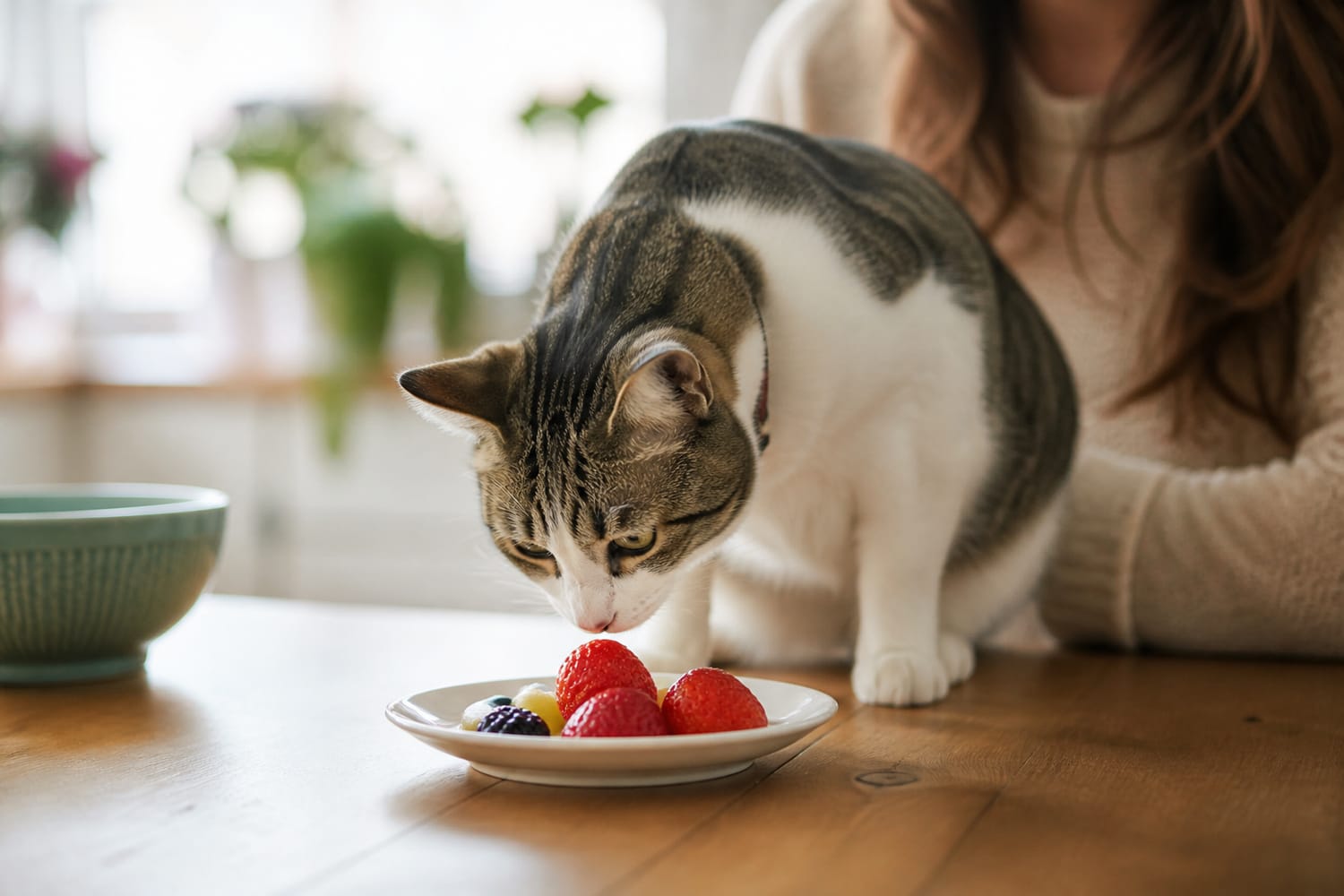
If your cat tries to steal a lick of ice cream, it’s tempting to think they share your sweet tooth. But cats do not appear to taste sugar’s sweetness the way humans do. Their curiosity is real; the appeal may be the food’s smell, fat, texture, or the simple pleasure of investigating whatever you’re eating.
That distinction opens a window into how cats experience mealtimes. A cat who ignores one dinner but rushes toward another isn’t necessarily asking for a stronger flavor. They may be responding to a different aroma, a familiar texture, or even a quieter place to eat.
Why Sugar Doesn’t Taste Sweet to Cats
In humans, a sweet-taste receptor relies on two working parts, known as T1R2 and T1R3. Cats have a working version of the gene for T1R3, but the gene for T1R2 does not produce the other part needed for the usual sweet receptor. Researchers studying feline taste genes concluded that cats lack the receptor likely necessary to detect sweet stimuli such as sugar.
This does not mean cats cannot taste anything, or that food is bland to them. It means one sensation we take for granted—a strawberry tasting sweet, for example—is probably missing from their experience. A cat’s food choices still involve taste, along with smell and the feel of food in the mouth.
So Why Does My Cat Want My Dessert?
Imagine a cat leaning toward your bowl of ice cream. What caught their attention? It could be the dairy-rich smell, the creamy feel, the cool sensation, or your obvious interest in the bowl. Watching that moment tells you that your cat is interested, but not exactly why.
The same goes for a cat sniffing a muffin or pawing at a fruit cup. One curious encounter does not reveal a craving for sugar. Cats are individuals, and their reasons for approaching a food are not always visible to us.
Curiosity is not a reason to share dessert, though. Sweets are no substitute for a balanced cat diet, and some ingredients pose specific dangers. Chocolate can be harmful to cats, so keep chocolate desserts out of reach. If your cat eats chocolate, contact your veterinarian or a pet poison-control service rather than waiting for symptoms.
What Flavors Do Interest Cats?
Cats are obligate carnivores: they have nutritional needs that must be met by an appropriately formulated diet, including nutrients supplied by animal-derived ingredients. Their taste biology reflects that meat-eating history. Research into feline taste has found responses to compounds associated with savory, or umami, flavors, although a cat’s version of umami does not work exactly like ours.
That helps explain why the smell of a meaty meal may be far more compelling than a sugary snack. It does not mean every cat will adore the same chicken pâté or fish recipe. One may favor a smooth mousse, while another heads straight for crunchy kibble. Both can be expressing genuine preferences.
When choosing food, start with nutrition rather than trying to guess the most exciting flavor. Look for a nutritional adequacy statement saying the food is “complete and balanced” for your cat’s life stage. Then, among suitable foods, pay attention to what your cat willingly eats and how they do on it. The FDA’s explanation of complete and balanced pet food can help you interpret that label statement.
A Cat’s Food Preferences Are About More Than Taste
Think of mealtime as a combination of aroma, texture, routine, and surroundings. A cat might eagerly eat a soft food one day but seem less interested when it is served cold from the refrigerator. Another may prefer a particular kibble shape or hesitate when a familiar recipe changes.
The bowl’s location matters, too. Cornell’s guide to feeding your cat notes that noise, other animals, dirty dishes, and food placed near a litter box can discourage eating. Before assuming your cat dislikes the food itself, look at the setting in which you offer it.
Past experience can shape a preference as well. A cat accustomed to one type of food may need patience when meeting an unfamiliar texture. If you want to explore a new option, offer a little alongside something familiar and make changes gradually, while ensuring your cat continues to eat enough. Variety may help some cats avoid becoming attached to only one food, but there is no need to change a diet that suits your cat simply for the sake of novelty.
How to Learn What Your Cat Is Telling You
A useful observation is more than “my cat liked it” or “my cat didn’t.” For a few meals, notice the details:
- The first response: Does your cat approach, sniff, lick, or walk away?
- The food itself: Is it wet or dry, smooth or chunky, familiar or new?
- The setting: Is another pet nearby? Has the bowl or feeding spot changed?
- The overall pattern: Is your cat eating their usual amount and maintaining their normal energy and weight?
Change one small thing at a time if you can. For instance, try the same food in a quieter location rather than changing the food and the bowl together. That makes your cat’s response easier to understand. In a multi-pet home, separate mealtimes may also help you see who is eating what; Petspiration’s guide to feeding schedules for multi-pet households offers practical ideas for doing that.
Treats deserve attention as well. A cat who eagerly accepts extras may be less hungry at dinner, and even small snacks add to the day’s calories. If you’re unsure how meals and treats fit together, Petspiration’s guide to calculating daily calories and portions offers a starting point; your veterinary team can help tailor it to your cat.
When “Picky” Might Mean Something Else
Food preferences can be charming. A sudden change in appetite deserves a different response. Dental pain, nausea, illness, and other problems can affect eating, even when a cat previously loved the food. Refusing a new recipe while still eating a familiar one is different from refusing food altogether.
If your cat stops eating, seems unwell, or is losing weight, call your veterinarian promptly rather than cycling through tempting foods and hoping the problem passes. Cornell notes that a sustained loss of appetite can seriously affect an adult cat in as little as 24 hours; very young kittens can become vulnerable even sooner. Its overview of appetite loss in cats explains why it matters to find the underlying cause.
The Sweetest Part of Mealtime
Your cat may not taste the sweetness in your dessert, but their food preferences still tell a story. They reveal which textures feel inviting, which routines bring comfort, and when something may need your attention.
You do not have to see food exactly as your cat does to care for them beautifully. Offer a complete and balanced diet, keep mealtimes comfortable, and stay curious about the little clues they give you. Every thoughtful meal is another chance to help your companion feel safe, nourished, and loved.