
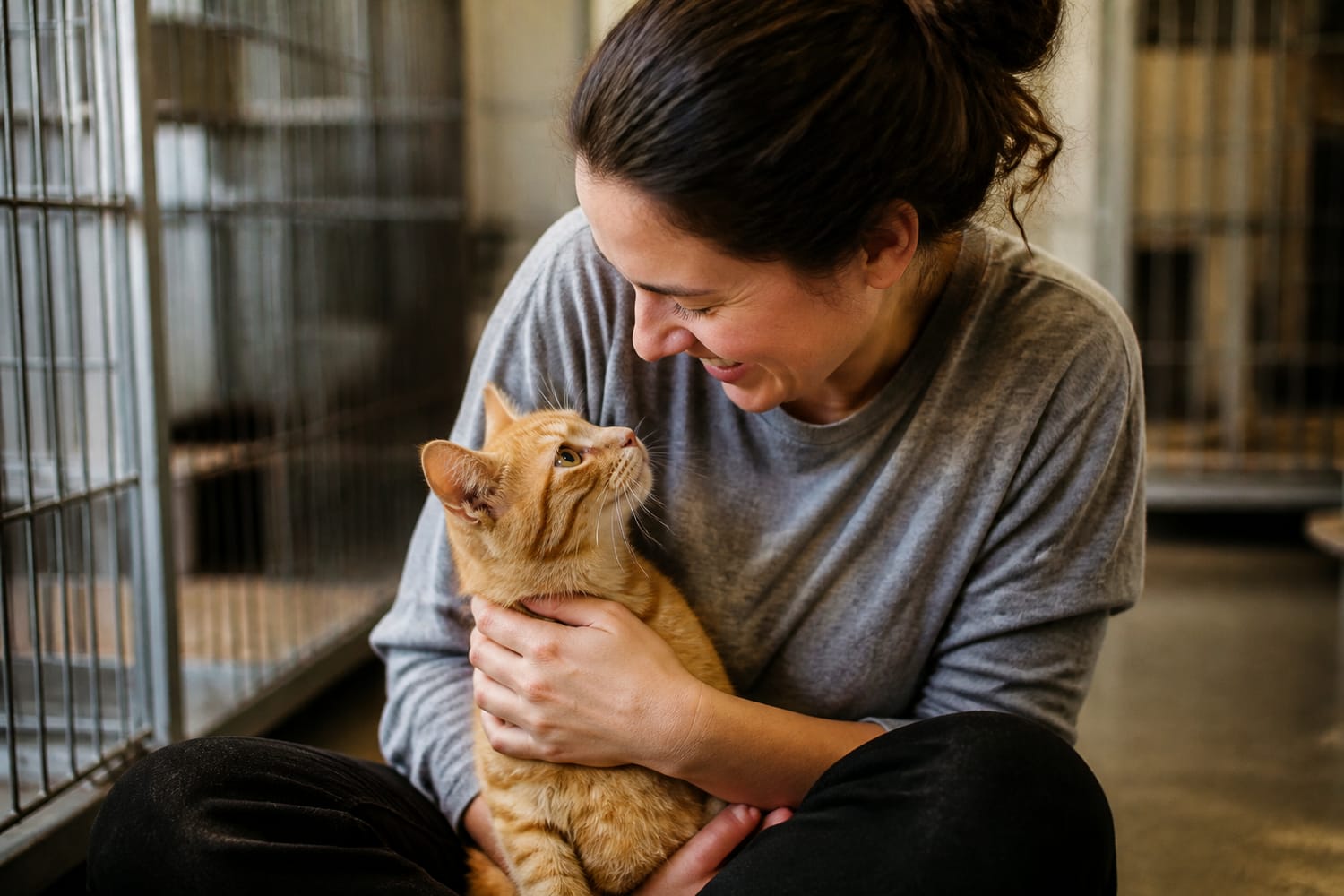
A Little Beginning With a Big Place in Your Heart
Your pet’s origin story is the story of how your lives came together. It might begin with a shelter visit, a conversation with a neighbor, or a photograph you couldn’t stop thinking about. To preserve it, gather what you remember, save a few meaningful keepsakes, and tell the story in your own words—before its smallest details fade.
There’s no need for a dramatic opening. Perhaps your dog was asleep when you first saw her. Perhaps the kitten you came to meet ignored you while another climbed into your lap. Years later, those ordinary details can bring the day back more vividly than a perfect portrait.
And an origin story doesn’t end when your pet arrives home. The quiet first evening, the discovery of a favorite spot, and the moment a cautious animal begins to relax are all part of how you met.
Start With the Scene You Can Still Picture
Before sorting photos or choosing a scrapbook, take ten minutes to write down what you remember. Where were you? Who was there? What was your pet doing when you first noticed them? What did you say on the way home?
Include details that seem too small to matter: the sound of a carrier on the car seat, a surprisingly loud chirp, a rabbit’s twitching nose, or the way a dog paused at the front door. Try to capture your feelings, too. Were you excited, nervous, uncertain, or all three?
If the exact date escapes you, that’s fine. “A rainy Saturday in early spring” is more honest—and often more evocative—than a date you’ve guessed. You can look through messages, photos, adoption paperwork, or calendar entries later to fill in what they confirm.
Gather the Pieces, Then Add Their Meaning
An adoption listing, a first photograph, a handwritten note from a foster carer, or a message from the person who introduced you can help anchor your story. If your pet came from a breeder, rescue, friend, or family member, you may have different keepsakes. There is no required set of “official” beginnings.
Choose a handful of items and add a sentence explaining each one. A photo of a cat beneath the sofa, for example, becomes part of the story when you write: “This was the spot she chose on her first evening; we put a soft blanket nearby and let her come out when she was ready.”
Keep private documents, such as adoption contracts and veterinary records, in a separate folder if you plan to share your story publicly. You can preserve a memory without displaying addresses, contact details, or someone else’s personal information. If a volunteer, former owner, or foster family played a part, you can thank them in your private version and ask permission before posting their name or photograph.
Tell the Truth About the First Days
Not every pet greets a new home with instant confidence. A dog may be quiet, a cat may hide, and a small animal may need time to explore unfamiliar surroundings. Those moments don’t make your story less heartwarming. Often, they show the patient beginning of a bond.
The ASPCA’s guidance for welcoming an adopted pet recommends giving new arrivals time and space and not forcing interactions. If you’re telling the story while those first days are still unfolding, let your pet settle rather than arranging a photo shoot. A picture taken from across the room—or no picture at all—is enough.
Describe what you observed instead of guessing what your pet was thinking. “He stayed in his bed while we read nearby” says more than “He knew he was finally safe.” As the weeks pass, you can add the first signs of comfort: a curious approach, an enthusiastic greeting, or a peaceful nap in the middle of the room.
Choose a Format You’ll Enjoy Returning To
The best way to preserve your pet’s origin story is one you’ll actually use. A single handwritten page tucked into a photo album can be just as precious as an elaborate scrapbook. Consider what feels natural for your household:
- A short written story: Pair a page of memories with three or four photographs.
- A scrapbook or memory box: Include copies of pictures, a welcome-home card, or a note about a favorite first toy.
- A voice recording: Invite family members to share what each remembers. Their versions may reveal details you missed.
- A short video: Combine a few early clips with your narration. Petspiration’s guide to creating a mini documentary of your pet’s life offers ideas for capturing personality without staging every moment.
Children can contribute a drawing or finish a sentence such as, “The first thing I noticed was…” A family member who wasn’t there on day one might add a memory of their own first meeting. Together, these perspectives make the story richer.
Give Photos and Keepsakes a Future
A photograph is easier to treasure when someone knows who is in it and why it matters. Add a date, place, and brief caption to your selected pictures. A file called Milo-first-day-home-sleeping-by-window will tell a future reader more than IMG_4827.
Save copies of important digital photos and recordings in more than one place. The Library of Congress’s advice on keeping personal digital photographs recommends descriptive file names and copies stored on separate media. Keep the original files when you can, especially if you’re also making smaller versions to share.
For physical photographs, choose photo-safe storage and avoid attaching originals with ordinary tape or glue. The National Archives’ family-archive guidance explains why some adhesives and self-stick albums can damage items over time. You can use copies in a craft project while storing originals more carefully.
Let the Story Grow Alongside Your Pet
Your first impression may turn out to be only one chapter. The seemingly fearless puppy might reveal a love of quiet mornings. The shy bird might begin greeting you with a familiar call. Leave space to add what you learn as your companion’s personality emerges.
You could write a brief update a month after they arrive and another on the anniversary of your first meeting. What did they enjoy at the beginning? What comforts them now? Which routine has become unmistakably yours together? If you like having prompts close at hand, Petspiration’s pet gratitude journal can help you notice and record the everyday moments that follow.
An anniversary can be a lovely time to reread your story, but your pet doesn’t need a party for the day to be meaningful. A familiar walk, a favorite game, or a calm evening at home may suit them better. The celebration is for your pet, not for a photograph of the celebration.
If You’re Beginning the Story Years Later
You haven’t missed your chance. Start with what you know for certain, then ask anyone who was there what they recall. Old emails, phone photos, and messages may help piece together the timeline. If memories differ, you can say so: “We disagree about who spotted her first, but everyone remembers the little white patch on her nose.”
You can also write about the story’s unknowns. Maybe you don’t know much about your pet’s life before you met. You don’t need to invent a past or turn uncertainty into a dramatic rescue tale. Tell the part you do know: how you found each other and what your shared life became.
One day, the first bed may be gone and the first toy long forgotten. But a few truthful sentences can keep their place in your story. Begin with the moment you remember most clearly, follow it with one detail only your family would notice, and let the rest unfold from there.