
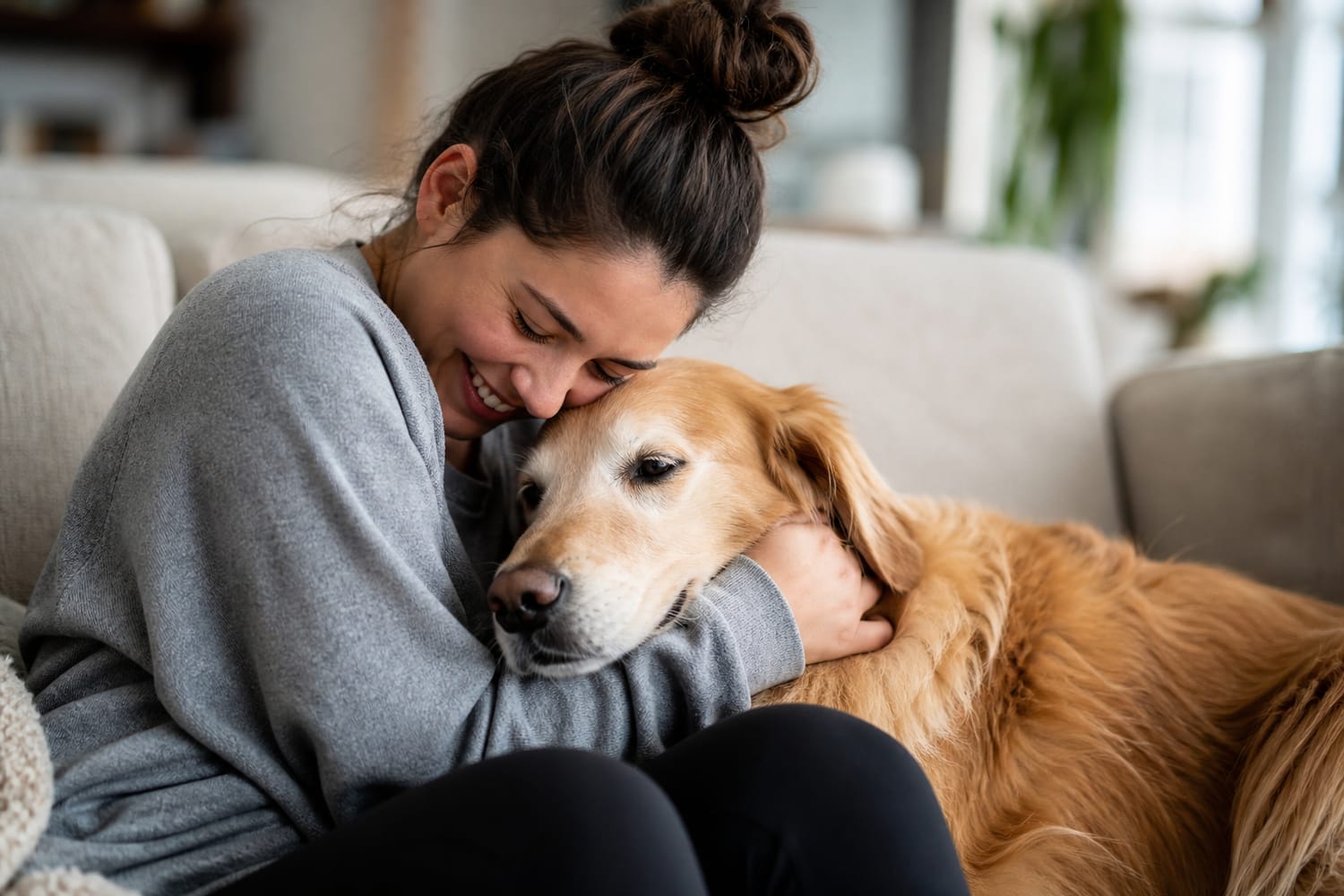
Love Looks Different Through Your Pet’s Eyes
We often show love in the ways that feel natural to us: hugs, kisses, long eye contact, excited greetings, and cozy cuddles on the couch. But our pets don’t always interpret affection the same way humans do. A tight hug may feel comforting to a person but restrictive to a dog. A direct stare may feel loving to us but threatening to a cat, rabbit, or bird. A surprise scoop into our arms may be adorable to us but alarming to a small animal who prefers having all four feet on the ground.
That doesn’t mean our pets don’t love us—or that they don’t enjoy affection. They absolutely do. The key is learning their language.
Think of pet love languages as the little signals, routines, and choices that help animals feel safe, understood, and bonded to you. Every pet is an individual, shaped by species, breed or type, age, health, personality, past experiences, and environment. Some pets crave physical closeness. Others prefer play, gentle conversation, food puzzles, or simply sharing the same room.
The most loving thing we can do is pay attention.
The First Love Language: Respecting Their Boundaries
Before treats, toys, or cuddles, the foundation of affection is respect. Pets feel loved when they have the ability to say “yes,” “no,” or “not right now.”
For dogs, this may mean letting them sniff your hand before petting, giving them space when they retreat to their bed, or noticing when tail wags are loose and relaxed versus stiff and uncertain. For cats, it may mean allowing them to approach you rather than picking them up whenever you feel like snuggling. For rabbits, guinea pigs, reptiles, and birds, it may mean moving slowly, speaking softly, and understanding that being grabbed from above can feel frightening because many small animals are naturally prey species.
Consent-based interaction is not just a training trend—it’s a kindness. When pets learn that we listen to their body language, they often become more confident and affectionate over time.
Look for signs of comfort: relaxed posture, soft eyes, leaning in, slow blinking, gentle tail movement, purring, voluntary approach, playful bows, or calm curiosity. Signs of discomfort may include turning away, lip licking, yawning, pinned ears, whale eye in dogs, tail thrashing in cats, freezing, hiding, hissing, growling, biting, or trying to escape.
Respect doesn’t create distance. It builds trust.
The Second Love Language: Quality Time
Many pets don’t need grand gestures. They need your presence.
Quality time can look like a long walk with your dog, a quiet reading session with your cat nearby, sitting beside your rabbit’s play area, chatting with your parrot while you fold laundry, or watching your hamster explore a safe enrichment space. To animals, shared routines are powerful. They create predictability, and predictability creates security.
Dogs often enjoy interactive time: walks, training games, fetch, tug, sniffing adventures, or simply sitting beside you outdoors. Cats may prefer shorter bursts of engagement—wand toys, puzzle feeders, window watching together, or gentle companionship. Birds are highly social and often benefit from daily interaction, mental stimulation, and being included in safe household activities. Rabbits and guinea pigs may enjoy calm floor time, gentle grooming, and exploration in a pet-safe space.
Quality time does not always mean constant attention. In fact, some of the sweetest bonds happen in quiet moments: a dog resting at your feet, a cat choosing your lap, a bird softly vocalizing from a perch, or a rabbit flopping nearby because they feel completely safe.
To your pet, love may sound like: “I’m here. I’m calm. I’m not rushing you.”
The Third Love Language: Play and Enrichment
Play is more than entertainment—it’s emotional nourishment. It allows pets to use natural behaviors in healthy, satisfying ways.
For dogs, enrichment may include sniff walks, food puzzles, training sessions, hide-and-seek, agility-style games, or safe chew toys. Sniffing is especially important: a walk where your dog gets to explore scents can be as fulfilling as a fast-paced march around the block.
For cats, play often connects to the hunting sequence: stalking, chasing, pouncing, catching, and “finishing” the game. Wand toys, crinkle balls, tunnels, and climbing spaces help cats express their instincts. A good play session often ends with a small meal or treat, mimicking the natural pattern of hunt, catch, eat, groom, and rest.
For birds, enrichment may include foraging toys, shreddable materials, training games, climbing opportunities, and safe social interaction. For rabbits, guinea pigs, and other small pets, tunnels, chew-safe toys, digging boxes, hideouts, and food-based foraging can be deeply rewarding.
The best enrichment matches the animal. A senior dog may prefer a slow sniffy stroll. A shy cat may enjoy a toy that moves under a blanket. A clever parrot may need puzzle challenges. A rabbit may delight in a cardboard castle.
When we play in ways that honor who our pets are, we’re saying, “I see you.”
The Fourth Love Language: Gentle Touch
Many pets enjoy physical affection, but the type of touch matters.
Dogs often enjoy scratches on the chest, shoulders, or base of the tail, though preferences vary. Some dogs love belly rubs; others roll over because they are nervous or being submissive, not because they want a hand on their tummy. Cats commonly enjoy petting around the cheeks, chin, and base of the ears, where scent glands are located, but many cats dislike belly rubs or prolonged stroking near the tail. Rabbits may enjoy gentle forehead strokes when they trust you, while many dislike being lifted. Birds may enjoy head scratches if they are comfortable, but petting wings, back, or tail can be inappropriate for many parrots because it may encourage hormonal behavior.
Touch should be calm, predictable, and wanted. Watch your pet’s response. Do they relax, lean in, purr, wag softly, close their eyes, or return for more? Or do they tense up, move away, flick their tail, flatten their ears, or nip?
The most loving touch is not the touch we want to give—it’s the touch our pet wants to receive.
The Fifth Love Language: Food, Treats, and Shared Rituals
Food is a powerful way to build positive associations, but affection through food should be thoughtful.
Treats can be used to reward good behavior, support training, build confidence, and create happy routines. A dog may feel thrilled by a training session with tiny treats. A cat may enjoy a lickable treat during grooming. A rabbit may appreciate a small piece of safe leafy green. A parrot may work enthusiastically for a favorite seed or nut in moderation.
The key is balance. Love should not accidentally lead to overfeeding. Obesity is a common health issue in pets and can contribute to problems such as arthritis, diabetes, respiratory difficulty, and reduced quality of life. Treats should generally make up only a small portion of a pet’s daily calories, and safe foods vary widely by species.
Food rituals can be especially meaningful. A breakfast routine, bedtime biscuit, puzzle feeder, or hand-fed training reward can become a daily moment of connection. The treat itself matters less than the trust and joy surrounding it.
The Sixth Love Language: Training With Kindness
Training is sometimes thought of as discipline, but at its best, it is communication. Positive, reward-based training helps pets understand what we want while strengthening the bond between human and animal.
For dogs, training can include practical cues like sit, stay, come, and leave it. These are not just tricks; they can help keep dogs safe. For cats, training can support carrier comfort, nail trims, recall, and mental stimulation. Birds can learn to step up, station, target, or participate willingly in care routines. Rabbits and other small animals can also learn simple behaviors through patience and rewards.
Kind training gives pets choices where possible and avoids fear-based methods. Yelling, intimidation, physical punishment, or forcing an animal into scary situations can damage trust. Instead, reward what you like, manage the environment, and break learning into tiny steps.
A pet who feels safe learning with you is a pet who sees you as a partner.
The Seventh Love Language: A Safe and Enriching Home
Your pet’s environment speaks love every day.
A dog needs a comfortable resting place, access to water, safe exercise, appropriate chew items, and relief from extreme weather. A cat needs scratching posts, hiding places, vertical spaces, clean litter boxes, and opportunities to observe the world. Birds need spacious cages, safe perches, toys, social interaction, and time outside the cage when appropriate and supervised. Rabbits and guinea pigs need roomy enclosures, soft footing, hay-based diets, hiding places, and safe exercise areas.
Safety also includes routine veterinary care, parasite prevention when appropriate, dental care, grooming, identification, and attention to changes in behavior. Pets often hide pain or illness, so subtle shifts—sleeping more, eating less, irritability, hiding, limping, changes in litter box habits, or unusual vocalization—deserve attention.
Creating a loving home means asking: Can my pet rest peacefully? Can they express natural behaviors? Can they retreat when overwhelmed? Can they trust that their needs will be met?
When the answer is yes, affection becomes part of the atmosphere.
Learning Your Pet’s Personal Dialect
Even within the same species, no two pets are exactly alike. One dog may live for belly rubs while another prefers fetch. One cat may want lap time every evening while another shows love by sitting three feet away and blinking slowly. One rabbit may enjoy gentle petting; another may prefer exploring near you without being touched.
Your pet’s love language is written in patterns. Notice what they seek out. What makes them relax? What makes their eyes brighten? What do they return to again and again?
Try keeping a simple “joy list” for your pet. Write down five things they genuinely love: a certain toy, a favorite resting spot, a type of scratch, a daily routine, a sound, a game, or a treat. Then make those things part of your shared life.
This is especially helpful for adopted pets, seniors, anxious animals, and pets with medical needs. Love becomes more meaningful when it is personalized.
When Affection Means Doing Less
Sometimes the most loving choice is restraint.
Let the sleeping dog sleep. Let the cat hide during a noisy gathering. Let the rabbit keep their feet on the floor. Let the bird choose whether to step up. Let the senior pet set the pace of the walk. Let the nervous rescue observe before participating.
This kind of love may not look dramatic, but pets understand it deeply. It tells them they are safe with us. It tells them we will not push them past their limits for our own comfort or entertainment.
Affection is not measured by how much we do to our pets. It is measured by how secure, healthy, and understood they feel in our care.
The Heart of Pet Love
The beautiful truth is that pets are always communicating. They tell us what they enjoy, what worries them, what comforts them, and what makes their world brighter. Our job is to listen with our eyes, our patience, and our hearts.
When we learn our pets’ love languages, everyday moments become extraordinary. A walk becomes a conversation. A play session becomes a celebration of instinct. A quiet evening becomes a promise. A gentle scratch, a clean habitat, a well-timed treat, or a respectful pause becomes a sentence in the language of love.
Pets may not understand every word we say, but they understand how we make them feel.
And when we show affection in ways they truly understand, we give them one of the greatest gifts any living being can receive: the feeling of being safe, cherished, and known.