
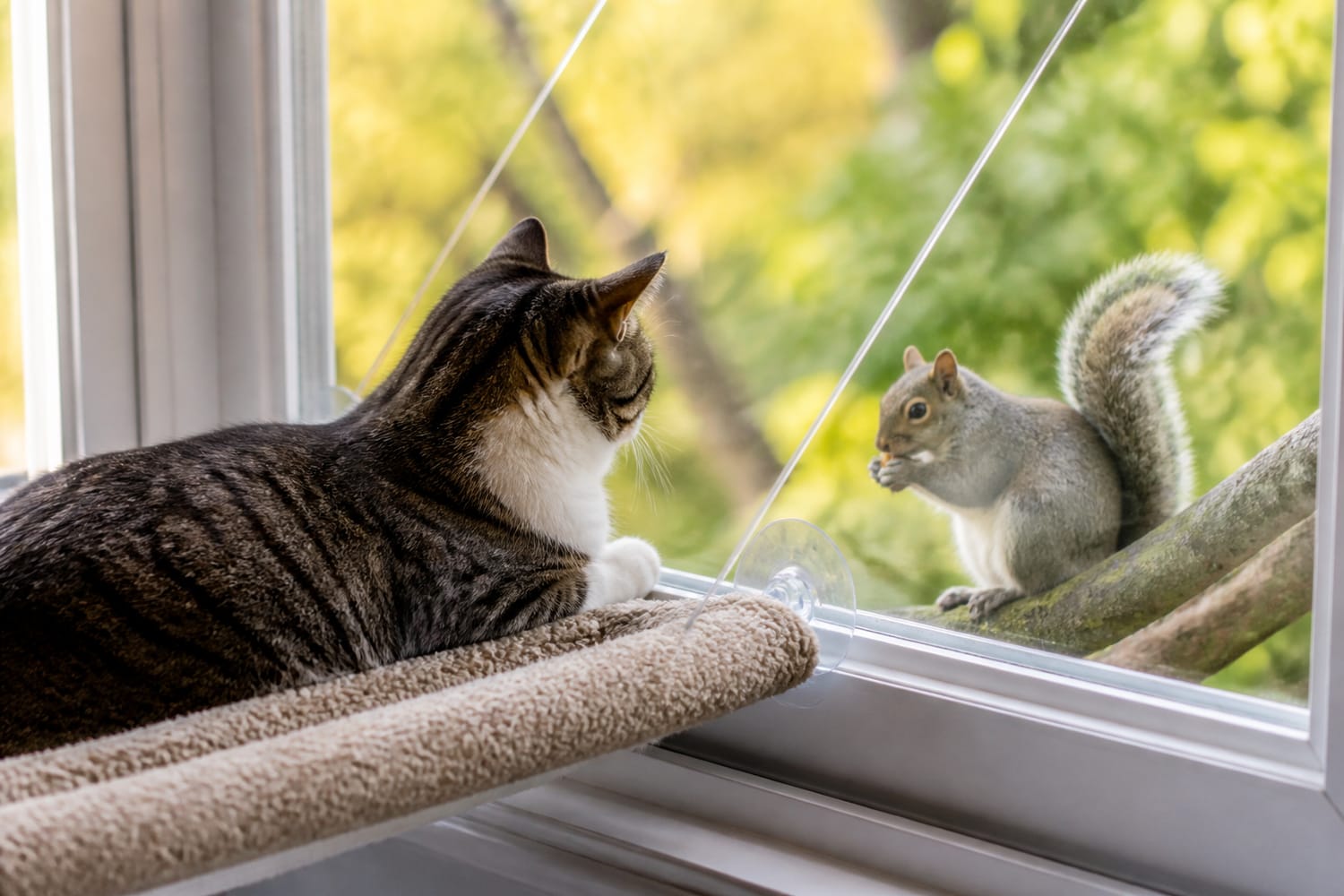
A Front-Row Seat to the Outside World
A squirrel pauses on the fence. A leaf skitters across the path. Your cat’s ears swivel; your dog lifts their head from a nap. To a curious pet, an ordinary window can offer a changing view of the neighborhood.
The best pet-friendly window seat combines that view with a sturdy place to rest, a secure window, and the freedom to walk away. It needn’t be elaborate. A well-placed bed or cat tree may be all it takes to turn a favorite lookout into a safer, more comfortable part of the day.
Start With the Window, Not the Cushion
Before choosing the coziest spot, look at the window from your pet’s height. Can they push against the screen? Reach a blind cord? Leap onto a narrow sill with nowhere steady to land? Fix those hazards first.
Keep windows securely closed when you cannot supervise, especially if a screen is loose or damaged. If you open a window, check that its screen is snug, sturdy, and firmly seated in the frame. The ASPCA warns that cats can fall from windows while distracted by birds or other animals—and that childproof window guards are not a substitute for secure screens. Even a fall from a lower floor can cause serious injury. Its window-safety guidance for cat parents is worth reading before you set up an upstairs lookout.
Choose cordless shades if possible, or keep existing blind and curtain cords completely out of reach. Tuck away electrical cords, too, and remove anything a pet could pull down while stretching toward the glass. If your pet has fallen from a window, seek veterinary care immediately, even if they seem able to walk.
Build a Seat That Fits Your Pet
For a cat, height can make the view especially appealing. A stable cat tree beside a closed window gives them room to settle, turn around, and watch without balancing on a thin sill. A window-mounted perch can also work, provided it is installed exactly as directed, suits your cat’s size, and is checked regularly for looseness or wear. Cats benefit from window perches as one option among many ways to stay engaged indoors.
For a dog, start lower. A washable bed set back from the glass often offers a better resting place than a raised platform. Make sure your dog can reach it without scrambling over furniture or slipping on a smooth floor. Senior pets and animals with limited mobility may appreciate a floor-level view or a secure ramp to an approved resting spot.
Whatever the setup, keep the route in and out clear. A pet should be able to leave without squeezing past another animal or jumping farther than they comfortably can. In a multi-pet household, a second resting spot can make window time feel less like a competition. Petspiration’s pet happiness audit offers more ideas for matching little changes at home to the animal who lives there.
Comfort matters, but so does choice. Put a washable mat or blanket on a secure surface, leave water accessible elsewhere in the room, and offer a shaded place to retreat. A sunbeam can be lovely for a nap; it should not be the only place your pet can rest.
Make “Squirrel TV” More Interesting—Without Overdoing It
A good view does not have to be busy. Moving branches, passing clouds, birds at a distance, and the occasional squirrel can provide plenty to notice. Try your pet’s existing favorite window before rearranging a room: they may already have a preferred view and time of day.
If you want to attract birds, think about the birds’ safety as carefully as your cat’s entertainment. Cornell Lab guidance recommends placing a feeder within three feet of a window or more than 30 feet away to reduce the risk of dangerous window strikes. Its guide to bird-feeder placement also considers safety around predators. Keep cats indoors, and consider bird-friendly window treatments if birds could mistake reflective glass for open space.
No feeder? No problem. A view of a tree, garden, or sidewalk may be enough. You can add variety inside by occasionally moving a favorite toy to the room or offering a supervised play session after your pet watches the world go by.
Window-watching works best as one part of a richer day—not a replacement for movement, interaction, or rest. For cats, a wand toy they can actually catch provides a different experience from watching a squirrel they cannot reach. Petspiration’s guide to keeping an indoor cat active has more ways to balance observation with play.
Learn When the View Is Fun—and When It Is Too Much
A pet who settles, watches for a while, and then wanders off is showing you that the window can be part of an ordinary, flexible routine. Other pets may have a harder time switching off. A dog who repeatedly rushes the glass and barks at every passerby, or a cat who remains tense and fixated, may need a quieter view.
If your dog finds the front window upsetting, try a seat overlooking a calmer yard or another part of the room. Curtains or privacy film can block a street-level view while you work on rewarding calm behavior away from the window. The American Kennel Club’s guide to dogs barking at windows explains why watching passersby can become frustrating for some dogs and why managing the view can help.
With cats, watch for repeated frantic pawing at the glass, an inability to disengage, or tension with another pet over access to the perch. Offer a break: invite your cat to play elsewhere, open a quieter room, or provide another lookout. Don’t force window time simply because other pets enjoy it.
Make the Lookout a Small Daily Ritual
Once the space is safe, invite your pet to discover it at their own pace. Set down a familiar blanket, then let them investigate. You might sit nearby with a book while your cat watches the yard, or reward your dog for resting calmly on their bed. There is no need to coax a reluctant animal onto a perch.
A simple routine keeps the setup pleasant:
- Check the seat and window for loose parts or damage.
- Keep the view optional, with an easy path to a quieter spot.
- Pair watching with other activities, such as play, sniffing games, or a walk.
- Adjust as needs change—a kitten, an older cat, and a dog sensitive to street activity may each need a different arrangement.
The reward is not a picture-perfect perch. It is the small moment when your pet finds a comfortable place, notices something wonderful outside, and knows they are safe at home. Pull up a chair if you like. “Squirrel TV” is often even better together.