
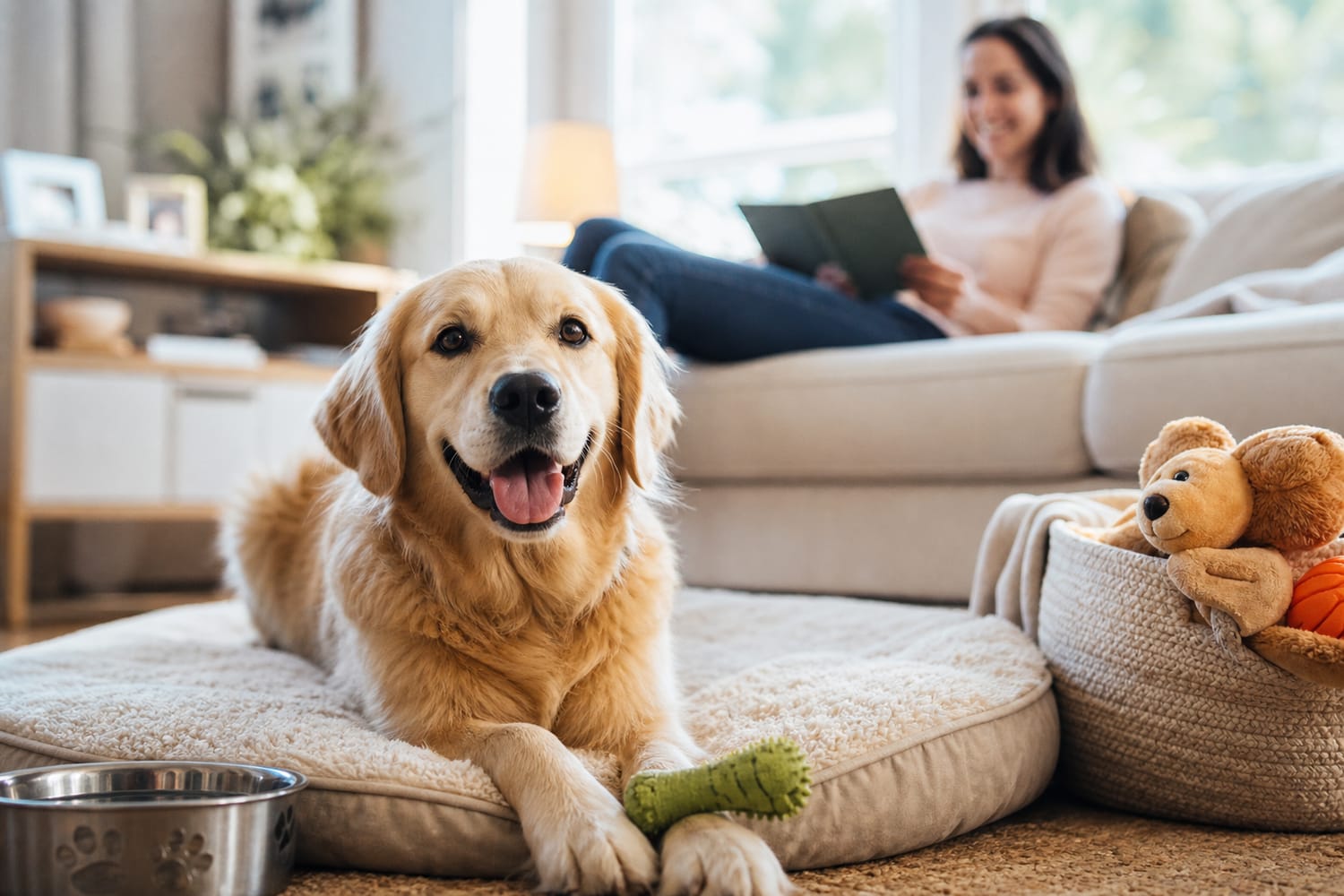
Start With a Pet’s-Eye View of Home
A happier pet home does not always require a complete lifestyle makeover, a brand-new training plan, or an expensive shopping trip. Often, the biggest difference comes from small, thoughtful changes: moving a water bowl, adding a soft blanket near a sunny window, creating a quieter feeding spot, or spending five more minutes in intentional play.
Think of this as a “Pet Happiness Audit”—a gentle walk through your home and daily routine, looking for tiny ways to make life more comfortable, enriching, and joyful for the animals who share it with you. Whether you live with a dog, cat, rabbit, guinea pig, bird, or another beloved companion, the goal is the same: notice what they need, respect who they are, and make home feel safe, interesting, and full of love.
Pets may not speak our language, but they are constantly communicating. A dog who follows you from room to room may be asking for connection. A cat scratching the sofa may be saying, “I need a better scratching option.” A rabbit hiding all day might need a quieter retreat. When we learn to read these signals, everyday home life becomes better for everyone.
1. Refresh the Water Station
Fresh water is one of the simplest wellness upgrades you can offer. Many pets drink more when their water is clean, cool, and easy to access. Wash bowls daily with soap and warm water, refill them often, and place them somewhere calm and convenient.
For cats especially, location matters. Some cats dislike drinking water that is right next to their food, and many prefer wide, shallow bowls that do not press against their whiskers. Some pets enjoy a fountain, while others are perfectly happy with a sturdy ceramic or stainless steel bowl.
If you have multiple pets, consider multiple water stations. Older pets, pets with mobility issues, or animals who avoid high-traffic areas may drink more when water is available in several rooms.
2. Create a Cozy “Yes” Spot
Every pet deserves a place where they can relax without being disturbed. This could be a dog bed in a quiet corner, a cat tree by a window, a covered hideout for a rabbit, or a soft perch for a bird. The key is that it belongs to them.
A good “yes” spot gives your pet permission to rest. It says: yes, you can nap here; yes, you can retreat here; yes, you are safe here. This is especially helpful in busy households with children, visitors, or multiple animals.
Teach family members to respect the space. If a pet goes there, let them decompress. For many animals, having a safe retreat reduces stress and builds confidence. It also supports better behavior, because pets who feel secure are less likely to act out from fear or overstimulation.
3. Make Mealtimes More Interesting
Food is not just fuel—it can also be enrichment. In the wild, animals spend time searching, sniffing, chewing, digging, or problem-solving to find food. At home, meals often disappear in seconds from a bowl. Turning mealtime into a gentle challenge can make the day more satisfying.
For dogs, try a puzzle feeder, snuffle mat, slow-feeder bowl, or scattering kibble in a safe grassy area. For cats, food puzzles and treat balls can encourage natural hunting behaviors. For rabbits and guinea pigs, hide small portions of appropriate greens in hay to encourage foraging. Birds may enjoy safe foraging toys designed for their species.
Start easy. The point is not frustration—it is fun. If your pet seems confused, show them how it works and choose simpler options first.
4. Add Five Minutes of Focused Play
Many pets do not need hours of entertainment at a time. What they often crave is consistent, focused interaction. Five minutes of engaged play—no phone, no distractions—can brighten a pet’s entire day.
For dogs, this might be tug, fetch, scent games, or practicing a few cheerful cues. For cats, try wand toys that mimic prey: slow movements, pauses, little “hiding” moments behind furniture, and a satisfying catch at the end. For small pets, supervised exploration in a safe playpen can be enriching. Birds may enjoy training, gentle interaction, or safe toys they can manipulate.
Play also strengthens your bond. It tells your pet, “I see you. I enjoy you. You are part of my day.”
5. Rotate Toys Instead of Buying More
If your pet seems bored with their toys, they may not need new ones—they may simply need variety. Try putting some toys away and rotating them every few days. A toy that has been hidden for a week can feel exciting again.
Keep favorites available, especially comfort toys, but cycle the extras. You can also refresh toys by changing how they are used. A ball can become part of a hide-and-seek game. A stuffed toy can appear at the end of a short training session. A cardboard box can become a cat castle or rabbit tunnel, as long as it is safe and free from staples, tape, or harmful coatings.
Toy rotation reduces clutter and makes enrichment feel special.
6. Give Them a Window to the World
For many pets, the outside world is fascinating. Birds flying past, leaves moving, neighbors walking by, sunlight shifting across the floor—these small details can provide gentle mental stimulation.
Set up a safe viewing spot near a window. Cats may love a stable perch or cat tree. Dogs may enjoy a bed where they can watch the yard, though if window-watching causes barking or stress, choose a calmer view. Small pets should have access to natural light but must always be protected from overheating, drafts, and direct sun with no escape.
You can make the view even better with pet-safe plants nearby, a bird feeder outside the window placed responsibly, or a cozy blanket in a sunbeam. Always consider your pet’s personality: for one animal, a busy street view is entertainment; for another, it may be overwhelming.
7. Improve the Soundscape
Humans often forget how noisy homes can be. Vacuum cleaners, doorbells, televisions, loud music, kitchen appliances, and outside traffic may affect pets more than we realize. Many animals have sensitive hearing, and sudden sounds can cause stress.
You do not need a silent home, but you can create calmer sound zones. Place beds and cages away from speakers, busy hallways, and slamming doors. Use soft background music or white noise if it helps mask unpredictable sounds. During fireworks, storms, or construction, close curtains and offer a safe retreat.
For pets who are extremely fearful of noise, speak with a veterinarian or qualified behavior professional. Anxiety is not a personality flaw—it is a welfare issue, and support is available.
8. Check the Comfort Details
A happiness audit includes the small physical details pets cannot adjust themselves. Is the bed still supportive, or has it become flat and lumpy? Is the litter box easy for an older cat to enter? Is your dog slipping on smooth floors? Is your rabbit’s enclosure large enough for normal movement? Are your bird’s perches varied in size and texture to support foot health?
Comfort needs change with age. Senior pets may benefit from non-slip rugs, orthopedic bedding, raised food bowls if recommended by a vet, ramps, or lower-entry litter boxes. Young pets may need chew-safe spaces and more frequent play. Small animals need clean, species-appropriate bedding and room to stretch, hop, climb, or explore.
A comfortable home tells your pet: you belong here at every stage of life.
9. Make Grooming a Little More Pleasant
Grooming is not just about appearance. Brushing, nail care, ear checks, dental care, and coat maintenance all support health. But for many pets, grooming can feel stressful if it only happens when something is already tangled, overgrown, or urgent.
Make grooming smaller and kinder. Brush for one minute, then reward. Touch paws gently during calm moments, then offer praise or a treat. Let your pet sniff grooming tools before using them. Keep sessions short and positive.
Different animals have different grooming needs. Long-haired cats may need regular brushing to prevent mats. Dogs vary widely depending on coat type. Rabbits generally should not be bathed, but they may need careful brushing, especially during shedding. Birds may need bathing opportunities, nail care, and appropriate perches. When in doubt, ask a veterinarian or experienced groomer familiar with your pet’s species.
10. Build a Predictable Rhythm
Pets thrive when life feels understandable. They do not need every minute scheduled, but predictable patterns help them feel secure. Meals, walks, playtime, bedtime, and quiet time can become comforting anchors in the day.
A routine is especially helpful for anxious pets, newly adopted animals, and seniors. If changes are coming—a move, a new baby, a vacation, a different work schedule—introduce adjustments gradually when possible. Keep some familiar rituals intact, like the morning cuddle, the evening walk, or the bedtime treat.
Predictability does not mean boredom. It means your pet can relax because they know good things happen reliably.
Notice the Small Signals
After making a few changes, watch your pet closely. Happiness often shows up in subtle ways: a looser body, brighter eyes, more curiosity, better sleep, playful invitations, relaxed grooming, or choosing to spend time near you. For prey animals like rabbits, guinea pigs, and birds, comfort may appear as exploring more, eating calmly, stretching out, or vocalizing softly.
Also watch for signs of stress or health concerns. Sudden changes in appetite, drinking, litter box habits, energy, aggression, hiding, vocalization, or mobility should not be dismissed as “just behavior.” Many behavior changes have medical causes, so a veterinary checkup is always wise when something feels off.
The Heart of a Happier Home
The Pet Happiness Audit is not about being a perfect pet parent. No one gets everything right all the time. It is about paying attention with love. It is about asking, “How does my home feel to the animals who live here?” and then making small, compassionate improvements.
Maybe today you wash the water bowl more often. Tomorrow you rotate toys. Next week you create a quieter resting place or try a puzzle feeder. Tiny changes add up. Over time, they create a home where pets feel safer, more engaged, and more deeply connected to their people.
And that is the beautiful secret of caring for animals: when we improve their world, ours becomes warmer too. A happier pet often means a calmer home, more laughter, better routines, and countless little moments of joy—the wag at the door, the purr beside you, the soft nudge, the curious chirp, the peaceful nap in the perfect patch of sun.
Home is not just where our pets live. It is where they trust, play, rest, heal, and love us back in their own wonderful ways.