
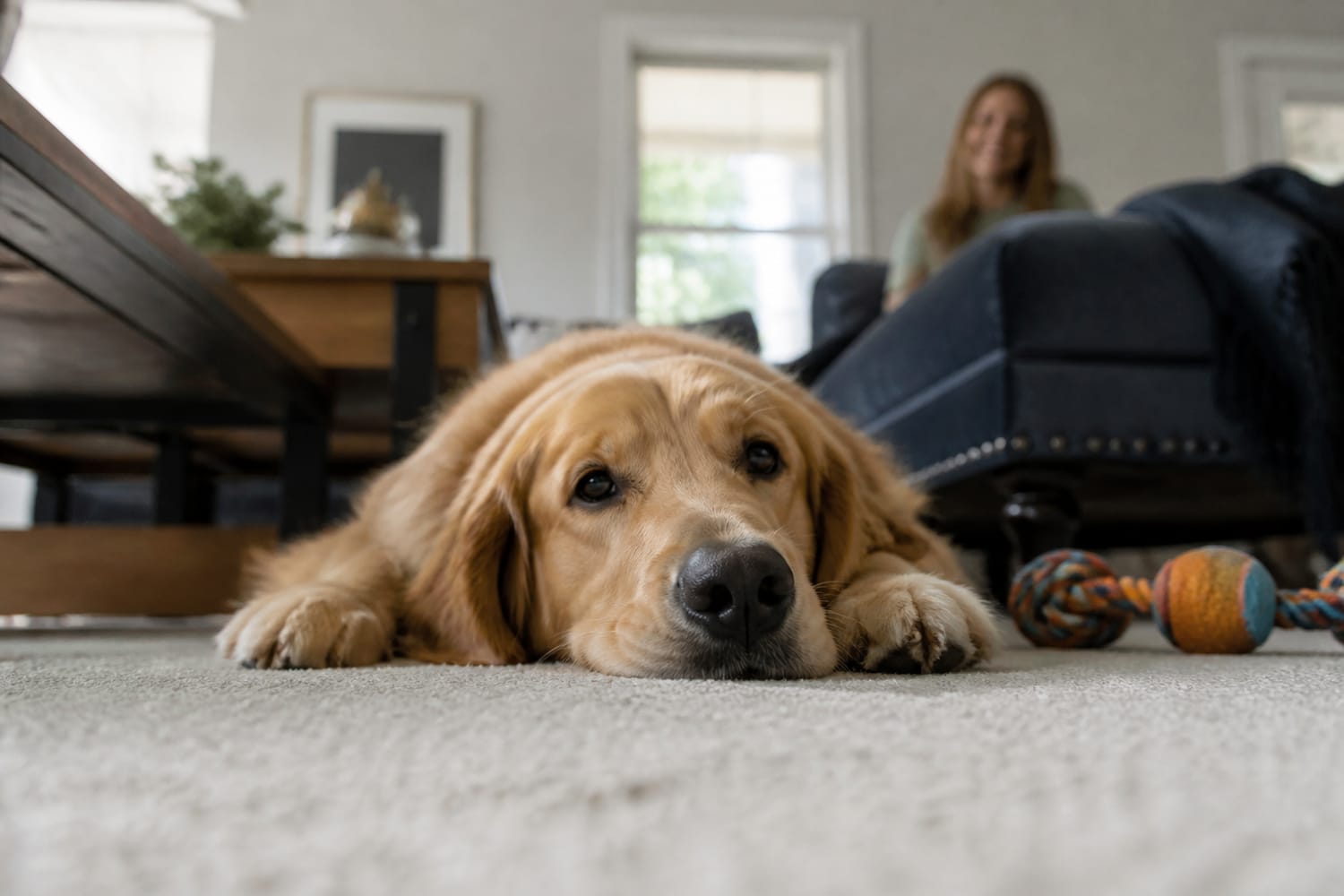
The living room looks tidy from where you stand. But from beside the sofa, a forgotten hair tie is suddenly in plain sight. The hallway feels different, too: its smooth floor stretches between your pet’s bed and water bowl. And that quiet corner under the table? It may be one of the most inviting places in the house.
A floor-level adventure is a simple way to notice what your pet can reach, where they like to rest, and which everyday obstacles you might have overlooked. Set aside 15 minutes, get comfortable, and explore with curiosity rather than a long to-do list. You may finish with a safer home—and a better understanding of the companion who shares it.
Before You Begin: Borrow Their View, Not Their Imagination
You can’t know exactly how your pet experiences a room. A dog may be interested in smells you can’t detect; a cat may be considering the route from the floor to a favorite perch. A rabbit may be drawn to a sheltered space you barely notice. What you can do is look at the height, reach, footing, and choices your home offers them.
Pick a room your pet uses often. Sit or kneel on the floor if that’s comfortable, or use a low chair and lean down. Bring a phone or notepad to record anything you want to change. There’s no need to coax your pet along or interrupt a nap; this is your investigation.
If children join you, invite them to be gentle detectives. Their job is to spot things, not to pull a pet from a hiding place or offer surprise cuddles.
Minutes 0–5: Follow the Paths Between Important Places
Start where your pet starts: perhaps at their bed, crate, favorite cushion, or quiet corner. From there, trace a route to water, food, the door, or the litter box. Is the path clear? Does it cross a slippery patch, pass a noisy appliance, or squeeze between furniture?
Try looking back along the route. A hallway you think of as open might feel busy when everyone’s feet pass through it. A water bowl may be easy to see but awkward to reach if a door sometimes swings across the space. These are small observations, but they can lead to useful changes.
Pay particular attention if your pet is older or has trouble moving. For some senior pets, hard floors can be slippery; secure rugs or runners may help with traction. Cats with limited mobility may also benefit from easier access to resting spots and litter boxes. If you notice new hesitation, stiffness, or difficulty getting around, speak with your veterinarian rather than assuming it is simply part of aging.
Now pause beside a doorway. Can your pet retreat from activity, or is this the only route through the room? A peaceful home offers both ways to join family life and places to step away from it.
Minutes 5–9: Search for the Tiny Things
This part feels like a treasure hunt, except the best finds go straight into a drawer or the trash. Scan beneath furniture, along baseboards, and beside bags or baskets. Look for dropped medication, coins, hair ties, rubber bands, packaging, small toy pieces, and anything else your pet might chew or swallow.
Check cords next. Notice electrical cables within chewing range and dangling blind cords or strings that invite play. The ASPCA recommends getting down to a pet’s level when pet-proofing, because small objects and cords are easy to miss from above.
Then look up—but only as far as your pet can reach. A low shelf, trailing plant, or table edge may be accessible to a curious cat or a dog willing to investigate. If you’re unsure whether a plant is suitable for the animals in your home, check its name against the ASPCA’s toxic and non-toxic plant list. Keep in mind that plant safety depends on the species, and even a plant listed as non-toxic can cause stomach upset if eaten.
You don’t have to solve every problem while you’re on the floor. Pick up immediate hazards, make a note of anything that needs securing, and continue your tour.
Minutes 9–12: Find the Good Stuff, Too
A pet’s-eye tour isn’t only a safety check. Look for what already works. Is there a soft resting spot away from the busiest walkway? A sunny patch your pet chooses in the afternoon? A sturdy scratching surface near a cat’s favorite room? A clear space where a dog can settle without being stepped over?
Those little discoveries tell you what your pet values. They can also show you where to make one inviting addition. A cat that rests behind the sofa might appreciate an accessible hideaway nearby. A dog that enjoys searching for toys might like a short, supervised “find it” game in that room. The best change is not necessarily a new purchase; sometimes it is moving a bed out of the traffic flow or making room for a well-loved toy.
Enrichment gives pets opportunities to use natural behaviors, including sniffing, exploring, playing, and foraging. It works best when it suits the individual animal and the space you actually have. For more low-key ideas, explore Petspiration’s five-minute pet rituals or its guide to rotating familiar toys.
Minutes 12–15: Make One Small Change
For the final three minutes, choose a single improvement you can make now. Move a loose cord out of reach. Clear the route to a water bowl. Put away the small object you found under the couch. Straighten a rug so its edges lie flat, or move a bed to a quieter spot.
One change is enough to make this adventure worthwhile. Save larger projects—such as securing furniture, replacing damaged cords, or reworking a room—for a time when you can do them properly. If you discover a possible poisoning or think your pet has swallowed something dangerous, stop the activity and contact your veterinarian or animal poison control promptly.
Before you stand up, look around once more and ask: Where can my pet feel comfortable here? What can they explore safely? Can they easily get what they need? Those questions can guide you long after the timer ends.
Let Your Pet Show You What Matters
Once you’ve made your change, let ordinary life resume and observe without demanding a reaction. Does your pet still choose the same sleeping spot? Do they move comfortably through the doorway? Do they investigate the newly cleared corner, or ignore it altogether? Either response is useful. Your pet does not owe every improvement an enthusiastic review.
Their needs will change over time, too. A lively young animal and a slower senior may use the same room very differently. A new piece of furniture can alter a favorite route; a move or a new family member can make a quiet retreat more valuable. Repeat your 15-minute tour whenever home life changes—or whenever you want a fresh perspective.
A welcoming home isn’t one that looks perfect from the doorway. It’s one that works for everyone who lives there. For a few minutes, you’ve looked beyond your own view of the room and made space for your pet’s. That small act of attention is a lovely way to care for them.