
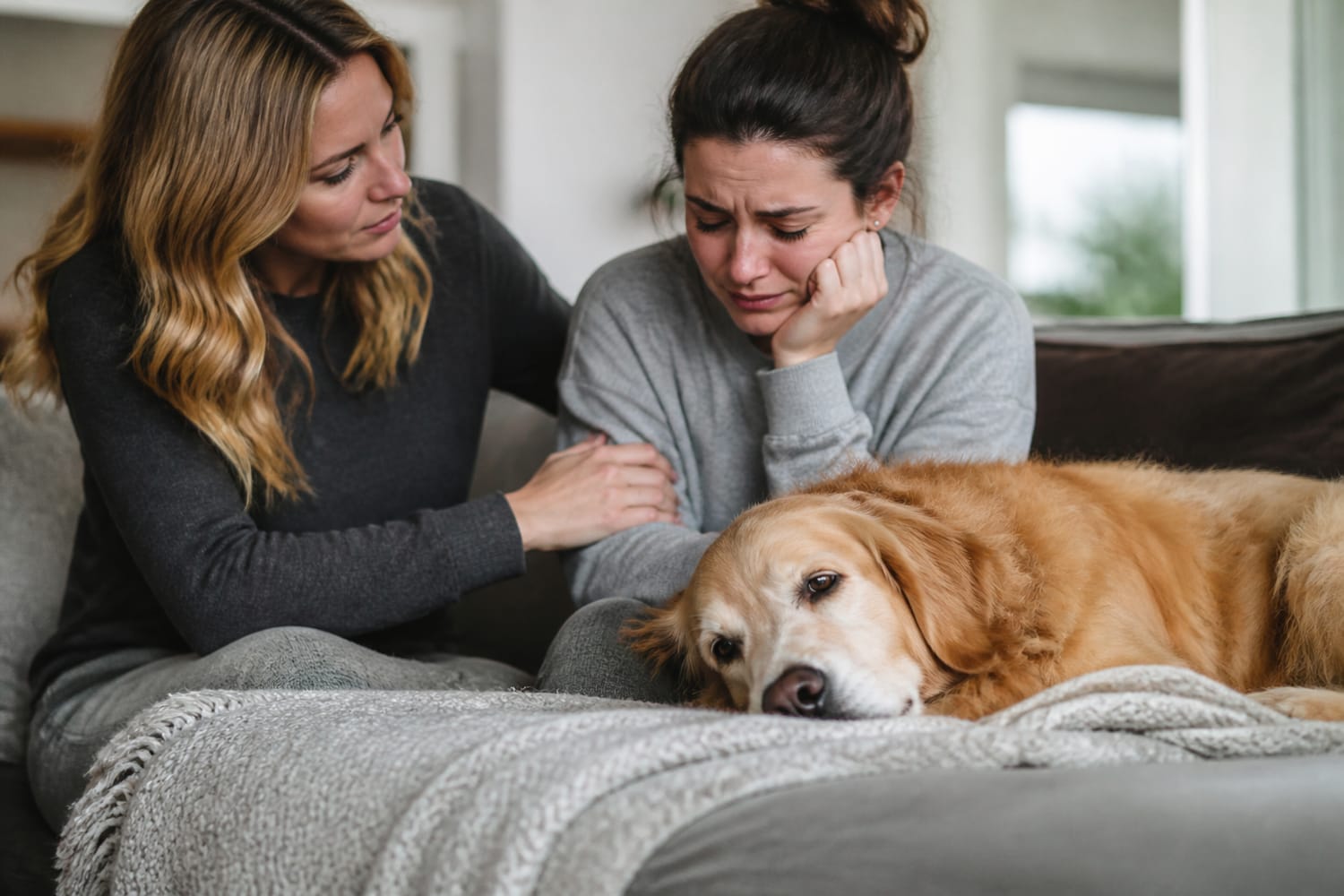
Support a friend grieving a pet by acknowledging their loss, listening without trying to fix their feelings, and offering specific, practical help. Use their pet’s name, follow their lead about talking, and keep checking in. Above all, never minimize the bond or put a deadline on their grief.
You do not need a perfect speech. A sincere message, a delivered dinner, or an afternoon of quiet company is a thoughtful place to start.
Understand What Your Friend Has Lost
A pet’s death means losing a companion, but it can also mean losing familiar routines: the morning walk, the cheerful greeting, the little shadow following from room to room. Cleveland Clinic’s guidance on grieving a pet recognizes how deeply these relationships shape everyday life.
Take the loss seriously whether your friend loved a dog, cat, rabbit, bird, horse, reptile, or fish. You do not have to share the same attachment to respect what that animal meant to them.
Avoid deciding how upset someone “should” be based on the pet’s age or how long they lived together. Begin with curiosity and compassion rather than assumptions.
What to Say When a Friend’s Pet Dies
Simple, sincere words are enough. The RSPCA’s advice on supporting someone through pet bereavement recommends acknowledging the death, using the pet’s name, and listening gently.
You might say:
- “I’m so sorry about Luna. I’m thinking of you.”
- “You and Jasper shared something really special.”
- “I don’t know what to say, but I want you to know I care.”
- “Would you like to talk about Pepper, have some company, or have a little space?”
If you knew their pet, offer one genuine memory: “I’ll always remember how Olive carried that enormous toy everywhere.”
If you did not, do not invent a connection. Try, “I didn’t get to meet Archie, but I’d love to hear about him whenever you feel ready.”
Listen Without Taking Over
Let your friend choose how much to share. Resist moving immediately into your own pet-loss story or searching for a positive lesson. Listening and allowing room for their experience are central recommendations from pet-bereavement support organizations.
A useful question is: “Would you like me to listen, or would it help to think through something together?”
Then honor the answer—even when the answer is silence.
What to Avoid Saying—and What to Try Instead
Well-meant reassurance can accidentally dismiss the loss. The RSPCA specifically advises against minimizing a pet’s importance, suggesting a replacement, or assuming you know exactly how someone feels.
Consider these alternatives:
- Instead of “It was just a pet,” say, “They were an important part of your life.”
- Instead of “You can get another one,” say, “There will never be another quite like them.”
- Instead of “At least they lived a long life,” say, “You shared so many years together. I’m sorry you’re facing goodbye.”
- Instead of “I know exactly how you feel,” say, “I’m here to listen to what this has been like for you.”
- Instead of “Shouldn’t you be feeling better?” ask, “How have things been for you lately?”
Follow your friend’s lead on spiritual language, too. Rather than assuming they believe their pet is “in a better place,” you can simply say, “I’m holding you and Milo in my thoughts.”
If you say something clumsy, repair it without asking your friend to reassure you: “I’m sorry. That sounded dismissive, and I didn’t mean to minimize your loss.”
Offer Practical Help That Is Easy to Accept
Meals, transportation, and other everyday assistance are among the practical ways the RSPCA recommends supporting someone after pet loss.
Make your offer concrete and easy to decline. Rather than “Let me know if you need anything,” try one of these:
- Food: “Could I leave dinner at your door tomorrow? No visit needed.”
- Errands: “I’m getting groceries this afternoon. May I pick up a few things for you?”
- Company: “Would you prefer a short walk, a movie, or just sitting together?”
- Other pets: “Would it help if I walked Bailey on Thursday?”
- Administration: “If you want, I can sit with you while you call the veterinary clinic.”
Only offer what you can realistically do. One reliable promise is better than several vague ones.
Ask before handling belongings, contacting anyone, or sharing news. A bowl beside the refrigerator or a bed in the hallway is not yours to move. You can offer help sorting things later, but let your friend decide whether—and when—that happens.
Be Especially Gentle Around Euthanasia and Guilt
After euthanasia, a grieving person may question their decisions or feel guilty. Cleveland Clinic discusses how painful these decisions can be and why veterinary guidance matters.
Do not interrogate your friend about treatment costs, timing, or whether they stayed for the appointment. Avoid confident medical judgments about circumstances you do not fully know.
Instead, you might say, “I hear how much you’re questioning yourself. Would it help to talk through what’s weighing on you?”
If they want medical explanations, offer to help write down questions for their veterinarian. Friendship can provide company and compassion without pretending to supply clinical answers.
Support can begin before the death, too. Cornell notes that grief may start during a pet’s illness. If your friend wants practical preparation, gently offer Petspiration’s compassionate end-of-life planning checklist—but ask before sending it.
Help Remember Their Pet Without Creating Pressure
Memorial activities are one option for expressing grief, not an obligation. Cornell’s pet-loss resources include remembrance through writing, art, photographs, and other personal tributes.
You could offer to:
- Print a favorite photograph.
- Write a card containing a real memory.
- Collect stories from friends, with permission.
- Make a donation in the pet’s name, if welcomed.
- Help assemble a small memory box.
For a simple shared project, adapt Petspiration’s pet memory jar ideas: write one remembered moment on each slip of paper.
Before making anything public, ask. “Would you like me to share a tribute, or would you prefer to keep this private?” leaves the decision where it belongs.
Keep Showing Up Without Setting a Timeline
Cornell explains that grief has no prescribed schedule and rarely follows a straight path. Someone may feel differently from day to day—or moment to moment.
Keep your support flexible. After an initial message, consider another check-in the following week: “Thinking of you and Nala today. No need to reply.”
If your friend welcomes it, remember their pet’s birthday or adoption anniversary. Ask before making those dates a recurring conversation.
Continue inviting them to ordinary activities without expecting attendance. Try, “You’re welcome to join us, and it’s completely okay if you’re not up for it.”
Let them enjoy an afternoon without treating it as proof that grief is finished. Likewise, leave the timing of any future adoption entirely to them.
Know When to Offer More Support
Friendship matters, but you do not have to be someone’s only source of help. Cornell’s pet-loss resources and support directory includes support groups, listening services, and other resources for grieving families.
If your friend is struggling to manage daily life, gently offer help finding a counselor or contacting their healthcare provider. Cleveland Clinic recommends seeking professional support when grief becomes difficult to cope with.
You might say, “You deserve support with this. Would you like me to help you find someone who understands pet loss?”
You Do Not Have to Make the Sadness Disappear
There is no sentence that can replace a beloved companion. Your role is not to make your friend stop missing their pet.
It is to offer something steady: a listening ear, respect for the bond, practical kindness, and permission to remember.
Start small. Say their pet’s name. Send the message. Offer the meal. Then keep making room for the love behind the grief.