
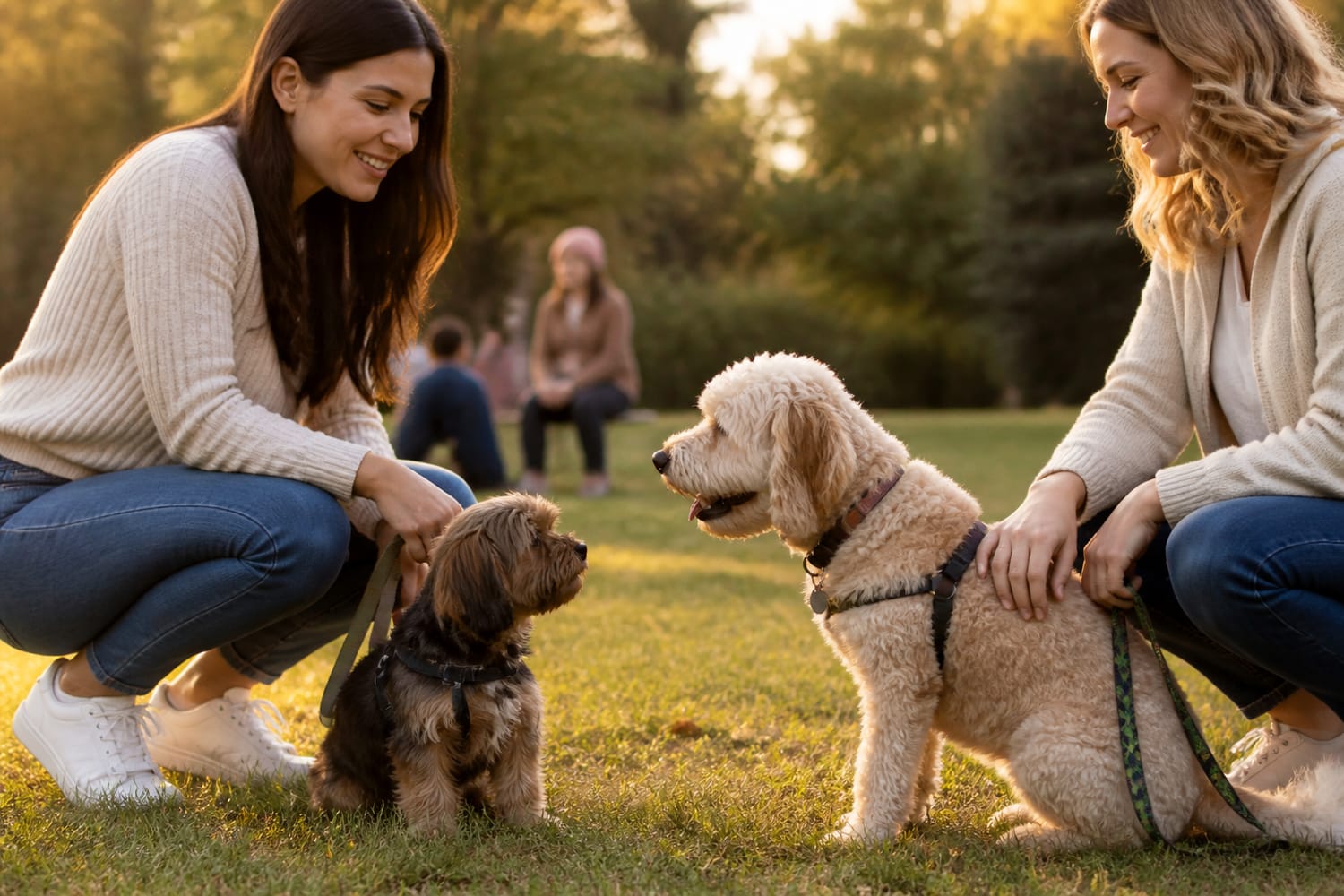
Your Pet Doesn’t Have to Make Friends for You
Making friends as a pet parent starts with a simple shift: look for people who share your interest in animals, not necessarily pets your animal wants to meet. A dog who needs space, a cat who stays home, or a rabbit who prefers a quiet routine can still be part of the story that brings you together.
It’s easy to feel left out when pet friendship looks, from the outside, like a parade of dog-park playdates. But your pet doesn’t need to greet another animal for you to enjoy a conversation, join a community project, or find someone who understands why you have so many photos on your phone.
Let Your Pet’s Personality Set the Boundaries
Before making plans, consider what your pet actually enjoys. Does your dog relax on a quiet route but struggle when another dog approaches? Does your cat hide when visitors arrive? Is your bird happy with familiar voices but unsettled by a busy room? Those preferences are useful information, not obstacles to overcome for the sake of a social calendar.
Friendliness isn’t a requirement for a fulfilling life. As Petspiration’s guide to building a social life that fits your pet’s personality explains, connection can look different for different animals. Your pet’s circle might be their household, while yours can grow beyond it.
If your pet becomes distressed around people or animals, skip the idea that repeated close encounters will make them “get used to it.” The ASPCA advises allowing a fearful dog to progress at their own pace rather than forcing interaction. Giving your pet room to feel safe makes it easier for you to enjoy meeting someone, too.
Find Places Where the People Are the Point
The easiest first step may be an event where animals aren’t expected to attend. Consider a shelter fundraiser, an animal-themed book club, a craft workshop benefiting a rescue, or a local talk about pet care. You arrive with something to do and an obvious conversation starter: “What brought you here?”
Volunteering offers another way to get to know people through a shared task. You might help set up an adoption event, organize supplies, take approved photographs, or assist with administrative work. Roles vary by organization, so ask what help is needed rather than assuming every volunteer position involves handling animals. Best Friends Animal Society also describes volunteer opportunities in communities and from home, which can suit people whose pets are happiest staying put.
If you want a small project to share with a neighbor or new acquaintance, try an idea from Petspiration’s pet kindness challenge. You could check a shelter’s wish list together or help at an event—without asking either person’s pet to participate.
Online groups can be a gentle starting point as well. Look for local spaces where people exchange practical advice about pet care, enrichment, or animal welfare. Join a conversation before suggesting a meetup. When you do meet someone new, choose a public place and keep your personal information private until you feel comfortable.
Make Conversation Without Making It a Pet Introduction
A pet gives you common ground, but the best questions leave room for a person’s whole life. Try “How did your pet get their name?” or “What’s something your pet loves that surprised you?” These invite stories rather than comparisons about whose animal is better trained, friendlier, or more adventurous.
A little honesty can also spare everyone an awkward encounter. If someone asks whether your pets can meet, you might say, “I’d love to get coffee with you, but my dog does best without close greetings.” That’s warm, clear, and open to friendship.
When you see a neighbor regularly, start small. Remember their pet’s name, ask how the new kitten is settling in, or follow up on the rainy-day walk they mentioned. Friendship often grows through these ordinary exchanges, not one perfect invitation.
If You Bring Your Dog, Build in Space
For some dogs, a low-key outing with another pet parent is possible if the humans agree in advance that the dogs will not interact. You could walk on opposite sides of a wide path, with enough distance for both dogs to remain comfortable. Choose a quiet location with room to turn away, and be willing to shorten or cancel the walk if either dog seems stressed.
Distance is individual: what feels easy for one dog may be too close for another. The American Kennel Club’s guidance on walk anxiety in dogs recommends recognizing a dog’s limits, adjusting routes or times, and creating distance from triggers rather than pushing through distress. A shared walk should serve your dogs’ comfort—not test it.
Watch the whole dog, not just a wagging tail. Turning away, freezing, repeated lip-licking, a tucked tail, or a stiff body can signal discomfort. If you notice a change, calmly create more space or head home. The ASPCA’s dog bite prevention guide offers more help with recognizing fearful body language and respecting an unfamiliar dog’s space.
A busy dog park is not the only place to meet dog lovers, and it’s not the right setting for every dog. You can exchange numbers during a brief chat on the sidewalk, then arrange to meet without the dogs.
Create Gatherings That Work for Different Pets
You don’t need to host a roomful of animals to build a pet-parent circle. In fact, a pet-free gathering may be more welcoming to people with shy dogs, indoor cats, small mammals, birds, or pets who don’t enjoy visitors.
Keep the first invitation simple: coffee after a neighborhood walk, a picnic where everyone leaves their pets safely at home, or a casual meet-up to assemble donation bags for a shelter. Say plainly that pets are not expected. Nobody has to explain or defend their animal’s behavior.
If you invite people into your home, plan around your own pet’s needs first. Some animals can rest comfortably in a separate, quiet area with familiar essentials; others may find visitors too stressful, making another location the kinder choice. Petspiration’s pet comfort menu can help you think through the routines and spaces your companion finds reassuring.
Not every gathering has to happen in person. A monthly video chat to swap enrichment ideas or celebrate pet milestones can include friends with limited time, no transport, or animals whose care keeps them close to home.
Turn a Good Chat Into a Real Friendship
Meeting another pet lover is the beginning; a small follow-up helps the connection grow. If you enjoyed talking, suggest something specific and easy to decline: “Would you like to visit the shelter’s open house with me next Saturday?” or “Want to trade favorite pet-book recommendations over coffee sometime?”
Be curious about the person as well as their pet. Ask how their week went. Celebrate the new job, remember the family visit, and share something about yourself beyond animal care. A mutual love of pets opens the door; attention to each other keeps it open.
And if one invitation doesn’t work out, don’t treat it as a verdict on you or your companion. Schedules are complicated, and friendships take time. Try a different event, return to a group you enjoyed, or reach out to someone with whom conversation already felt easy.
There’s Room for Both of You to Belong
Your pet’s world and your world can overlap without being identical. They can have familiar routines and comfortable boundaries while you build a wider circle of people who love animals as much as you do.
Start with one conversation, one shared cause, or one invitation. The right friends won’t need your pet to be the life of the party. They’ll understand that loving an animal means respecting who that animal is—and they’ll be glad to get to know you along the way.