
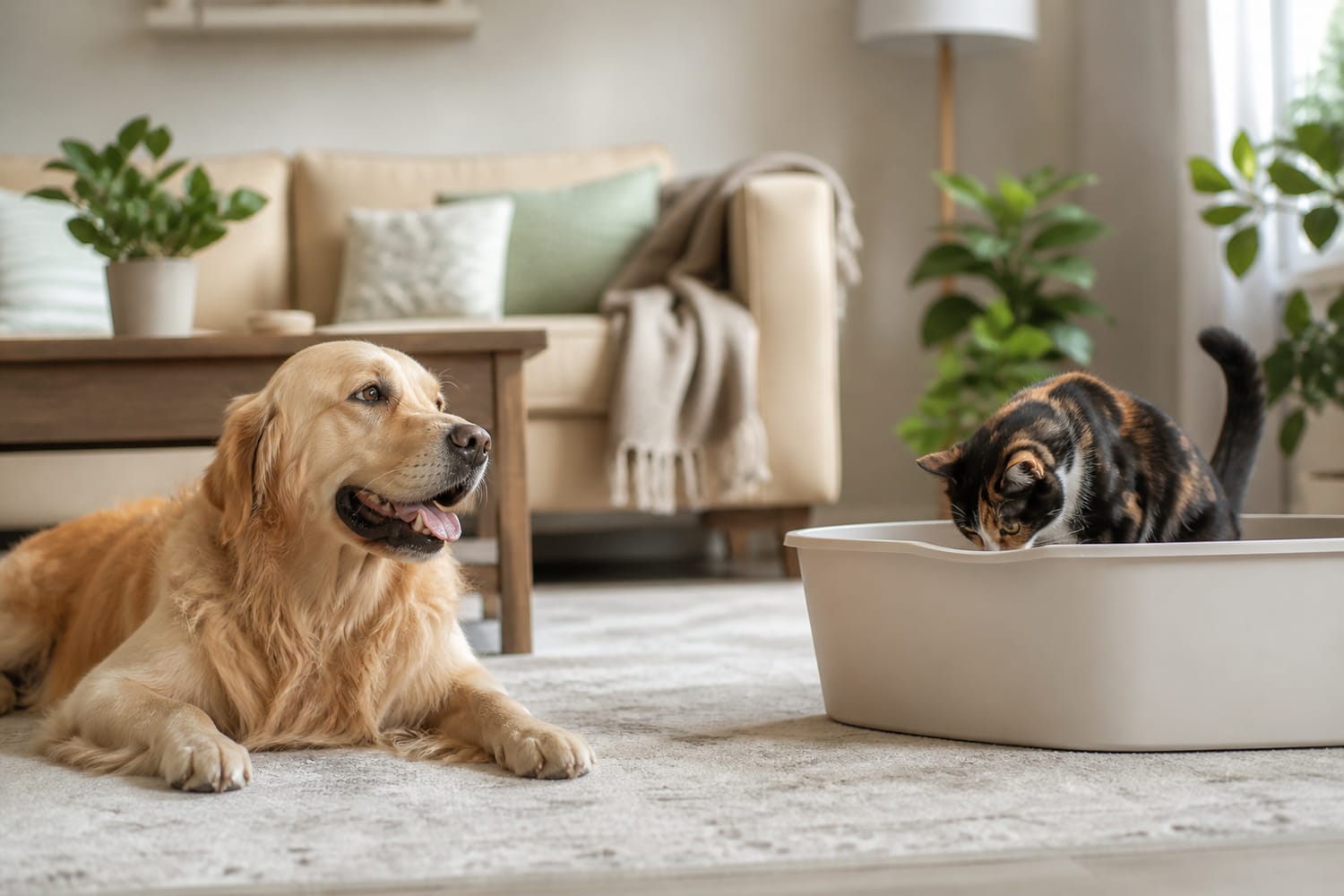
A Fresh Home Starts at the Source
You don’t need a powerful fragrance to keep a pet-friendly home smelling fresh. The most effective approach is to remove odor where it begins: clean litter boxes and accidents promptly, wash the things pets use most, keep damp areas dry, and bring in fresh air when you can. A little attention each day goes further than a cloud of perfume.
And “fresh” needn’t mean that your home smells as though no animal has ever lived there. A favorite dog blanket and a sunny cat perch are part of what makes a place feel like home. The aim is to prevent unpleasant smells from settling in while keeping your pets comfortable in their own space.
Start with a quick scent tour. Check the places your pet spends time: bedding, the sofa, the litter area, the food station, and that patch of rug by the door. If one spot smells stronger than the rest, focus your cleaning there instead of treating the whole room.
Make Pet Bedding and Fabrics Easy to Wash
Soft surfaces hold onto the evidence of a well-loved life: shed fur, tracked-in dirt, and the occasional damp paw print. A washable cover on your pet’s favorite bed makes regular cleaning much simpler. The same goes for throws on sofas and removable cushion covers, especially where your companion likes to curl up after a walk.
Shake or brush loose hair from fabrics before laundering them. Wash bedding according to its care label, and let it dry completely before putting it back; a blanket that still feels damp is not ready for an afternoon nap. Check what is underneath the bed, too. Cleaning a blanket won’t solve an odor trapped in the cushion, on the floor, or between sofa cushions.
Vacuum the places fur and crumbs collect: along baseboards, beneath furniture, around beds, and in the car if your pet rides with you. For washable toys, follow the maker’s care instructions. Retire anything that is falling apart rather than trying to rescue it with a scented spray.
Give the Litter Box a Routine, Not a Perfume
For cat households, a clean litter box is one of the biggest contributors to a pleasant room. Scoop at least daily and remove the waste from the living area. When it’s time to replace the litter, wash the box with warm water and unscented soap, rinse it, and dry it before refilling. The ASPCA’s litter-box guidance also notes that many cats prefer unscented litter; a fragrance that appeals to us may make the box less inviting to them.
Placement matters. Give your cat a quiet, accessible spot away from food bowls, rather than hiding the box somewhere difficult to reach or easy to forget. In a multi-cat household, having a box for each cat plus one extra can help keep the setup comfortable. If your cat suddenly starts avoiding the box, don’t assume it’s a housekeeping protest: arrange a veterinary check to rule out a health problem.
For rabbits and other small pets, the setup will differ, but the principle is familiar. Remove soiled material regularly, clean habitats and accessories as appropriate for the species, and make sure bedding is dry before it goes back in.
Clean Accidents Thoroughly—and Kindly
Even a house-trained pet can have an accident. Blot up fresh liquid promptly with absorbent towels, working from the outside of the spot inward so it doesn’t spread. Then use an enzymatic cleaner intended for pet accidents, following its directions for the surface and allowing it the required time to work. Test it first in an inconspicuous place, particularly on upholstery or carpet. The ASPCA recommends enzymatic cleansers to neutralize pet odors after litter-box accidents.
Resist the urge to cover the spot with room spray. If liquid reached the carpet padding or soaked through a cushion, cleaning only the visible surface may leave the source behind. Keep your pet away from the area while you use a cleaner and until it is dry, and never mix cleaning products. For more on choosing and using household supplies, see Petspiration’s guide to finding pet-safe cleaning products.
One accident calls for cleanup; repeated accidents call for curiosity. Changes in bathroom habits can have medical or behavioral causes, so speak with your veterinarian rather than blaming your pet.
Keep the Food Station Fresh
Sometimes the mystery smell isn’t coming from a pet bed at all. Look beneath food bowls for spilled kibble, stray treats, or drops of wet food. Wash and dry feeding dishes after use, clean water bowls daily, and wipe up spills around the feeding area. Petspiration’s pet food storage guide has more advice for keeping bowls, scoops, and food supplies clean.
A washable mat beneath the bowls can make everyday spills easier to spot and handle. Check the food container and treat cupboard occasionally, too. A pleasant-smelling room spray won’t help much if a forgotten morsel is tucked under a cabinet.
Let Fresh Air and Filtration Help
Once you’ve dealt with the source, give the room a chance to breathe. Open a window when the weather and outdoor air quality allow, making sure screens are secure and pets can’t slip out. Bathroom or kitchen exhaust fans that vent outdoors can also help move stale, damp air out of the home. The EPA’s indoor-air guidance puts source removal and ventilation first, with air filtration as a helpful supplement—not a replacement for cleaning.
A portable air cleaner may help with airborne particles in the room where it runs. If you choose one, follow its maintenance instructions and replace filters as directed. But don’t expect it to fix a soiled rug, dirty litter box, or damp bedding. Those need direct attention.
Moisture deserves a look of its own. Dry wet paws near the door, hang damp towels rather than leaving them in a heap, and investigate a persistent musty smell. The EPA recommends controlling indoor moisture as part of maintaining good air quality.
Groom for Comfort, Not for a Perfumed Coat
Regular brushing gives loose fur and outdoor debris a chance to land in a brush instead of on your furniture. A gentle paw wipe after a muddy outing can make a difference, too. Choose grooming products made for your pet’s species, and ask your veterinarian if you’re unsure what suits their skin or coat.
Baths have their place, but more is not always better. Over-bathing can dry or irritate skin, and cats and dogs have different grooming needs. If your pet seems unusually smelly soon after a bath—or has itchy skin, irritated ears, or a change in coat—ask your veterinarian about the cause rather than reaching for stronger shampoo. Petspiration’s guide to how often to bathe a dog or cat can help you think through a sensible grooming routine.
Be Thoughtful About “Natural” Scents
It’s tempting to swap a conventional air freshener for an essential-oil diffuser and call the problem solved. But “natural” does not automatically mean suitable for animals. Concentrated essential oils can be dangerous if a pet gets them on their coat, walks through a spill, or ingests them. The ASPCA’s advice on essential oils around pets urges caution, especially for pets with breathing problems, and advises against diffusers in homes with birds.
You can create an inviting atmosphere without adding a scent at all. A clean blanket, a tidy feeding corner, and a bit of fresh air are quiet comforts for everyone who lives there. If you do use any cleaning or fragrance product, follow its label, store it out of reach, and give your pet a way to leave the area.
Build a Routine You Can Actually Keep
A fresh home isn’t the result of one heroic cleaning day. It comes from small habits that fit around walks, meals, playtime, and naps. Scoop the litter box, deal with spills when they happen, and give the most-used pet spots a quick check. Then set aside regular time for bedding, floors, toys, and the easily forgotten corners.
Some weeks will be muddier than others. That’s part of sharing a home with an animal who finds joy in the world. With a practical routine and a little attention to what your pet is telling you, your space can feel welcoming without smelling like a perfume counter—and still feel wonderfully, unmistakably theirs.