
A Limp Is a Clue, Not a Diagnosis
A pet may limp because of something as small as a thorn in the paw or as serious as a fracture, torn ligament, infection, spinal problem, or bone disease. Check gently, restrict activity, and watch for warning signs. Severe pain, major trauma, deformity, bleeding, or inability to stand requires immediate veterinary care.
Limping—also called lameness—means your pet is moving differently because pain, weakness, or limited motion is affecting a limb. It can appear suddenly after a lively game or develop so gradually that you first notice hesitation on stairs, stiffness after sleep, or less enthusiasm for jumping.
Although this guide focuses mainly on dogs and cats, rabbits, birds, and other companion animals can also develop mobility problems. Because these species may hide pain especially well, contact a veterinarian promptly whenever their movement changes.
Common Reasons Pets Begin Limping
The location and timing of a limp can provide clues, but they cannot confirm the cause. Bones, joints, muscles, ligaments, tendons, nerves, skin, paw pads, and nails can all be involved. A veterinary examination may be necessary even when nothing looks unusual from the outside.
Paw and Nail Problems
Start by considering the part of the body that meets the ground. Common problems include:
- Splinters, thorns, burrs, or grass awns between the toes
- Small stones, dried mud, or ice packed around the pads
- Cuts, punctures, blisters, or burns
- Cracked or torn nails
- An overgrown dewclaw pressing into the skin
- Insect stings or irritated skin between the toes
- Gum, tape, or another sticky substance caught in the fur
These injuries may cause sudden limping, repeated paw licking, or reluctance to place the foot down. A pet who frequently explores fields, woodland, rough trails, or hot sidewalks may be especially vulnerable.
Sprains, Strains, and Ligament Injuries
Running, slipping, landing awkwardly, or turning sharply can overstretch muscles and supporting tissues. Mild soft-tissue injuries may produce a weight-bearing limp, while a major ligament tear can make a pet unwilling to use the leg.
Do not assume an injury is “only a sprain” simply because there is no visible wound. Torn knee ligaments and other significant orthopedic injuries may initially look like ordinary soreness. Once your veterinarian has identified a minor injury, follow the recommended rest and rehabilitation plan rather than allowing an early return to energetic play.
Arthritis and Other Joint Conditions
A limp that appears gradually, comes and goes, or seems worse after rest may be connected to joint disease. Arthritis is common in older pets, but younger animals can also have developmental problems such as hip or elbow dysplasia or a kneecap that slips out of position.
Signs may include stiffness, shorter steps, trouble rising, reduced jumping, difficulty using stairs, or a loss of interest in walks and play. Petspiration’s guide to protecting your pet’s joints as they age explains how healthy weight, suitable exercise, and a supportive home can help preserve mobility.
Fractures, Dislocations, and Major Trauma
Falls, vehicle accidents, animal attacks, and other forceful injuries can fracture bones or dislocate joints. The limb may hang at an unusual angle, swell quickly, or appear shorter than the opposite limb. However, not every fracture creates an obvious deformity.
Do not straighten, splint, or repeatedly manipulate a suspected fracture unless a veterinary professional directs you to do so. Unnecessary movement can increase pain and worsen the damage. An obvious fracture or limping after major trauma is an emergency.
Infection, Abscess, or Inflammation
Punctures and bites can seal over while bacteria remain trapped beneath the skin. This is particularly important in cats that roam outdoors or have recently fought with another animal. An abscess may feel warm and swollen and can eventually leak fluid.
Nail-bed infections, infected wounds, and inflammation around a joint can also cause limping. Fever, reduced appetite, tiredness, trembling, discharge, or worsening swelling suggests that the problem involves more than a simple mechanical injury.
Neurologic and Spinal Problems
Sometimes the problem begins in the nerves, spinal cord, neck, or back rather than in the leg itself. A pet may drag the top of a paw, cross the legs strangely, stumble, lose balance, or appear weak in more than one limb.
Dragging, sudden paralysis, severe back or neck pain, or inability to stand requires urgent veterinary attention. These signs should not be managed with home stretching or massage.
Less Common but Serious Causes
Bone tumors, immune-mediated disease, certain infections, and developmental bone disorders can also cause lameness. Persistent or unexplained limping deserves investigation, especially when accompanied by a firm swelling, weight loss, low energy, fever, or reduced appetite.
A Safe Home Check You Can Perform
Your goal is to collect useful information—not to diagnose the problem. Pain can make even a gentle pet bite or scratch, so stop immediately if your companion becomes frightened, tense, vocal, or defensive.
1. Watch Before You Touch
Observe your pet walking naturally on a flat, nonslip surface. Ask:
- Which leg appears affected?
- Is your pet placing any weight on it?
- Did the limp begin suddenly or gradually?
- Is it worse after rest or activity?
- Are there signs of stumbling or weakness?
- Did a fall, collision, fight, or vigorous play occur?
Record a short video if it is safe. Pets sometimes move differently at the clinic because excitement or adrenaline temporarily masks subtle signs. A home video can therefore be very helpful to the veterinarian.
2. Examine the Paw Gently
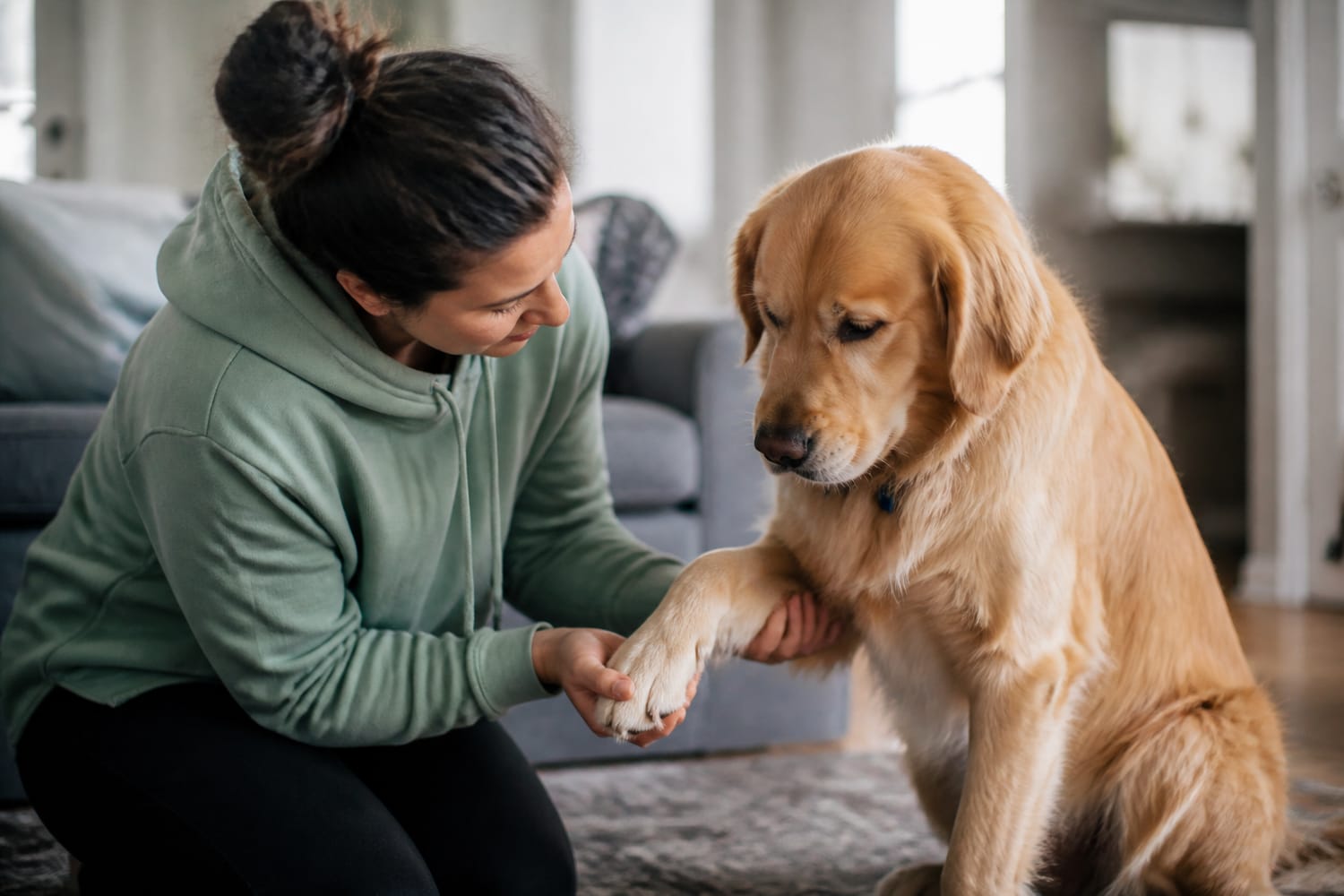
If your pet is calm and the injury does not appear severe, look at the paw pads, nails, and spaces between the toes. Check for debris, redness, swelling, punctures, damaged nails, and sticky material.
You may remove a loose, superficial object that lifts away easily. Do not dig into the skin or pull on a deeply embedded object; your veterinarian may need to remove it safely and check for remaining fragments.
3. Compare Both Sides
Look at the affected limb beside the matching healthy limb. Differences in size, warmth, shape, or position may be easier to recognize this way.
Run your hand lightly up the leg only if your pet remains comfortable. Avoid forcefully bending joints or squeezing swollen areas. If the limb looks deformed or your pet is in severe pain, stop the examination and arrange immediate care.
Pet owners can become more familiar with their animal’s normal condition by completing a regular 10-minute nose-to-tail wellness check.
What You Can Safely Do at Home
For a mild limp in a pet who is otherwise bright, comfortable, eating normally, and able to bear weight, begin with strict rest. Keep dogs on short leash trips for toileting and prevent running, rough play, stairs, and jumping. Keep cats in a quiet room with food, water, a low-sided litter box, and comfortable bedding nearby.
Do not tightly bandage the leg or apply a homemade splint. A poorly fitted wrap can restrict circulation, create pressure sores, trap moisture, or hide increasing swelling.
Most importantly, never give human painkillers unless a veterinarian specifically prescribes or directs them for that animal. Ibuprofen, naproxen, acetaminophen, aspirin, and other medicines can cause serious or fatal complications, and cats are particularly sensitive to several common drugs. The FDA’s pet pain-reliever safety guide explains why veterinary supervision is essential.
When Limping Is an Emergency
Go to an emergency veterinary hospital immediately—or call while preparing to leave—if your pet has:
- Been hit by a vehicle, fallen from a significant height, or experienced another major trauma
- An obvious fracture, dislocation, or strangely positioned limb
- Uncontrolled bleeding or a deep wound
- Severe or rapidly increasing swelling
- Extreme pain, continuous crying, or inability to settle
- Inability to stand or walk without assistance
- Sudden paralysis, limb dragging, or loss of balance
- A cold, pale, blue, or severely damaged paw
- Limping accompanied by breathing difficulty, collapse, profound weakness, or pale gums
Move an injured pet as little as possible. Support both the front and back of the body, and use a carrier for cats and small pets when practical. A removable-top carrier can make it easier to lower an injured cat inside without forcing them through a narrow door.
When to Schedule a Regular Veterinary Visit
Contact your veterinarian promptly if a mild limp does not improve with rest, persists into the next day, repeatedly returns, or gradually worsens. Arrange an earlier assessment for puppies, kittens, senior pets, animals with existing medical conditions, or any pet whose appetite, energy, or behavior has changed.
Even if your pet is not crying, they may still be in pain. Watch for subtler signals such as hiding, irritability, panting at rest, licking one area, sleeping differently, or avoiding favorite activities. Learn more about the signs pets may use to communicate pain.
At the appointment, your veterinarian may observe your pet’s gait, feel the muscles and joints, perform a neurologic examination, and recommend X-rays or other tests. Treatment depends on the diagnosis and may include veterinary pain relief, controlled rest, weight management, rehabilitation, wound care, or surgery.
Helping Your Pet Move Forward Comfortably
Seeing a beloved companion limp is worrying, but calm observation and timely action can make a meaningful difference. Check gently, prevent further activity, avoid unapproved medication, and trust your instincts when something seems seriously wrong.
Most importantly, remember that a limp is your pet’s way of communicating. By listening carefully and seeking help when needed, you are giving them the best opportunity to heal, regain confidence, and return to the joyful movement that makes every tail wag, playful pounce, and happy homecoming so special.